Electronic Parts Carrier Tape Market Insights
Global Electronic Parts Carrier Tape market size was valued at USD 248 million in 2025. The market is projected to reach USD 349 million by 2034, exhibiting a CAGR of 5.1% during the forecast period.
Electronic component carrier tape is a strip product used in the field of electronics and packaging. It features a specific thickness with evenly distributed pockets for holding electronic components and positioning holes for precise indexing. During mounting, the cover tape is peeled away, allowing automated equipment to extract components from the pockets via index hole alignment and place them onto printed circuit boards, enabling fully automated, efficient, reliable, and cost-effective chip packaging installation.
The market is experiencing steady growth due to surging demand in semiconductor and consumer electronics manufacturing, alongside the rise of surface-mount technology (SMT) and automation in assembly processes. Furthermore, miniaturization trends and the need for electrostatic discharge (ESD) protection in handling sensitive components are fueling expansion. Key players including 3M, Shin-Etsu, YAC Garter, K-Tech GmbH, Asahi Kasei, Fukuda, Keaco, LLC., Jabon, Ultra-Pak Industries, and Chung King Enterprise lead with diverse portfolios and ongoing innovations.
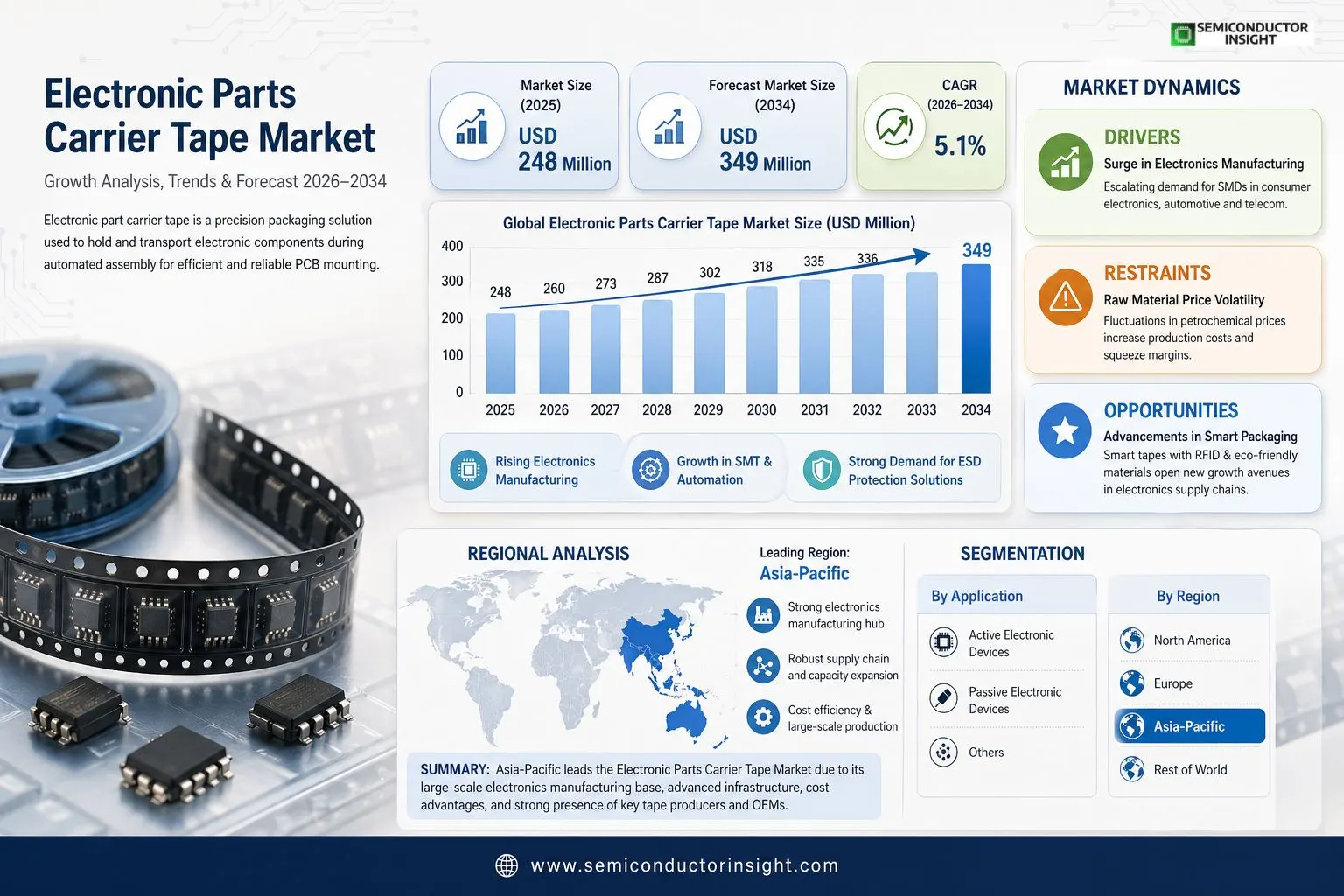
MARKET DRIVERS
Surge in Electronics Manufacturing
Electronic Parts Carrier Tape Market is propelled by the escalating demand for surface-mount devices (SMDs) in consumer electronics, automotive, and telecommunications sectors. With global smartphone shipments exceeding 1.2 billion units annually and the rise of electric vehicles incorporating advanced semiconductors, carrier tapes ensure precise component handling during assembly processes. This growth is further fueled by automation in pick-and-place machines, enhancing throughput in high-volume production lines.
Expansion of Semiconductor Industry
Semiconductor fabrication facilities worldwide are scaling up to meet the needs of 5G infrastructure and IoT devices, driving the adoption of specialized carrier tapes for delicate chips. Market projections indicate a compound annual growth rate (CAGR) of around 6% for Electronic Parts Carrier Tape Market through 2030, supported by investments totaling over $500 billion in semiconductor capacity. Embossed and pocketed designs dominate, accommodating miniaturization trends in electronic components.
➤ Innovative materials like conductive polymers improve ESD protection, reducing defects by up to 20% in assembly lines
Additionally, the shift toward lead-free soldering and RoHS compliance standards reinforces the need for robust carrier tapes that withstand high-temperature reflow processes, solidifying market momentum.
MARKET CHALLENGES
Raw Material Price Volatility
Fluctuations in petrochemical prices directly impact the production costs of polystyrene and polycarbonate-based carrier tapes in Electronic Parts Carrier Tape Market. Supply chain disruptions, as seen in recent global events, have led to a 15-20% rise in input costs, squeezing margins for manufacturers reliant on consistent resin supplies.
Other Challenges
Recycling and Sustainability Pressures
Traditional carrier tapes pose environmental disposal issues, with low recycling rates prompting stricter regulations. Industry players face hurdles in developing biodegradable alternatives without compromising mechanical strength or tape integrity during high-speed reeling.
MARKET RESTRAINTS
Regulatory Compliance Burdens
Stringent environmental regulations on plastic usage and waste management constrain expansion in Electronic Parts Carrier Tape Market. Compliance with REACH and TSCA standards requires costly material substitutions, slowing innovation cycles for tape producers serving global electronics assemblers.Geopolitical tensions and trade tariffs further limit cross-border material sourcing, with Asia-Pacific manufacturers,holding over 70% market share,facing export barriers that inflate costs for downstream users in Europe and North America.Moreover, the maturity of standard tape formats hinders rapid adoption of custom solutions, as equipment compatibility demands standardized dimensions, restricting flexibility amid evolving component sizes.
MARKET OPPORTUNITIES
Advancements in Smart Packaging
Electronic Parts Carrier Tape Market presents opportunities through integration of RFID and smart sensors for real-time inventory tracking in electronics supply chains. This innovation could reduce handling errors by 25%, appealing to high-precision sectors like aerospace and medical devices.Growing demand in emerging markets, particularly India and Southeast Asia with their burgeoning electronics manufacturing hubs, offers untapped potential estimated at $1.5 billion by 2028. Development of eco-friendly tapes using recycled polymers aligns with sustainability goals, capturing premium pricing from green-conscious OEMs.Furthermore, the proliferation of flexible electronics and wearables necessitates advanced tape designs with finer pitches, positioning early adopters to gain competitive edges in a market projected to surpass $4 billion globally.
Electronic Parts Carrier Tape Market Trends
Rising Demand Driven by Electronics Assembly Automation
Electronic Parts Carrier Tape Market continues to evolve with the surge in automated electronics manufacturing processes. Carrier tapes, essential for holding and positioning components during surface mount technology assembly, feature precise pockets and indexing holes that enable high-speed, reliable component placement on printed circuit boards. This trend reflects broader industry shifts toward fully automated, efficient production lines, reducing costs and enhancing reliability in chip packaging. Key players like 3M, Shin-Etsu, and Asahi Kasei are innovating tape designs to meet escalating demands from semiconductor and consumer electronics sectors.
Other Trends
Growth in Specialized Tape Segments
Segments such as conductive carrier tape and antistatic tapes are gaining prominence due to heightened focus on electrostatic discharge protection in sensitive electronic components. Conductive variants ensure safe handling of active electronic devices, while antistatic options cater to passive devices, minimizing risks during transportation and mounting. Insulating tapes also play a role in diverse applications, supporting the market’s diversification. Manufacturers are responding by refining material compositions to balance conductivity, durability, and environmental resistance, aligning with industry standards for high-volume production.
Regional Expansion and Competitive Dynamics
Asia-Pacific regions, particularly China, Japan, and South Korea, dominate Electronic Parts Carrier Tape Market, fueled by robust electronics manufacturing hubs and expanding consumer device production. North America and Europe follow, with emphasis on advanced applications in automotive and telecommunications. Competitive landscapes show top global players like YAC Garter, K-Tech GmbH, and Fukuda holding substantial revenue shares through strategic developments, mergers, and localized supply chains. Ongoing surveys among suppliers highlight challenges like raw material fluctuations and opportunities in sustainable packaging, positioning the market for steady adaptation amid global supply chain realignments. Industry experts note that downstream demands from active and passive devices will sustain momentum, encouraging investments in R&D for next-generation tapes.
COMPETITIVE LANDSCAPE
Key Industry Players
Strategic Positioning of Leading Manufacturers in the Global Electronic Parts Carrier Tape Market
Electronic Parts Carrier Tape Market exhibits a moderately concentrated structure, with the global top five players commanding a substantial revenue share in 2025. Industry leaders like 3M and Shin-Etsu Polymer dominate due to their scale, technological prowess in producing conductive, antistatic, and insulating carrier tapes, and robust supply chains tailored for high-volume electronics assembly. These firms leverage precision engineering to ensure compatibility with automated surface-mount technology (SMT) equipment, supporting applications in active and passive electronic devices. The market’s growth from USD 248 million in 2025 to USD 349 million by 2034 at a 5.1% CAGR underscores their influence amid rising demand for reliable packaging solutions in semiconductors and consumer electronics.
Beyond the frontrunners, a cadre of specialized niche players enriches the competitive dynamics, including Asahi Kasei, YAC Garter, and K-Tech GmbH, which focus on customized tapes for specific regional needs and material innovations to mitigate electrostatic discharge risks. Emerging contributors such as Fukuda, Keaco LLC, Jabon, and Ultra-Pak Industries are carving niches through agile manufacturing and expansions in Asia-Pacific hubs like China and Japan. Additional significant entities like Chung King Enterprise, CARRIER-TECH, Jeni Metal Chemical, Zhejiang Jiemei Electronic and Technology, and Shenzhen Prince New Material intensify rivalry by targeting cost-sensitive segments and advancing sustainable, high-performance carrier tapes, fostering overall market innovation and efficiency.
List of Key Electronic Parts Carrier Tape Companies Profiled
- 3M
- Shin-Etsu
- YAC Garter
- K-Tech GmbH
- Asahi Kasei
- Fukuda
- Keaco, LLC.
- Jabon
- Ultra-Pak Industries
- Chung King Enterprise
- CARRIER-TECH
- Jeni Metal Chemical
- Zhejiang Jiemei Electronic and Technology
- Shenzhen Prince New Material
Segment Analysis:
| Segment Category | Sub-Segments | Key Insights |
| By Type |
|
Antistatic (Static Dissipative) Carrier Tape
|
| By Application |
|
Passive Electronic Devices
|
| By End User |
|
Consumer Electronics
|
| By Material |
|
Polystyrene (PS)
|
| By Sprocket Pitch |
|
8mm
|
Regional Analysis: Electronic Parts Carrier Tape Market
Asia-Pacific
Booming electronics assembly hubs propel demand for Electronic Parts Carrier Tape Market solutions. Surge in smartphone production and semiconductor fabs necessitates tapes with superior adhesion and durability. Automotive electrification trends amplify needs for reliable packaging in EV component handling.
Leading firms innovate in advanced polymer formulations for precision tapes. Strong R&D collaborations with device makers enhance tape designs for ultra-fine pitch components. Regional giants leverage vertical integration for swift market responsiveness.
Shift toward eco-friendly tapes gains traction amid regulatory pressures. Adoption of anti-static enhancements supports high-speed automation. Customization for wearables and flexible electronics redefines tape specifications.
Expansion in display and sensor manufacturing opens avenues for specialized tapes. Supply chain localization initiatives invite new entrants. Tech upgrades in SMT lines boost demand for performance-optimized carrier solutions.
North America
North America plays a pivotal role in Electronic Parts Carrier Tape Market, emphasizing high-tech applications in aerospace, medical devices, and telecommunications. Innovation-driven ecosystems prioritize tapes with exceptional purity and ESD protection for sensitive components. U.S.-based firms focus on advanced materials to support next-generation computing and defense electronics. Steady growth stems from reshoring efforts in semiconductor packaging, enhancing tape usage in domestic fabs. Collaborative ventures between tape suppliers and OEMs drive standards for reliability in harsh environments. Sustainability efforts explore recyclable options, aligning with corporate ESG goals. Competitive landscape features premium pricing for custom-engineered products, with market dynamics influenced by R&D investments and proximity to end-users. Regional strengths in quality assurance position it for sustained contributions to global Electronic Parts Carrier Tape Market evolution.
Europe
Europe’s Electronic Parts Carrier Tape Market thrives on stringent quality norms and diversified industrial bases in automotive and industrial automation. Germany and other nations lead in precision engineering, demanding tapes optimized for robotic assembly and miniaturization. Emphasis on circular economy principles accelerates development of sustainable carrier materials. Regulatory frameworks promote eco-compliant packaging, influencing supplier strategies. Growth is supported by robust automotive sector transitions to electric vehicles, requiring durable tapes for battery management systems. Strategic partnerships foster innovations in conductive films and embossing techniques. Market competition revolves around compliance certifications, with dynamics favoring established players adept at multi-standard adherence. Europe’s focus on value-added features ensures its relevance in the expanding Electronic Parts Carrier Tape Market landscape.
South America
South America emerges as a growing niche in Electronic Parts Carrier Tape Market, driven by expanding consumer electronics assembly and automotive localization. Brazil and regional hubs see rising demand for cost-effective tapes amid import substitution policies. Challenges in infrastructure spur adaptations in tape robustness for variable humidity conditions. Local manufacturers partner with multinationals to upscale production for white goods and telecom gear. Investment in training enhances SMT line efficiencies, boosting carrier tape volumes. Market dynamics reflect price sensitivity balanced by quality improvements. Emerging opportunities in renewable energy components further stimulate the sector, positioning South America for incremental gains in the global Electronic Parts Carrier Tape Market.
Middle East & Africa
The Middle East & Africa region in Electronic Parts Carrier Tape Market is nascent yet promising, anchored by oil-funded diversification into electronics and renewables. UAE and South Africa lead assembly initiatives for consumer gadgets and solar inverters. Demand focuses on heat-resistant tapes suited to arid climates. Infrastructure projects drive telecom infrastructure builds, elevating carrier needs. Collaborations with Asian suppliers bridge technology gaps while local content rules encourage domestic production. Market growth hinges on workforce skilling and logistics enhancements. Dynamics emphasize affordability and reliability, with potential in data center expansions. This region’s strategic investments signal a pathway to deeper integration in Electronic Parts Carrier Tape Market.
Report Scope
This market research report provides a comprehensive analysis of Electronic Parts Carrier Tape Market, covering the forecast period 2026–2034. It offers detailed insights into market dynamics, technological advancements, competitive landscape, and key trends shaping the industry.
Key focus areas of the report include:
- Market Overview: The report begins with an overview outlining its current market scenario, key growth indicators, and industry transformation drivers. It discusses macroeconomic factors, demand–supply balance, regulatory landscape, and the strategic role of semiconductors in powering advancements across industries such as automotive, telecommunications, consumer electronics, and industrial automation.
- Market Size & Forecast: Historical data and future projections for revenue, unit shipments, and market value across major regions and segments.
- Segmentation Analysis: Detailed breakdown by product type, technology, application, and end-user industry to identify high-growth segments and investment opportunities.
- Regional Insights: Insights into market performance across North America, Europe, Asia-Pacific, Latin America, and the Middle East & Africa, including country-level analysis where relevant.
- Competitive Landscape: Profiles of leading market participants, including their product offerings, R&D focus, manufacturing capacity, pricing strategies, and recent developments such as mergers, acquisitions, and partnerships.
- Technology Trends & Innovation: Assessment of emerging technologies, integration of AI/IoT, semiconductor design trends, fabrication techniques, and evolving industry standards.
- Market Drivers & Restraints: Evaluation of factors driving market growth along with challenges, supply chain constraints, regulatory issues, and market-entry barriers.
- Stakeholder Insights: Insights for component suppliers, OEMs, system integrators, investors, and policymakers regarding the evolving ecosystem and strategic opportunities.
Primary and secondary research methods are employed, including interviews with industry experts, data from verified sources, and real-time market intelligence to ensure the accuracy and reliability of the insights presented.
FREQUENTLY ASKED QUESTIONS:
What is the current market size of Electronic Parts Carrier Tape Market?
-> Global Electronic Parts Carrier Tape Market was valued at USD 248 million in 2025 and is expected to reach USD 349 million by 2034, at a CAGR of 5.1% during the forecast period.
Which key companies operate in Electronic Parts Carrier Tape Market?
-> Key players include 3M, Shin-Etsu, YAC Garter, K-Tech Gmbh, Asahi Kasei, Fukuda, Keaco, LLC., Jabon, Ultra-Pak Industries, and Chung King Enterprise, among others.
What are the key growth drivers?
-> Key growth drivers include demand for automated electronic component mounting, expansion in electronics packaging, and growth in semiconductor and consumer electronics industries.
Which region dominates the market?
-> Asia dominates the market, with significant contributions from China, Japan, and South Korea.
What are the emerging trends?
-> Emerging trends include advancements in conductive and antistatic carrier tapes, improvements in ESD protection for active and passive electronic devices, and enhanced automation in SMT processes.

Get Sample Report PDF for Exclusive Insights
Report Sample Includes
- Table of Contents
- List of Tables & Figures
- Charts, Research Methodology, and more...
 Download Sample Report PDF