MARKET INSIGHTS
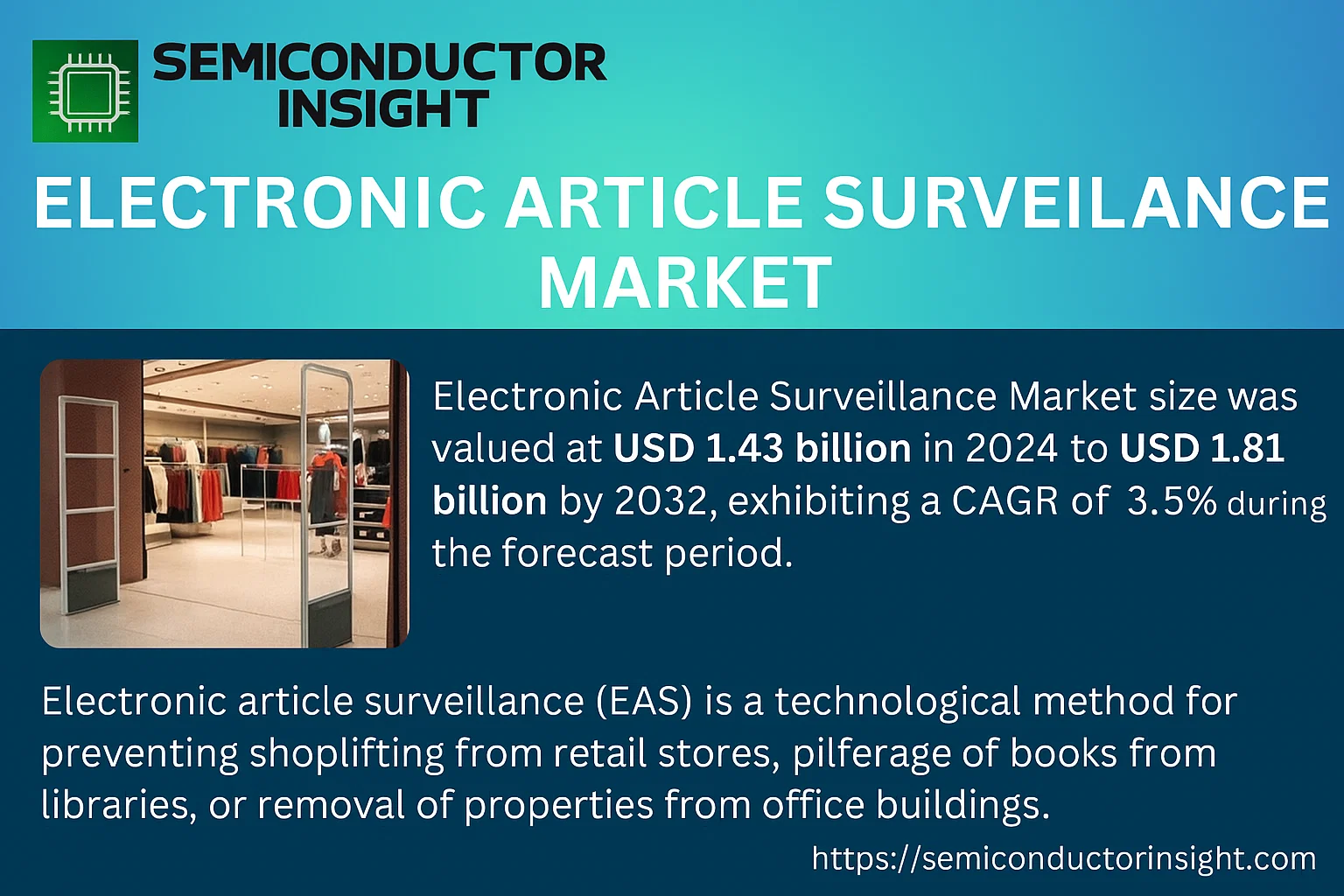
Global Electronic Article Surveillance Market size was valued at USD 1.43 billion in 2024 to USD 1.81 billion by 2032, exhibiting a CAGR of 3.5% during the forecast period.
Electronic article surveillance (EAS) is a technological method for preventing shoplifting from retail stores, pilferage of books from libraries, or removal of properties from office buildings. These systems utilize specialized tags that are attached to merchandise or assets, which are removed or deactivated by authorized personnel during legitimate transactions. Detection systems positioned at exits trigger alarms when active tags pass through monitored areas.
The market growth is primarily driven by increasing retail shrinkage concerns and the need for enhanced security measures across various sectors. While traditional retail applications continue to dominate demand, emerging markets in Asia-Pacific are showing accelerated adoption rates due to expanding organized retail infrastructure. North America maintains its position as the largest regional market with approximately 33% share, followed closely by Asia-Pacific at over 28%. Key players including Checkpoint Systems and Tyco Retail Solutions collectively hold about 38% market share, leveraging their extensive product portfolios and global distribution networks to maintain competitive positions.
MARKET DRIVERS
Rising Retail Shrinkage and Theft Incidents
The primary driver for the Electronic Article Surveillance (EAS) market is the persistently high rate of retail shrinkage, which includes shoplifting, employee theft, and administrative errors. Global retail shrinkage results in annual losses exceeding D 100 billion, forcing retailers to invest in robust loss prevention solutions. EAS systems provide a visible deterrent and are a critical first line of defense. The expansion of large-format retail stores and the increasing value of consumer goods further amplify this need for effective asset protection.
Adoption of RFID Technology
The integration of Radio-Frequency Identification (RFID) technology with traditional EAS systems is a significant growth driver. Modern RFID-EAS solutions offer enhanced capabilities beyond simple theft prevention, enabling real-time inventory management, smart shelves, and improved supply chain visibility. This dual functionality provides a strong return on investment, driving adoption among major apparel retailers and mass merchandisers seeking operational efficiency alongside security.
➤ Global EAS market is projected to grow at a compound annual growth rate (CAGR) of approximately 6-8% over the next five years, fueled by technological integration and retail expansion.
The expansion of organized retail in emerging economies across Asia-Pacific and Latin America presents a substantial growth avenue. As modern retail formats become more prevalent, the demand for established loss prevention technologies like EAS systems increases simultaneously, creating a sustained and growing market.
MARKET CHALLENGES
High Initial Investment and Integration Costs
One of the foremost challenges is the significant upfront cost associated with deploying a comprehensive EAS system. This includes the expense of tags, detachers/deactivators, detection antennas, and the software infrastructure. For small and medium-sized retailers, this capital expenditure can be a major barrier to adoption. Furthermore, integrating new EAS systems with existing point-of-sale (POS) and inventory management platforms can be complex and costly.
Tagging Limitations and False Alarms
EAS systems face operational challenges related to the physical tagging of merchandise. Certain products, especially liquids and metals, can interfere with detection systems, making them difficult to protect effectively. Additionally, false alarms remain a persistent issue, often caused by improperly deactivated tags or environmental interference, which can lead to customer annoyance and a loss of staff productivity.
Other Challenges
Evolving Sophistication of Theft
Criminal tactics are continually evolving, with organized retail crime (ORC) groups using methods to bypass EAS systems, such as jamming signals or using shielded bags. This necessitates ongoing investment in research and development to keep security measures ahead of threats.
MARKET RESTRAINTS
Growth of E-commerce
The rapid expansion of e-commerce poses a significant restraint to the traditional EAS market, which is primarily designed for brick-and-mortar stores. As a larger share of retail sales moves online, the direct need for in-store physical security systems like EAS can be perceived as less critical. Retailers may reallocate loss prevention budgets toward combating online fraud and securing supply chains rather than expanding their in-store EAS infrastructure.
Availability of Low-Cost Alternatives
The market faces competition from lower-cost alternatives such as increased staffing for floor monitoring, basic CCTV systems, and other non-electronic security measures. While less effective than integrated EAS solutions, these options are often more accessible for businesses with very tight budgets, limiting the potential market penetration of advanced EAS systems.
MARKET OPPORTUNITIES
Integration with IoT and Big Data Analytics
A major opportunity lies in the convergence of EAS with the Internet of Things (IoT) and data analytics. Smart EAS systems can collect vast amounts of data on customer movement, product handling, and incident patterns. By analyzing this data, retailers can gain valuable insights into store operations, optimize product placements, and implement more proactive loss prevention strategies, transforming a security tool into a business intelligence asset.
Expansion into New Verticals
While retail remains the core market, significant growth opportunities exist in non-traditional verticals. Libraries, healthcare facilities (for securing expensive equipment and pharmaceuticals), and even event venues are increasingly adopting EAS technology to protect their assets. This diversification reduces market dependency on the retail sector and opens up new revenue streams for EAS manufacturers and solution providers.
Global Electronic Article Surveillance Market Trends
Sustained Growth and Market Expansion
Global Electronic Article Surveillance (EAS) Market is demonstrating robust and steady expansion, with a valuation of USD 1434 million in 2024. Projections indicate the market will reach USD 1810 million by 2032, growing at a Compound Annual Growth Rate (CAGR) of 3.5% during the forecast period. This growth is primarily driven by the persistent and global need for retail loss prevention solutions to combat shoplifting and inventory shrinkage. The market is well-established, with North America representing the largest consumption region, accounting for nearly 33% of global sales. However, the Asia-Pacific region is a significant and rapidly growing market, holding over 28% market share, indicating a strategic shift and expansion opportunity for industry players.
Other Trends
Dominance of Established Market Leaders
The competitive landscape of the EAS market is characterized by a high degree of consolidation, with the top two players, Checkpoint Systems and Tyco Retail Solutions, collectively holding 38% of the global market share. The presence of other key players like Nedap, Hangzhou Century Co., Ltd, and Gunnebo Gateway ensures a competitive environment. This concentration among a few major companies underscores the importance of technological innovation, comprehensive service offerings, and global distribution networks as critical factors for maintaining and growing market position.
Segmentation by Application and Product Type
Market trends are further defined by application and product segmentation. The Clothing & Fashion Accessories sector represents a major application segment, driven by the high pilferage rates of small, high-value items. Supermarkets & Large Grocery stores also constitute a significant portion of the market. In terms of product types, the market is segmented into Hard Tags, Soft Tags, Deactivators/Detachers, Detection Systems, and Permanent Deactivation Tags. The evolution of these technologies focuses on enhancing detection accuracy, improving customer checkout experience through faster deactivation, and developing more discrete tagging solutions.
Regional Market Dynamics and Future Prospects
While North America remains the dominant market, the most dynamic growth is anticipated in the Asia-Pacific region, fueled by the rapid expansion of organized retail sectors in countries like China and India. This regional shift presents both opportunities and challenges for existing market leaders and new entrants. The industry’s future will be shaped by integrating EAS systems with broader retail management and analytics platforms, offering retailers not just security but valuable insights into store traffic and inventory movement. The continued global emphasis on reducing retail losses ensures the long-term relevance and evolution of the Electronic Article Surveillance Market.
COMPETITIVE LANDSCAPE
Key Industry Players
A Consolidated Market Led by Global Security Giants
Global Electronic Article Surveillance (EAS) Market is characterized by a high degree of consolidation, with the top two players, Checkpoint Systems and Tyco Retail Solutions (a division of Johnson Controls), collectively commanding a dominant 38% market share. These industry leaders possess extensive global distribution networks, robust R&D capabilities, and a comprehensive portfolio of solutions encompassing hard tags, soft tags, detachers, and advanced detection systems. Their strong brand recognition and long-standing relationships with major retail chains across North America, Europe, and Asia-Pacific solidify their leading positions. The competitive dynamics are heavily influenced by continuous technological innovation, particularly in the integration of EAS with RFID and other data-centric retail management solutions, where these top players are aggressively investing.
Beyond the market leaders, a number of other significant players occupy important niches, catering to specific geographic regions or specialized application segments. Companies like Nedap N.V. from the Netherlands have a strong presence in Europe and are known for their innovative long-range RFID solutions. In the Asia-Pacific region, Hangzhou Century Co., Ltd. is a major force, benefiting from the large manufacturing base and growing retail sector in China. Other established competitors such as Gunnebo Gateway, All Tag, and Universal Surveillance Systems compete effectively by offering cost-competitive products and specialized services for various retail verticals, including apparel, cosmetics, and supermarkets. The market also includes specialized technology providers like WGSPI and Ketec, which focus on specific components or advanced detection technologies.
List of Key Electronic Article Surveillance Companies Profiled
- Checkpoint Systems
- Tyco Retail Solutions
- Nedap N.V.
- Hangzhou Century Co., Ltd
- Gunnebo Gateway
- WGSPI
- Ketec
- All Tag
- Universal Surveillance Systems
- Sensormatic Solutions (part of Johnson Controls)
- Avery Dennison RFiD
- Metra Group
- Sentry Technology Corporation
- Agon Systems Ltd.
- Nanjing Langan Electronic Technology Co., Ltd.
Segment Analysis:
| Segment Category | Sub-Segments | Key Insights |
| By Type |
|
Detection System constitutes the fundamental component of any EAS solution, acting as the gatekeeper that triggers alarms for active tags. This segment’s dominance is driven by its indispensable role in the overall system functionality, with continuous innovation focusing on improving detection accuracy, reducing false alarms, and integrating seamlessly with other retail management and security systems. The evolution towards more aesthetically pleasing and less obtrusive pedestal designs also supports its leading position. |
| By Application |
|
Clothing & Fashion Accessories represents the most significant application segment due to the high value, small size, and high pilferage risk associated with apparel items. Retailers in this sector heavily invest in EAS to protect merchandise that is easily concealed. The need for specialized tags that do not damage delicate fabrics, coupled with the high volume of foot traffic in clothing stores, solidifies this segment’s leadership as it directly addresses a critical pain point for a vast and vulnerable retail category. |
| By End User |
|
Apparel Retailers are the foremost end-users, driving demand for sophisticated EAS solutions tailored to their specific inventory challenges. The constant threat of organized retail crime targeting high-turnover fashion items compels these businesses to implement robust loss prevention strategies. Their leadership is characterized by a focus on integration with inventory management and a preference for source tagging, where security tags are applied at the point of manufacture to ensure comprehensive protection across the supply chain. |
| By Technology |
|
Acousto-Magnetic (AM) technology is widely regarded as the leading segment due to its superior detection accuracy and high immunity to environmental interference, which minimizes false alarms. Its ability to detect tags at greater distances and through metal objects, such as shopping carts, makes it exceptionally reliable for high-traffic retail environments. The technology’s robust performance and established reputation for effectiveness in securing a wide range of merchandise types underpin its dominant position in the market. |
| By Deployment |
|
Integrated Systems are increasingly becoming the deployment method of choice for modern retailers seeking a holistic security and operational solution. This leading segment involves the seamless connection of EAS with point-of-sale systems, video surveillance, and inventory management software. The key advantage lies in the ability to generate actionable intelligence, such as linking alarm events with video footage and sales data, thereby transforming loss prevention from a reactive to a proactive and analytically driven business function. |
Regional Analysis: Electronic Article Surveillance Market
Retailers in North America have deeply integrated EAS systems into their standard operating procedures. This is not viewed as an optional security measure but as a fundamental component of store design and management. The sophistication of integration extends to linking EAS alarms with point-of-sale systems and customer traffic data, providing a holistic view of store security and operational efficiency, which is a level of maturity less commonly seen in other regions.
The market is a primary testing ground for next-generation EAS technologies, including RFID, acoustic magnetic, and electromagnetic systems with enhanced detection capabilities. There is a strong preference for systems that offer source tagging, where security tags are applied at the point of manufacture, streamlining the process for retailers. This drive for efficiency and accuracy fuels continuous innovation and sets the benchmark for global EAS standards.
North America hosts the headquarters of many leading global EAS manufacturers and solution providers. This concentration fosters intense competition, which in turn drives product development, competitive pricing, and high-quality customer service and support. Vendors are compelled to offer comprehensive solutions that include installation, maintenance, and data analytics services, creating a mature and service-oriented ecosystem around the core technology.
As North American retail increasingly blends physical and digital channels, the role of EAS is evolving. There is a growing emphasis on securing the entire supply chain, from distribution centers to the final point of sale in-store. EAS systems are being adapted to protect against not only in-store theft but also losses associated with online order fulfillment processes like ‘Buy Online, Pick Up In-Store’ (BOPIS).
Europe
Europe represents a highly developed and diverse market for Electronic Article Surveillance, characterized by varying adoption rates and regulatory frameworks across different countries. Western European nations, such as the UK, Germany, and France, exhibit maturity similar to North America, with widespread use of EAS in apparel, electronics, and cosmetics retail. The market is driven by a strong focus on organized retail crime prevention and the need to protect high-value goods. In contrast, Eastern Europe shows strong growth potential, with increasing modernization of the retail sector fueling demand. The region is also seeing a push towards more sustainable and discreet tagging solutions, aligning with broader European environmental and aesthetic sensibilities. Cross-border retail chains often standardize their EAS systems, promoting consistency, but local regulations concerning tagging and privacy can influence specific implementations.
Asia-Pacific
The Asia-Pacific region is the fastest-growing market for Electronic Article Surveillance, propelled by the rapid expansion of organized retail, the emergence of supermalls, and rising disposable incomes. Countries like China, India, Japan, and Australia are key contributors. The growth is primarily volume-driven, with a massive number of new retail outlets requiring basic security infrastructure. While adoption is high, the focus is often on cost-effective solutions, with a significant market for reusable hard tags and basic detection systems. However, more mature markets within the region, such as Japan and Australia, are adopting advanced RFID-based systems. The diverse economic landscape means the market is highly fragmented, with requirements ranging from simple theft deterrents in emerging markets to sophisticated, integrated loss prevention systems in developed areas.
South America
The Electronic Article Surveillance Market in South America is in a growth phase, with Brazil and Argentina being the primary markets. The driver is the gradual formalization and expansion of the retail sector, particularly in major urban centers. Retailers are increasingly recognizing EAS as a necessary investment to combat high levels of inventory shrinkage. The market is price-sensitive, with a preference for robust and reliable systems that offer a clear return on investment. Adoption is most prominent in segments like fashion, department stores, and supermarkets. Challenges include economic volatility, which can impact investment in security infrastructure, and a retail landscape that is still developing in terms of scale and organization compared to more mature regions.
Middle East & Africa
The Middle East and Africa region presents a mixed picture for the EAS market. The Gulf Cooperation Council (GCC) countries, such as the UAE and Saudi Arabia, are well-established markets driven by luxurious shopping malls, high-end retail, and a strong tourism industry that demands high security standards. These markets are sophisticated and adopt advanced EAS technologies. In contrast, the broader African market is nascent, with growth potential tied to the slow but steady development of modern retail chains in key economies like South Africa and Nigeria. The primary challenge across much of Africa is the cost of implementation and the predominance of informal retail, which limits widespread adoption. The region overall shows significant potential for long-term growth as retail infrastructure continues to develop.
Report Scope
This market research report provides a comprehensive analysis of the Electronic Article Surveillance Market, covering the forecast period 2025–2032. It offers detailed insights into market dynamics, technological advancements, competitive landscape, and key trends shaping the industry.
Key focus areas of the report include:
- Market Overview: The report begins with an overview outlining its current market scenario, key growth indicators, and industry transformation drivers. It discusses macroeconomic factors, demand–supply balance, regulatory landscape, and the strategic role of semiconductors in powering advancements across industries such as automotive, telecommunications, consumer electronics, and industrial automation.
- Market Size & Forecast: Historical data and future projections for revenue, unit shipments, and market value across major regions and segments.
- Segmentation Analysis: Detailed breakdown by product type, technology, application, and end-user industry to identify high-growth segments and investment opportunities.
- Regional Insights: Insights into market performance across North America, Europe, Asia-Pacific, Latin America, and the Middle East & Africa, including country-level analysis where relevant.
- Competitive Landscape: Profiles of leading market participants, including their product offerings, R&D focus, manufacturing capacity, pricing strategies, and recent developments such as mergers, acquisitions, and partnerships.
- Technology Trends & Innovation: Assessment of emerging technologies, integration of AI/IoT, semiconductor design trends, fabrication techniques, and evolving industry standards.
- Market Drivers & Restraints: Evaluation of factors driving market growth along with challenges, supply chain constraints, regulatory issues, and market-entry barriers.
- Stakeholder Insights: Insights for component suppliers, OEMs, system integrators, investors, and policymakers regarding the evolving ecosystem and strategic opportunities.
Primary and secondary research methods are employed, including interviews with industry experts, data from verified sources, and real-time market intelligence to ensure the accuracy and reliability of the insights presented.
FREQUENTLY ASKED QUESTIONS:
What is the current market size of Electronic Article Surveillance Market?
-> Global Electronic Article Surveillance Market was valued at USD 1434 million in 2024 and is projected to reach USD 1810 million by 2032, exhibiting a CAGR of 3.5% during the forecast period.
Which key companies operate in Electronic Article Surveillance Market?
-> Key players include Checkpoint Systems, Tyco Retail Solutions, Nedap, Hangzhou Century Co., Ltd, Gunnebo Gateway, WGSPI, Ketec, All Tag and Universal Surveillance Systems, among others. The top two players, Checkpoint Systems and Tyco Retail Solutions, hold a combined market share of approximately 38%.
What are the key growth drivers?
-> Key growth drivers include the persistent need for retail theft prevention, technological advancements in tagging and detection systems, and the expansion of organized retail sectors globally.
Which region dominates the market?
-> North America is the largest consumption region, accounting for a sales market share of nearly 33%. The Asia-Pacific region is the second-largest market with a share of over 28%.
What are the emerging trends?
-> Emerging trends include the development of more discreet and reusable tags, integration with broader retail management and inventory systems, and the use of advanced detection technologies to reduce false alarms.

Get Sample Report PDF for Exclusive Insights
Report Sample Includes
- Table of Contents
- List of Tables & Figures
- Charts, Research Methodology, and more...
 Download Sample Report PDF