MARKET INSIGHTS
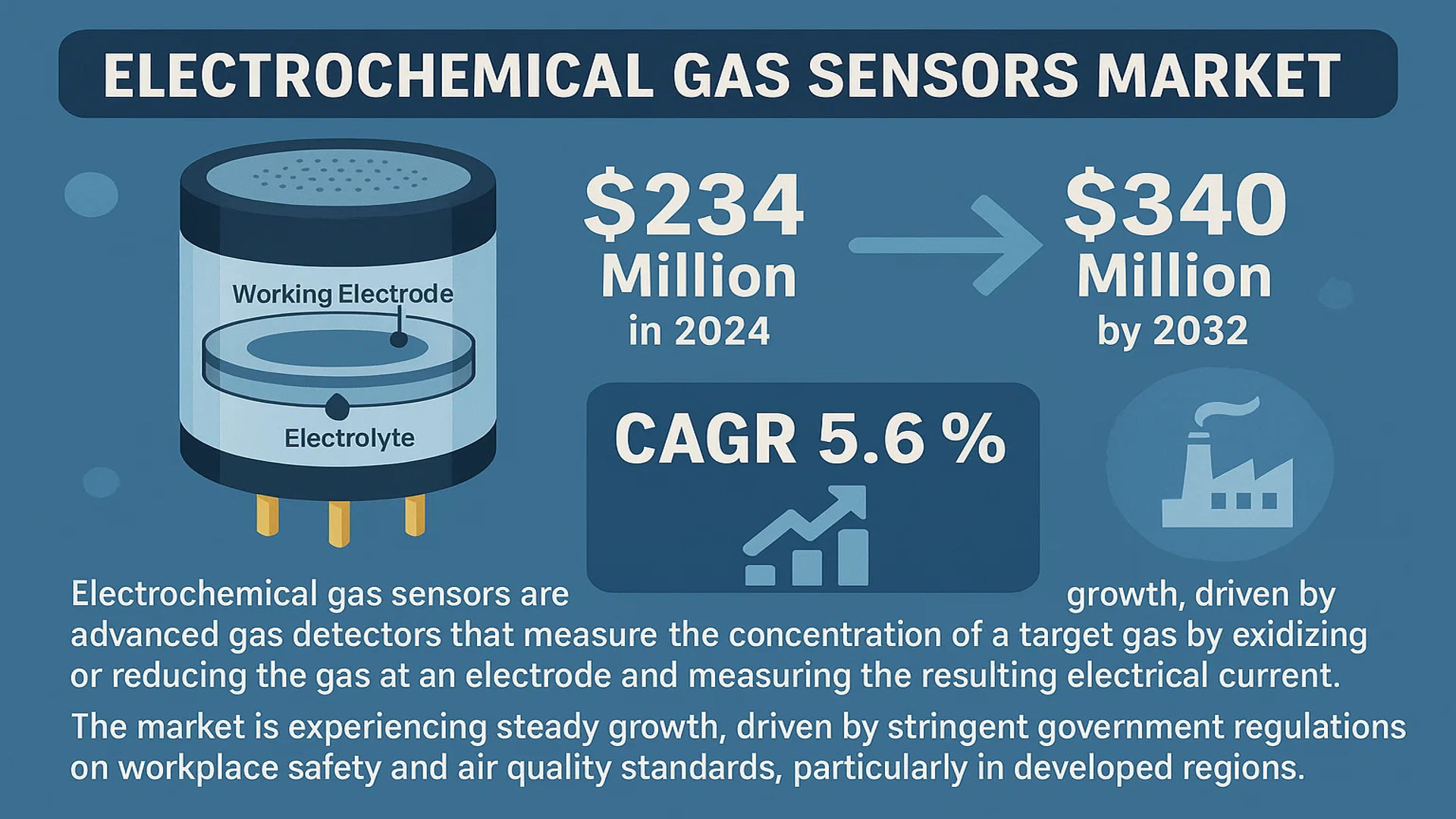
The global Electrochemical Gas Sensors Market was valued at 234 million in 2024 and is projected to reach US$ 340 million by 2032, at a CAGR of 5.6% during the forecast period.
Electrochemical gas sensors are advanced gas detectors that measure the concentration of a target gas by oxidizing or reducing the gas at an electrode and measuring the resulting electrical current. These sensors typically contain two to four electrodes in contact with an electrolyte, which is most commonly a mineral acid. The gas diffuses through a porous membrane to the working electrode, where the electrochemical reaction occurs, generating a current proportional to the gas concentration. This technology is highly valued for its selectivity, sensitivity, and low power consumption, making it a cornerstone for safety and environmental monitoring.
The market is experiencing steady growth, driven by stringent government regulations on workplace safety and air quality standards, particularly in developed regions. For instance, Europe holds a dominant 48% market share, followed by the United States at 17%, reflecting their mature regulatory frameworks and high adoption rates in industrial and civil safety applications. Furthermore, the rising demand from sectors such as chemical & oil, mining, and environmental monitoring is a significant growth driver. Key industry players, including UK-based City Technology and Alphasense, Switzerland’s MEMBRAPOR, and Germany’s Draeger, continue to lead technological development and maintain a strong competitive presence globally.
MARKET DYNAMICS
MARKET DRIVERS
Stringent Industrial Safety Regulations to Propel Market Expansion
Global industrial safety regulations are becoming increasingly rigorous, mandating the use of advanced gas detection systems to protect workers and facilities. Electrochemical gas sensors are critical components in these systems due to their high sensitivity, selectivity, and ability to detect low concentrations of toxic and combustible gases. Regulatory bodies worldwide have intensified compliance requirements, particularly in sectors such as oil & gas, chemical manufacturing, and mining, where exposure to hazardous gases poses significant risks. For instance, occupational exposure limits for gases like carbon monoxide, hydrogen sulfide, and nitrogen dioxide are being enforced more strictly, driving the adoption of reliable sensing technologies. The expansion of industrial activities in emerging economies, coupled with heightened safety awareness, further amplifies the demand for these sensors. Continuous technological improvements in sensor durability and accuracy also support regulatory compliance, making electrochemical sensors indispensable for modern industrial safety protocols.
Growing Demand for Environmental Monitoring to Boost Market Growth
Environmental monitoring applications represent a major growth avenue for electrochemical gas sensors, driven by increasing global concerns over air quality and pollution. Governments and environmental agencies are implementing stringent measures to monitor and control emissions from industrial operations, vehicles, and urban infrastructure. Electrochemical sensors are widely deployed in portable and fixed air quality monitoring systems due to their ability to detect pollutants such as sulfur dioxide, ozone, and nitrogen oxides at parts-per-billion levels. Urbanization and industrialization in regions like Asia-Pacific have exacerbated air pollution issues, prompting substantial investments in monitoring infrastructure. Public health initiatives aimed at reducing respiratory diseases linked to poor air quality further accelerate the adoption of these sensors. The integration of electrochemical sensors with IoT-based networks for real-time data collection and analysis enhances their utility in smart city projects and environmental compliance reporting.
Advancements in Sensor Technology to Drive Innovation and Adoption
Technological advancements in electrochemical gas sensors are significantly enhancing their performance, reliability, and application scope. Innovations such as miniaturization, improved electrode materials, and advanced electrolyte formulations have led to sensors with longer lifespans, reduced cross-sensitivity, and lower power consumption. These improvements are particularly vital for battery-operated and portable devices, including personal gas detectors and wearable monitors. The development of sensors capable of operating effectively in extreme environmental conditions—such as high humidity, temperature variations, and corrosive atmospheres—has expanded their use in challenging industrial settings. Furthermore, integration with wireless communication technologies enables remote monitoring and data analytics, providing actionable insights for safety and operational efficiency. Continuous research in nanomaterials and solid-state electrolytes is expected to yield next-generation sensors with enhanced selectivity and stability, fostering broader adoption across diverse sectors.
MARKET CHALLENGES
Cross-Sensitivity and Interference Issues to Hinder Accurate Detection
Electrochemical gas sensors, while highly effective for specific target gases, often suffer from cross-sensitivity where other gases present in the environment can trigger false readings or reduce accuracy. This challenge is particularly pronounced in complex gas mixtures common in industrial and urban settings. For example, sensors designed to detect carbon monoxide may also respond to hydrogen or other reducing gases, leading to measurement errors that compromise safety. Mitigating cross-sensitivity requires sophisticated filtering algorithms, additional sensor arrays, or periodic calibration—all of which increase system complexity and cost. In applications where precise gas concentration data is critical, such as medical safety or emission monitoring, these limitations can pose significant operational risks. Ongoing research focuses on developing more selective electrode materials and advanced signal processing techniques to address these issues, but achieving high specificity remains a persistent challenge for widespread deployment.
Other Challenges
Calibration and Maintenance Requirements
Electrochemical gas sensors require regular calibration and maintenance to ensure accuracy over time. Factors such as electrolyte evaporation, electrode degradation, and environmental conditions can drift sensor readings, necessitating frequent recalibration. This maintenance burden is especially challenging in remote or large-scale installations where access is limited. The need for specialized equipment and trained personnel to perform these tasks adds to the total cost of ownership and can deter adoption in cost-sensitive markets.
Limited Lifespan in Harsh Environments
The operational lifespan of electrochemical sensors can be significantly reduced in harsh environments characterized by extreme temperatures, high humidity, or corrosive gases. Exposure to such conditions accelerates sensor aging, leading to more frequent replacements and higher operational costs. While manufacturers are developing ruggedized designs, ensuring long-term reliability in demanding applications remains an ongoing challenge that affects user confidence and market penetration.
MARKET RESTRAINTS
High Competition from Alternative Technologies to Limit Market Share
Electrochemical gas sensors face intense competition from alternative sensing technologies such as infrared (IR), photoionization detectors (PID), and semiconductor-based sensors. These alternatives often offer advantages in specific applications, including broader detection ranges, faster response times, or reduced maintenance needs. Infrared sensors, for instance, are highly stable and do not require frequent calibration, making them preferable for long-term environmental monitoring. Semiconductor sensors are cost-effective for consumer-grade air quality devices. While electrochemical sensors excel in detecting low concentrations of specific toxic gases, their market share is constrained by the growing adoption of these competing technologies. The trend toward multi-gas detection systems that integrate various sensor types further challenges the dominance of electrochemical sensors in certain segments. Manufacturers must continuously innovate to improve performance and reduce costs to maintain competitiveness in an increasingly diversified market.
MARKET OPPORTUNITIES
Expansion in Healthcare and Medical Applications to Open New Avenues
The healthcare sector presents significant growth opportunities for electrochemical gas sensors, particularly in medical diagnostics and therapeutic devices. These sensors are increasingly used in breath analyzers for detecting biomarkers associated with diseases such as asthma, diabetes, and gastrointestinal disorders. The non-invasive nature of breath analysis drives demand for highly sensitive and selective sensors capable of detecting volatile organic compounds at trace levels. Additionally, electrochemical sensors are integral to anesthetic gas monitoring in operating rooms and oxygen sensors in respiratory equipment. The aging global population and rising prevalence of chronic diseases are fueling investments in medical gas detection solutions. Advances in miniaturization and biocompatibility are enabling the development of implantable and wearable medical devices that incorporate electrochemical sensing capabilities. This expansion into healthcare applications diversifies the market beyond traditional industrial uses and offers substantial growth potential.
Integration with IoT and Smart Systems to Enhance Market Prospects
The integration of electrochemical gas sensors with Internet of Things (IoT) platforms and smart systems is creating lucrative opportunities across various industries. IoT-enabled gas detection systems allow real-time monitoring, data logging, and remote alerts, improving safety and operational efficiency. In industrial settings, these systems facilitate predictive maintenance by tracking sensor performance and environmental conditions. Smart city initiatives leverage networked sensors to monitor urban air quality and pollution hotspots, providing data for public health policies. The growing adoption of industrial automation and Industry 4.0 practices further drives demand for intelligent sensing solutions that can communicate with central control systems. Partnerships between sensor manufacturers and technology firms are accelerating the development of integrated solutions that combine sensing, connectivity, and analytics. This convergence of sensing technology with digital infrastructure expands the application scope and adds value to electrochemical gas sensors in a connected world.
ELECTROCHEMICAL GAS SENSORS MARKET TRENDS
Rising Demand for Industrial Safety and Environmental Monitoring to Drive Market Growth
The global electrochemical gas sensors market is experiencing significant growth, primarily driven by the escalating demand for industrial safety and stringent environmental monitoring regulations. Industries such as oil & gas, mining, and chemical manufacturing are mandated to adhere to strict safety protocols to protect workers from hazardous gas exposures. For instance, the enforcement of standards by organizations like OSHA in the United States and similar bodies worldwide necessitates continuous monitoring of toxic and combustible gases, thereby fueling the adoption of these sensors. Furthermore, growing environmental concerns and legislation aimed at reducing air pollution have increased the deployment of these sensors in ambient air quality monitoring stations. The market for environmental monitoring applications is projected to grow at a substantial rate, with investments in smart city initiatives further accelerating this trend. The inherent advantages of electrochemical sensors, including their high sensitivity, selectivity for specific gases, and relatively low power consumption, make them the preferred choice for portable and fixed gas detection systems in these critical applications.
Other Trends
Technological Advancements in Miniaturization and IoT Integration
A prominent trend shaping the electrochemical gas sensors market is the relentless push towards miniaturization and the seamless integration with Internet of Things (IoT) platforms. Manufacturers are increasingly developing smaller, more robust sensors with enhanced connectivity features to enable real-time data transmission and remote monitoring. This evolution is critical for the expansion of applications in personal safety devices, wearable technology, and smart home systems. The integration of these sensors into wireless networks allows for the creation of comprehensive safety ecosystems within industrial plants, providing centralized control and immediate alerting capabilities. This technological shift not only improves operational efficiency but also opens new revenue streams, as the demand for connected, data-driven safety solutions continues to rise across various end-user sectors.
Expansion in Automotive and Consumer Electronics Applications
The application spectrum for electrochemical gas sensors is broadening beyond traditional industrial uses, notably penetrating the automotive and consumer electronics sectors. In the automotive industry, these sensors are essential components in cabin air quality monitoring systems and for detecting harmful emissions, aligning with the global push for cleaner vehicles and enhanced passenger comfort. The consumer electronics segment is witnessing the incorporation of gas sensors into smartphones and other portable devices for environmental sensing, a niche yet growing application area. While these segments currently represent a smaller portion of the overall market compared to industrial safety, their growth potential is considerable. The development of low-cost, high-volume manufacturing techniques is key to capturing this opportunity, enabling sensor producers to cater to the price-sensitive consumer market without compromising on performance and reliability.
COMPETITIVE LANDSCAPE
Key Industry Players
Established Leaders and Innovators Drive Market Evolution Through Technological Prowess
The competitive landscape of the global electrochemical gas sensors market is fragmented, featuring a mix of long-standing industry titans and agile, innovative specialists. This structure is largely due to the specialized nature of the technology, which requires deep expertise in electrochemistry and material science. City Technology Ltd. (a subsidiary of Honeywell) and Alphasense Ltd., both based in the United Kingdom, are universally acknowledged as foundational pillars of the industry. Their dominance is attributed to decades of refinement, resulting in sensors renowned for their high accuracy, long-life stability, and robust performance across diverse environmental conditions. Their historical presence has granted them an unshakable status, particularly in European and North American markets.
Meanwhile, Draeger Safety AG & Co. KGaA in Germany leverages its extensive expertise in safety technology to lead in technology development, particularly for industrial safety applications in the chemical and mining sectors. In Switzerland, MEMBRAPOR AG has carved out a niche as a global leader, especially noted for its innovative electrode and membrane technologies that enhance sensor selectivity and response times. The growth trajectories of these European powerhouses are further propelled by the region’s stringent industrial safety and environmental monitoring regulations, which create a consistent, high-value demand.
These companies are actively strengthening their market positions not just through organic R&D, but also via strategic acquisitions and partnerships. For instance, the acquisition of specialized sensor firms by larger conglomerates aims to create comprehensive safety and automation solutions. Furthermore, geographical expansion into emerging economies in Asia-Pacific is a critical growth initiative, as industrialization and new air quality standards in countries like China and India present substantial new market opportunities.
Additionally, other significant players like Figaro Engineering Inc. (Japan), SGX Sensortech (Switzerland), and Winsen Electronics Technology Co., Ltd. (China) are intensifying competition through cost-effective manufacturing and tailored products for the consumer and environmental monitoring segments. Their focus on miniaturization and integration with IoT platforms is expected to significantly grow their market share over the coming years, challenging the established hierarchy and driving innovation across the entire competitive landscape.
List of Key Electrochemical Gas Sensor Companies Profiled
- City Technology Ltd. (Honeywell) (U.K.)
- Alphasense Ltd. (U.K.)
- Draeger Safety AG & Co. KGaA (Germany)
- MEMBRAPOR AG (Switzerland)
- SGX Sensortech (Switzerland)
- Figaro Engineering Inc. (Japan)
- Winsen Electronics Technology Co., Ltd. (China)
- Dart Sensors Ltd. (U.K.)
- Emerson Electric Co. (U.S.)
- General Electric Company (U.S.)
Segment Analysis:
By Type
Toxic Gas Type Segment Leads Due to Stringent Industrial Safety Regulations and Widespread Use in Hazardous Environments
The market is segmented based on type into:
- Inflammable Gas Type
- Toxic Gas Type
- Other Gases Type
By Application
Civil Gas Safety Segment Dominates Owing to Mandatory Installation in Residential and Commercial Buildings for Leak Detection
The market is segmented based on application into:
- Civil Gas Safety
- Chemical & Oil
- Mining
- Environmental
- Others
By End User
Industrial Sector Represents the Largest End-User Segment Driven by Critical Need for Worker Safety and Process Monitoring
The market is segmented based on end user into:
- Industrial
- Commercial
- Residential
- Government & Public Infrastructure
By Technology
Three-Electrode Sensors Hold Prominence Due to Superior Accuracy and Stability in Continuous Monitoring Applications
The market is segmented based on technology into:
- Two-Electrode Sensors
- Three-Electrode Sensors
- Four-Electrode Sensors
Regional Analysis: Electrochemical Gas Sensors Market
Europe
Europe is the undisputed leader in the global electrochemical gas sensors market, commanding a dominant 48% share of global consumption. This supremacy is anchored by the region’s long-standing manufacturing heritage and stringent regulatory environment. The United Kingdom is a historical powerhouse, home to globally recognized manufacturers like City Technology and Alphasense, which are renowned for their high-quality, reliable products. Germany’s market is driven by technological leadership from companies such as Draeger, a key player in safety technology. Furthermore, Switzerland’s MEMBRAPOR has established itself as a global innovator. Demand is heavily fueled by strict EU directives on industrial safety, air quality monitoring (e.g., the Ambient Air Quality Directive), and workplace health standards, compelling industries from chemical processing to mining to adopt advanced gas detection solutions. The region’s mature industrial base and high safety awareness create a consistent, high-value market for precision sensors.
North America
North America represents the second-largest market, accounting for approximately 17% of global consumption, with the United States being the primary driver. The market is characterized by robust regulatory frameworks, including standards set by the Occupational Safety and Health Administration (OSHA) and the Environmental Protection Agency (EPA), which mandate rigorous gas monitoring in workplaces and for environmental protection. Significant activity in the oil & gas and chemical sectors, coupled with a strong focus on civil safety and infrastructure, sustains demand. The presence of major end-users and the adoption of IoT-integrated smart sensors for industrial automation are key growth trends. While the market is well-established, it faces competition from other sensing technologies, though electrochemical sensors remain preferred for their specificity and cost-effectiveness in detecting toxic gases like carbon monoxide and hydrogen sulfide.
Asia-Pacific
The Asia-Pacific region is the fastest-growing market for electrochemical gas sensors, propelled by rapid industrialization and increasing governmental focus on environmental and occupational safety. While the region currently has a lower revenue share compared to Europe and North America, its growth rate is the highest globally. China, in particular, is a major manufacturing hub and consumer, driven by its vast industrial base and tightening environmental regulations aimed at combating air pollution. Countries like Japan and South Korea are significant markets due to their advanced technological manufacturing sectors. India’s market is expanding quickly, fueled by growth in industries such as chemicals, manufacturing, and smart city initiatives that incorporate air quality monitoring networks. The demand is primarily for cost-effective solutions, but there is a growing uptake of higher-end, precise sensors as safety standards evolve.
South America
The South American market for electrochemical gas sensors is emerging and presents a landscape of moderate growth potential. Key economies like Brazil and Argentina drive demand, primarily within their mining and oil & gas industries. However, market expansion is often tempered by economic volatility, which can delay large-scale industrial investments and the adoption of advanced safety technologies. Regulatory frameworks for workplace and environmental safety exist but are less consistently enforced compared to North America or Europe, which can slow the replacement cycle for older equipment. Nonetheless, a gradual increase in industrial activity and a growing awareness of the importance of gas detection for worker safety are creating new opportunities for sensor suppliers in the region.
Middle East & Africa
The market in the Middle East & Africa is nascent and unevenly developed. The Middle East, particularly Gulf Cooperation Council (GCC) nations like Saudi Arabia and the UAE, shows more promise due to heavy investments in oil, gas, and petrochemical industries—sectors with inherent needs for gas detection. National development visions, such as Saudi Vision 2030, which aim to diversify economies, are expected to spur industrial growth and, consequently, demand for safety equipment. In contrast, the African market is challenged by limited industrial development and constrained investment in safety infrastructure. Growth is sporadic and concentrated in specific mining regions and urban areas starting to implement air quality monitoring projects. Overall, the region offers long-term potential but is currently characterized by a relatively low adoption rate of advanced electrochemical sensors.
Report Scope
This market research report provides a comprehensive analysis of the global and regional Electrochemical Gas Sensors markets, covering the forecast period 2025–2032. It offers detailed insights into market dynamics, technological advancements, competitive landscape, and key trends shaping the industry.
Key focus areas of the report include:
- Market Size & Forecast: Historical data and future projections for revenue, unit shipments, and market value across major regions and segments.
- Segmentation Analysis: Detailed breakdown by product type, technology, application, and end-user industry to identify high-growth segments and investment opportunities.
- Regional Outlook: Insights into market performance across North America, Europe, Asia-Pacific, Latin America, and the Middle East & Africa, including country-level analysis where relevant.
- Competitive Landscape: Profiles of leading market participants, including their product offerings, R&D focus, manufacturing capacity, pricing strategies, and recent developments such as mergers, acquisitions, and partnerships.
- Technology Trends & Innovation: Assessment of emerging technologies, integration of AI/IoT, semiconductor design trends, fabrication techniques, and evolving industry standards.
- Market Drivers & Restraints: Evaluation of factors driving market growth along with challenges, supply chain constraints, regulatory issues, and market-entry barriers.
- Stakeholder Analysis: Insights for component suppliers, OEMs, system integrators, investors, and policymakers regarding the evolving ecosystem and strategic opportunities.
Primary and secondary research methods are employed, including interviews with industry experts, data from verified sources, and real-time market intelligence to ensure the accuracy and reliability of the insights presented.
FREQUENTLY ASKED QUESTIONS:
What is the current market size of Global Electrochemical Gas Sensors Market?
-> Electrochemical Gas Sensors Market was valued at 234 million in 2024 and is projected to reach US$ 340 million by 2032, at a CAGR of 5.6% during the forecast period.
Which key companies operate in Global Electrochemical Gas Sensors Market?
-> Key players include City Technology, Alphasense, MEMBRAPOR, SGX Sensortech, Figaro, Draeger, Winsen, Dart, GE, and Emerson, among others.
What are the key growth drivers?
-> Key growth drivers include stringent workplace safety regulations, increasing industrial automation, rising demand for environmental monitoring, and growing adoption in the oil & gas and mining sectors.
Which region dominates the market?
-> Europe holds the largest market share at 48%, followed by North America with 17%, driven by advanced industrial safety standards and established manufacturing bases.
What are the emerging trends?
-> Emerging trends include miniaturization of sensors, development of wireless and IoT-enabled gas detection systems, increased use of nanomaterials, and advancements in electrolyte formulations for enhanced sensor longevity and accuracy.

Get Sample Report PDF for Exclusive Insights
Report Sample Includes
- Table of Contents
- List of Tables & Figures
- Charts, Research Methodology, and more...
 Download Sample Report PDF