Market Insights
Consumer smart wearables market includes electronic devices worn on the body that quietly turn everyday movement, health signals, and connectivity into useful data. These products rely on compact semiconductors, sensors, batteries, display modules, and advanced materials to work inside small, lightweight form factors.
From a semiconductor point of view, this market is not just about smartwatches or fitness bands. It is about the chips, sensors, wireless connectivity, and low-power architectures that make a device responsive enough to monitor a heartbeat, count steps, stream notifications, or track sleep without draining power too quickly.
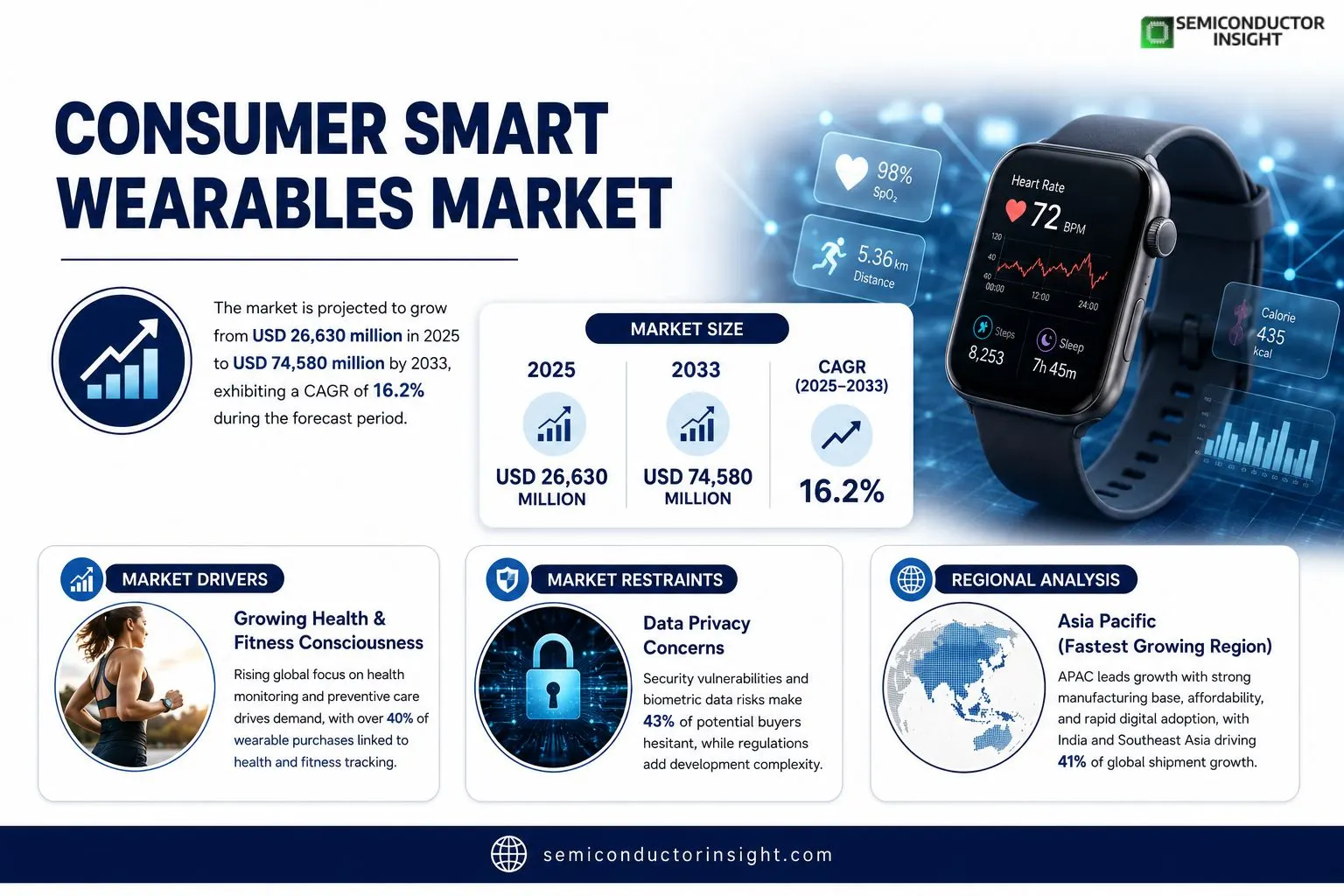
- Industry valuation amounted to USD 26,630 million in 2025
- Expected to climb to USD 28,950 million in 2026
- Forecast to touch USD 74,580 million by 2033
- Recording a CAGR of 16.2% over the assessment period
Semiconductors are the hidden engine of the wearables industry. They support processing, sensing, power management, wireless communication, and user interface functions, all inside products that often weigh just a few grams.
A smartwatch or fitness device may contain multiple chip layers working together for Bluetooth, Wi‑Fi, cellular functions, biometric sensing, and battery optimization. That design challenge is what makes wearables especially relevant for semiconductor suppliers focused on miniaturization, thermal control, and ultra-low-power performance.
Key Takeaways:
- Smart watches lead the market, driven by all-in-one utility, health tracking, and stronger smartphone integration across everyday use.
- Fitness and wellness stays the most active application, as users want simple daily tracking for steps, heart rate, sleep, and personal health goals.
- Bluetooth-enabled devices continue to dominate, mainly because they are easy to use, affordable, and battery-friendly for mass adoption.
- North America and Asia Pacific are the key regional growth engines, with North America supported by premium health-tech demand and Asia Pacific driven by scale, affordability, and rapid digital adoption.
MARKET DRIVERS
Growing Health & Fitness Consciousness
The rising global focus on health monitoring and preventive care has significantly boosted the Consumer Smart Wearables Market. Devices offering heart rate tracking, sleep analysis, and workout metrics now account for over 40% of wearable tech purchases as users prioritize data-driven wellness.
Integration with IoT Ecosystems
Seamless connectivity with smartphones and smart home systems enhances consumer smart wearables’ utility, with 68% of users preferring devices that sync across multiple platforms. This interoperability drives replacement cycles and premium purchases.Technological advancements in battery life and sensor accuracy continue to overcome early adoption barriers, with new models offering 7+ days of continuous use on a single charge.
MARKET CHALLENGES
Data Privacy Concerns
Security vulnerabilities in consumer smart wearables raise privacy issues, with 43% of potential buyers hesitant about biometric data collection. Regulatory compliance with GDPR and CCPA adds development complexity for manufacturers.
Other Challenges
High Product Competition
Market saturation from 300+ brands creates pricing pressures, with basic fitness trackers experiencing 22% YoY price declines due to commoditization.
Battery Technology Limitations
Despite improvements, 58% of users cite charging frequency as their primary complaint about smart wearables, constraining adoption for extended travel or outdoor use.
MARKET RESTRAINTS
High Price Sensitivity
Premium smartwatch adoption remains limited to high-income demographics, with 72% of consumers unwilling to spend over USD 300 on wearables. This price sensitivity slows market penetration in developing economies.
MARKET OPPORTUNITIES
Medical-Grade Wearable Adoption
FDA-cleared health monitoring features present a USD 12.8 billion revenue opportunity, with diabetic glucose monitoring wearables projected to grow at 34% CAGR through 2027 as healthcare converges with consumer tech.
Emerging Market Expansion
Asia-Pacific represents the fastest-growing region for consumer smart wearables, with India and Southeast Asia expected to contribute 41% of global shipment growth in the next 3 years as disposable incomes rise.
Consumer Smart Wearables Market Trends
Rapid Market Expansion with 16.2% CAGR Projection
Global Consumer Smart Wearables Market demonstrates strong growth potential, valued at USD 26,630 million in 2025 with projections reaching USD 74,580 million by 2033. This expansion is fueled by increasing consumer demand for health monitoring features and integration with mobile ecosystems. Key functionalities driving adoption include real-time fitness tracking, heart-rate monitoring, and sleep pattern analysis.
Other Trends
Dominance of Smart Watches Segment
Smart watches currently lead product categorization with over 40% market share. Their multifunctional capabilities combining health tracking with smartphone notifications and payment systems create versatile user appeal. The segment’s growth is further accelerated by continuous advancements in sensor accuracy and battery efficiency.
Regional Market Concentration in China
China dominates the Consumer Smart Wearables landscape with approximately 65% market share, benefiting from local manufacturing ecosystems and strong domestic brands like Xiaomi and Huawei. North America and Japan follow as secondary markets, each holding over 10% shares, driven by premium brand presence and health-conscious consumer bases. The infotainment application segment leads adoption, reflecting consumer preference for multifunctional devices beyond pure fitness tracking.
Consolidation Among Top Manufacturers
Five major players control more than 50% of the global Consumer Smart Wearables Market, with Fitbit, Apple, and Samsung leading innovation. This concentration is creating competitive pressure for smaller manufacturers to differentiate through specialized health features or price advantages. The market continues to evolve with new entrants focusing on niche segments like advanced biometric monitoring for medical applications.
Integration with Healthcare Systems
Trends indicate growing partnerships between wearables manufacturers and healthcare providers to utilize collected health data for preventive care. This development pathway presents both opportunities for market expansion and challenges regarding data privacy regulations. The industry is responding with improved encryption standards and user-controlled data sharing features to address these concerns while maintaining growth momentum.
COMPETITIVE LANDSCAPE
Key Industry Players
Global Smart Wearables Market Dominated by Tech Giants and Fitness Specialists
Global Consumer Smart Wearables Market is highly consolidated, with the top five manufacturers controlling over 50% market share. Apple leads with its Apple Watch series, benefiting from strong ecosystem integration and premium positioning. Fitbit (now owned by Google) remains the dominant fitness tracker brand, while Xiaomi captures value-conscious consumers through aggressive pricing. Samsung and Garmin maintain strong positions through continuous innovation in health monitoring features and rugged designs for sports enthusiasts.Several niche players are gaining traction in specialized segments. Huawei has grown rapidly in Asian markets with its health-focused wearables, while Polar and Misfit cater to professional athletes with advanced biometric tracking. Emerging brands like Razer target gaming communities with performance-oriented wearables, and BBK(XTC) dominates budget segments in developing markets through its Oppo and Vivo brands. Chinese manufacturers Lifesense and Jawbone continue to innovate in medical-grade wearables for chronic condition monitoring.
List of Key Consumer Smart Wearables Companies Profiled
Segment Analysis:
| Segment Category | Sub-Segments | Key Insights |
| By Type |
|
Smart Watches dominate the segment due to their multifunctionality and integration with smartphones.
|
| By Application |
|
Infotainment leads as the most adopted application for smart wearables.
|
| By End User |
|
Individual Consumers represent the largest user base for smart wearables.
|
| By Technology |
|
Bluetooth-enabled devices remain most popular for their balance of features and affordability.
|
| By Price Tier |
|
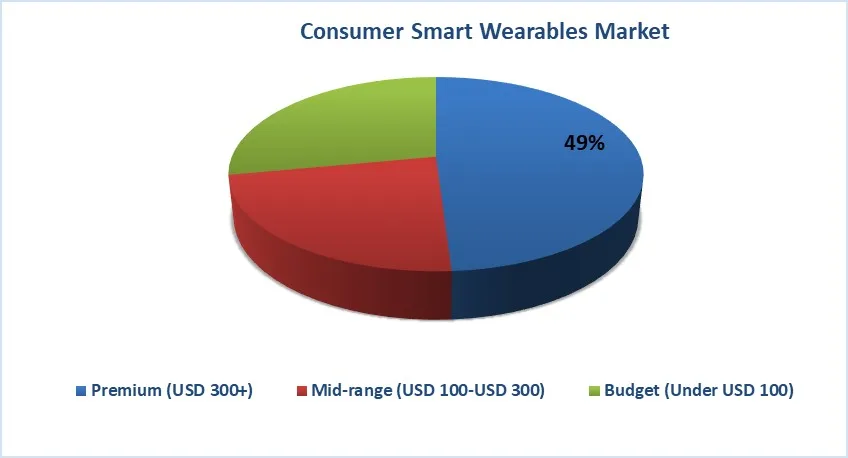
Mid-range devices achieve the best balance of adoption and profitability.
|
By Measurement Range:
Regional Analysis: Consumer Smart Wearables Market
North America
Silicon Valley’s concentration of tech giants fuels rapid innovation cycles in wearables, with companies prioritizing health-tech integrations and cross-platform compatibility to capture larger market shares in the consumer smart wearables segment.
Strong insurance incentives for preventive healthcare and corporate wellness programs drive enterprise demand for wearable health monitors, making North America the testing ground for advanced medical-grade wearables before global rollout.
Consumers show willingness to pay premium prices for advanced features, with smartwatch ASPs significantly higher than other regions. This enables manufacturers to reinvest in R&D for next-gen wearables with enhanced sensors and battery life.
Extensive carrier partnerships and Apple Store exclusives create optimized sales channels, while big box retailers drive volume through holiday promotions and family wearable bundles tailored to North American shopping behaviors.
Europe
Europe represents the second-largest market for Consumer Smart Wearables, with Germany, UK, and Nordic countries leading adoption. Strict data privacy regulations (GDPR) shape product development, emphasizing on-device processing. The market shows strong preference for hybrid smartwatches blending traditional aesthetics with smart features. Government-sponsored digital health initiatives and growing senior population create demand for elderly care wearables. Regional brands like Withings leverage European design sensibilities while global players adapt products to meet EU health device certification requirements.
Asia-Pacific
APAC is the fastest-growing region in the Consumer Smart Wearables Market, driven by China’s massive production ecosystem and India’s youthful demographic. Chinese brands like Huawei and Xiaomi dominate budget segments with feature-packed devices, while Japan leads in niche innovations like stress-monitoring wearables. Rapid urbanization and increasing health awareness boost adoption, though price sensitivity remains higher than Western markets. Smart ring adoption shows particular growth potential across APAC markets as a discreet alternative to watches.
South America
Brazil and Mexico show accelerating smart wearable adoption, though market penetration remains lower than developed regions. Local manufacturers focus on affordable fitness trackers with basic health monitoring, while imported premium smartwatches appeal to affluent urban consumers. Economic fluctuations impact discretionary spending, but growing middle-class interest in wellness creates stable demand for entry-level wearables tailored to Latin American preferences for colorful designs and soccer/fitness tracking features.
Middle East & Africa
The MEA region demonstrates divergent trends – Gulf countries show rapid adoption of luxury smartwatches as status symbols, while African markets focus on pragmatic health monitoring solutions. Smart hijabs with embedded wearables see niche popularity, and region-specific prayer tracking features demonstrate localization strategies. Limited healthcare infrastructure makes preventive health wearables particularly valuable, though distribution challenges persist outside major cities.
Report Scope
This market research report provides a comprehensive analysis of the Consumer Smart Wearables Market , covering the forecast period 2025–2033. It offers detailed insights into market dynamics, technological advancements, competitive landscape, and key trends shaping the industry.
Key focus areas of the report include:
- Market Overview: The report begins with an overview outlining its current market scenario, key growth indicators, and industry transformation drivers. It discusses macroeconomic factors, demand–supply balance, regulatory landscape, and the strategic role of smart wearables in health monitoring and sports applications.
- Market Size & Forecast: Historical data and future projections for revenue, unit shipments, and market value across major regions and segments.
- Segmentation Analysis: Detailed breakdown by product type, technology, application, and end-user industry to identify high-growth segments and investment opportunities.
- Regional Insights: Insights into market performance across North America, Europe, Asia, Latin America, and the Middle East & Africa, including country-level analysis where relevant.
- Competitive Landscape: Profiles of leading market participants, including their product offerings, R&D focus, manufacturing capacity, pricing strategies, and recent developments such as mergers, acquisitions, and partnerships.
- Technology Trends & Innovation: Assessment of emerging technologies, integration of AI/IoT, design trends, and evolving industry standards.
- Market Drivers & Restraints: Evaluation of factors driving market growth along with challenges, supply chain constraints, regulatory issues, and market-entry barriers.
- Stakeholder Insights: Insights for component suppliers, OEMs, system integrators, investors, and policymakers regarding the evolving ecosystem and strategic opportunities.
Primary and secondary research methods are employed, including interviews with industry experts, data from verified sources, and real-time market intelligence to ensure the accuracy and reliability of the insights presented.
FREQUENTLY ASKED QUESTIONS:
What is the current market size of Consumer Smart Wearables Market?
-> Consumer Smart Wearables Market size was valued at USD 26,630 million in 2025 and is projected to grow from USD 28,950 million in 2026 to USD 74,580 million by 2033, exhibiting a CAGR of 16.2% during the forecast period.
What is the growth rate (CAGR) of the Consumer Smart Wearables Market?
-> The market is projected to grow at a CAGR of 16.2% during the forecast period (2025-2033).
Which key companies operate in Consumer Smart Wearables Market?
-> Key players include Fitbit, Xiaomi, Apple, Garmin, Samsung, Jawbone, Misfit, Polar, Moto, Huawei, BBK(XTC), Lifesense, and Razer, among others.
What are the key growth drivers?
-> Key growth drivers include increasing health awareness, demand for real-time fitness monitoring, advancements in wearable technology, and rising adoption in sports applications.
Which region dominates the market?
-> China is the largest market with 65% share, followed by Japan and North America with over 10% each.
What are the major product segments?
-> Major segments include Smart Watches (40%+ share), Fitness Bands, Smart Glasses, and Others.
Get Sample Report PDF for Exclusive Insights
Report Sample Includes
- Table of Contents
- List of Tables & Figures
- Charts, Research Methodology, and more...
 Download Sample Report PDF