
Cold Chain Monitoring IC Market Insights
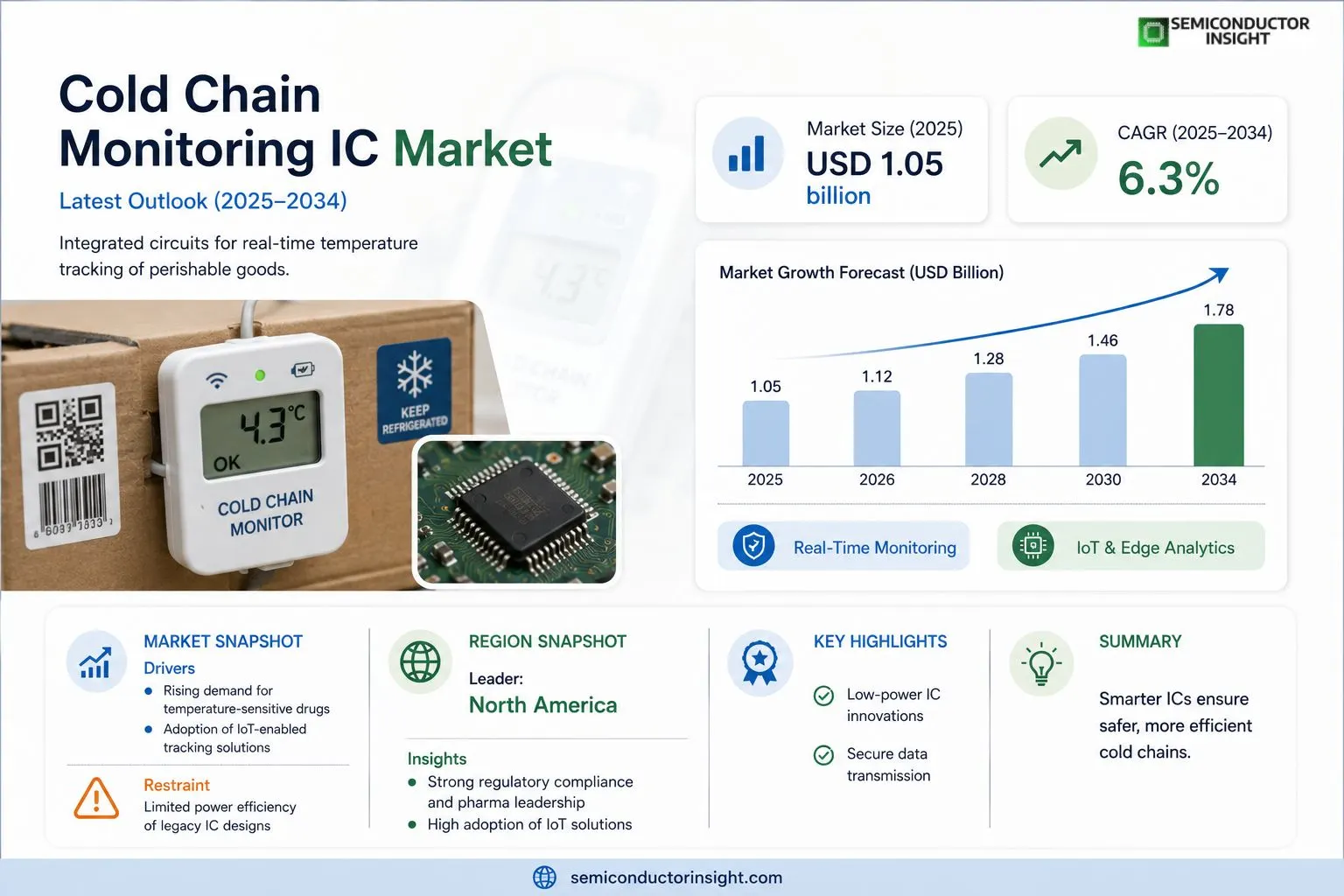
Global Cold Chain Monitoring IC Market size was valued at USD 1.05 billion in 2025. The market is projected to grow from USD 1.12 billion in 2025 to USD 1.78 billion by 2034, exhibiting a CAGR of 6.3% during the forecast period.
Cold chain monitoring integrated circuits (ICs) are specialized semiconductor devices that combine temperature sensors, data loggers, wireless transceivers and power‑management modules into a single chip package designed for real‑time tracking of perishable goods throughout the supply chain. These ICs enable precise temperature measurement (typically –40 °C to +85 °C), alarm generation and secure data transmission over cellular or LPWAN networks, ensuring compliance with stringent regulatory standards for pharmaceuticals, food and biotech products.The market is accelerating because expanding vaccine distribution networks and rising consumer demand for fresh foods are driving investment in reliable cold‑chain solutions; however, challenges such as battery life constraints persist. Furthermore, advances in IoT connectivity and edge analytics are enhancing the value proposition of monitoring ICs. Leading manufacturersincluding Texas Instruments, NXP Semiconductors, STMicroelectronics, Analog Devices and Sensirionare expanding their portfolios through strategic partnerships and firmware upgrades that improve accuracy and reduce power consumption.
MARKET DRIVERS
Rising Demand for Temperature‑Sensitive Pharmaceuticals
Cold Chain Monitoring IC Market is propelled by a sustained increase in biologics and vaccine shipments, which require precise temperature control. Industry reports indicate an average annual growth rate of around 15 % for cold‑chain logistics services, reflecting heightened regulatory scrutiny and patient safety concerns.
Adoption of IoT‑Enabled Tracking Solutions
Manufacturers are integrating IoT‑capable integrated circuits that provide real‑time alerts and cloud‑based analytics. This shift improves traceability and reduces spoilage, with early adopters reporting up to a 30 % reduction in product loss during transit.
➤ Integrated circuits with real‑time data logging are reshaping cold‑chain compliance, enabling proactive interventions before temperature excursions occur.
Overall, the convergence of stricter regulatory frameworks and advancing sensor technology creates a robust foundation for Cold Chain Monitoring IC Market to expand into new verticals such as organ transport and high‑value food products.
MARKET CHALLENGES
Regulatory Complexity Across Regions
Varying temperature‑control standards between North America, Europe, and Asia‑Pacific increase certification costs for IC manufacturers. Companies must navigate multiple approval processes, which can extend time‑to‑market and raise compliance expenditures.
Other Challenges
Cost Barriers
Advanced low‑power IC designs and secure data transmission modules carry higher upfront prices. Small‑scale shippers often lack the capital to invest in these solutions, limiting market penetration among niche operators.
MARKET RESTRAINTS
Limited Power‑Efficiency of Legacy IC Designs
Older integrated circuits consume more energy, shortening battery life for long‑haul shipments. This inefficiency discourages adoption in scenarios where frequent battery replacement is impractical, such as maritime transport.In addition, the lack of standardized low‑power protocols hampers interoperability between devices from different vendors, creating integration challenges for end‑users.
MARKET OPPORTUNITIES
Emerging Markets for Perishable Food Logistics
Rapid urbanization and rising consumer demand for fresh produce in emerging economies are driving investment in temperature‑controlled supply chains. Cold Chain Monitoring IC Market stands to capture this growth by offering affordable, high‑accuracy sensors tailored to the food sector.Furthermore, the integration of AI‑driven predictive analytics with monitoring ICs enables operators to anticipate temperature deviations and optimize routing, opening new revenue models based on data services.
Cold Chain Monitoring IC Market Trends
Integration of Sensors and Connectivity
Cold Chain Monitoring IC Market is being reshaped by the convergence of high‑precision temperature sensors and robust wireless modules within a single chip. This integration enables real‑time tracking of perishable goods across global supply chains, supporting vaccine roll‑outs and fresh‑food logistics alike. Manufacturers are embedding LPWAN and cellular transceivers that transmit secure data to cloud platforms, allowing stakeholders to trigger alarms instantly when temperature excursions occur. While accuracy and latency have improved markedly, battery endurance remains a technical constraint, prompting ongoing research into ultra‑low‑power designs and energy‑harvesting techniques.
Other Trends
Power Management Improvements
Advances in power‑management architectures are a defining characteristic of Cold Chain Monitoring IC Market today. New generation ICs leverage dynamic voltage scaling and adaptive sleep cycles to extend operational life by up to 40 % compared with legacy parts. Firmware updates focused on edge analytics further reduce the need for frequent data transmissions, conserving energy without sacrificing compliance reporting. These efficiency gains are critical for remote temperature‑sensitive assets where frequent battery replacement is impractical.
Regulatory Compliance and Data Security
Regulatory pressure continues to elevate the importance of secure data handling within Cold Chain Monitoring IC Market. Standards such as EU GDP and FDA 21 CFR Part 11 demand immutable audit trails and encrypted communication channels. Leading semiconductor firms are integrating hardware‑based cryptographic modules and tamper‑detect features to meet these requirements. Partnerships with cloud service providers are also emerging, offering end‑to‑end compliance solutions that simplify certification for end users while preserving data integrity throughout the cold‑chain network.
COMPETITIVE LANDSCAPEKey Industry Players
Cold Chain Monitoring IC Market Competitive Overview
Cold Chain Monitoring IC Market is currently led by a handful of semiconductor powerhouses that command the bulk of revenue through comprehensive product portfolios and deep integration capabilities. Texas Instruments, NXP Semiconductors, STMicroelectronics, Analog Devices, and Sensirion dominate due to their extensive R&D investments, broad temperature‑range sensor accuracy, and strategic partnerships with logistics providers. These leaders leverage scale to offer low‑power designs, OTA firmware updates, and multi‑network connectivity that meet stringent pharmaceutical and food‑safety regulations. Their market structure is characterized by a tiered approach: flagship IC families target high‑volume OEMs, while specialized variants address niche applications such as vaccine transport and biotech reagents, reinforcing a consolidated yet innovation‑driven landscape.Beyond the dominant tier, a diverse set of niche players enriches the ecosystem with differentiated technologies and regional strengths. Companies such as Maxim Integrated (now part of Analog Devices), AMS AG, Melexis, ROHM Semiconductor, Infineon Technologies, Microchip Technology, Qorvo, Skyworks Solutions, Silicon Labs, and Murata Manufacturing focus on ultra‑low‑power consumption, advanced MEMS sensing, or bespoke wireless protocols for emerging LPWAN networks. Their competitive edge lies in agile product cycles, targeted collaborations with cold‑chain equipment manufacturers, and the ability to quickly incorporate edge‑analytics firmware, thereby expanding market choice and driving incremental performance gains across the value chain.
List of Key Cold Chain Monitoring IC Companies Profiled
- Texas Instruments
- NXP Semiconductors
- STMicroelectronics
- Analog Devices
- Sensirion
- Maxim Integrated (Analog Devices)
- AMS AG
- Melexis
- ROHM Semiconductor
- Infineon Technologies
- Microchip Technology
- Qorvo
- Skyworks Solutions
- Silicon Labs
- Murata Manufacturing
Segment Analysis:
| Segment Category | Sub-Segments | Key Insights |
| By Type |
|
Integrated Sensor‑Transceiver ICs
|
| By Application |
|
Pharmaceutical Cold‑Chain Monitoring
|
| By End User |
|
Vaccine Manufacturers
|
| By Connectivity |
|
Cellular Connectivity Solutions
|
| By Power Management |
|
Battery‑Optimized Designs
|
Regional Analysis: North America
United States
Cold Chain Monitoring IC Market in the United States is further fueled by a growing emphasis on sustainability and reducing food waste. This trend is prompting investments in technologies that can optimize temperature control throughout the supply chain, minimizing spoilage and extending product shelf life. Furthermore, the increasing complexity of global supply chains necessitates sophisticated monitoring solutions that can track goods across multiple transportation modes and geographical locations. This creates opportunities for IC vendors to develop comprehensive, scalable, and interoperable platforms. The focus on data analytics and machine learning is also gaining traction, enabling businesses to proactively identify potential temperature excursions and take corrective actions.
The food and beverage sector in the US is a major consumer of Cold Chain Monitoring ICs. Strict regulations and consumer expectations regarding food safety necessitate robust temperature monitoring throughout the supply chain, from farm to table.
Focus on preventing spoilage and ensuring product quality drives demand for reliable IC solutions.
The pharmaceutical and biopharmaceutical industries in the US have particularly stringent requirements for temperature control due to the sensitive nature of their products. Cold Chain Monitoring ICs play a critical role in maintaining drug efficacy and safety during storage and transportation.
Compliance with regulatory guidelines and the need for real-time monitoring are key drivers in this sector.
Efficient cold chain logistics are essential for businesses involved in the transportation and storage of temperature-sensitive goods. Cold Chain Monitoring ICs enable real-time tracking and monitoring, optimizing logistics operations and reducing risks.
Integration with existing logistics platforms is a key consideration for businesses.
The healthcare sector utilizes Cold Chain Monitoring ICs for the storage and transportation of vaccines, blood products, and other temperature-sensitive medical supplies. Maintaining product integrity is paramount in this highly regulated environment.
Reliable monitoring solutions are crucial for ensuring patient safety.
Europe
European market for Cold Chain Monitoring ICs is experiencing steady growth, driven by escalating regulatory standards and a heightened emphasis on sustainable supply chains. The region’s diverse economies and varying levels of technological adoption present both opportunities and challenges for market players. Key trends include the increasing integration of IoT devices and cloud-based platforms for real-time monitoring, a growing demand for interoperable solutions, and a rise in predictive analytics to mitigate potential temperature deviations. The pharmaceutical and food & beverage industries are the primary drivers of demand, with a strong focus on compliance with EU regulations regarding product traceability and integrity. Businesses are increasingly investing in smart packaging and advanced monitoring systems to ensure the quality and safety of temperature-sensitive goods throughout the supply chain. This is particularly evident in the logistics sector, where companies are seeking data-driven insights to optimize transportation routes and reduce cold chain failures.
Asia-Pacific
The Asia-Pacific region is poised to become the fastest-growing market for Cold Chain Monitoring ICs, underpinned by rapid economic expansion, increasing urbanization, and the growth of the pharmaceutical and e-commerce sectors. China, India, and Southeast Asian countries are witnessing significant investments in cold chain infrastructure to support their burgeoning economies. The demand for temperature-controlled logistics solutions is particularly strong in the pharmaceutical sector, driven by the need to ensure the efficacy and safety of vaccines and biopharmaceuticals. Rising concerns about food safety and quality are also fueling demand in the food and beverage industry. Businesses are increasingly adopting IoT-enabled monitoring systems to enhance supply chain visibility and efficiency. However, challenges remain in terms of infrastructure development, regulatory harmonization, and the need for skilled workforce to manage and maintain complex monitoring systems. The increasing adoption of mobile technologies and cloud computing is expected to further accelerate market growth.
South America
The South American market for Cold Chain Monitoring ICs is characterized by a growing need to improve the efficiency and reliability of temperature-controlled supply chains, particularly in the agricultural and pharmaceutical sectors. The region’s significant agricultural output, including fruits, vegetables, and meat, requires robust cold chain solutions to minimize post-harvest losses and ensure product quality. The pharmaceutical industry is also experiencing increasing demand for temperature monitoring equipment to comply with regulatory requirements and maintain the integrity of drug products. Challenges include limited infrastructure in some areas, regulatory complexities, and the need for greater investment in cold chain technology. However, the growing adoption of e-commerce and the expansion of logistics networks are expected to drive market growth.
Middle East & Africa
The Middle East and Africa represent emerging markets for Cold Chain Monitoring ICs, with significant potential for growth driven by increasing investments in healthcare, food processing, and logistics infrastructure. The pharmaceutical sector is a key driver of demand, with increasing needs for temperature monitoring of vaccines and other temperature-sensitive medications. The food and beverage industry is also experiencing growing demand for cold chain solutions to address concerns about food safety and quality in the wake of changing consumer preferences. The region faces challenges including limited infrastructure, regulatory gaps, and the need for specialized expertise in cold chain management. However, government initiatives to modernize logistics networks and promote economic diversification are expected to create opportunities for market growth.
Report Scope
This market research report provides a comprehensive analysis of the Cold Chain Monitoring IC Market , covering the forecast period 2026–2034. It offers detailed insights into market dynamics, technological advancements, competitive landscape, and key trends shaping the industry.
Key focus areas of the report include:
- Market Overview: The report begins with an overview outlining its current market scenario, key growth indicators, and industry transformation drivers. It discusses macroeconomic factors, demand–supply balance, regulatory landscape, and the strategic role of semiconductors in powering advancements across industries such as automotive, telecommunications, consumer electronics, and industrial automation.
- Market Size & Forecast: Historical data and future projections for revenue, unit shipments, and market value across major regions and segments.
- Segmentation Analysis: Detailed breakdown by product type, technology, application, and end-user industry to identify high-growth segments and investment opportunities.
- Regional Insights: Insights into market performance across North America, Europe, Asia-Pacific, Latin America, and the Middle East & Africa, including country-level analysis where relevant.
- Competitive Landscape: Profiles of leading market participants, including their product offerings, R&D focus, manufacturing capacity, pricing strategies, and recent developments such as mergers, acquisitions, and partnerships.
- Technology Trends & Innovation: Assessment of emerging technologies, integration of AI/IoT, semiconductor design trends, fabrication techniques, and evolving industry standards.
- Market Drivers & Restraints: Evaluation of factors driving market growth along with challenges, supply chain constraints, regulatory issues, and market-entry barriers.
- Stakeholder Insights: Insights for component suppliers, OEMs, system integrators, investors, and policymakers regarding the evolving ecosystem and strategic opportunities.
Primary and secondary research methods are employed, including interviews with industry experts, data from verified sources, and real-time market intelligence to ensure the accuracy and reliability of the insights presented.
FREQUENTLY ASKED QUESTIONS:
What is the current market size of Cold Chain Monitoring IC Market?
-> Cold Chain Monitoring IC Market was valued at USD 1.05 billion in 2025 and is expected to reach USD 1.78 billion by 2034, reflecting a CAGR of 6.3% over the forecast period.
Which key companies operate in Cold Chain Monitoring IC Market?
-> Key players include Texas Instruments, NXP Semiconductors, STMicroelectronics, Analog Devices, and Sensirion, among others.
What are the key growth drivers?
-> Key growth drivers include expanding vaccine distribution networks and rising consumer demand for fresh foods, which are accelerating investment in reliable cold‑chain solutions.
Which region dominates the market?
-> The market shows strong adoption worldwide, with no single region overwhelmingly dominating; growth is observed across North America, Europe, and Asia‑Pacific.
What are the emerging trends?
-> Emerging trends include enhanced IoT connectivity, edge analytics, and firmware upgrades that improve accuracy while reducing power consumption in cold‑chain monitoring ICs.

Get Sample Report PDF for Exclusive Insights
Report Sample Includes
- Table of Contents
- List of Tables & Figures
- Charts, Research Methodology, and more...
 Download Sample Report PDF


