CMOS High-speed Cameras Market Analysis:
The global CMOS High-speed Cameras market was valued at 139 million in 2023 and is projected to reach US$ 246 million by 2030, at a CAGR of 8.1% during the forecast period.
CMOS High-speed Cameras Market Overview
CMOS high-speed cameras are specialized imaging devices that use CMOS (Complementary Metal Oxide Semiconductor) image sensors. These cameras are designed to capture high-speed events with high resolution, high sensitivity, and ultra-high frame rates.
Key features of CMOS high-speed cameras include:
-
High-speed imaging capabilities facilitated by advanced CMOS image sensors.
-
Ultra-fast electronics and memory for quick data capture.
-
Compact image processing electronics for real-time analysis.
-
The ability to control the camera via a user interface (UI) on a web browser, allowing users to adjust settings such as exposure, frame rate, and focus.
Due to the high data volume involved, most cameras store recorded data locally and later transfer it for slower, offline analysis. High-power lighting is often required for adequate illumination, as the sensors have short light collection times.
Market Drivers for CMOS High-Speed Cameras
The growth of the CMOS high-speed camera market is driven by several factors:
1. Demand for Automation and Intelligent Manufacturing
-
With the rise of industrial automation and intelligent manufacturing, there is an increasing need for high-speed and high-precision imaging equipment.
-
CMOS high-speed cameras have become essential in automated production lines and intelligent manufacturing systems, offering high-speed imaging capabilities and high resolution.
2. Widespread Application of Machine Vision
-
Machine vision is widely used for quality assurance, process control, and automated inspection.
-
CMOS high-speed cameras are a crucial component of machine vision systems, providing high-speed image acquisition and accurate data processing.
3. Expanding Applications in Emerging Fields
-
Beyond traditional industries like automobiles, electronics, and food and beverages, CMOS high-speed cameras are finding increasing applications in emerging fields, such as:
-
Medical diagnostics
-
Scientific research
-
Traffic management
-
-
These new applications have opened up fresh growth opportunities for the CMOS high-speed camera market.
4. Technological Innovation and R&D
-
Ongoing technological advancements continue to improve the performance of CMOS high-speed cameras. Innovations in sensor technology, image processing algorithms, and data processing have led to significant enhancements in:
-
Imaging speed
-
Resolution
-
Sensitivity
-
-
These advancements are further propelling the market’s growth.
5. Policy Support and Industry Standards
-
Government policies supporting intelligent manufacturing and technological innovation, alongside the establishment of industry standards, provide a favorable market environment for the growth of CMOS high-speed cameras.
-
These policies encourage technological innovation and the widespread adoption of high-speed imaging solutions.
Market Summary
The CMOS high-speed camera market is experiencing rapid growth, driven by a combination of automation trends, machine vision integration, expansion into emerging fields, and technological advancements. Additionally, government support and the development of industry standards are contributing to the market’s expansion. These factors collectively foster an environment ripe for continued progress and adoption of CMOS high-speed cameras across various sectors.
We have surveyed the CMOS High-speed Cameras manufacturers, suppliers, distributors, and industry experts on this industry, involving the sales, revenue, demand, price change, product type, recent development and plan, industry trends, drivers, challenges, obstacles, and potential risks
This report aims to provide a comprehensive presentation of the global market for CMOS High-speed Cameras, with both quantitative and qualitative analysis, to help readers develop business/growth strategies, assess the market competitive situation, analyze their position in the current marketplace, and make informed business decisions regarding CMOS High-speed Cameras. This report contains market size and forecasts of CMOS High-speed Cameras in global, including the following market information:
- Global CMOS High-speed Cameras market revenue, 2019-2024, 2025-2030, ($ millions)
- Global CMOS High-speed Cameras market sales, 2019-2024, 2025-2030, (Units)
- Global top five CMOS High-speed Cameras companies in 2023 (%)
CMOS High-speed Cameras Key Market Trends :
-
Surge in Industrial Automation
The adoption of industrial automation systems is driving the need for high-speed imaging, boosting demand for CMOS high-speed cameras. -
Integration with Machine Vision
CMOS high-speed cameras are being widely integrated into machine vision systems for real-time quality checks and process monitoring. -
Rising Adoption in Emerging Fields
From traffic monitoring to medical diagnostics, newer industries are adopting these cameras to capture fast-moving processes with precision. -
Advancements in Sensor Technology
Innovations in CMOS sensors and image processing algorithms are enhancing performance, resolution, and sensitivity. -
Supportive Government Policies
Governments worldwide are promoting intelligent manufacturing through policies and standards, encouraging CMOS camera market growth.
CMOS High-speed Cameras Market Regional Analysis :
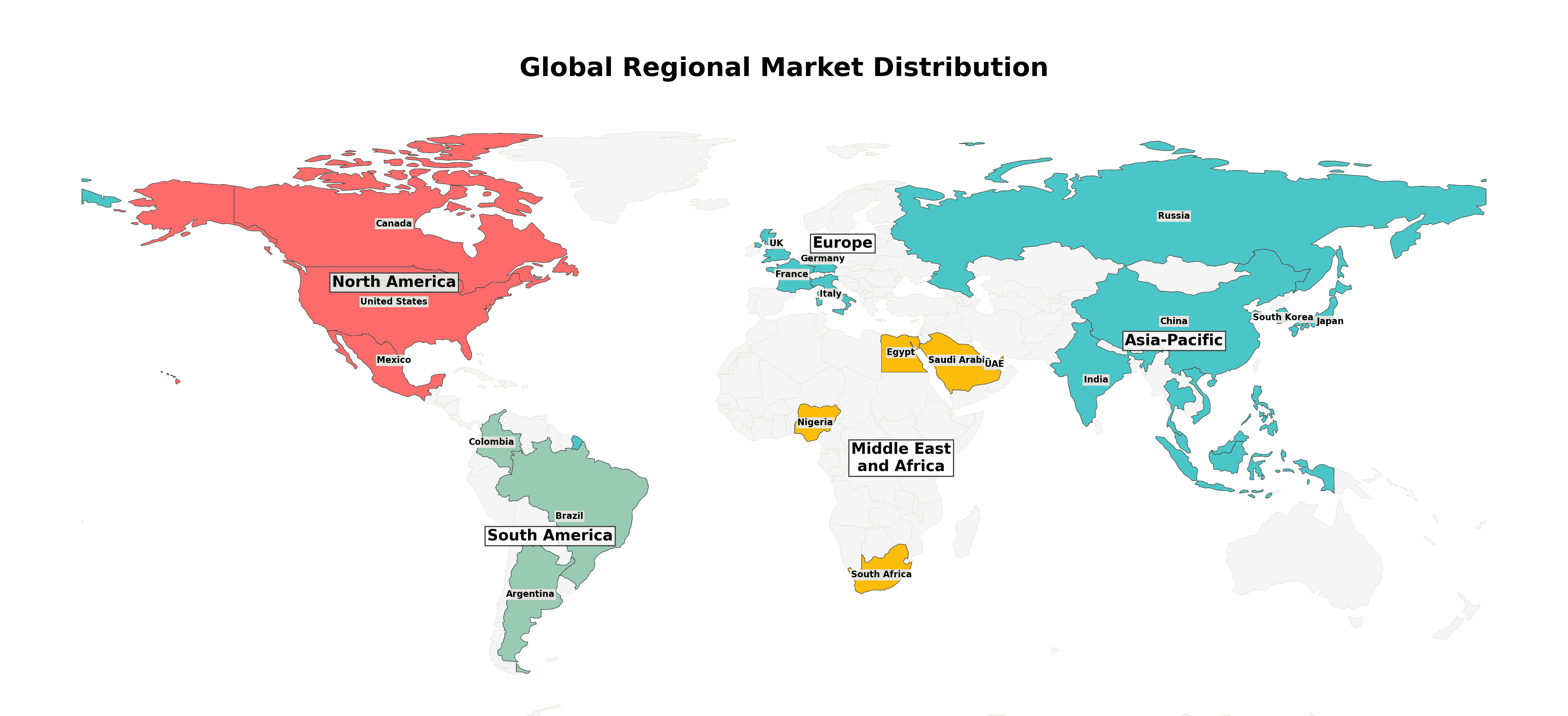
-
North America:
Strong demand driven by EVs, 5G infrastructure, and renewable energy, with the U.S. leading the market.
-
Europe:
Growth fueled by automotive electrification, renewable energy, and strong regulatory support, with Germany as a key player.
-
Asia-Pacific:
Dominates the market due to large-scale manufacturing in China and Japan, with growing demand from EVs, 5G, and semiconductors.
-
South America:
Emerging market, driven by renewable energy and EV adoption, with Brazil leading growth.
-
Middle East & Africa:
Gradual growth, mainly due to investments in renewable energy and EV infrastructure, with Saudi Arabia and UAE as key contributors.
Total Market by Segment:
Global CMOS High-speed Cameras market, by Type, 2019-2024, 2025-2030 ($ millions) & (Units)
Global CMOS High-speed Cameras market segment percentages, by Type, 2023 (%)
- 1,000 5,000 FPS
- 5,000 20,000 FPS
- 20,000 100,000 FPS
- Above 100,000 FPS
Global CMOS High-speed Cameras market, by Application, 2019-2024, 2025-2030 ($ Millions) & (Units)
Global CMOS High-speed Cameras market segment percentages, by Application, 2023 (%)
- Industrial
- Media & Entertainment
- Sports
- Others
Competitor Analysis
The report also provides analysis of leading market participants including:
- Key companies CMOS High-speed Cameras revenues in global market, 2019-2024 (estimated), ($ millions)
- Key companies CMOS High-speed Cameras revenues share in global market, 2023 (%)
- Key companies CMOS High-speed Cameras sales in global market, 2019-2024 (estimated), (Units)
- Key companies CMOS High-speed Cameras sales share in global market, 2023 (%)
Further, the report presents profiles of competitors in the market, key players include:
- Phantom (Vision Research)
- IX Camera
- Mikrotron
- Photron
- Weisscam
- Nac Image Technology
- AOS Technologies
- Fastec Imaging
- Optronis
- Del Imaging Systems
Market Drivers
-
Growing Demand for Smart Manufacturing
Industries are embracing intelligent and automated production systems, where CMOS high-speed cameras play a vital role in capturing high-speed processes for analysis and quality control. -
Expansion of Machine Vision Applications
Machine vision is being increasingly used in sectors like automotive, electronics, and food & beverage. CMOS cameras are essential components that provide accurate, high-speed imaging. -
R&D and Technological Advancements
Ongoing innovations in imaging sensors, frame rates, and data processing capabilities are boosting camera performance, making them more appealing across various sectors.
Market Restraints
-
High Cost of Equipment
The initial cost of CMOS high-speed cameras and related systems can be a barrier for small and medium enterprises, affecting widespread adoption. -
Storage and Data Management Challenges
These cameras generate large volumes of data at high speeds, requiring advanced storage and data handling solutions, which adds to infrastructure costs. -
Lighting Requirements
Due to extremely short exposure times, high-intensity lighting is essential for capturing clear images, making the setup complex and costly.
Market Opportunities
-
Emerging Use in Healthcare and Research
The growing use of high-speed imaging in scientific research and medical diagnostics presents new growth opportunities for CMOS camera manufacturers. -
Growth in Sports and Entertainment
The increasing demand for high-speed replay and motion capture in sports and media production is fueling market expansion. -
Integration with AI and IoT
Combining CMOS high-speed cameras with AI and IoT systems offers potential for smarter, real-time analysis in industrial and surveillance applications.
Market Challenges
-
Data Bandwidth Limitations
Transferring large amounts of high-speed video data is constrained by existing digital interface bandwidths, requiring offline processing. -
Heat Generation at High Speeds
Operating at extremely high frame rates generates substantial heat, requiring robust thermal management solutions to maintain performance. -
Customization Requirements
Different applications require varying frame rates, resolutions, and setups, increasing the complexity and customization needs in product design.
FAQs
Q: What are the key driving factors and opportunities in the CMOS High-speed Cameras market?
A:The main drivers include the rise in smart manufacturing and machine vision applications. Key opportunities lie in emerging fields like healthcare, scientific research, and AI-based imaging systems.
Q: Which region is projected to have the largest market share?
A:Asia-Pacific is expected to lead the market due to rapid industrialization, growing automation, and strong manufacturing infrastructure.
Q: Who are the top players in the global CMOS High-speed Cameras market?
A:Leading companies include Vision Research, Photron, NAC Image Technology, Mikrotron, and DEL Imaging Systems.
Q: What are the latest technological advancements in the industry?
A:Recent advancements include improved CMOS sensor designs, faster image processing algorithms, and enhanced resolution and sensitivity.
Q: What is the current size of the global CMOS High-speed Cameras market?
A:The market was valued at USD 139 million in 2023 and is projected to reach USD 246 million by 2030, growing at a CAGR of 8.1%.

Get Sample Report PDF for Exclusive Insights
Report Sample Includes
- Table of Contents
- List of Tables & Figures
- Charts, Research Methodology, and more...
 Download Sample Report PDF