MARKET INSIGHTS
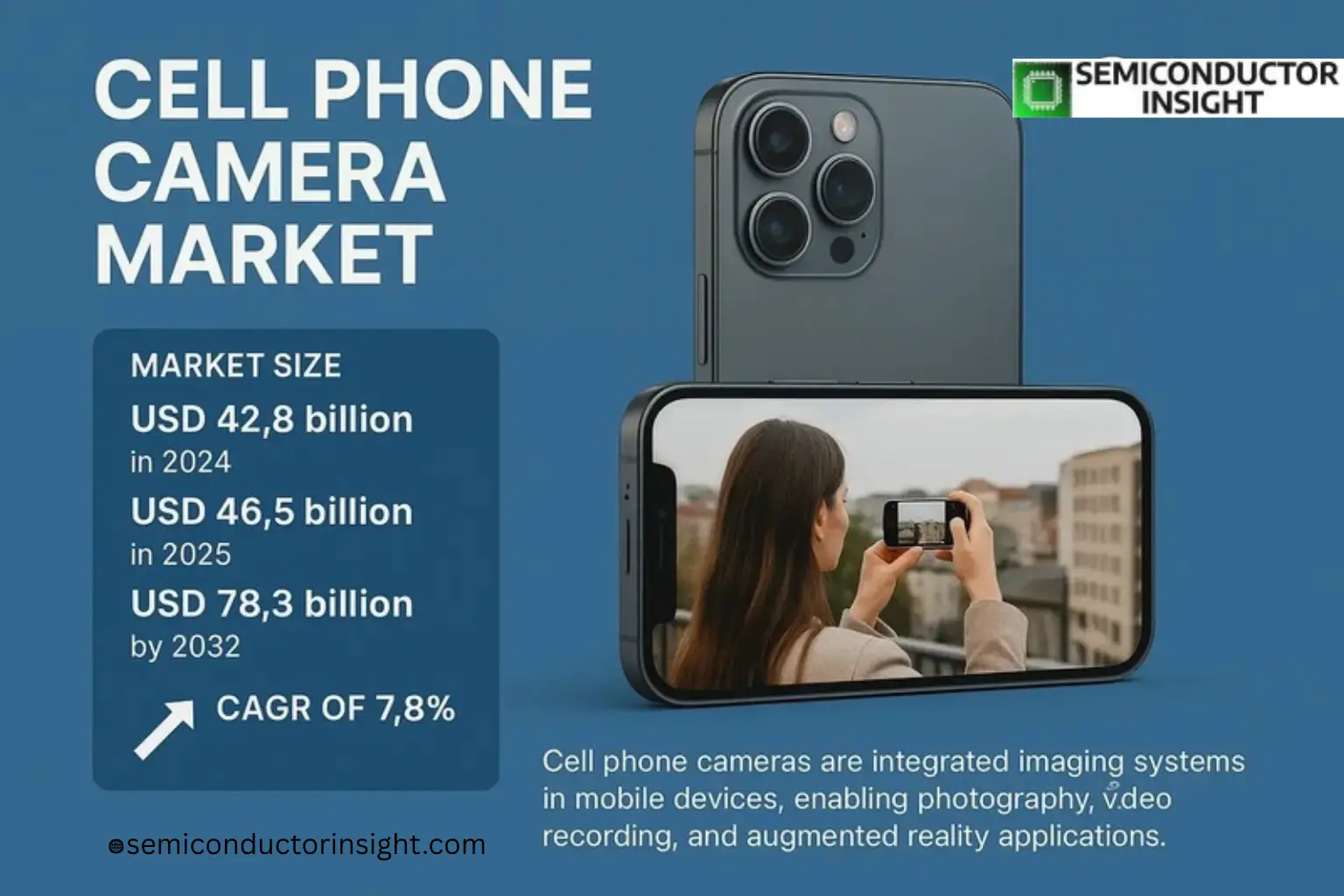
Global Cell Phone Camera Market size was valued at USD 42.8 billion in 2024. The market is projected to grow from USD 46.5 billion in 2025 to USD 78.3 billion by 2032, exhibiting a CAGR of 7.8% during the forecast period.
Cell phone cameras are integrated imaging systems in mobile devices, enabling photography, video recording, and augmented reality applications. These systems consist of key components such as CMOS image sensors, lenses, image signal processors (ISPs), and stabilization mechanisms. Advancements in multi-camera setups including ultra-wide, telephoto, and macro lenses have transformed smartphones into versatile imaging tools, surpassing traditional digital cameras in consumer adoption.
The market growth is driven by rising demand for high-resolution mobile photography, fueled by social media platforms and content creation trends. However, supply chain dependencies on specialized components like high-end sensors present challenges for manufacturers. Leading players such as Sony (dominant in sensor supply), Samsung Electronics, and Largan Precision (lens manufacturing) continue to innovate with periscope zoom and computational photography technologies to maintain competitive edges.
MARKET DRIVERS
Growing Demand for High-Quality Mobile Photography
The rapid adoption of social media platforms and content-sharing apps has significantly increased demand for advanced cell phone cameras. Consumers now prioritize smartphones with multi-lens setups, high megapixel counts, and AI-enhanced image processing capabilities. Over 65% of smartphone buyers consider camera quality a primary purchase factor.
Technological Advancements in Sensor Technology
Manufacturers are investing heavily in R&D to develop larger sensors, periscope zoom lenses, and computational photography features. Innovations like night mode and 8K video recording are becoming standard across premium cell phone camera segments. The market has seen a 40% increase in sensor shipments for smartphones year-over-year.
5G network expansion is further driving demand for high-resolution content creation, pushing manufacturers to develop more sophisticated cell phone camera systems.
MARKET CHALLENGES
Supply Chain Disruptions Affecting Component Availability
The Cell Phone Camera Market faces persistent challenges from semiconductor shortages and logistics bottlenecks. Camera module manufacturers report average lead times extending to 20+ weeks for specialized components like ultra-wide lenses and optical image stabilization mechanisms.
Other Challenges
Increasing Production Costs
The complexity of multi-camera arrays and advanced features has increased manufacturing costs by approximately 35% over the past two years, putting pressure on smartphone profit margins.
MARKET RESTRAINTS
Market Saturation in Premium Segments
The high-end Cell Phone Camera Market shows signs of saturation, with year-over-year growth slowing to single digits. Consumers are holding onto devices longer as incremental improvements fail to justify frequent upgrades, particularly in mature markets.
MARKET OPPORTUNITIES
Emerging Markets Driving Volume Growth
Developing regions present significant opportunities, with the Cell Phone Camera Market projected to grow at 18% CAGR in these areas. Manufacturers are introducing cost-optimized multi-camera solutions tailored to price-sensitive consumers, expanding the addressable market.
Cell Phone Camera Market () Trends
Rising Demand for Multi-Camera Systems in Smartphones
Global Cell Phone Camera Market is experiencing significant growth driven by the increasing adoption of multi-camera configurations in smartphones. Manufacturers are integrating multiple lenses – including main, ultra-wide, telephoto, and macro cameras – to enhance photographic capabilities. This trend is particularly prominent in high-end smartphones, where camera performance has become a primary differentiator.
Other Trends
Growth of High-Resolution Imaging
Camera resolution continues to improve, with many flagship smartphones now featuring 48MP to 200MP sensors. This trend is extending to mid-range devices, pushing the entire market toward higher resolution offerings. The demand for sharper images, especially for social media content creation, is accelerating this development.
Advancements in AI-Assisted Photography
Artificial intelligence is playing an increasingly important role in cell phone camera technology. AI-powered features like scene recognition, night mode enhancements, and computational photography are becoming standard across all price segments. The integration of AI processors with image signal processors (ISPs) is improving both performance and energy efficiency.
Expansion of 5G-Enabled Applications
The rollout of 5G networks is creating new opportunities for cell phone camera applications. Ultra-high-definition video streaming, live broadcasting, and AR/VR experiences are driving demand for advanced camera capabilities in mobile devices.
Challenges in Supply Chain and Technology
While the market grows, manufacturers face challenges including rising R&D costs, patent restrictions, and supply chain complexities. The concentration of key image sensor and lens technology among a few major suppliers creates potential bottlenecks for market expansion.
COMPETITIVE LANDSCAPE
Key Industry Players
Major Players Dominating the Evolving Cell Phone Camera Ecosystem
The Cell Phone Camera Market is dominated by vertically integrated tech giants like Samsung and Sony, which control both sensor production and smartphone manufacturing. Samsung leverages its ISOCELL image sensor technology across its Galaxy lineup, while Sony’s Exmor RS sensors power flagship devices from Apple, Xiaomi, and other OEMs. The market structure follows a tiered approach, with top-tier suppliers controlling advanced CMOS technologies and mid-tier players specializing in lens assemblies and module integration.
Niche specialists like Largan Precision and Sunny Optical have carved significant market share through ultra-precise optical lens manufacturing. Emerging Chinese suppliers such as Q Technology and Asia Optical are rapidly catching up in multi-camera module production, supported by domestic smartphone brands’ supply chain localization strategies. The industry also features specialized players like Omron in micro-actuators for autofocus systems and Cha Diostech in compact periscope lens solutions.
List of Key Cell Phone Camera Companies Profiled
- Samsung Electronics
- Sony Semiconductor Solutions
- LG Innotek
- Sharp Corporation
- Largan Precision
- Omron Corporation
- Sunny Optical Technology
- Q Technology Group
- Asia Optical Co., Inc.
- GeniuS Electronic Optical (GSEO)
- Kantatsu Co., Ltd.
- Kolen Corporation
- Sekonix Co., Ltd.
- Fujinon (Fujifilm)
- Cha Diostech Co., Ltd.
Segment Analysis:
| Segment Category | Sub-Segments | Key Insights |
| By Type |
|
16+ M-Pixel Lens dominates premium smartphone segments with superior image resolution and clarity.
|
| By Application |
|
High-end Flagship Smartphones drive innovation with advanced camera technologies.
|
| By End User |
|
Professional Content Creators are emerging as key influencers in camera technology adoption.
|
| By Technology |
|
Periscope Lens Systems are gaining traction for advanced zoom capabilities.
|
| By Function |
|
Primary Imaging remains the core application driving camera innovations.
|
Regional Analysis: Global Cell Phone Camera Market
China remains the production hub for cell phone cameras, housing key component manufacturers like Sunny Optical and OFILM. The country’s vertical integration allows rapid innovation cycles for periscope zooms and larger sensors. Local brands implement camera differentiation as primary selling points in both domestic and export markets.
India demonstrates the fastest growth rate for camera phone adoption, with consumers prioritizing camera quality across all price segments. OEMs are introducing dedicated night modes and portrait enhancements tailored to local photography preferences. Government incentives under PLI scheme are attracting camera module manufacturing investments.
South Korean and Japanese consumers drive demand for advanced camera technologies, particularly for telephoto and ultra-wide capabilities. Sony’s sensor technology gives Japanese brands competitive advantages, while Samsung’s ISOCELL innovations set global benchmarks for low-light performance and HDR imaging.
Southeast Asian markets show increasing preference for camera-centric smartphones with social media optimized features. Brands are introducing specialized filters and vlogging enhancements for platforms like TikTok. Price-sensitive buyers prioritize primary camera quality over auxiliary lenses in this region.
North America
North America maintains strong demand for premium camera phones, with Apple and Samsung leading innovation in computational photography. Consumers emphasize natural color reproduction and video stabilization capabilities. Carrier partnerships drive camera-focused marketing, while the influencer economy sustains demand for professional-grade mobile photography tools. Emerging trends include AR-enhanced camera applications and integration with social platforms.
Europe
European markets display steady demand for camera phones with balanced imaging capabilities. Brands emphasize camera durability and low-light performance across price segments. GDPR compliance influences camera software development, particularly for AI-based features. Eastern Europe shows growing appetite for mid-range camera phones, while Western Europe maintains premium segment dominance.
Middle East & Africa
The MEA region exhibits polarization between premium camera phone adoption in GCC countries and value-focused purchases across Africa. Camera durability in extreme climates and enhanced zoom capabilities are key differentiators. Local brands are emerging with camera solutions optimized for regional photography styles and lighting conditions.
South America
Brazil and Mexico lead camera phone adoption in South America, with consumers prioritizing selfie camera quality. Mid-range devices with multiple rear cameras gain traction. Economic fluctuations influence replacement cycles, but camera quality remains a primary purchase driver across all demographics.
Report Scope
This market research report provides a comprehensive analysis of the Cell Phone Camera Market, covering the forecast period 2025–2032. It offers detailed insights into market dynamics, technological advancements, competitive landscape, and key trends shaping the industry.
Key focus areas of the report include:
- Market Overview: The report begins with an overview outlining its current market scenario, key growth indicators, and industry transformation drivers. It discusses macroeconomic factors, demand-supply balance, regulatory landscape, and the strategic role of mobile imaging in powering advancements across smartphone and consumer electronics industries.
- Market Size & Forecast: Historical data and future projections for revenue, unit shipments, and market value across major regions and segments.
- Segmentation Analysis: Detailed breakdown by camera type, pixel resolution, application, and smartphone segment to identify high-growth opportunities.
- Regional Insights: Insights into market performance across North America, Europe, Asia-Pacific, Latin America, and the Middle East & Africa, including country-level analysis where relevant.
- Competitive Landscape: Profiles of leading market participants, including their product offerings, R&D focus, manufacturing capacity, pricing strategies, and recent developments.
- Technology Trends & Innovation: Assessment of emerging camera technologies, AI-enhanced imaging, multi-camera configurations, and evolving industry standards.
- Market Drivers & Restraints: Evaluation of factors driving market growth along with challenges, supply chain constraints, and technological barriers.
- Stakeholder Insights: Strategic insights for component suppliers, OEMs, smartphone manufacturers, and investors regarding market evolution.
Primary and secondary research methods are employed, including interviews with industry experts, data from verified sources, and market intelligence to ensure accuracy and reliability.
FREQUENTLY ASKED QUESTIONS:
What is the current market size of Cell Phone Camera Market?
-> Cell Phone Camera Market size was valued at USD 42.8 billion in 2024. The market is projected to grow from USD 46.5 billion in 2025 to USD 78.3 billion by 2032, exhibiting a CAGR of 7.8% during the forecast period.ne Camera Market was valued at USD million in 2024 and is projected to reach USD million by 2032.
What is the growth rate (CAGR) of Cell Phone Camera Market?
-> The market is expected to grow at a CAGR of % during 2024-2032.
Which key companies operate in Cell Phone Camera Market?
-> Key players include Samsung, Sony, LG Innotek, Sharp, Largan, Omron, Sunny Optical, and Q Technology, among others.
What are the key growth drivers?
-> Growth is driven by rising smartphone camera innovation, demand for high-resolution imaging, multi-camera adoption, and proliferation of visual content platforms.
Which region dominates the market?
-> Asia-Pacific is the largest market, led by smartphone manufacturing hubs in China, South Korea, and Japan.

Get Sample Report PDF for Exclusive Insights
Report Sample Includes
- Table of Contents
- List of Tables & Figures
- Charts, Research Methodology, and more...
 Download Sample Report PDF