
AI-Powered Leak Detection Sensor for Liquid Cooling Market Insights
AI‑Powered Leak Detection Sensor for Liquid Cooling market size was valued at USD 0.15 billion in 2025. The market is forecasted to expand from USD 0.15 billion in 2025 to USD 0.50 billion by 2034, exhibiting a CAGR of 14.3 % during the forecast period.
AI‑Powered Leak Detection Sensors combine optical‑fiber or ultrasonic transducers with machine‑learning models that continuously interpret acoustic signatures and temperature gradients inside liquid‑cooling circuits. By translating minute pressure variations into actionable digital alerts, these devices pinpoint micro‑leaks before they impair thermal performance.The adoption curve accelerates because data‑center operators demand higher uptime and lower maintenance expenses, while semiconductor manufacturers require precise cooling for high‑power chips.Recent collaborations such as ThermoSense Inc.’s partnership with NVIDIA’s AI research division demonstrate how embedded analytics are being integrated directly into coolant monitoring platforms.Other notable participantsSiemens Energy, Bosch Sensortec, and Keysight Technologiesare broadening their portfolios with AI‑enhanced leak detection modules.
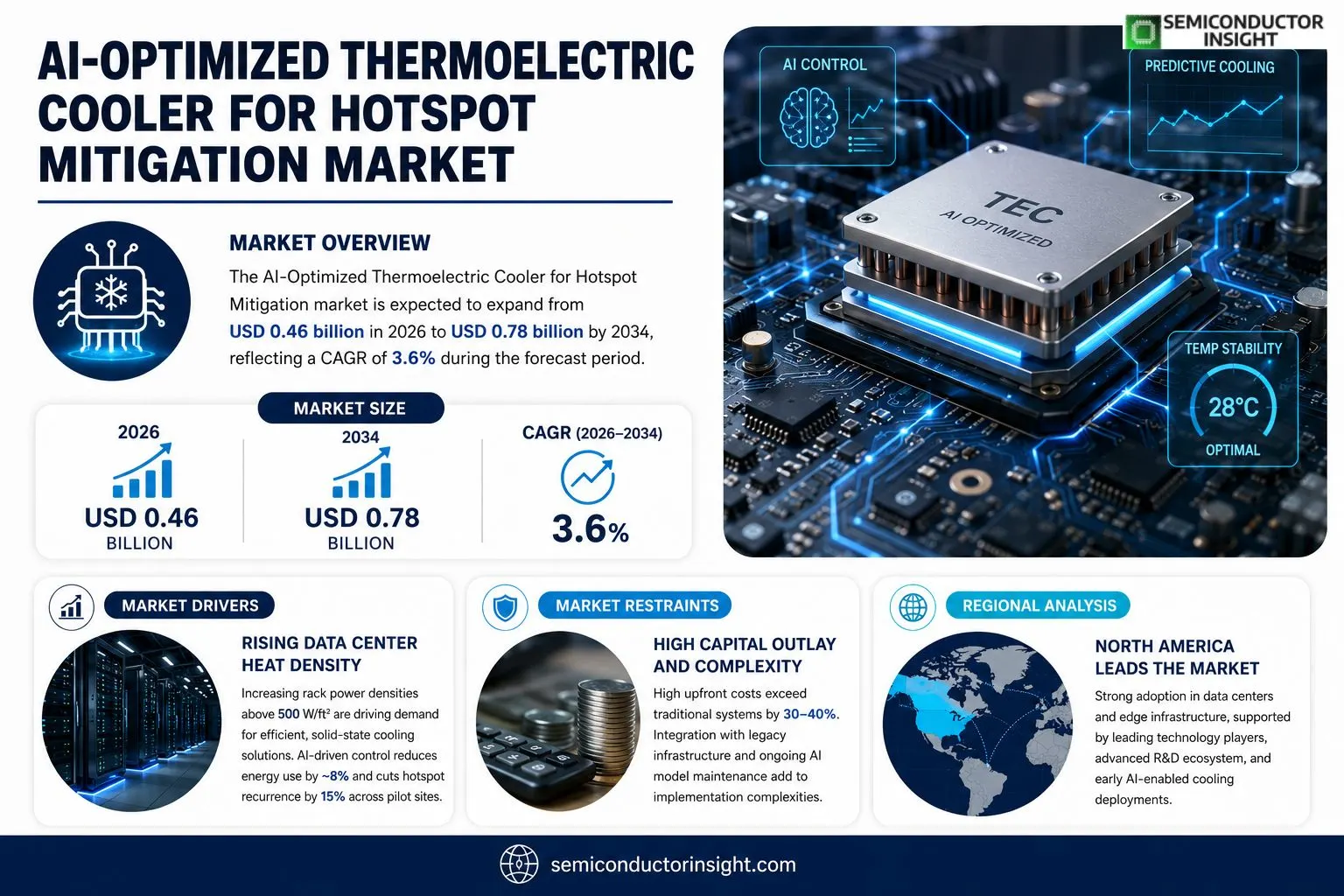
MARKET DRIVERS
Rising Data‑Center Thermal Loads
Today’s hyperscale facilities pack more compute per rack, pushing coolant temperatures toward their design limits. Operators are therefore forced to monitor every millimeter of fluid circuit. The AI‑Powered Leak Detection Sensor for Liquid Cooling Market offers continuous acoustic‑signal analysis that spots incipient drips before they become catastrophic, translating into measurable savings on equipment replacement and unplanned outages.
Regulatory Momentum on Energy‑Efficiency
Environmental statutes now require demonstrable leak‑free operation for large‑scale cooling plants. Sensors that combine machine‑learning pattern recognition with low‑power telemetry give facilities a defensible audit trail, enabling them to meet compliance thresholds without excessive manual inspections.
➤ “Early leak identification can slash downtime by up to 40 %,” industry benchmark analysis.
Because the cost of a single coolant breach can exceed $150,000 in lost productivity, decision‑makers are allocating budget to intelligent detection platforms. This willingness to invest is reshaping the competitive landscape and accelerating adoption across hyperscale, enterprise, and edge‑computing segments.
MARKET CHALLENGES
Technical Integration Hurdles
Legacy cooling loops rely on proprietary protocols, and retrofitting AI‑driven sensors often demands firmware upgrades or gateway devices. The calibration process for acoustic‑based models can be time‑consuming, especially when facilities operate with heterogeneous coolant chemistries, creating friction for rapid rollout.
Other Challenges
Supply‑Chain Constraints
The semiconductor components that power on‑board inference engines have faced periodic shortages, nudging project timelines by several months and inflating unit costs for early adopters.Cost sensitivity remains pronounced among mid‑tier data‑center owners, who weigh the upfront price against projected ROI. Without clear financing models, the transition from conventional pressure‑switch devices to AI solutions can stall.
MARKET RESTRAINTS
High Initial Capital Outlay
Premium sensor packages integrate edge processors, high‑fidelity microphones, and secure wireless modules, driving an entry price that exceeds $2,000 per unit. While long‑term savings are compelling, the payback horizon of three to five years can deter cash‑strapped operators.In addition, organizations handling sensitive data often impose strict data‑handling policies. Transmitting acoustic signatures to cloud analytics platforms may raise privacy concerns, prompting some customers to defer deployment until on‑premise AI solutions mature.
MARKET OPPORTUNITIES
Edge‑Computing Integration
Embedding inference engines directly within the sensor eliminates reliance on external servers, delivering sub‑second leak alerts even in bandwidth‑constrained environments. This capability unlocks markets such as autonomous‑vehicle thermal management and high‑performance‑computing clusters located in remote sites.Service firms that specialize in retrofitting legacy cooling infrastructures stand to gain a recurring revenue stream by offering sensor‑installation, model‑training, and ongoing analytics subscriptions. As the ecosystem of compatible hardware expands, the addressable market for AI‑enhanced leak detection is set to broaden beyond traditional data‑center applications.
AI-Powered Leak Detection Sensor for Liquid Cooling Market Trends
Edge‑AI Integration Elevates Leak Detection Accuracy
Data‑center operators are shifting from periodic manual inspections to continuous, algorithm‑based monitoring. By embedding lightweight neural networks directly on sensor modules, the devices can discriminate genuine micro‑leak signatures from background noise in real time. This capability reduces false‑positive alerts, which historically forced unnecessary shutdowns, and enables predictive maintenance schedules that align with operational uptime targets. The transition reflects a broader preference for localized processing that limits bandwidth consumption while preserving the immediacy of critical warnings.
Other Trends
Strategic OEM Partnerships Accelerate Market Reach
Recent collaborations, such as the joint effort between ThermoSense Inc. and NVIDIA’s AI research division, illustrate how chipset manufacturers are embedding analytics firmware into coolant monitoring kits. Parallel moves by Siemens Energy, Bosch Sensortec, and Keysight Technologies to bundle AI‑enhanced modules with existing thermal‑management portfolios broaden adoption across both hyperscale facilities and boutique semiconductor fabs. These alliances shorten time‑to‑market for integrated solutions and lower the entry barrier for customers seeking turnkey leak‑mitigation tools.
Cost Efficiency Pressures Shape Sensor Design
Operating budgets in high‑performance computing environments are tightening, prompting engineers to evaluate total cost of ownership rather than upfront equipment price. AI‑Powered Leak Detection Sensor for Liquid Cooling Market offerings now prioritize modular hardware that can be retrofitted onto legacy cooling loops, extending asset life while delivering the analytical depth of newer platforms. By delivering actionable alerts that prevent coolant loss and overheating, these sensors translate directly into reduced downtime costs and lower consumable expenditures, reinforcing their value proposition in price‑sensitive procurement cycles.
COMPETITIVE LANDSCAPEKey Industry Players
AI‑Powered Leak Detection Sensor for Liquid Cooling Market
ThermoSense Inc. dominates the front‑end of the segment by leveraging its partnership with NVIDIA’s AI research division to embed deep‑learning inference directly on sensor nodes. This alliance accelerates rollout cycles for data‑center operators seeking pre‑emptive maintenance tools, and it forces rivals to adopt similar edge‑AI architectures to stay relevant. Siemens Energy, Bosch Sensortec, and Keysight Technologies have each extended legacy portfolios with AI‑enhanced modules, reshaping the supply chain from pure hardware manufacturers to hybrid analytics providers. The market structure therefore resembles a cluster of established industrial leaders augmenting core competencies with software‑defined capabilities, while new entrants focus on niche‑specific algorithms for semiconductor cooling.Beyond the principal cluster, firms such as Honeywell International, TE Connectivity, Analog Devices, Texas Instruments, and Schneider Electric are carving out specialized rolesHoneywell with robust safety‑rated enclosures, TE Connectivity with rugged connectors, and Analog Devices with precision analog front‑ends that feed richer data into machine‑learning pipelines. ABB, Hitachi, Sensirion, Infineon Technologies, and AMS AG round out the landscape, each offering proprietary sensor chemistries or ultra‑low‑power ASICs that differentiate product value propositions. The collective movement toward integrated AI signals a shift from reactive leak mitigation to predictive thermal management, compelling customers to reconsider procurement strategies and invest in holistic monitoring ecosystems.
List of Key AI‑Powered Leak Detection Sensor for Liquid Cooling Companies Profiled
- ThermoSense Inc.
- NVIDIA Corporation
- Siemens Energy
- Bosch Sensortec
- Keysight Technologies
- Honeywell International
- TE Connectivity
- Analog Devices
- Texas Instruments
- Schneider Electric
- ABB
- Hitachi Ltd.
- Sensirion AG
- Infineon Technologies
- AMS AG
Segment Analysis:
| Segment Category | Sub-Segments | Key Insights |
| By Type |
|
Optical‑Fiber Sensors
|
| By Application |
|
Data‑Center Cooling
|
| By End User |
|
Cloud Service Providers
|
| By Technology |
|
Edge AI Analytics
|
| By Deployment Scenario |
|
Retrofit Upgrades
|
Regional Analysis: AI-Powered Leak Detection Sensor for Liquid Cooling Market
North America
Early‑stage AI accelerators are embedded in most North American sensors, allowing real‑time anomaly classification without cloud latency. Firms prioritize low‑power designs to meet stringent data‑center power budgets, resulting in a steady pipeline of silicon‑level innovations.
Federal and provincial guidelines stress continuous operational integrity, prompting mandatory leak‑detection audits for high‑density compute farms. Compliance drives capital allocation toward AI‑enhanced sensors that can generate auditable event logs.
Besides hyperscale cloud providers, the automotive electronics testing sector and advanced scientific facilities adopt the technology to safeguard expensive liquid‑cooled rigs from costly coolant loss incidents.
Start‑ups specializing in edge‑AI chipsets vie with established cooling OEMs that bundle sensors into turnkey packages, creating a layered competitive field where innovation speed and integration depth are decisive.
Europe
European adopters are channeling sustainability agendas into the AI‑Powered Leak Detection Sensor for Liquid Cooling Market, especially within the Nordic and Benelux clusters where green‑data‑center certifications are becoming prerequisite. Manufacturers confront a fragmented standards environment, prompting cross‑border consortia to harmonize communication protocols for sensor data exchange. The region’s emphasis on modular design fosters modular sensor kits that can be retrofitted across diverse cooling architectures, enabling operators to upgrade incrementally without wholesale equipment replacement. Investment trends reveal a preference for joint‑venture models, pairing local system integrators with AI algorithm providers to tailor solutions to region‑specific energy tariffs and cooling fluid formulations. The overall effect is a cautious but steadily expanding deployment curve, with a clear tilt toward modularity and regulatory alignment.
Asia‑Pacific
In Asia‑Pacific, burgeoning data‑center construction in Singapore, Japan, and South Korea fuels demand for AI‑enhanced leak detection, yet adoption is tempered by cost‑sensitivity. Local vendors are leveraging economies of scale to produce sensor modules that embed lightweight neural nets, balancing performance with price. The market is further shaped by governmental incentives for high‑efficiency cooling, which subsidize retrofits that incorporate intelligent leak monitoring. Cultural emphasis on operational resilience drives enterprises to prioritize sensors capable of autonomous self‑diagnosis, reducing reliance on on‑site engineering staff. As the region matures, we anticipate a shift from pilot deployments toward broader rollout, particularly as cross‑border supply chains stabilize and regional standards coalesce.
South America
South American data‑center operators, largely concentrated in Brazil and Chile, are beginning to recognize the risk profile associated with liquid‑cooled infrastructure in tropical climates. While budget constraints limit immediate large‑scale procurement, early adopters are experimenting with hybrid sensor solutions that combine cloud‑based analytics with on‑premise AI inference to keep upfront costs manageable. Partnerships between multinational OEMs and regional system integrators are crucial in navigating import tariffs and localization requirements. Moreover, the region’s focus on energy diversification, including renewable integration, dovetails with leak‑detection technologies that can safeguard coolant loops amid variable power quality, thereby reinforcing the business case for gradual adoption.
Middle East & Africa
The Middle East & Africa landscape reflects a dual narrative of high‑value data‑center projects in the Gulf states and nascent industrial cooling applications across Africa. In the Gulf, sovereign wealth funds allocate capital toward ultra‑secure facilities, making AI‑Powered Leak Detection Sensor for Liquid Cooling Market solutions attractive for their predictive maintenance capabilities. Conversely, African enterprises prioritize ruggedness and low‑maintenance designs, prompting vendors to offer sensors with simplified AI models that can operate on minimal computational resources. Regulatory drivers are emerging, especially in the UAE, where data‑center operational risk frameworks now reference intelligent leak monitoring. The region’s trajectory will likely hinge on the ability of suppliers to customize sensor firmware to accommodate disparate power infrastructures and fluid chemistries.
Report Scope
This market research report provides a comprehensive analysis of the AI-Powered Leak Detection Sensor for Liquid Cooling Market , covering the forecast period 2026–2034. It offers detailed insights into market dynamics, technological advancements, competitive landscape, and key trends shaping the industry.
Key focus areas of the report include:
- Market Overview: The report begins with an overview outlining its current market scenario, key growth indicators, and industry transformation drivers. It discusses macroeconomic factors, demand–supply balance, regulatory landscape, and the strategic role of semiconductors in powering advancements across industries such as automotive, telecommunications, consumer electronics, and industrial automation.
- Market Size & Forecast: Historical data and future projections for revenue, unit shipments, and market value across major regions and segments.
- Segmentation Analysis: Detailed breakdown by product type, technology, application, and end-user industry to identify high-growth segments and investment opportunities.
- Regional Insights: Insights into market performance across North America, Europe, Asia-Pacific, Latin America, and the Middle East & Africa, including country-level analysis where relevant.
- Competitive Landscape: Profiles of leading market participants, including their product offerings, R&D focus, manufacturing capacity, pricing strategies, and recent developments such as mergers, acquisitions, and partnerships.
- Technology Trends & Innovation: Assessment of emerging technologies, integration of AI/IoT, semiconductor design trends, fabrication techniques, and evolving industry standards.
- Market Drivers & Restraints: Evaluation of factors driving market growth along with challenges, supply chain constraints, regulatory issues, and market-entry barriers.
- Stakeholder Insights: Insights for component suppliers, OEMs, system integrators, investors, and policymakers regarding the evolving ecosystem and strategic opportunities.
Primary and secondary research methods are employed, including interviews with industry experts, data from verified sources, and real-time market intelligence to ensure the accuracy and reliability of the insights presented.
FREQUENTLY ASKED QUESTIONS:
What is the current market size of AI-Powered Leak Detection Sensor for Liquid Cooling Market?
-> AI-Powered Leak Detection Sensor for Liquid Cooling Market was valued at USD 0.15 billion in 2025 and is expected to reach USD 0.50 billion by 2034.
Which key companies operate in AI-Powered Leak Detection Sensor for Liquid Cooling Market?
-> Key players include Siemens Energy, Bosch Sensortec, Keysight Technologies, ThermoSense Inc., and NVIDIA, among others.
What are the key growth drivers?
-> Key growth drivers include increasing demand for ultra‑reliable data‑center uptime, rising cooling requirements for high‑power semiconductor chips, and the integration of AI‑driven analytics for proactive maintenance.
Which region dominates the market?
-> North America leads the market due to a high concentration of data‑center infrastructure, while Asia‑Pacific is emerging as the fastest‑growing region.
What are the emerging trends?
-> Emerging trends include embedding AI models directly into sensor firmware, leveraging optical‑fiber and ultrasonic transducers for higher sensitivity, and collaborative partnerships between sensor manufacturers and AI research divisions to enhance predictive leak detection.
Get Sample Report PDF for Exclusive Insights
Report Sample Includes
- Table of Contents
- List of Tables & Figures
- Charts, Research Methodology, and more...
 Download Sample Report PDF


