AI Chiller Plant Cooling Tower Fan Speed Energy Optimizer Processor Market Insights
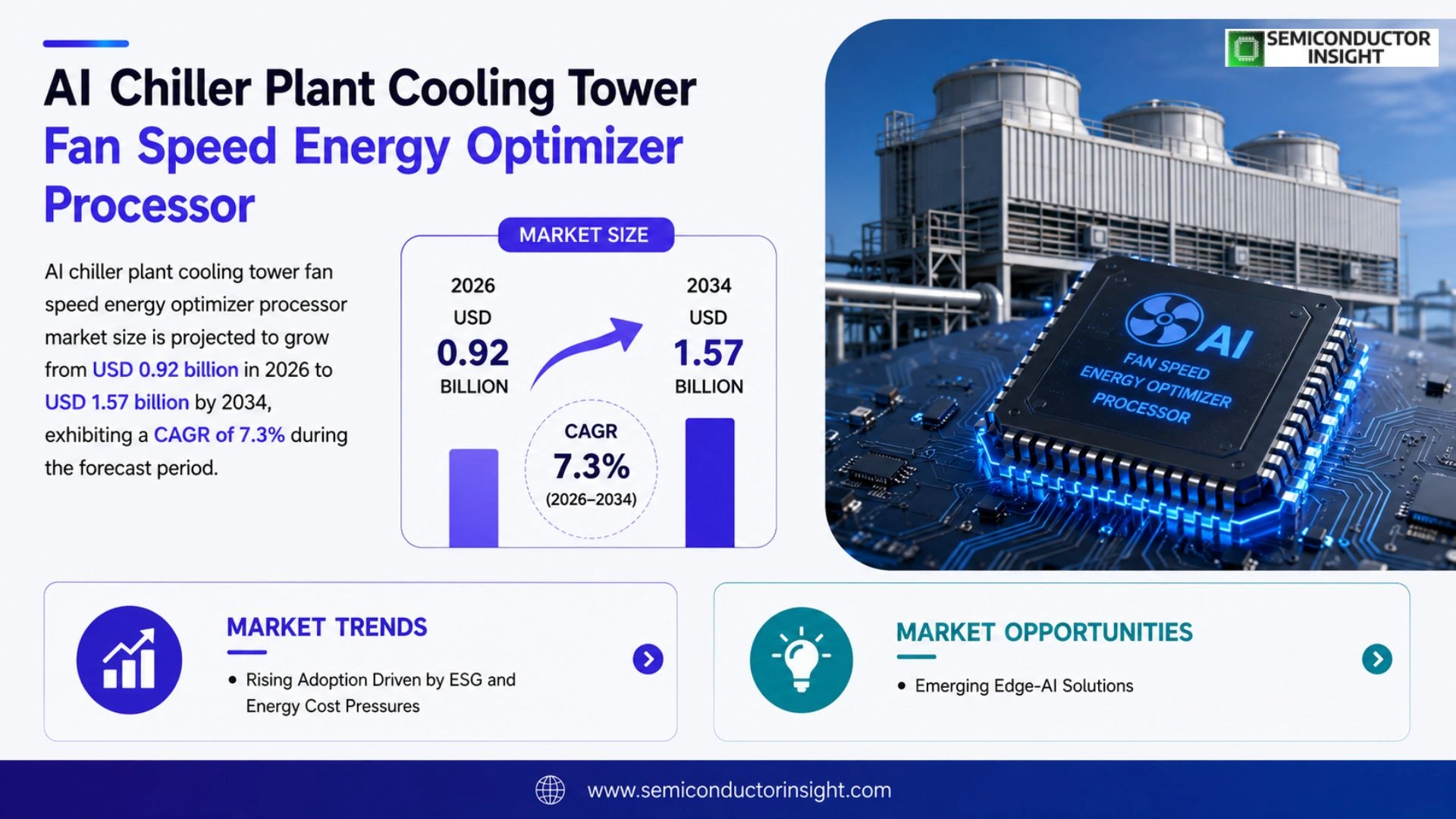
Global AI chiller plant cooling tower fan speed energy optimizer processor market size was valued at USD 0.85 billion in 2025. The market is projected to grow from USD 0.92 billion in 2026 to USD 1.57 billion by 2034, exhibiting a CAGR of 7.3% during the forecast period.
AI chiller plant cooling tower fan speed energy optimizer processors are intelligent control modules that combine machine‑learning algorithms with variable‑frequency drive (VFD) technology to continuously modulate fan motor speeds in cooling towers. By analyzing real‑time load, ambient temperature, and water‑side heat rejection data, these processors reduce pump and fan power draw while preserving required condenser approach temperatures.
The market is accelerating because of mounting pressure on industrial facilities to cut carbon footprints, soaring electricity tariffs, and stricter ESG reporting mandates. Furthermore, widespread digitalization of HVAC systems and government incentives for smart‑energy solutions are driving adoption. Recent initiatives such as Siemens’ March 2024 collaboration with IBM on AI‑enabled HVAC optimization platforms illustrate how leading OEMs are expanding their portfolios. Johnson Controls, Daikin Industries, and Trane Technologies remain key players shaping industry standards.
MARKET DRIVERS
Rising Energy Efficiency Demands
AI chiller plant cooling Tower Fan Speed Energy Optimizer Processor Market is being propelled by stringent energy‑saving regulations across industrial campuses. Operators increasingly adopt intelligent fan‑speed algorithms that can cut electricity consumption by up to 15% without compromising cooling performance.
Integration with Smart Building Platforms
Modern HVAC control systems now support seamless API connections, allowing optimizer processors to exchange data with building‑automation dashboards in real time. This integration creates measurable ROI, with many facilities reporting payback periods of under two years.
➤ Case studies show that facilities using AI‑driven fan speed control achieve a 10‑12% reduction in CO₂ emissions, reinforcing sustainability commitments.
In addition, the growing availability of edge‑computing hardware reduces latency, enabling faster response to load variations and further strengthening the market’s growth trajectory.
MARKET CHALLENGES
High Initial Capital Outlay
Deploying advanced optimizer processors requires upgrading legacy control panels, which can entail significant upfront costs. Smaller facilities often hesitate to allocate budget for technology that promises long‑term savings but demands immediate expenditure.
Other Challenges
Technical Skill Gap
The sophisticated nature of AI algorithms necessitates trained personnel for installation, calibration, and ongoing maintenance. A shortage of skilled engineers can delay projects and increase reliance on external consultants.
Moreover, integration complexities with heterogeneous chiller brands sometimes lead to interoperability issues, requiring customized middleware solutions that add to project timelines.
MARKET RESTRAINTS
Regulatory Compliance Uncertainty
While energy‑efficiency standards are tightening, the lack of clear guidelines specific to AI‑based fan‑speed optimization creates hesitation among adopters. Facilities prefer proven, standards‑compliant solutions over emerging technologies that may face future regulatory revisions.
Data privacy concerns also emerge when processors transmit operational metrics to cloud platforms. Organizations must ensure compliance with regional data protection laws, adding another layer of complexity.
Finally, the perceived risk of system downtime during retrofitting discourages some operators, especially in mission‑critical environments where continuous cooling is non‑negotiable.
MARKET OPPORTUNITIES
Emerging Edge‑AI Solutions
Advances in low‑power AI chips enable on‑site processing, eliminating the need for continuous cloud connectivity. This development opens opportunities for deploying optimizer processors in remote or off‑grid facilities where bandwidth is limited.
Furthermore, the expansion of predictive maintenance services creates cross‑selling potential. By coupling fan‑speed optimization with anomaly detection, vendors can offer bundled solutions that enhance overall plant reliability.
Strategic partnerships between processor manufacturers and major HVAC OEMs are also accelerating market penetration, as co‑engineered products simplify integration and reduce implementation barriers for end users.
AI Chiller Plant Cooling Tower Fan Speed Energy Optimizer Processor Market Trends
Rising Adoption Driven by ESG and Energy Cost Pressures
AI chiller plant cooling Tower Fan Speed Energy Optimizer Processor Market is experiencing accelerated uptake as industrial facilities confront tighter carbon‑reduction mandates and escalating electricity tariffs. Intelligent control modules that fuse machine‑learning algorithms with variable‑frequency drive technology are now standard for modernizing cooling‑tower operations. By continuously adjusting fan motor speeds in response to real‑time load, ambient temperature, and condenser approach requirements, these processors deliver measurable reductions in pump and fan power consumption while safeguarding thermal performance. The convergence of digital HVAC strategies, government incentives for smart‑energy solutions, and heightened ESG reporting obligations creates a fertile environment for sustained market expansion across North America, Europe, and fast‑growing Asian economies.
Other Trends
Integration with IoT Platforms
Manufacturers are embedding optimizer processors within broader IoT ecosystems to enable remote monitoring, predictive maintenance, and data‑driven facility management. Real‑time telemetry from fan speed controllers is aggregated in cloud‑based dashboards, allowing plant engineers to benchmark performance across multiple sites and to trigger automatic adjustments when deviation thresholds are crossed. This level of connectivity enhances overall equipment efficiency and supports advanced analytics that pinpoint energy‑saving opportunities beyond the cooling tower itself. Leading OEMs such as Siemens, in partnership with IBM, have demonstrated pilot deployments that leverage edge computing to process sensor inputs locally, thereby reducing latency and ensuring continuous operation even during intermittent network outages.
Competitive Landscape and OEM Innovation
Key players,including Johnson Controls, Daikin Industries, and Trane Technologies,are intensifying R&D investments to differentiate their processor offerings through higher‑resolution modeling, adaptive learning cycles, and modular hardware designs. Recent announcements highlight the rollout of next‑generation units capable of self‑calibrating across a wider range of fan motor sizes, which reduces installation complexity and accelerates time‑to‑value for end users. Collaborative projects, such as the March 2024 Siemens‑IBM initiative, exemplify how strategic alliances are shaping industry standards, fostering interoperability, and expanding the functional scope of optimizer processors beyond traditional cooling‑tower applications into integrated building‑automation frameworks.
COMPETITIVE LANDSCAPE
Key Industry Players
AI Chiller Plant Cooling Tower Fan Speed Energy Optimizer Processor Market Overview
The market is currently anchored by a handful of multinational OEMs that combine deep HVAC engineering expertise with advanced AI and machine‑learning capabilities. Siemens leads the segment through its integrated AI‑enabled HVAC platforms, leveraging a global footprint and strategic partnerships such as the 2024 collaboration with IBM. Johnson Controls follows closely, offering a suite of Energy Optimizer Processors that are embedded across its extensive portfolio of chiller plants and cooling towers. Daikin Industries and Trane Technologies round out the top tier, each delivering proprietary VFD‑based fan speed controllers that integrate predictive analytics for energy savings. These leaders dominate the high‑value contracts with large‑scale industrial complexes, data centers, and campus utilities, shaping standards for performance, reliability, and ESG compliance.
Beyond the primary tier, a diverse set of specialist firms contributes niche innovations and regional market depth. Mitsubishi Electric, Honeywell, and Schneider Electric provide competitive AI‑driven control modules targeting mid‑size facilities. ABB, Rockwell Automation, and Yokogawa focus on robust industrial communication and safety integration. Emerging players such as Carrier, LG Electronics, and Hitachi offer hybrid solutions that blend traditional HVAC hardware with cloud‑based analytics. Smaller but agile companies like Emerson, Bosch, and Fujitsu contribute proprietary algorithms for fan speed modulation, enabling customized energy‑optimization strategies for specific climate zones and process requirements.
List of Key AI Chiller Plant Cooling Tower Fan Speed Energy Optimizer Processor Companies Profiled
- Siemens AG
- Johnson Controls International plc
- Daikin Industries Ltd.
- Trane Technologies plc
- Mitsubishi Electric Corporation
- Honeywell International Inc.
- Schneider Electric SE
- ABB Ltd.
- Rockwell Automation Inc.
- Yokogawa Electric Corporation
- Carrier Global Corp.
- LG Electronics Inc.
- Hitachi Ltd.
- Emerson Electric Co.
- Bosch Thermotechnology Corp.
Segment Analysis:
| Segment Category | Sub-Segments | Key Insights |
| By Type |
|
Standalone Optimizer Modules
|
| By Application |
|
Industrial Process Cooling
|
| By End User |
|
Manufacturing Plants
|
| By Functional Benefit |
|
Energy Savings
|
| By Adoption Stage |
|
Mainstream Users
|
Regional Analysis: AI Chiller Plant Cooling Tower Fan Speed Energy Optimizer Processor Market
Europe
The European Union’s Energy Efficiency Directive and upcoming revisions to the Ecodesign regulations mandate higher performance standards for HVAC equipment, compelling manufacturers to embed AI‑driven fan speed optimization within chiller plant designs. Compliance incentives accelerate market uptake across both new builds and retrofits.
Rising electricity tariffs, carbon pricing mechanisms, and corporate sustainability commitments create a compelling business case for AI processors that can deliver measurable energy savings while preserving cooling reliability.
Europe’s strong digital manufacturing ecosystem facilitates seamless integration of edge AI modules, enabling real‑time data acquisition, predictive analytics, and automated fan speed adjustments across heterogeneous cooling networks.
Leading processor vendors form strategic alliances with system integrators and software platforms, creating bundled solutions that address both performance optimization and regulatory compliance in the European market.
North America
North America remains a fast‑growing market for AI Chiller Plant Cooling Tower Fan Speed Energy Optimizer Processors, propelled by the United States’ aggressive climate policies and Canada’s emphasis on green building standards. Utilities are deploying demand‑response programs that reward facilities for reducing peak load, encouraging the adoption of AI‑based fan speed control. Industrial sectors such as semiconductor manufacturing and large‑scale office campuses benefit from the technology’s ability to cut energy bills while maintaining stringent uptime requirements.
Asia‑Pacific
In the Asia‑Pacific region, rapid urbanisation and expanding data‑center density drive demand for efficient cooling solutions. Countries like Japan, South Korea, and Singapore are early adopters, leveraging AI processors to offset high electricity costs and meet strict environmental regulations. Emerging economies, notably India and Vietnam, are beginning to invest in smart cooling infrastructure as part of broader industrial modernization initiatives, creating new growth avenues for the market.
South America
South America’s market dynamics are shaped by a mix of legacy cooling assets and rising awareness of energy waste. Brazil’s industrial sector is increasingly exploring AI‑enabled fan speed optimization to improve competitiveness amid volatile energy prices. Collaborative pilot projects between local equipment manufacturers and technology firms aim to demonstrate cost‑effective retrofits, setting the stage for broader market penetration over the next decade.
Middle East & Africa
The Middle East & Africa region presents a unique landscape where extreme ambient temperatures intensify cooling loads, making energy efficiency a critical concern. Gulf Cooperation Council (GCC) nations are investing heavily in smart building technologies, and AI Chiller Plant Cooling Tower Fan Speed Energy Optimizer Processors are being introduced to reduce the carbon footprint of massive commercial complexes. In Africa, pilot programs in South Africa and Kenya focus on integrating AI processors within off‑grid cooling solutions to improve reliability and lower operational costs.
Report Scope
This market research report provides a comprehensive analysis of the AI Chiller Plant Cooling Tower Fan Speed Energy Optimizer Processor Market , covering the forecast period 2026–2034. It offers detailed insights into market dynamics, technological advancements, competitive landscape, and key trends shaping the industry.
Key focus areas of the report include:
- Market Overview: The report begins with an overview outlining its current market scenario, key growth indicators, and industry transformation drivers. It discusses macroeconomic factors, demand–supply balance, regulatory landscape, and the strategic role of semiconductors in powering advancements across industries such as automotive, telecommunications, consumer electronics, and industrial automation.
- Market Size & Forecast: Historical data and future projections for revenue, unit shipments, and market value across major regions and segments.
- Segmentation Analysis: Detailed breakdown by product type, technology, application, and end-user industry to identify high-growth segments and investment opportunities.
- Regional Insights: Insights into market performance across North America, Europe, Asia-Pacific, Latin America, and the Middle East & Africa, including country-level analysis where relevant.
- Competitive Landscape: Profiles of leading market participants, including their product offerings, R&D focus, manufacturing capacity, pricing strategies, and recent developments such as mergers, acquisitions, and partnerships.
- Technology Trends & Innovation: Assessment of emerging technologies, integration of AI/IoT, semiconductor design trends, fabrication techniques, and evolving industry standards.
- Market Drivers & Restraints: Evaluation of factors driving market growth along with challenges, supply chain constraints, regulatory issues, and market-entry barriers.
- Stakeholder Insights: Insights for component suppliers, OEMs, system integrators, investors, and policymakers regarding the evolving ecosystem and strategic opportunities.
Primary and secondary research methods are employed, including interviews with industry experts, data from verified sources, and real-time market intelligence to ensure the accuracy and reliability of the insights presented.
FREQUENTLY ASKED QUESTIONS:
What is the current market size of AI Chiller Plant Cooling Tower Fan Speed Energy Optimizer Processor Market?
-> AI chiller plant cooling tower fan speed energy optimizer processor market size is projected to grow from USD 0.92 billion in 2026 to USD 1.57 billion by 2034
Which key companies operate in AI Chiller Plant Cooling Tower Fan Speed Energy Optimizer Processor Market?
-> Key players include Johnson Controls, Daikin Industries, Trane Technologies, Siemens, and IBM.
What are the key growth drivers?
-> Key growth drivers include pressure to reduce carbon footprints, rising electricity tariffs, stricter ESG reporting mandates, digitalization of HVAC systems, and government incentives for smart‑energy solutions.
Which region dominates the market?
-> The reference does not specify a dominant region for this market.
What are the emerging trends?
-> Emerging trends include AI‑enabled optimization platforms, integration with IoT, and collaborations such as Siemens’ partnership with IBM to enhance smart‑energy solutions.
Get Sample Report PDF for Exclusive Insights
Report Sample Includes
- Table of Contents
- List of Tables & Figures
- Charts, Research Methodology, and more...