

Why Wiener Model-Based Predictive Control Is Finally Taming the pH Neutralization Beast and Finding a Real Market in 2026
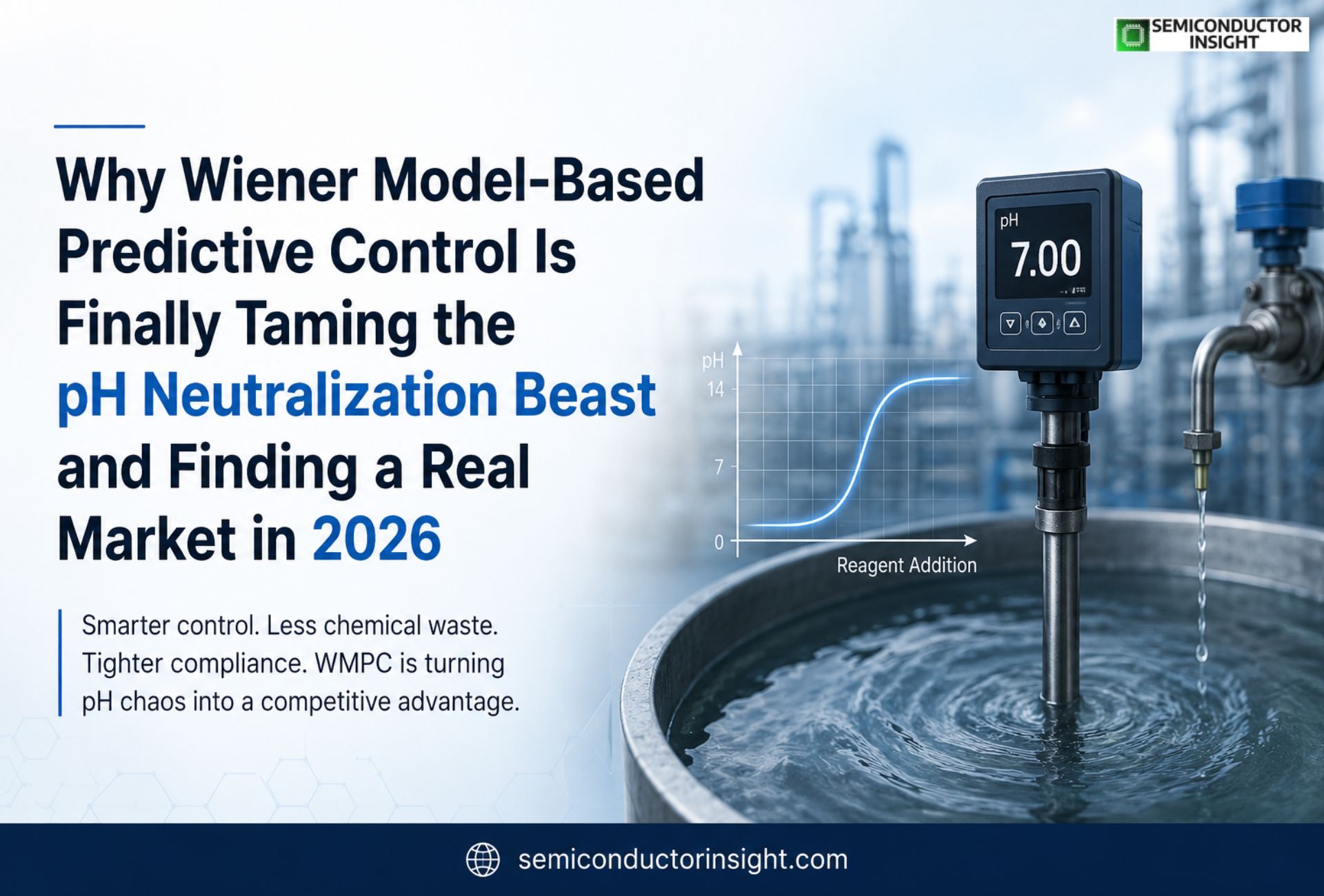
For anyone who has ever stood next to a pH neutralization tank in a chemical plant, the problem is almost visceral. A clear liquid swirls in, a reagent trickles through a valve, and somewhere downstream a sensor waits for the magic number – seven, or whatever the discharge permit demands. But the relationship between how much reagent you add and the resulting pH is anything but linear. It is a steep, S‑shaped titration curve that can swing from acid to alkaline with a few drops too many. Traditional PID controllers, tuned for one operating point, struggle here. They overshoot, oscillate, and chew through expensive chemicals while operators watch nervously. This is exactly the kind of messy, nonlinear process that has made pH control a classic headache in textbooks and a real cost centre in industry.
In 2026, a growing number of process engineers are turning to something called Wiener model‑based predictive control – WMPC for those who like abbreviations – not because it is academically elegant, but because it works where older methods break. And while this is a niche corner of the advanced process control world, the technology is quietly building a market as water regulations tighten and manufacturing plants chase every possible efficiency gain.
What a Wiener model actually does
The name sounds like it belongs in a Viennese coffee house, but it comes from the mathematician Norbert Wiener, not the city. A Wiener model breaks a nonlinear process into two connected blocks: a linear dynamic part that captures how the system reacts over time, and a static nonlinear part that captures the weird curve of the pH measurement. Imagine the linear block describing the mixing and flow delays in the tank, and the nonlinear block describing the titration curve. By fitting these two pieces separately using routine plant data, engineers end up with a model that is far easier to work with than a full‑blown first‑principles simulation – yet accurate enough to predict what happens when you open the acid valve a little more.
Once that model exists, it can be plugged into a model predictive controller (MPC), which uses it to look ahead and calculate the best sequence of valve moves while respecting constraints like valve limits and maximum allowable pH deviation. The result is tighter control, smoother operation, and – most importantly for the accountants – a measurable drop in chemical consumption.
Why 2026 is becoming a turning point
The idea of using Wiener models for pH control is not new. Papers on the topic have been circulating for over two decades. What has changed in the last few years is the software and the sensors. Modern distributed control systems now ship with embedded MPC toolboxes that can run linear and simple nonlinear models without needing a PhD to configure them. At the same time, the cost of inline pH probes with fast response times and self‑diagnostics has fallen enough that even mid‑sized treatment plants can afford reliable real‑time data.
A concrete signal arrived in early 2026. In February, the International Society of Automation’s water and wastewater industry division published a technical report highlighting three case studies where Wiener‑based MPC was applied to municipal and industrial pH adjustment systems. One case, from a chemical park in the Netherlands, documented a 22 percent reduction in caustic soda use after replacing a cascade PID scheme with a Wiener MPC running on the plant’s existing hardware. The savings translated into a return on investment of under nine months. That kind of number travels quickly through operator networks.
Meanwhile, on the regulatory side, the push is tightening. The European Union’s revised Industrial Emissions Directive, which came into force in 2025 and is being phased into national laws through 2026, sets stricter limits on effluent pH variability for a range of sectors including metal finishing, food processing, and chemical manufacturing. Exceedances mean fines and potential production curtailments. For plant managers, the incentive to move from reactive control – chasing pH after it drifts – to predictive control that anticipates disturbances is no longer theoretical.
The market that nobody talks about in headlines
There will never be a multibillion‑dollar “Wiener MPC for pH neutralization” market. It is too specific. But it sits inside several larger, fast‑growing segments: the industrial wastewater treatment equipment market, the advanced process control software market, and the broader industrial automation services sector. Together, these are expanding at a steady clip, driven by manufacturing reshoring, water reuse mandates, and the desire to cut chemical waste. When a plant invests in a new treatment line or upgrades its control system, adding a more intelligent pH controller is a marginal extra cost that can pay back rapidly.
Suppliers are taking note. Engineering firms that specialize in water treatment automation have quietly started bundling pre‑configured Wiener MPC blocks into their standard libraries. Rather than treat it as a bespoke consulting project, they offer it as a configuration option – like choosing a particular type of pump. This commoditization, while unglamorous, is exactly what takes a technology from “interesting research” to “standard toolkit.” And in 2026, that shift is visibly underway in sectors as varied as dairy processing, semiconductor fab water reclamation, and pharmaceutical neutralization.
Where the human element still matters
It would be easy to paint a picture of plants running entirely on autopilot, but anyone who has worked around chemical processes knows that trust is earned slowly. Operators who have spent years manually tweaking reagent flows are understandably wary of handing over control to a black box. The successful deployments in 2026 tend to share one trait: they keep the operator in the loop. The Wiener MPC suggests a move, the operator sees it on a trend screen, and the system gently nudges the process back into spec rather than making dramatic, unexplained changes. Once operators see the reagent savings and the reduction in alarm floods, scepticism often turns into advocacy.
A plant superintendent in northern England, interviewed by a trade magazine in March 2026, put it this way: “I didn’t care what model they used, as long as my pH alarms stopped going off at three in the morning. They did, and my chemical bill dropped by eighteen percent. Now I want it on every tank.”
That kind of word‑of‑mouth, more than any white paper, is what builds a market from the ground up.
Read Full Report: https://semiconductorinsight.com/report/wiener-model-based-predictive-control-for-ph-neutralization-process-market/

Comments (0)