
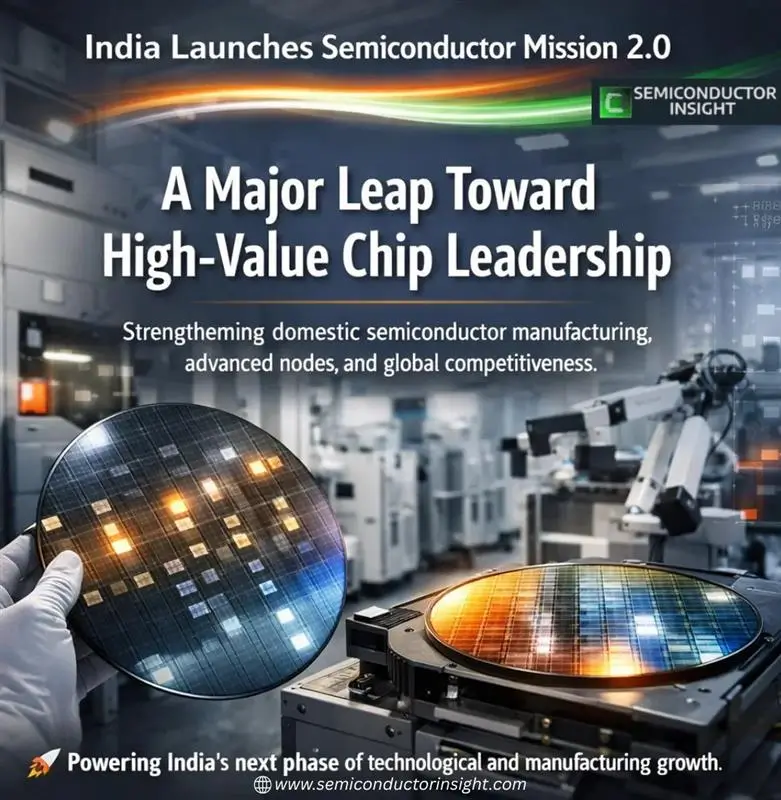
Union Budget 2026: India Launches Semiconductor Mission (ISM) 2.0 to Build a High-Value Chip Ecosystem
India has signalled a major strategic shift in its electronics and semiconductor roadmap with the launch of India Semiconductor Mission (ISM) 2.0, announced by Union Finance Minister Nirmala Sitharaman in the Union Budget 2026.
The new phase reflects India’s ambition to move beyond assembly-led manufacturing and develop deeper capabilities in semiconductor intellectual property, advanced materials, fabrication equipment, and resilient domestic supply chains.
Key Focus Areas under ISM 2.0
Building on the progress of the first phase, ISM 2.0 will concentrate on strengthening India’s position across the entire semiconductor value chain.
Major priorities include:
- Manufacturing of semiconductor equipment and critical materials
- Development of full-stack Indian semiconductor IP
- Expansion of domestic and resilient supply chains
- Industry-led research initiatives and innovation partnerships
- Establishment of training centres and workforce development programs
The mission is designed to reduce strategic import dependence and position India as a credible global player in advanced chip and electronics technologies.
Policy Measures Supporting Electronics and Creative Industries
In addition to ISM 2.0, the Budget introduced several customs duty reforms to support both electronics manufacturing and India’s creative economy.
Effective April 1, duty waivers include:
- Removal of customs duty on parts used in video game manufacturing
- Waiver of duty on TV equipment, cameras, and instruments imported by foreign film and television crews shooting in India
These measures are expected to encourage investment, boost domestic production, and strengthen India’s attractiveness as both a manufacturing and creative hub.
Vision beyond Assembly Manufacturing
Speaking in Parliament, Sitharaman emphasized that ISM 2.0 will focus on building capabilities beyond basic manufacturing, including:
- Semiconductor design and engineering
- Advanced materials and fabrication equipment
- Research and development infrastructure
- Skilled workforce creation for long-term growth
The objective is to ensure India develops end-to-end expertise in the semiconductor ecosystem rather than remaining dependent on imports for high-value components.
Industry Response and Growth Outlook
The announcements have been broadly welcomed by technology and electronics companies. Industry leaders highlighted that ISM 2.0’s focus on:
- Component localisation
- Design-led incentives
- Semiconductor-linked supply chain development
The given above features will help Indian manufacturers move up the global value chain.
Executives from smartphone, consumer electronics, and industrial technology firms noted that the mission could drive long-term innovation, create skilled employment opportunities, and support affordable technologies designed and developed in India.
Feel Free to Reach Our Most Recent Updates of the Report:
https://semiconductorinsight.com/report/semiconductor-chip-package-test-probe-market/
Strengthening Manufacturing Ecosystems through Infrastructure Investment
The Budget also reinforced infrastructure-led growth with higher capital expenditure aimed at supporting:
- Electronics clusters
- Manufacturing corridors
- Semiconductor equipment ecosystems
Together, ISM 2.0 and allied measures are expected to accelerate localisation, improve cost efficiencies, and strengthen India’s ambition of emerging as a global high-tech manufacturing hub.

Comments (0)