
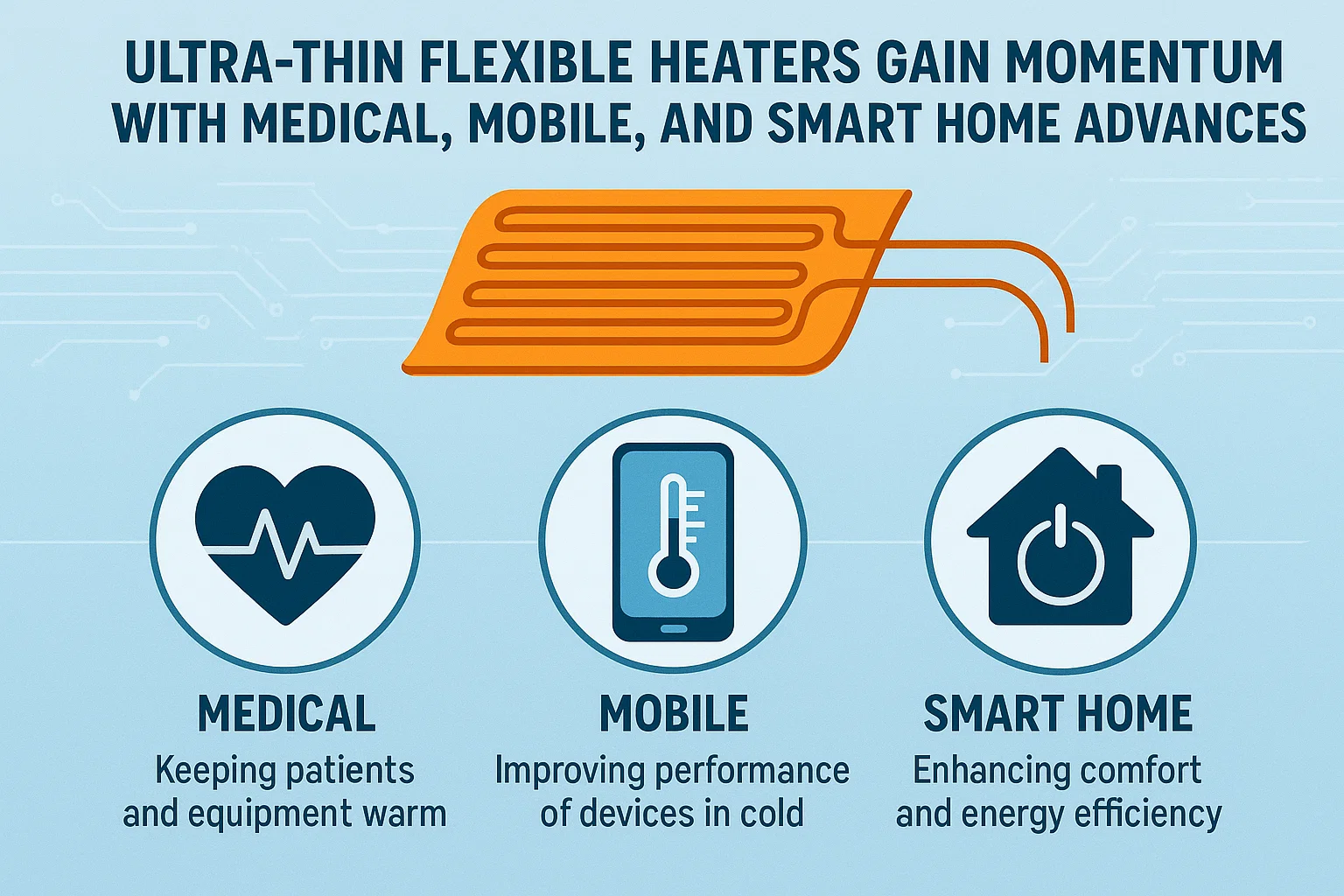
Ultra-Thin Flexible Heaters Gain Momentum with Medical, Mobile, and Smart Home Advances
In the world of modern electronics, healthcare wearables, energy-efficient interiors, and compact consumer gadgets, ultra-thin flexible heaters are quietly driving transformative change. Once considered a niche solution, these advanced heaters have evolved into key enablers for technological progress across multiple domains. With a market size valued at US$ 347.6 million in 2024 and projected to soar to US$ 587.4 million by 2032, the sector is witnessing robust growth at a CAGR of 7.7% during the forecast period (2025-2032). This blog dives into the most recent developments, technological breakthroughs, and future possibilities of the ultra-thin flexible heater industry.
Access Your Free Sample Report- Ultra Thin Flexible Heater Market
Why Ultra-Thin Flexible Heaters Matter
Ultra-thin flexible heaters are lightweight, bendable, and ultra-slim components capable of delivering consistent and controlled heating. They are typically constructed using materials like polyimide, silicone rubber, or printed circuits and are designed for efficient thermal transfer in restricted spaces. Their flexibility and durability make them ideal for integration into wearable devices, medical instruments, consumer electronics, aerospace systems, and even interior furnishings.
Unlike traditional bulky heating elements, these heaters can adapt to curved surfaces and variable thermal demands, making them a cornerstone for emerging smart applications.
Recent Breakthroughs in the Industry
- Smart Thermotherapy for Arthritis and Joint Pain Relief
A landmark development comes from researchers at Dalian University of Technology, who created a wearable, flexible heater system for personalized thermotherapy. This advanced system integrates:
- Temperature and humidity sensors
- Gold-based flexible heater on stretchable polyimide film
- Kirigami-serpentine structural design
- Bluetooth-enabled real-time monitoring
The system achieves a precise temperature control of 45 °C with a variance of ±0.1°C, ensuring optimized therapeutic results. It enhances blood circulation in the affected joint area and can withstand over 1,000 usage cycles, proving its commercial and clinical viability.
This development opens doors for wearable health solutions, particularly for the aging population and patients with chronic pain conditions.
- Revolutionary Cooling Solutions for Mobile Devices
The explosion of mobile computing demands efficient thermal management. Nagoya University introduced a game-changing 0.3mm ultra-thin loop heat pipe made from copper. This device, although primarily a cooling solution, complements the heater industry by addressing dual thermal challenges in compact devices.
The key features include:
- Effective dissipation of ~10 watts of heat
- Operability in any orientation, ideal for smartphones
- Minimal thickness enables thinner device profiles
This advancement is critical for electronics where size, performance, and heat management must coexist.
- Flexible Thermoelectric Films for Self-Powered Devices
A team from Queensland University of Technology (QUT) has engineered an A4-sized flexible film that converts body heat into electricity. Constructed from bismuth-telluride, the film holds immense potential to power medical and wearable devices without the need for batteries.
These thermoelectric heaters:
- Are printable and scalable
- Provide dual-functionality as both heaters and power sources
- Offer excellent durability and flexibility for integration into clothing and wearables
In the era of sustainable energy and IoT, such films mark a leap forward in creating battery-free smart devices.
- Embedded Heaters in Furniture and Walls
Pioneered by VTT Technical Research Centre of Finland and Warming Surfaces Company, paper-thin metal-mesh heaters are now being embedded into interior furnishings. These heaters are:
- Integrated into laminates, walls, or even furniture
- Offer radiant heating, eliminating the need for bulky radiators
- Enable zonal heating, making homes and offices more energy efficient
Pilot projects are underway in Portugal and Scandinavian offices, setting new standards for building-integrated heating systems. This trend reflects how ultra-thin heaters are blending seamlessly into everyday environments.
Download Sample Report PDF- Ultra Thin Flexible Heater Market
Key Applications Fueling Market Expansion
- Healthcare and Wearables
Flexible heaters are critical in:
- Thermotherapy pads
- Smart bandages
- Temperature control in diagnostics
They enable real-time monitoring and adaptive heating, enhancing patient comfort and therapy outcomes.
- Aerospace and Automotive
In aerospace, heaters are used for:
- De-icing aircraft wings
- Maintaining optimal battery temperatures
In electric vehicles (EVs), ultra-thin heaters regulate battery packs and improve range efficiency.
- Consumer Electronics
Applications include:
- Smartphones and tablets
- Camera systems
- Flexible displays
They enable devices to function reliably even under temperature extremes.
- Industrial and Smart Infrastructure
Embedded heaters are being adopted in smart buildings for:
- Invisible heating panels
- Anti-fog and de-icing systems
This creates safer, more energy-efficient environments without compromising aesthetics.
Industry Leaders and Ecosystem
Prominent players driving innovation in the ultra-thin heater market include:
- Omega Engineering: High-precision heaters for industrial and medical use
- Watlow: Smart thermal systems with sensor integration
- All Flex Solutions: Customized polyimide and silicone flexible heaters
- Birk Manufacturing: Miniaturized heaters for medical applications
Startups like Warming Surfaces are reshaping how we perceive indoor climate solutions, while institutions like QUT, Nagoya University, and Dalian University of Technology continue to lead the academic frontier.
Market Dynamics: What’s Driving Growth?
- Surge in Wearable Tech Adoption
As consumers demand smarter, sleeker devices, flexible heaters become indispensable in maintaining comfort and safety in wearables.
- Focus on Energy Efficiency
With global emphasis on reducing carbon footprints, radiant and embedded heating technologies are gaining traction in residential and commercial infrastructure.
- Electrification of Vehicles
EVs need thermally managed batteries and components. Flexible heaters offer lightweight and efficient heating without increasing overall vehicle weight.
- Miniaturization and Multi-functionality
Modern devices require components that can do more in less space. Heaters integrated with sensors, power supplies, and feedback systems fit perfectly into this model.
Challenges and Considerations
- Material Durability: Ensuring long-term performance under repetitive bending and exposure.
- Cost Efficiency: Scaling production while maintaining affordability.
- Regulatory Standards: Compliance in medical and aerospace industries can slow deployment.
- Thermal Management: Avoiding overheating or inefficient power usage in compact environments.
These challenges, however, are being actively addressed by industry players and researchers through materials science, modular design, and AI-enhanced control systems.
Future Outlook
The future of ultra-thin flexible heaters lies in smart integration:
- AI-controlled thermal zones in clothing
- Self-powered medical devices
- Transparent heating films for automotive and architectural glass
- Biodegradable heater elements for sustainable tech
With continued innovation, increased investment, and expanding cross-industry applications, the global market is well-positioned for accelerated adoption.
Click Here To Download Full Sample Report- Ultra Thin Flexible Heater Market
A Quiet Revolution Heating Up the World
From joint therapy solutions to energy-efficient interiors and battery-free wearables, ultra-thin flexible heaters are no longer just accessories; they are core components of the next-generation smart ecosystem. Their seamless adaptability, energy efficiency, and growing range of applications underscore their vital role in reshaping industries.
With the market expected to grow from US$ 347.6 million in 2024 to US$ 587.4 million by 2032, ultra-thin flexible heaters represent a promising frontier in smart design and thermal innovation. As the boundaries between technology, health, infrastructure, and sustainability blur, these heaters will continue to quietly power the future—one wafer-thin layer at a time.

Comments (0)