
Top 5 Major Leading Regions for PC Card Connectors Market Growth and Specialized Electronics Demand
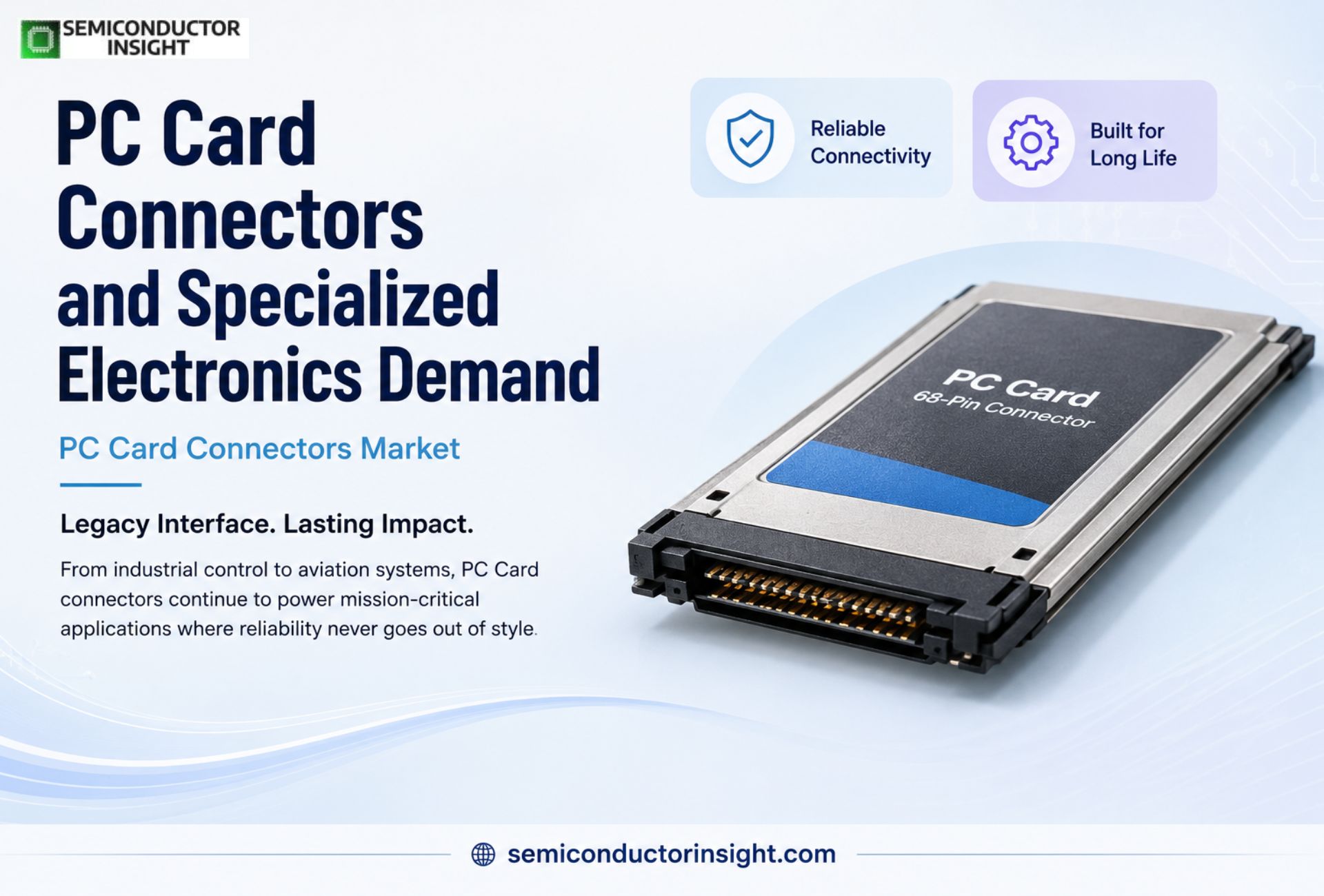
The PC Card connector belongs to an older generation of computer interfaces, but its story has not completely ended. PCMCIA introduced the PC Card concept in 1990 for laptop expansion, while the later CardBus version brought 32-bit connectivity. The standard commonly uses a 68-contact interface, allowing memory, storage and I/O functions through a removable card format.
Today, demand is less connected to mainstream consumer laptops and more closely tied to equipment that has long operating lifecycles. Industrial controllers, aviation systems, railway equipment, specialized computers and legacy automation platforms can continue using PC Card technology years after newer consumer interfaces have replaced it.
The 2026 demand picture is therefore better understood through replacement activity, equipment servicing and specialized applications rather than mass-market laptop volumes.
Why 68 contacts still have a place in specialized hardware?
PC Card connectors typically support two rows of 34 contacts and a 1.27 mm pitch configuration. Commercial suppliers continue to list PCMCIA sockets and connectors, including through-hole and surface-mount versions. TE Connectivity, for example, still maintains PCMCIA products within its memory-card connector portfolio, while distributors continue to carry 68-position parts.
The interesting part is the application profile. Industrial-grade PCMCIA memory products are still supplied for equipment exposed to vibration, shock, temperature variation and intensive read-write cycles. Some industrial storage products support capacities reaching 4 GB and operating temperatures from around -40°C to 85°C, showing why rugged legacy interfaces can remain useful where reliability matters more than interface novelty.
To find out more, feel free to browse our latest updated report: https://semiconductorinsight.com/report/pc-card-connectors-market/
North America
North America remains an important replacement and maintenance market because of its large installed base of industrial, defense, transportation and specialized computing equipment. Aviation is one notable use case. Astronics has documented rugged PCMCIA interfaces for MIL-STD-1553 avionics applications, although several of these products are now classified as obsolete. That status itself creates a replacement requirement because equipment operators often need compatible parts to keep established platforms operational.
Industrial automation is another pocket of demand. Current technical guidance continues to identify PCMCIA cards in legacy Fanuc robotics, PanelView terminals, DataStation equipment and PLC-related systems.
Europe
Europe has a particularly interesting installed-equipment profile because manufacturing, transportation and industrial automation systems often operate for many years. Railway applications provide a clear example. Technical literature has documented PCMCIA as a method for downloading operational data from train control and monitoring systems to portable computers.
The region’s large engineering base also supports specialist connector sourcing. European distributors continue to list PCMCIA products from manufacturers including TE Connectivity, Hirose and Amphenol, indicating that availability remains part of the industrial replacement ecosystem.
Asia Pacific
Asia Pacific is the strongest manufacturing-oriented region in this landscape. Japan, China, South Korea, Taiwan and other electronics centers combine large electronics production capabilities with extensive industrial automation and embedded equipment activity.
Japan’s electronics ecosystem is particularly relevant because Japanese connector manufacturers such as Hirose continue to offer PC Card-compatible connector families. Current distributor listings show 68-position Hirose PC Card connectors with 1.27 mm pitch configurations.
The region also benefits from a broad component supply chain, making it easier for OEMs and maintenance teams to source discontinued or low-volume connector formats.
Latin America
Latin America represents a smaller but meaningful niche, particularly where industrial plants continue operating older automation hardware. PCMCIA-based equipment can remain valuable because replacing an entire controller, workstation or machine interface can cost considerably more than replacing a connector or memory card.
The practical opportunity is therefore centered on maintenance, refurbishment and compatibility. Industrial PCMCIA suppliers continue to advertise replacement cards designed to remain compatible with systems originally built around older manufacturers and ATA specifications.
Middle East & Africa
The Middle East and Africa market is shaped largely by installed industrial equipment, transportation infrastructure, energy facilities and specialized electronic systems. PC Card connectors are unlikely to be a high-volume consumer component here, but they can become strategically important when an older system remains operational and its original interface must be preserved.
This creates a parts-availability market rather than a conventional high-volume expansion market. Suppliers still maintain PCMCIA inventory specifically for legacy replacement requirements, including applications exposed to harsh environments and long service cycles.
The bigger opportunity is hidden inside legacy equipment
PC Card connector market illustrates an unusual semiconductor and electronics trend. Newer interfaces such as USB, PCIe and modern removable storage have taken over mainstream computing, yet older connectors can survive where equipment replacement is expensive, certification is complicated or downtime is unacceptable.
Global internet use reached approximately 6 billion people in 2025, according to the ITU, demonstrating the enormous scale of modern digital infrastructure. Yet the PC Card connector opportunity sits in a much narrower layer of that ecosystem, where specialized machines and long-life electronic platforms still require physical compatibility.
For 2026, the most relevant signal is therefore not mass adoption. It is the continued availability of 68-position connector designs, industrial PCMCIA storage, aviation interfaces, railway systems and automation equipment that keep this older interface commercially relevant.

Comments (0)