
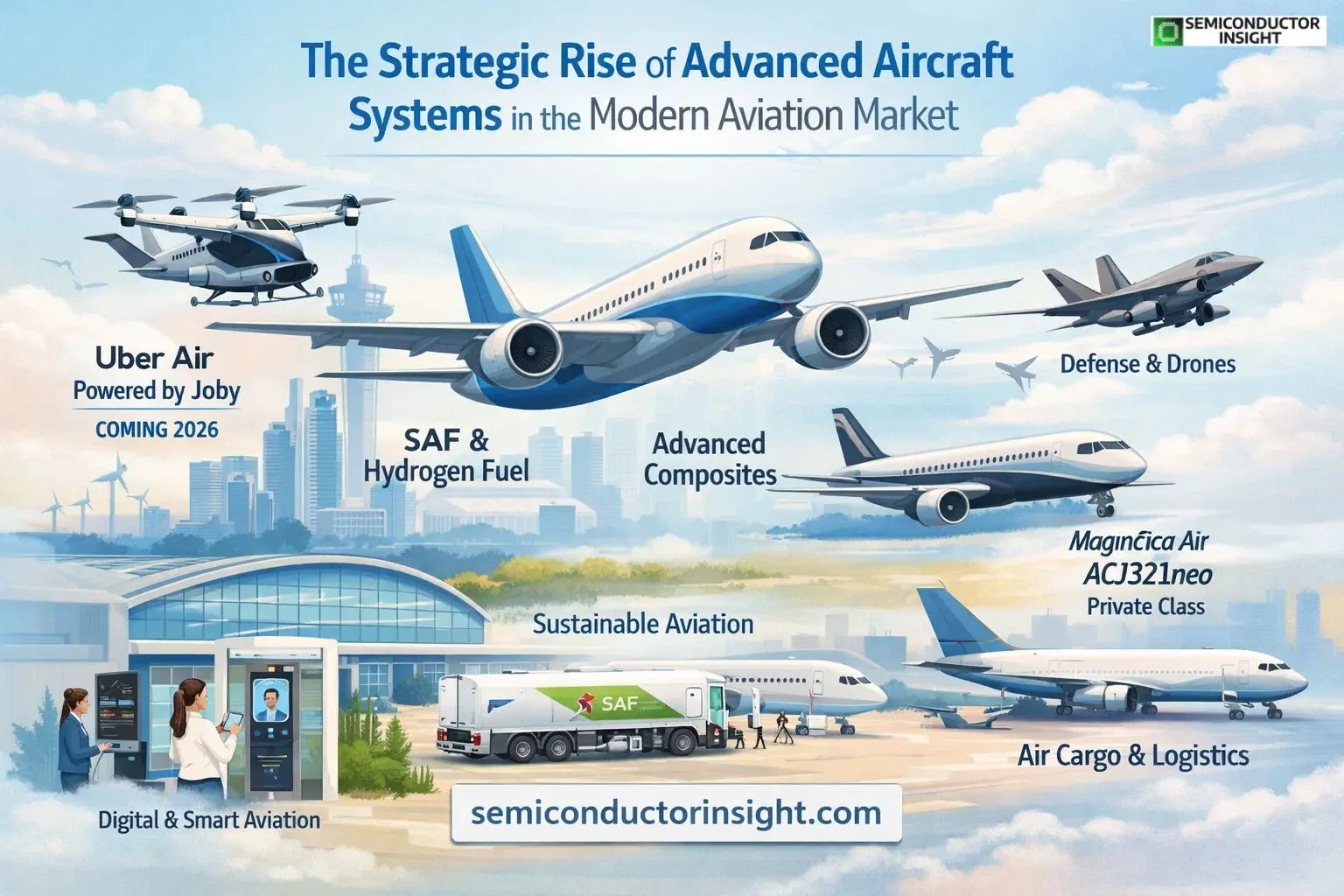
The Strategic Rise of Advanced Aircraft Systems in the Modern Aviation Market
Aviation market is undergoing a structural shift shaped by technological upgrades, sustainability mandates, and changing passenger expectations. Commercial airlines, cargo operators, aircraft manufacturers, and defence aviation programs are interconnected in a value chain that now prioritizes efficiency and resilience. Aircraft orders from major manufacturers continue to reflect renewed airline confidence, with large narrow-body backlogs signalling strong medium-haul demand recovery.
Recent fleet expansion announcements by global carriers demonstrate that airlines are preparing not just for volume growth but for next-generation performance standards. The integration of lightweight composite fuselage structures and high-bypass ratio engines illustrates how material science has become central to aviation competitiveness.
For instance, in March 2026,
- Uber’s app is getting a new feature, and it’s amazing.
- The company said that customers will be able to reserve all-electric air taxis straight through the Uber app with the announcement of Uber Air powered by Joby.
For instance, in February 2026,
- Florida-based start-up Magnifica Air has acquired its first Airbus ACJ321neo aircraft as it prepares for a potential launch in the future years.
- At Orlando International Airport, the airline presented a new livery that was painted on the first of four aircraft that were uniquely outfitted in what Magnifica refers to as its new Private Class cabin category.
Materials Innovation and Aircraft Engineering
Advanced materials now sit at the heart of aviation engineering. Carbon fiber-reinforced polymers, titanium alloys, and next-generation thermoplastics are replacing traditional aluminum components in airframes. These changes reduce aircraft weight, improve corrosion resistance, and enhance overall fuel performance.
Aircraft such as the Airbus A350 and Boeing 787 rely heavily on composite materials, demonstrating how engineering precision translates into long-haul efficiency. The shift toward lightweight structural materials not only reduces operational costs but also lowers emissions output, aligning with international sustainability goals. The role of advanced composites is therefore redefining aircraft durability and lifecycle economics.
Chemical innovations also influence cabin systems, fire-retardant materials, adhesives, and high-performance coatings that protect aircraft from extreme environmental stress. These specialty materials ensure compliance with safety regulations while extending maintenance intervals.
To Know More about the Report, You Can Freely Browse Our Latest Updated Report: https://semiconductorinsight.com/report/aviation-obstruction-lights-market/
Sustainable Aviation and Fuel Transition
One of the most critical shifts in the aviation market is the acceleration toward Sustainable Aviation Fuel (SAF). Governments and aviation alliances are pushing for blending mandates and carbon reduction targets. The European Union’s ReFuelEU Aviation initiative requires gradual SAF blending increases, while the United States supports production expansion through the Inflation Reduction Act’s clean fuel incentives.
Airlines including United Airlines and Lufthansa have conducted SAF-powered commercial flights, demonstrating technical viability at scale. Although SAF production volumes remain limited compared to conventional jet fuel, investment in bio-refineries and synthetic fuel pathways is expanding rapidly.
Beyond fuels, hydrogen propulsion and electric regional aircraft prototypes are being tested by aerospace innovators. While commercial deployment may take time, these developments signal that decarbonization is becoming embedded within long-term aviation planning.
Digital Aviation and Smart Systems
Digital transformation is reshaping how airlines manage fleets, passengers, and operations. Predictive maintenance powered by artificial intelligence reduces unscheduled downtime by analyzing engine performance data in real time. Aircraft health monitoring systems now transmit continuous diagnostics to ground stations, enabling faster servicing decisions.
Airports are also adopting biometric boarding systems and smart baggage tracking to enhance traveler efficiency. For example, biometric verification pilots at major international hubs have reduced boarding times while improving security alignment.
The integration of digital aviation platforms extends to air traffic management. Satellite-based navigation systems improve routing precision, cutting fuel consumption and minimizing delays. This technological shift improves both economic and environmental performance across global networks.
Defense Aviation and Strategic Modernization
Military aviation continues to represent a significant portion of aerospace investment. Governments worldwide are upgrading fighter jets, surveillance aircraft, and unmanned aerial vehicles to strengthen national security frameworks.
The expansion of next-generation fighter programs and long-range surveillance drones reflects rising geopolitical priorities. Defense modernization also stimulates advancements in propulsion systems, avionics, and radar technologies that often spill over into commercial aviation applications.
Dual-use technologies such as lightweight materials and advanced sensors demonstrate how defense and commercial sectors remain interconnected within the broader aviation ecosystem.
Air Cargo and Logistics Acceleration
The air cargo segment gained strategic importance during global supply chain disruptions. Pharmaceutical distribution, semiconductor transport, and high-value electronics shipping have reinforced aviation’s logistical role.
Cargo-focused aircraft conversions have increased, with older passenger aircraft being modified into freighters to meet demand. This adaptive reuse reflects operational flexibility within the market. E-commerce growth continues to sustain dedicated cargo fleet expansion, particularly across Asia-Pacific and North America trade corridors.
Regulatory Architecture and Safety Governance
- Aviation operates within one of the most stringent regulatory environments globally. Agencies such as the Federal Aviation Administration (FAA) and the European Union Aviation Safety Agency (EASA) continuously update certification protocols for aircraft design, pilot training, and maintenance compliance.
- Carbon Offsetting and Reduction Scheme for International Aviation (CORSIA), established by the International Civil Aviation Organization (ICAO), requires airlines to offset emissions growth beyond baseline levels. These frameworks influence procurement decisions, fuel strategies, and operational reporting standards.
- Regulation is not merely restrictive; it often drives innovation. Stricter emissions benchmarks accelerate research into cleaner propulsion systems and efficient aerodynamics.
Passenger Experience and Cabin Reinvention
The passenger cabin has evolved into a differentiated service environment. Airlines are investing in improved air filtration systems, ergonomic seating materials, and high-speed onboard connectivity. Lightweight cabin components made from engineered polymers contribute to fuel savings while maintaining comfort standards.
Premium economy expansion and modular seating concepts show how airlines balance yield optimization with traveler expectations. Enhanced in-flight connectivity partnerships with satellite providers further demonstrate aviation’s integration with digital infrastructure.
Infrastructure and Airport Modernization
Global airport expansion projects underline long-term aviation confidence. Smart terminals equipped with automated check-in kiosks, advanced security scanners, and contactless retail systems are redefining passenger throughput efficiency.
Green airport initiatives including solar-powered terminals and electric ground support equipment reflect the broader sustainability movement. Infrastructure modernization ensures that fleet upgrades align with ground-side capability improvements.

Comments (0)