
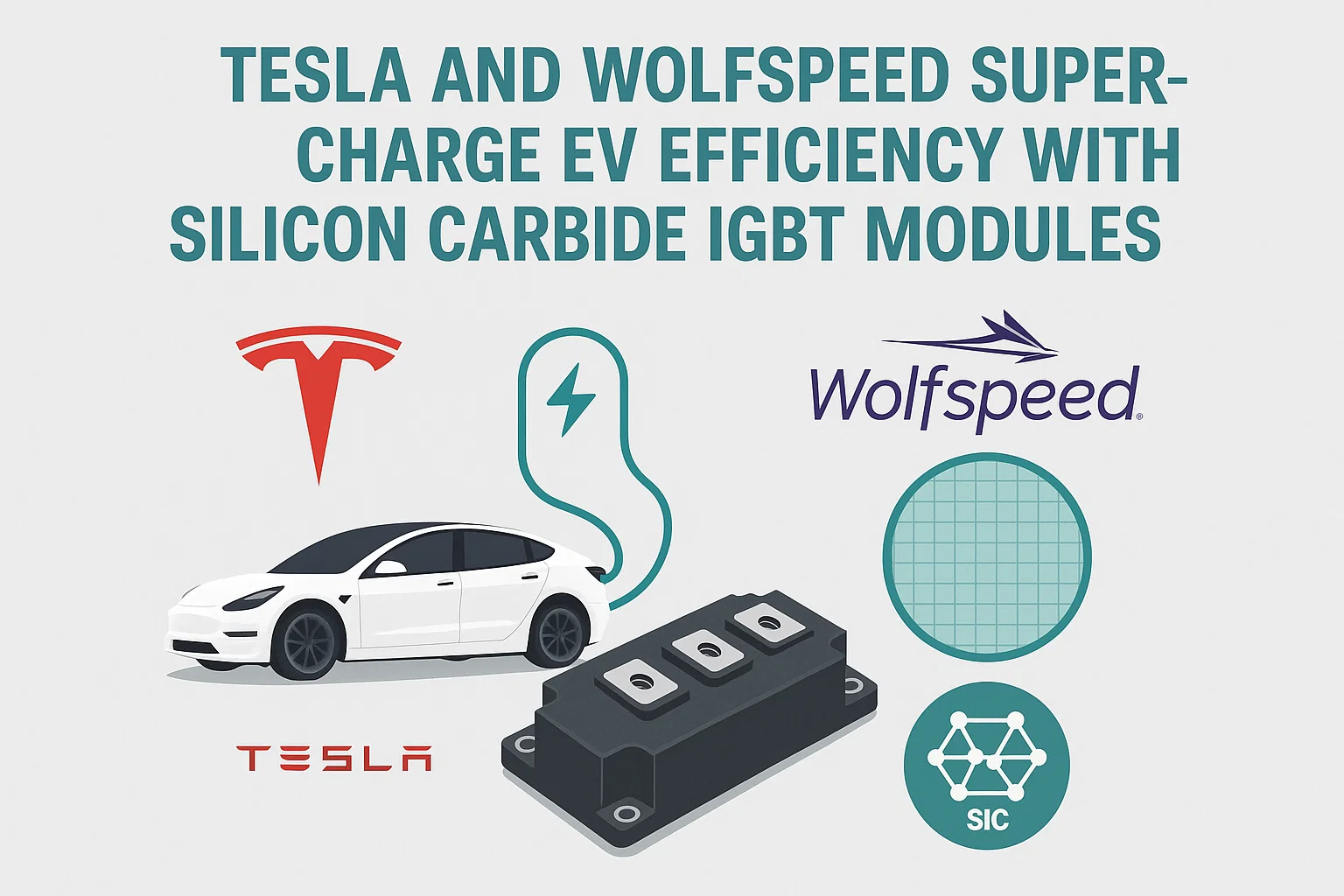
Tesla and Wolfspeed Supercharge EV Efficiency with Silicon Carbide IGBT Modules
The Insulated Gate Bipolar Transistor (IGBT) module industry is undergoing a transformative evolution. As demand for high-efficiency energy systems and electric mobility accelerates, the global IGBT module market is poised for significant growth. In 2024, the market was valued at USD 3,728 million and is projected to reach USD 6,059 million by 2032, growing at a CAGR of 7.4% during the forecast period.
This growth is being driven not just by raw demand but also by technological innovations and strategic initiatives from global leaders in semiconductor and energy systems. Below, we delve into the most significant recent developments in the IGBT module space, as reported by top-tier sources such as Reuters, Bloomberg, Nikkei Asia, and others. We also analyze how these innovations impact the broader market and what they mean for the future.
Access Your Free Sample Report- Insulated Gate Bipolar Transistors (IGBTs) Module Market
1. Tesla and Wolfspeed: Silicon Carbide Paving the Road for Future IGBT Modules
In early 2025, Tesla expanded its collaboration with Wolfspeed, a leading manufacturer of silicon carbide (SiC) semiconductors. This partnership marks a significant leap forward in EV power electronics, where SiC-based IGBT modules are becoming increasingly desirable for their efficiency and thermal performance.
Wolfspeed is set to supply Tesla with advanced SiC devices for drivetrain and charging infrastructure applications. These components outperform traditional silicon-based IGBTs in terms of switching speed and thermal resistance, making them ideal for EV platforms that demand high power density and minimal energy loss.
Impact:
- The automotive industry’s move toward SiC technology is influencing IGBT module designs, pushing manufacturers to innovate in packaging, thermal management, and integration.
- Tesla’s scale and innovation often set industry benchmarks, likely accelerating the adoption of SiC and hybrid modules across other EV manufacturers.
Industry Insight:
Although SiC is not a direct replacement for silicon IGBTs in all applications, the Tesla-Wolfspeed collaboration underscores a growing hybrid trend. Manufacturers are now developing modules that integrate both silicon and SiC components to balance cost and performance.
2. Infineon’s €2 Billion Malaysian Plant: Scaling for the Future
In 2024, Infineon Technologies inaugurated a state-of-the-art facility in Kulim, Malaysia, as reported by Reuters and Financial Times. The plant represents a €2 billion investment and focuses on manufacturing 650V and 1200V IGBT modules, alongside next-generation SiC components.
Key Features:
- The facility will triple Infineon’s production capacity for wide-bandgap semiconductors.
- Targets EV, solar inverter, and industrial motor drive applications.
- Incorporates cutting-edge automation and sustainability practices.
Impact:
- Enhances supply chain resilience in Asia, reducing lead times for key markets.
- Positions Infineon as a global leader in both silicon and SiC power modules.
Industry Insight:
This expansion comes at a crucial time when geopolitical tensions and supply chain bottlenecks are pressing companies to diversify manufacturing locations. Infineon’s proactive investment demonstrates strategic foresight in capturing emerging market demand.
3. Mitsubishi Electric’s AI-Driven IGBT Modules
In a noteworthy development reported by Nikkei Asia and EE Times Japan, Mitsubishi Electric has introduced a new line of high-power IGBT modules equipped with AI-based thermal monitoring. These modules are designed for critical infrastructure like wind turbines, high-speed trains, and industrial converters.
Key Innovations:
- Integrated sensors monitor internal temperature and predict thermal fatigue.
- AI algorithms optimize cooling performance and module lifespan.
Impact:
- Enhances reliability and maintenance predictability in mission-critical systems.
- Reduces operational downtime by providing real-time diagnostics.
Industry Insight:
The use of AI in power electronics represents a significant evolution. While traditionally static, power modules are now becoming smarter, allowing systems to self-regulate and self-diagnose—paving the way for more resilient energy infrastructure.
Download Sample Report PDF- Insulated Gate Bipolar Transistors (IGBTs) Module Market
4. BYD’s Vertical Integration Strategy: In-House IGBT Modules
Chinese EV giant BYD has been making headlines for its aggressive vertical integration strategy. According to Bloomberg and the South China Morning Post, BYD now manufactures its own IGBT modules tailored specifically for its electric vehicles. This strategic move helps the company reduce reliance on foreign semiconductor suppliers.
Key Highlights:
- Custom IGBT modules offer optimal thermal performance and power density.
- Enables BYD to iterate quickly and reduce costs.
Impact:
- BYD becomes less vulnerable to global supply chain disruptions.
- Gains a competitive edge in price-performance optimization for EV powertrains.
Industry Insight:
BYD’s strategy mirrors the Apple model in the semiconductor world: tightly integrated hardware and software designed for maximum synergy. This approach is likely to inspire other EV makers to follow suit.
5. Hitachi Energy’s Liquid-Cooled Modules for Grid Applications
Hitachi Energy, as reported by The Engineer and IEEE Spectrum, has launched a new line of liquid-cooled IGBT modules targeted at grid-scale converters and renewable energy systems.
Key Features:
- Designed for medium-voltage applications in harsh environments.
- High switching frequency with minimal thermal drift.
Impact:
- Extends IGBT application into grid-scale renewable integration, such as solar farms and offshore wind.
- Facilitates greater energy efficiency in utility-scale systems.
Industry Insight:
As the world moves toward decarbonization, grid resilience becomes critical. Liquid cooling enhances thermal performance and reliability, enabling IGBT modules to handle more demanding grid conditions.
Global Market Trends and Future Outlook
Market Projections
As mentioned earlier, the global IGBT module market was valued at USD 3,728 million in 2024 and is projected to reach USD 6,059 million by 2032. This growth is largely fueled by:
- The electrification of transportation.
- Expansion of renewable energy infrastructure.
- Increasing demand for energy-efficient industrial systems.
Regional Highlights
- Asia-Pacific continues to dominate the market, with major manufacturing hubs in China, Japan, South Korea, and Malaysia.
- Europe is focusing on green energy and rail electrification, demanding high-efficiency IGBT solutions.
- North America is investing in smart grids and EV infrastructure, spurring localized production.
Key Challenges
- Heat Management: As IGBT modules handle higher power densities, thermal management remains a challenge.
- Supply Chain Risks: Geopolitical instability and rare material scarcity can impact manufacturing.
- Cost of SiC Transition: Silicon carbide technology offers performance benefits but at a higher initial cost.
Emerging Opportunities
- AI Integration: Smarter modules with real-time diagnostics and predictive maintenance.
- 3D Packaging: Enhanced module designs for compact and high-performance applications.
- Sustainability: Development of eco-friendly materials and energy-efficient production processes.
Click Here To Download Full Sample Report- Insulated Gate Bipolar Transistors (IGBTs) Module Market
The Electrified Path Ahead
The IGBT module industry is at an inflection point. With electric vehicles, smart grids, and renewable energy systems driving unprecedented demand, innovation is no longer optional—it’s essential. From Tesla’s adoption of SiC modules to Mitsubishi’s AI-integrated solutions, the landscape is evolving rapidly.
Strategic investments, like Infineon’s mega-plant and BYD’s in-house production, show how companies are responding not just to market demand but to the need for agility and self-sufficiency. Meanwhile, technological advances such as liquid cooling and hybrid silicon-SiC designs promise to overcome traditional limitations.
As we move toward a more electrified, efficient, and intelligent future, IGBT modules will remain at the heart of this transformation—powering everything from the cars we drive to the grids that light our cities. The road ahead is not just about electrons—it’s about innovation, resilience, and sustainable growth.

Comments (0)