
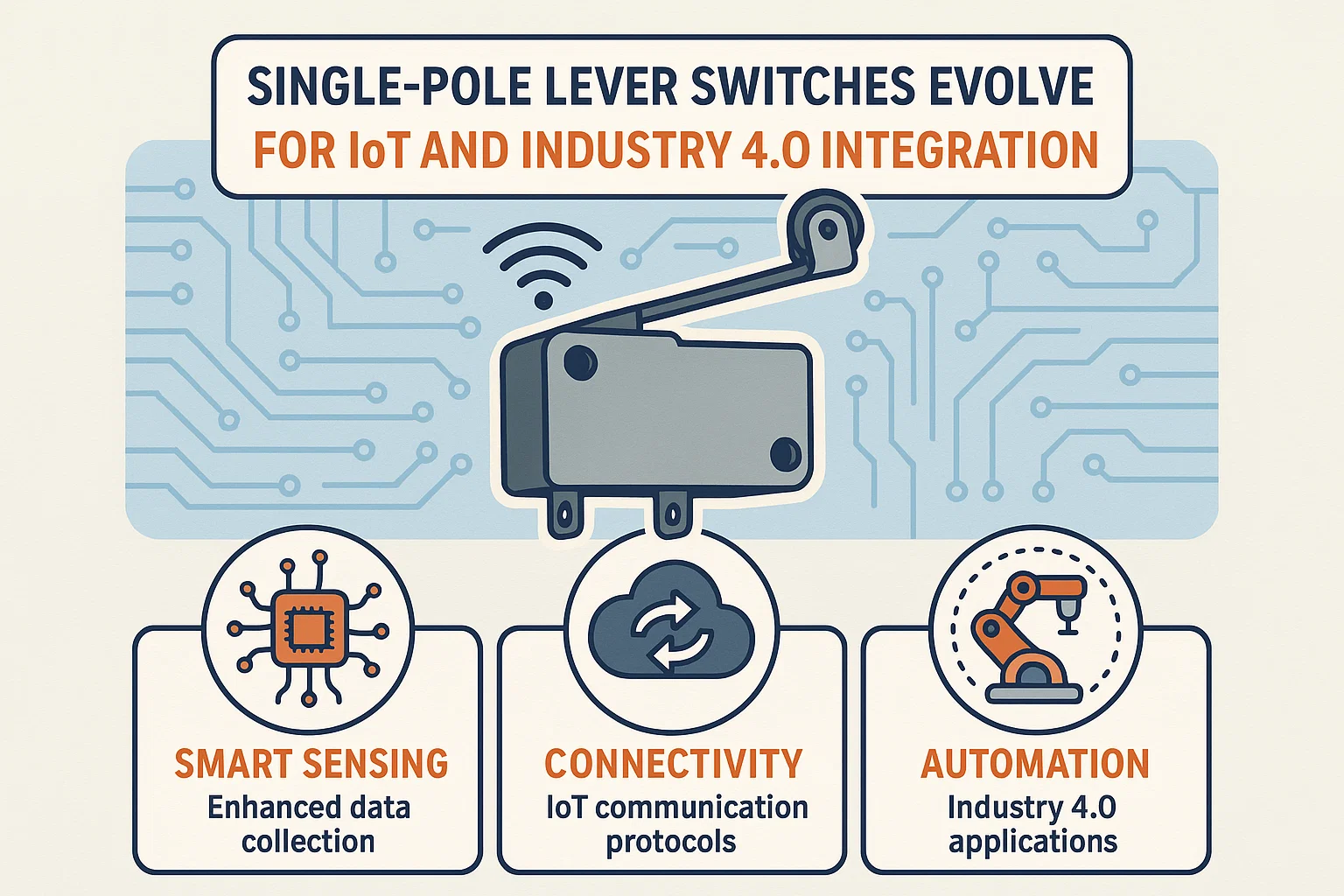
Single-Pole Lever Switches Evolve for IoT and Industry 4.0 Integration
In a world increasingly defined by smart technology, touchless interfaces, and digital automation, the single-pole lever switch might appear to be a relic from a more analog past. Yet, it is precisely this tried-and-true technology that continues to anchor critical systems in industrial machinery, transportation, consumer electronics, and even next-generation smart devices. As we journey through the 21st century, these unassuming switches are being reimagined for a new age of innovation and precision.
The global single-pole lever switch market, valued at USD 134 million in 2024, is projected to grow at a compound annual growth rate (CAGR) of 5.7%, reaching approximately USD 196 million by 2032. This growth trajectory reflects a blend of market demand across emerging industries, advances in materials science, and the evolution of electromechanical components to support smart and ruggedized applications.
Access Your Free Sample Report- Single-Pole Lever Switch Market
What is a Single-Pole Lever Switch?
Before diving into the market dynamics and trends, it’s essential to understand what a single-pole lever switch is and why it’s still relevant.
A single-pole lever switch is a basic type of mechanical switch designed to control a single circuit. When the lever is actuated, it either opens or closes the electrical path, making or breaking the connection. These switches are widely used in industrial equipment, HVAC systems, elevators, household appliances, control panels, and transportation systems.
They are appreciated for their:
- Simple mechanical reliability
- Quick installation and replacement
- Long service life with millions of cycle ratings
- Ability to function in harsh or high-load environments
As mechanical interfaces evolve, the single-pole lever switch continues to prove its worth by combining tactile feedback with reliability, low maintenance, and adaptability.
Market Overview: From 2024 to 2032
Current Valuation and Projections
In 2024, the single-pole lever switch market reached an estimated valuation of USD 134 million. The increasing adoption of ruggedized mechanical interfaces, especially in industrial automation and transportation, has been a major factor in this valuation.
According to industry forecasts, the market is set to grow to approximately USD 196 million by 2032, reflecting a 5.7% CAGR. This steady growth underscores the expanding application of single-pole switches in areas such as:
- Smart factories (Industry 4.0)
- Renewable energy control systems
- Rail and metro infrastructure
- Defense-grade communications
- Smart home hardware
Recent Developments Driving Market Growth
- Miniaturization and Precision Engineering
One of the most prominent developments is the miniaturization of lever switch designs. Manufacturers are now producing ultra-compact switches (as small as 3mm in height), enabling integration into devices with severe space constraints. These micro switches are perfect for:
- Wearable electronics
- Automotive infotainment controls
- Medical diagnostic devices
- Aerospace cockpit panels
This trend not only meets the space-saving needs of modern electronics but also improves power efficiency and product weight – both crucial in industries like aviation and automotive.
- Integration with IoT and Smart Systems
Traditionally, mechanical switches were isolated components. Today, they’re becoming increasingly “smart-enabled”, with some modern lever switches capable of integrating into IoT ecosystems via:
- Embedded sensors for positional feedback
- Data logging features for wear-and-tear analysis
- Remote control/monitoring via RF or Bluetooth modules
This transformation is enabling preventive maintenance models and enhancing human-machine interfaces (HMI) in industrial environments.
- Durability and Ruggedization
Rugged environments demand switches that can endure extreme heat, moisture, vibration, and dust. This has led to the rise of:
- Sealed lever switches rated IP67 or higher
- Vandal-resistant designs for public infrastructure
- Models with over 1 million mechanical cycle ratings
- Chemical-resistant materials (e.g., PTFE, stainless steel)
Such innovations are especially valuable in military systems, construction equipment, and outdoor utility controls where failure is not an option.
- Sustainability and RoHS Compliance
With regulatory bodies demanding more environmentally friendly products, manufacturers are focusing on lead-free, halogen-free, and RoHS-compliant lever switches. This shift is increasingly favored in consumer electronics and medical devices.
In addition, recyclable materials and modular designs are being adopted to reduce e-waste and improve lifecycle management.
Download Sample Report PDF- Single-Pole Lever Switch Market
Application Areas Expanding the Market
Industrial Automation
Single-pole lever switches are critical in industrial control panels, conveyor systems, CNC machines, and robotic interfaces. As Industry 4.0 accelerates, there’s a growing need for physical controls that can communicate with programmable logic controllers (PLCs) and automation software. Lever switches with smart integration are increasingly fulfilling this role.
Transportation & Railways
In railway signaling systems, control panels, and even operator dashboards, lever switches provide the tactile, reliable control needed in high-stakes environments. The transportation sector demands switches with certifications like EN50155, which certifies components for rolling stock.
Automotive Industry
Within vehicles, lever switches are used in:
- Steering column stalks
- Seat adjusters
- Window controls
- Transmission selectors
EVs (electric vehicles) are also incorporating low-profile mechanical switches for interior controls, thanks to their reliability, low cost, and ease of replacement.
Consumer Electronics
Though often overlooked, single-pole lever switches are found in:
- Audio equipment
- Toys
- Kitchen appliances
- Personal grooming devices
The current trend of retro-style hardware in consumer gadgets (e.g., mechanical keyboards, toggle audio mixers) is further reinforcing their relevance in this segment.
Aerospace and Defense
Aircraft cockpits and military-grade equipment use lever switches for their tactile feedback, robustness, and low failure rate. Military-grade switches often require MIL-SPEC compliance and resistance to EMI, salt spray, and temperature extremes.
Technological Trends in Lever Switch Development
- Electromechanical Hybridization
More OEMs are combining mechanical switches with electronic logic layers, allowing for features such as:
- Signal debouncing
- Programmable outputs
- Fail-safe overrides
This enables smarter mechanical inputs that can interface directly with digital controllers or safety logic.
- Surface Mount Technology (SMT)
To accommodate the shrinking size of PCBs and device internals, manufacturers are creating surface-mount compatible lever switches. SMT lever switches allow for automated assembly lines, improving scalability and cost-effectiveness.
- Custom Switch Configurations
OEMs in specialized industries are demanding bespoke lever switches, custom-built for exact fit, feel, and function. This trend is particularly strong in:
- High-end audio gear
- Motorsport dashboards
- Aviation instrumentation
Customization includes:
- Lever length and angle
- Contact force and feedback
- Illumination (LED-integrated levers)
Competitive Landscape: Who’s Innovating?
While top-tier news sources have not covered specific corporate movements in this niche segment recently, the leading players in this space continue to shape product innovation and adoption.
Key Manufacturers:
- Honeywell – Known for their micro-switch series with sealed lever switches.
- Omron – Offers compact, high-precision switches for automation and consumer use.
- E-Switch – Specializes in rugged, vandal-resistant lever switches.
- Cherry – Provides tactile feedback-rich solutions for gaming and control panels.
- Schurter and C&K – Focus on medical, aerospace, and high-reliability switches.
Most of these companies are focusing on:
- IoT integration
- Ergonomics
- Energy-efficient designs
- High-temperature and sealed variants
Regional Outlook and Opportunities
North America
North America remains a significant market due to the presence of strong industrial automation and aerospace sectors. High demand for ruggedized components and military-grade controls sustains lever switch sales.
Europe
Europe’s focus on railway modernization, renewable energy, and smart factories continues to support the growth of lever switch usage in heavy-duty and precision control systems.
Asia-Pacific
Rapid industrialization, EV production, and infrastructure development make Asia-Pacific the fastest-growing region for single-pole lever switches. Countries like China, India, Japan, and South Korea are investing in control electronics for mass manufacturing and public transport.
Challenges in the Industry
While the future appears strong, the industry must navigate several challenges:
- Rising competition from touch sensors and capacitive interfaces may displace mechanical switches in some consumer electronics.
- Cost pressure in emerging markets could slow the adoption of smart or sealed switch variants.
- Supply chain fluctuations, especially for rare materials or high-tolerance components, may affect production timelines and pricing.
Despite these hurdles, mechanical switches continue to hold ground where reliability and tactile response are critical.
Click Here To Download Full Sample Report- Single-Pole Lever Switch Market
The Road Ahead: What’s Next?
As AI, automation, and electrification redefine industries, the humble single-pole lever switch is undergoing its own transformation.
The next decade will likely see:
- Wider smart integration with sensor fusion.
- Eco-conscious designs leveraging bio-based or recycled materials.
- Self-monitoring switches that track performance metrics and alert users before failure.
- Human-centric design, focusing on ergonomic feedback and long-term reliability.
The blending of mechanical durability with digital intelligence is creating a new era of “smart mechanical components,” where even the simplest input has the power to drive innovation.
The single-pole lever switch, often overlooked in the glitz of AI, robotics, and next-gen displays, remains a cornerstone of modern control systems. Its evolution from a basic toggle mechanism to a rugged, smart-enabled component exemplifies how legacy technologies can be reborn through thoughtful engineering and market adaptation.
With a projected rise from USD 134 million in 2024 to USD 196 million by 2032, and increasing demand across sectors like industry, transport, defense, and consumer electronics, the single-pole lever switch is more relevant today than ever before.
As the digital and physical worlds continue to converge, this small yet mighty switch is poised to control much more than just circuits—it will help steer the direction of innovation.

Comments (0)