

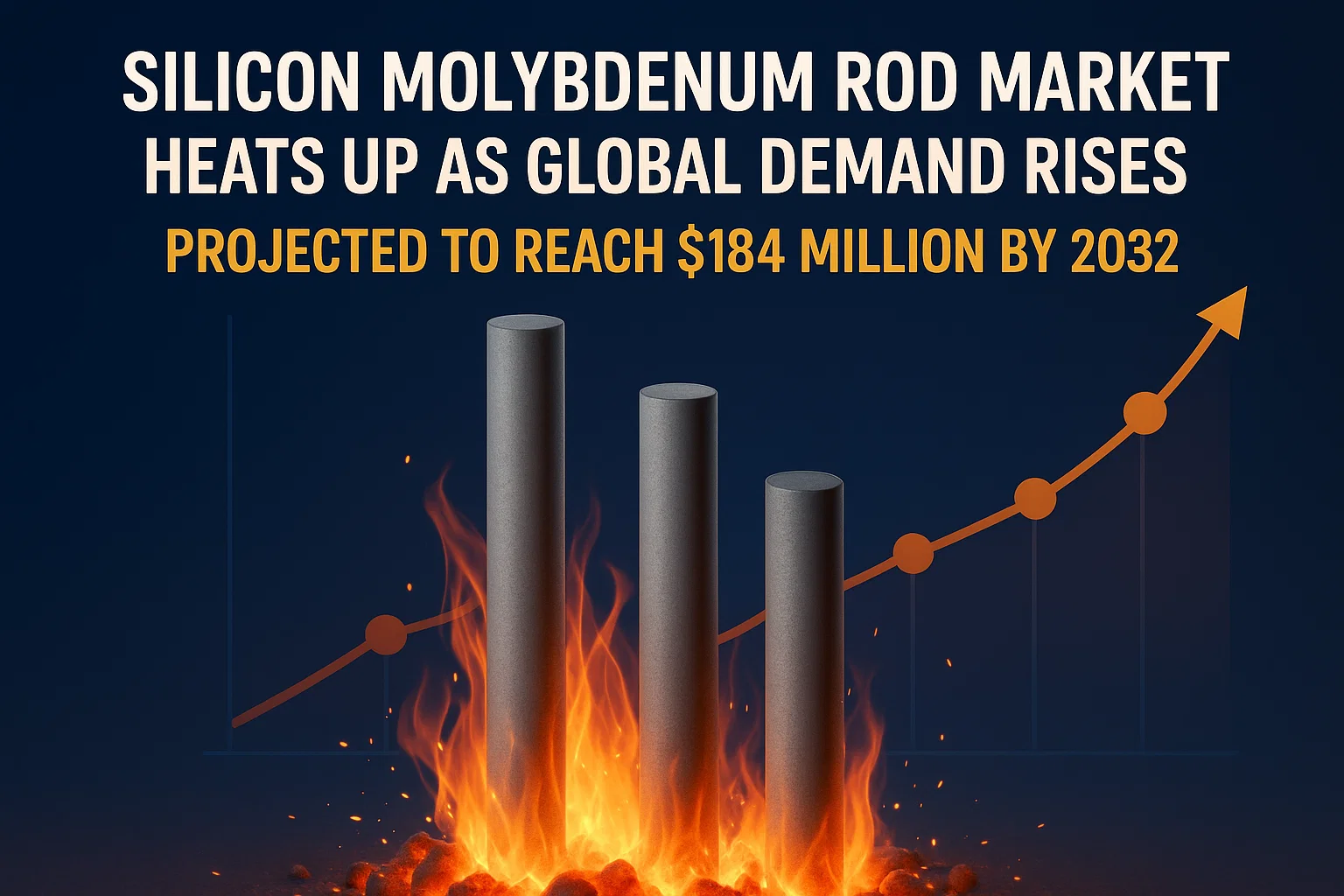
Silicon Molybdenum Rod Market Heats Up as Global Demand Rises: Projected to Reach $184 Million by 2032
The global Silicon Molybdenum Rod market is entering a phase of consistent growth, driven by increasing demand for high-temperature industrial heating applications and technological innovations in materials science. According to recent market estimates, the industry was valued at USD 125 million in 2024 and is projected to reach USD 184 million by 2032, registering a compound annual growth rate (CAGR) of 5.6% during the forecast period.
These specialized heating elements play a critical role across multiple sectors, including metallurgy, ceramics, glass manufacturing, electronics, and semiconductor processing. With global industrialization and the shift towards advanced manufacturing, demand for durable, energy-efficient, and reliable heating solutions continues to rise, making silicon molybdenum rods a vital component of modern thermal systems.
Access Your Free Sample Report- Silicon Molybdenum Rod Market
Understanding Silicon Molybdenum Rods
Silicon Molybdenum (Si-Mo) rods, often referred to as molybdenum silicide heating elements, are high-temperature heating elements known for their exceptional ability to operate at extremely high temperatures ranging from 1,600°C to 1,800°C. These rods are typically made of MoSi₂ (molybdenum disilicide), a ceramic-like material with excellent oxidation resistance at elevated temperatures.
Key Properties:
- High Temperature Resistance: Can sustain prolonged exposure to high temperatures without degradation.
- Oxidation Resistance: Forms a protective silica layer that minimizes oxidation at high temperatures.
- Long Service Life: When used under optimal conditions, these rods have a longer operational lifespan than many conventional heating elements.
- Stable Electrical Performance: Maintains consistent resistivity, ensuring stable heating performance over time.
Major Applications:
- Metallurgical Furnaces – Used in steel and alloy production.
- Ceramic Industry – For firing and sintering high-performance ceramics.
- Glass Manufacturing – Ensuring precise temperature control in melting and forming processes.
- Semiconductor Fabrication – For wafer processing and heat treatment applications.
- Laboratory and Research Furnaces – Essential for scientific research in materials science.
Recent Developments in the Silicon Molybdenum Rod Industry
1. Chinese Manufacturer Exports to Russia
In March 2025, a prominent Chinese materials company, CVSIC, shipped 2,000 silicon molybdenum rods to a large industrial client in Russia.
- Significance:
- This shipment highlights the global demand for Si-Mo rods and China’s dominant position in the manufacturing and export of these heating elements.
- With geopolitical factors influencing supply chains, Russia’s reliance on Chinese suppliers illustrates the shifting dynamics of global trade for high-temperature industrial components.
- Market Implication:
- China continues to solidify its leadership in the production of advanced heating elements, leveraging its vertically integrated supply chain for molybdenum extraction, processing, and manufacturing.
2. Comparative Studies Between SiC and Si-Mo Rods
A recent technical report published on ResistiveHeatingElements.com compared Silicon Carbide (SiC) rods with Silicon Molybdenum rods to help industries select the optimal heating element for specific applications.
Key Findings:
- Si-Mo rods are superior for extreme high-temperature operations (up to 1,800°C), making them ideal for advanced metallurgical and ceramic applications.
- SiC rods, while more cost-effective, are limited to lower temperature ranges and require more frequent replacements.
- Si-Mo rods, however, are more sensitive to oxidation at low temperatures (500°C – 800°C), necessitating careful system design and maintenance.
Industry Impact:
- This comparison is crucial as industries seek cost-efficiency and durability. Many manufacturers are now investing in hybrid systems combining both materials to optimize performance and reduce operational costs.
3. Addressing Oxidation Challenges
One of the persistent technical challenges facing Si-Mo rods is low-temperature oxidation, which can lead to:
- Embrittlement of the rod surface.
- Formation of molybdenum trioxide (MoO₃), which deteriorates mechanical strength.
- Shortened service life.
Recent Research Insights:
- A technical publication by com highlighted new countermeasures being adopted to mitigate oxidation damage:
- Application of protective coatings to create an additional barrier against oxidation.
- Regular maintenance and inspection schedules to clean and monitor rods.
- Design modifications to minimize exposure to vulnerable temperature zones during operations.
These innovations are helping manufacturers extend the lifespan of their heating elements, leading to lower long-term costs and improved energy efficiency.
4. Hot Bending Technology Revolutionizes Customization
Traditional Si-Mo rods were limited in their shapes and configurations, restricting their use in complex furnace geometries.
In 2025, a breakthrough hot bending process was introduced by leading manufacturers, allowing rods to be bent and shaped at temperatures exceeding 1,900°C without compromising structural integrity.
- Benefits of Hot Bending:
- Enables customized furnace designs for specific industrial applications.
- Improves heat distribution efficiency, reducing energy consumption.
- Opens new opportunities in advanced industries like aerospace and semiconductor fabrication.
This development marks a significant step toward flexible, application-specific heating solutions, helping companies optimize their thermal processing systems.
Download Sample Report PDF- Silicon Molybdenum Rod Market
5. Stable Molybdenum Market Prices
The cost of molybdenum, a key raw material for Si-Mo rods, has remained relatively stable through 2025, especially in China, which is the leading producer.
- Why This Matters:
- Stable raw material prices help manufacturers maintain predictable production costs.
- It shields end-users from volatile pricing, making high-temperature heating solutions more accessible to mid-sized enterprises.
This stability provides a solid foundation for moderate and consistent growth in the silicon molybdenum rod market through 2032.
Market Dynamics Driving Growth
1. Rising Demand for Advanced Manufacturing
Industries worldwide are transitioning toward precision manufacturing, which requires accurate temperature control. Silicon molybdenum rods are increasingly favored in:
- Aerospace component production.
- Semiconductor wafer processing.
- Advanced ceramics used in electronics and medical devices.
These applications demand heating elements with exceptional stability and longevity, directly boosting the Si-Mo rod market.
2. Growth in Semiconductor and Electronics Sectors
The semiconductor industry is expanding rapidly due to increasing demand for consumer electronics, electric vehicles, and IoT devices.
- Si-Mo rods are critical for processes like diffusion, oxidation, and annealing, making them indispensable to wafer fabrication facilities.
- With global semiconductor supply chains diversifying, particularly in Asia and North America, demand for these heating elements will continue to grow.
3. Energy Efficiency and Sustainability Trends
As industries face stricter environmental regulations, there is a growing push toward energy-efficient furnaces and heating systems.
- Si-Mo rods contribute to energy savings by offering high thermal efficiency and longer service lives, which reduce waste and downtime.
- Companies are also exploring recyclable and environmentally friendly production processes for these rods, aligning with global sustainability goals.
4. Geopolitical Influences and Supply Chain Shifts
Geopolitical tensions and trade policies are influencing the global supply chain for advanced industrial components:
- Countries like Russia are turning to Chinese suppliers for critical industrial equipment due to sanctions and import restrictions.
- Western nations are investing in domestic production capabilities to reduce dependency on foreign suppliers.
These dynamics are creating both challenges and opportunities for Si-Mo rod manufacturers, especially those looking to expand internationally.
Challenges Facing the Industry
Despite its promising growth trajectory, the Si-Mo rod industry faces several hurdles:
1. High Production Costs
The complex manufacturing process of molybdenum silicide rods requires:
- Advanced sintering equipment.
- High-purity raw materials.
- Skilled labor.
These factors contribute to elevated production costs, which can limit adoption among cost-sensitive industries.
2. Competition from Alternative Materials
Silicon carbide (SiC) rods are a direct competitor, offering lower upfront costs and easier availability.
While Si-Mo rods excel at high temperatures, industries operating below 1,600°C may opt for SiC, challenging Si-Mo market penetration.
3. Oxidation Vulnerability
As highlighted earlier, Si-Mo rods are prone to low-temperature oxidation, requiring additional investments in design and maintenance.
Regional Market Insights
Asia-Pacific: The Global Leader
- China dominates global production and consumption of silicon molybdenum rods.
- Rising industrialization in India, Japan, and South Korea is further boosting regional demand.
- Government policies supporting domestic manufacturing are creating new opportunities for local suppliers.
North America: Driven by Semiconductor Growth
- The U.S. is experiencing increased demand due to its booming semiconductor industry and investments in advanced manufacturing.
- Local companies are also focusing on R&D and technological innovations to reduce dependency on imports.
Europe: Sustainability at the Core
- European countries emphasize energy-efficient and environmentally friendly manufacturing, aligning perfectly with the benefits of Si-Mo rods.
- Strong demand from the aerospace and automotive sectors adds to regional growth.
Click Here To Download Full Sample Report- Silicon Molybdenum Rod Market
Future Outlook (2025–2032)
With the market projected to grow at a CAGR of 5.6%, the future of the silicon molybdenum rod industry looks promising.
Key trends likely to shape the industry include:
- Integration of Smart Technologies
- IoT-enabled sensors will allow real-time monitoring of rod performance, reducing downtime and maintenance costs.
- Greater Customization
- Hot bending and other advanced fabrication techniques will enable bespoke designs tailored to specific industrial applications.
- Sustainability Initiatives
- Increased focus on recycling and sustainable production methods will enhance the industry’s environmental profile.
- Global Supply Chain Diversification
- Companies will seek to mitigate geopolitical risks by establishing multiple manufacturing and distribution hubs worldwide.
By 2032, the market is expected to reach USD 184 million, driven by a perfect blend of technological innovation, industrial demand, and strategic global partnerships. Manufacturers who focus on sustainability, customization, and supply chain resilience will be well-positioned to lead this thriving sector into the future.

Comments (0)