

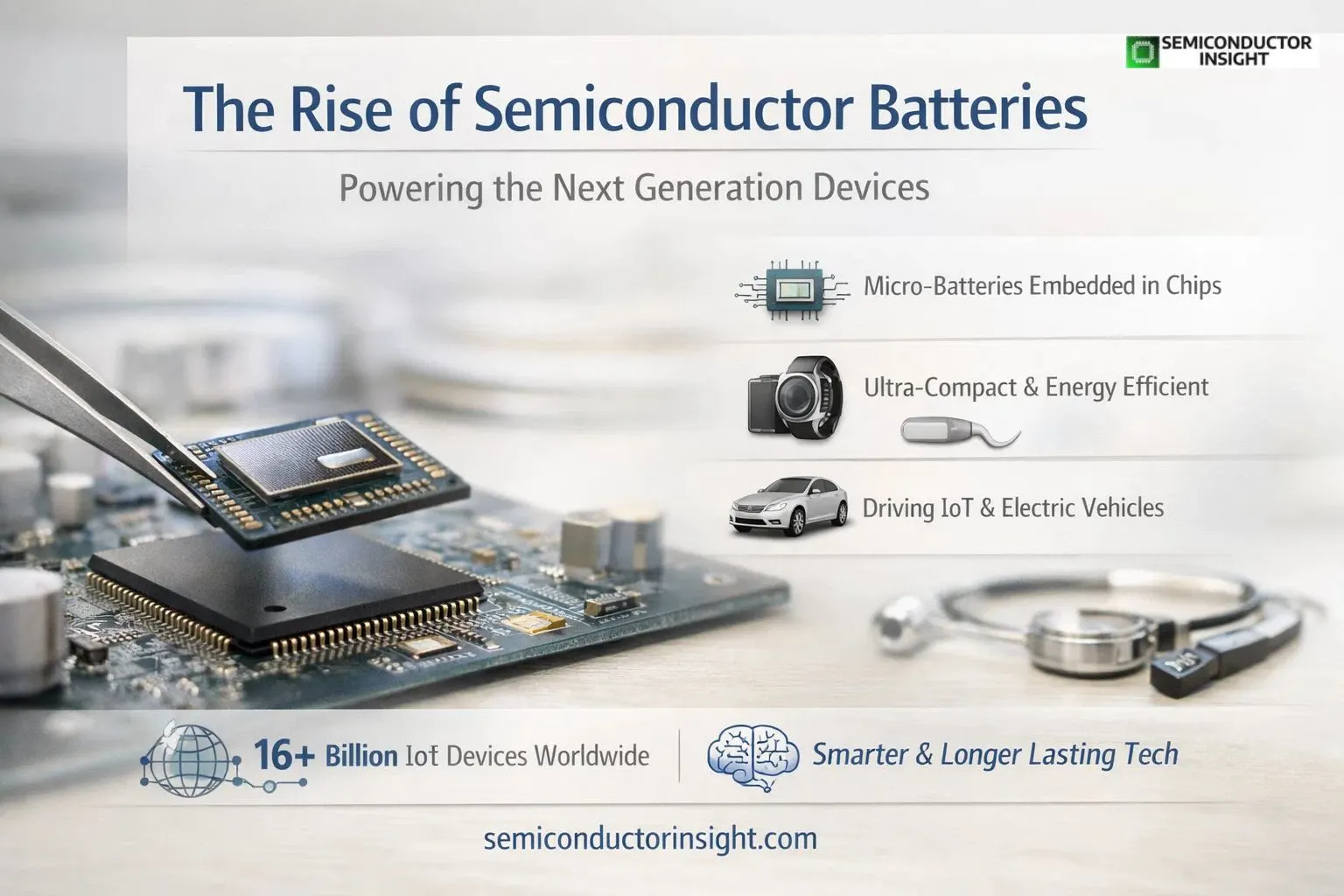
Top Semiconductor Battery Market Trends Powering Next Generation Electronics
Semiconductor battery market sits at a fascinating crossroads where energy storage meets microelectronics. Semiconductor-based battery systems, in contrast to conventional batteries that solely rely on electrochemical processes, are becoming more and more integrated with chips, sensors, and small electronic designs. The increasing need for gadgets that are more compact, intelligent, and energy-efficient is driving this change.
From wearable electronics to autonomous systems, devices today are expected to operate longer while occupying less space. Semiconductor batteries are stepping in to meet these expectations by enabling tighter integration with circuits and improving energy density at a micro scale. This is particularly relevant in applications where space constraints and power efficiency are equally critical.
Stay updated with in-depth related report analysis by clicking here: https://semiconductorinsight.com/report/battery-market-2/
How Miniaturization Is Driving Battery Innovation?
- The push toward miniaturization in electronics has fundamentally changed how batteries are designed and deployed.
- Semiconductor batteries are now being engineered to fit directly into printed circuit boards or chip packages, reducing the need for bulky external power sources.
- In recent years, research institutions and semiconductor manufacturers have demonstrated micro-batteries that can be embedded within chips used in medical implants and IoT sensors.
- For instance, advancements in solid-state thin-film batteries have enabled energy storage components to be just a few millimetres thick while maintaining reliable performance.
- This trend is especially visible in healthcare devices such as implantable monitors, where long battery life and compact size are essential.
- Semiconductor-integrated batteries reduce the need for frequent replacements, improving patient comfort and device reliability.
Industrial Data Reflecting Growing Demand
The demand for compact and efficient power solutions is not theoretical it is strongly supported by real-world data. According to the International Energy Agency, the global deployment of connected IoT devices surpassed 16 billion units in recent years, with projections continuing to rise. A significant portion of these devices requires low-power, long-lasting battery solutions, directly influencing the adoption of semiconductor battery technologies.
In the electric mobility space, semiconductor-driven battery management systems are also gaining traction. Reports from automotive engineering associations indicate that advanced battery management integrated with semiconductor components can improve energy efficiency in electric vehicles by optimizing charge cycles and thermal performance.
Additionally, consumer electronics manufacturers have reported reductions in device thickness by integrating compact battery solutions alongside semiconductor components, reflecting a clear shift toward integrated design approaches.
Industry-Focused Innovations Delivering Tangible Value
The influence of semiconductor batteries extends across multiple industries. In consumer electronics, they are enabling ultra-thin devices such as smartwatches and wireless earbuds to deliver longer usage times without increasing size. The seamless integration with semiconductor chips ensures efficient energy distribution and reduced power loss.
In industrial automation, semiconductor batteries are powering wireless sensors used for predictive maintenance. These sensors monitor equipment performance in real time, often in hard-to-reach locations where replacing batteries frequently is not practical. The reliability and longevity of semiconductor-based solutions make them ideal for such use cases.
Another emerging application is in smart packaging, where small semiconductor-powered batteries enable tracking and monitoring of goods during transportation. This is particularly valuable in pharmaceuticals and perishable goods logistics, where maintaining specific environmental conditions is crucial.
Integration with Smart Systems and AI-Driven Devices
- As devices become smarter, the role of semiconductor batteries is evolving beyond simple energy storage. They are now part of intelligent systems where power usage is dynamically managed based on device activity.
- This is particularly important in AI-driven applications, where processing demands can vary significantly.
- For example, edge computing devices used in surveillance or industrial monitoring rely on efficient power management to process data locally.
- Semiconductor batteries, combined with energy-efficient chips, enable these systems to operate continuously without frequent recharging.
- This integration also supports sustainability goals by reducing energy waste and extending the operational life of devices.
- As industries move toward greener technologies, efficient battery systems will play a crucial role in minimizing environmental impact.
Practical Industry Perspective
Engineers and product designers increasingly view semiconductor batteries as more than just components they are enablers of innovation. The ability to design compact, efficient, and reliable devices depends heavily on how power is managed at the micro level.
In fast-evolving sectors like consumer electronics and mobility, the pressure to deliver high performance within limited space continues to grow. Semiconductor batteries provide a pathway to achieve this balance, supporting both functionality and design flexibility.
The market is not just expanding; it is transforming alongside the broader semiconductor ecosystem. As technology continues to evolve, the integration of energy storage and electronic systems will remain a defining factor in shaping next-generation devices.

Comments (0)