
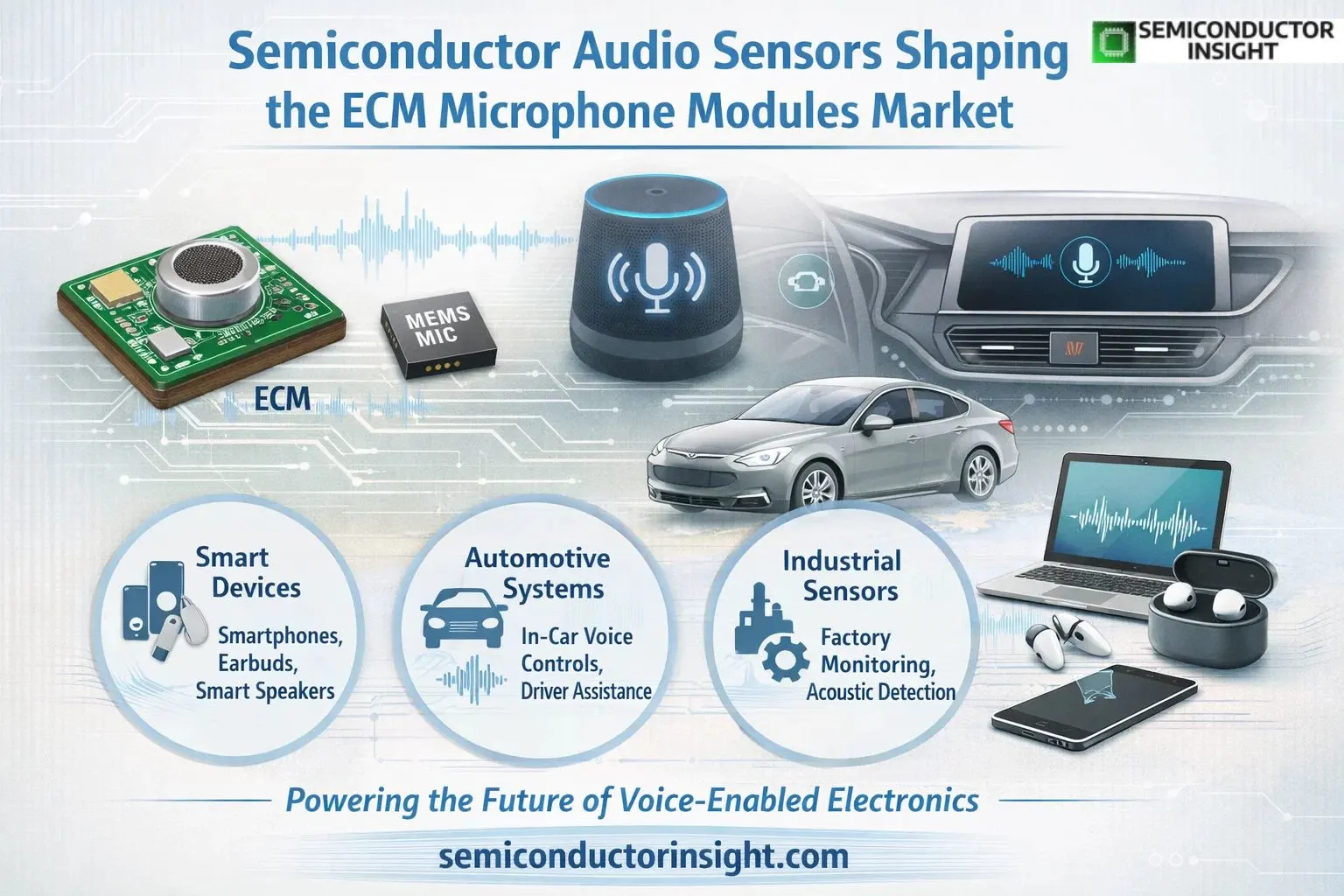
Semiconductor Audio Sensors Shaping the ECM Microphone Modules Market
ECM microphone modules market is gaining strategic importance as voice interfaces become a standard feature in modern electronics. From smartphones and laptops to smart home systems and automotive voice assistants, audio sensors are now deeply integrated into semiconductor-based devices.
Microphone technology has evolved alongside semiconductor miniaturization. Today’s microphone modules combine acoustic sensors, signal processors, and packaging technology within compact semiconductor structures. Industry data indicates that billions of microphone units are shipped every year for integration into consumer electronics, IoT devices, and communication systems.
Voice-enabled electronics have expanded rapidly over the past decade. More than 320 million smart speakers are active globally, and these devices rely on multi-microphone arrays to detect voice commands and filter background noise.
This rapid adoption of voice-driven technology is one of the primary factors supporting the growth of the ECM microphone modules ecosystem.
Semiconductor Packaging Enabling Compact Audio Modules
One of the defining characteristics of ECM microphone modules is their compact design enabled through semiconductor packaging techniques. These modules often combine electret condenser elements with integrated circuits that amplify and process audio signals.
Modern consumer electronics frequently include multiple microphones for advanced audio functions. Many smartphones and laptops use two- or three-microphone configurations to support noise cancellation and spatial sound recording.
In wearable electronics, miniaturization is even more critical. MEMS-based audio sensors used in many semiconductor devices can measure around 2 mm × 2 mm in size, enabling integration into extremely compact hardware such as earbuds, smart glasses, and hearing aids.
The increasing use of multi-microphone arrays has pushed semiconductor manufacturers to develop more advanced packaging, acoustic shielding, and signal processing capabilities.
Consumer Electronics Driving Massive Deployment
- Consumer electronics represent the largest application environment for microphone modules. Smartphones, wireless earbuds, laptops, and gaming headsets collectively account for the majority of microphone sensor deployments worldwide.
- Industry device adoption statistics highlight the scale of this integration. Over 92% of smartphones, 87% of wireless earbuds, and 74% of laptops incorporate multiple microphones for voice recognition, noise reduction, and communication features.
- True wireless earbuds are one of the fastest growing application areas. Approximately 25% of new TWS earbud models launched in 2023 included advanced microphone modules designed specifically to reduce wind noise and improve call clarity.
- Smart home technology is also expanding the deployment of microphone modules. Voice-activated assistants embedded in smart speakers, televisions, and home automation hubs rely on microphone arrays capable of detecting voice commands even from several meters away.
Automotive and Industrial Electronics Expanding Demand
Beyond consumer electronics, ECM microphone modules are increasingly used in automotive and industrial semiconductor systems. Modern vehicles integrate microphones into infotainment systems, cabin monitoring systems, and voice-controlled navigation platforms.
Industry reports suggest that nearly 75% of new connected vehicles now include voice-controlled infotainment systems powered by integrated microphone modules.
Automotive manufacturers also deploy microphone arrays for noise cancellation and driver-assist technologies. Premium vehicle models often integrate multiple cabin microphones to detect driver commands while filtering out road and engine noise.
Industrial electronics represent another emerging application area. Acoustic sensors embedded in industrial equipment can detect mechanical anomalies such as vibration patterns or air leaks. Some smart factory systems use microphone-based acoustic sensors in over 40% of automated inspection systems to monitor machine performance.
These applications highlight how microphone modules are evolving from simple audio components to critical acoustic sensing technologies.
To Know More about the Report, You Can Freely Browse Our Latest Updated Report: https://semiconductorinsight.com/report/ecm-microphone-modules-market/
Audio Sensors Becoming a Core Element of Smart Electronics
Microphone modules are no longer limited to traditional audio capture. They are becoming essential sensors within the broader semiconductor ecosystem powering smart electronics.
From smartphones and smart speakers to connected vehicles and industrial monitoring systems, microphone modules now support a wide range of applications including voice recognition, acoustic diagnostics, and environmental sensing.
As the adoption of voice interfaces, artificial intelligence, and IoT devices accelerates, the ECM microphone modules market will remain closely tied to the evolution of semiconductor sensor technologies and the growing demand for intelligent audio systems.

Comments (0)