

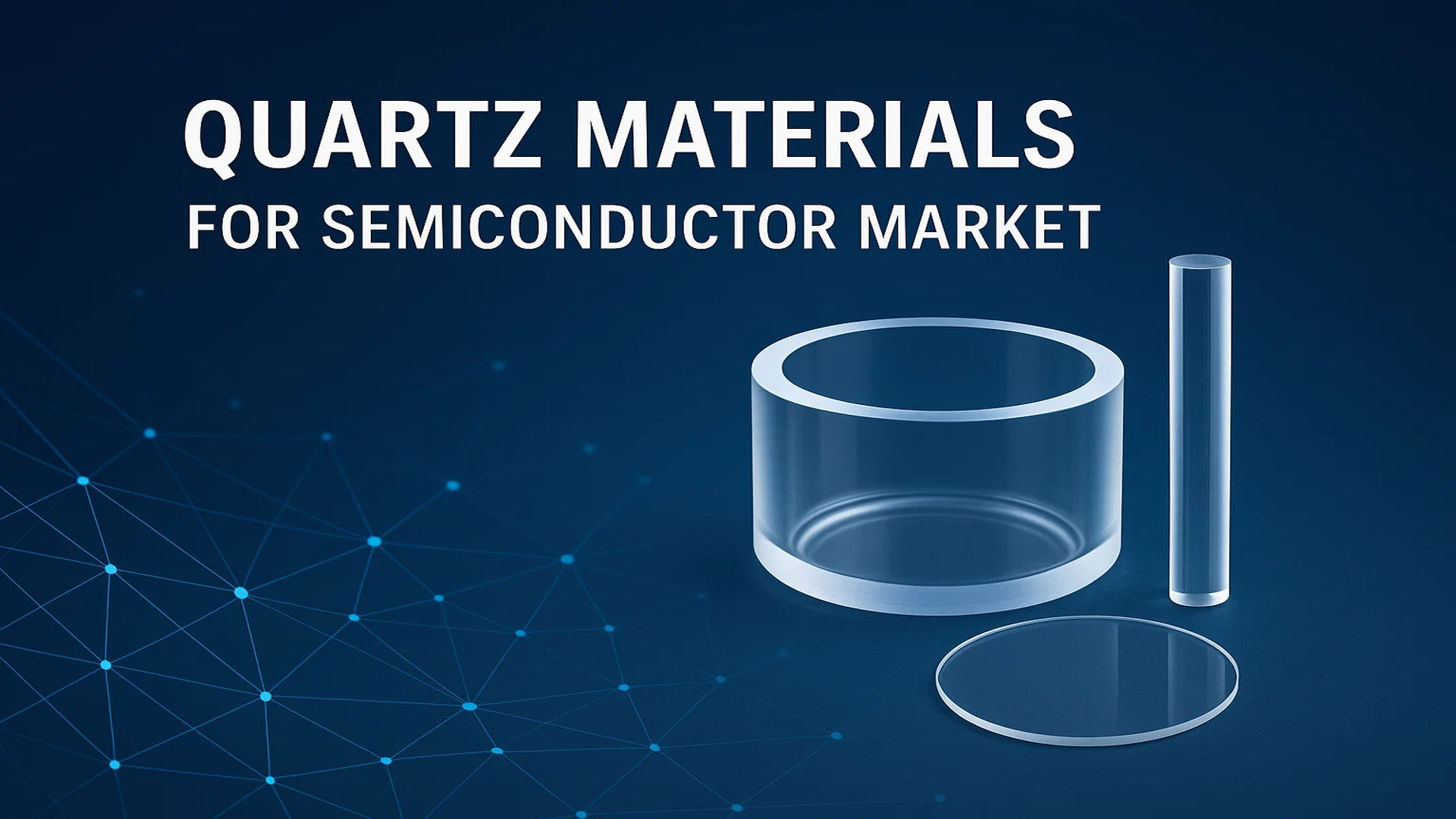
Quartz Materials for Semiconductor Market Sees Breakthrough with Advanced Purity Standards and Next-Gen Manufacturing Techniques
The Quartz Materials for Semiconductor Market is gaining strong momentum as the global semiconductor industry continues to expand. Quartz, a highly pure and thermally stable material, plays a critical role in semiconductor manufacturing processes, including wafer processing, lithography, and etching. The material’s ability to withstand extreme temperatures, resist chemical corrosion, and maintain optical clarity makes it indispensable for producing advanced semiconductor devices.
According to market estimates, the Quartz Materials for Semiconductor market size was valued at US$ 1.18 billion in 2024 and is projected to reach US$ 2.02 billion by 2032, growing at a CAGR of 8.1% during the forecast period (2025–2032). This growth is fueled by increasing demand for electronics, the proliferation of AI and 5G technologies, and rising investments in semiconductor manufacturing infrastructure worldwide.
In this blog, we will explore recent developments, market drivers, technological advancements, regional trends, and future opportunities shaping the quartz materials segment in the semiconductor industry.
Download Sample Report PDF-Quartz Materials for Semiconductor Market
Understanding the Role of Quartz in Semiconductor Manufacturing
Quartz is one of the most essential materials in semiconductor production. Its applications include:
-
Wafer carriers – transporting semiconductor wafers without contamination.
-
Quartz tubes – used in diffusion and deposition processes.
-
Photomask substrates – providing high transparency for photolithography.
-
Etching components – offering chemical resistance during plasma etching.
-
Heaters and lamp components – used in high-temperature processes.
The performance and quality of quartz directly impact semiconductor yields, making it a strategic material in the industry.
Recent Developments Driving Market Expansion
Over the past few years, the quartz materials market has witnessed several noteworthy advancements and business moves:
Expansion of Semiconductor Fabrication Facilities
-
In 2024, multiple semiconductor giants, including TSMC, Samsung, and Intel, announced multi-billion-dollar investments in new fabrication plants in the U.S., Europe, and Asia-Pacific.
-
The construction of these fabs is creating a surge in demand for high-purity quartz glass components for wafer processing.
Technological Improvements in Quartz Purity
-
Quartz manufacturers have achieved purity levels exceeding 99.999%, which are critical for next-generation semiconductor nodes (3nm and below).
-
Advanced refining processes and synthetic quartz production are ensuring consistency in optical and thermal properties.
Strategic Partnerships and Mergers
-
In early 2025, a leading Japanese quartz manufacturer partnered with a U.S.-based semiconductor materials company to develop next-gen quartz photomasks compatible with EUV lithography.
-
Several regional players are merging to strengthen production capacity and meet the rising global demand.
Rising Demand for EUV-Compatible Quartz
-
Extreme Ultraviolet Lithography (EUV) requires ultra-transparent and defect-free quartz.
-
Quartz products optimized for EUV are becoming a new revenue stream for material suppliers.
Sustainability and Recycling Initiatives
-
To address environmental concerns, companies are recycling quartz components used in semiconductor fabs.
-
These sustainability initiatives are helping reduce costs and reliance on raw quartz mining.
Click Here To Download Full Sample Report-Quartz Materials for Semiconductor Market
Market Size and Growth Projections
The market’s strong growth trajectory is backed by robust semiconductor industry expansion:
| Year | Market Size (US$ Billion) |
|---|---|
| 2024 | 1.18 |
| 2025 | 1.28 |
| 2027 | 1.53 |
| 2029 | 1.78 |
| 2032 | 2.02 |
CAGR (2025–2032): 8.1%
The growth will be particularly strong in Asia-Pacific, driven by large-scale fabrication plant expansions in China, Taiwan, South Korea, and Japan.
Key Market Drivers
Several trends are pushing the quartz materials market forward:
-
Boom in Semiconductor Demand – The rise of AI, IoT, and electric vehicles is increasing chip production needs.
-
Miniaturization of Semiconductor Nodes – Advanced lithography techniques demand higher-grade quartz products.
-
Growing Fab Investments – Governments are incentivizing semiconductor manufacturing through subsidies and grants.
-
Rising Photomask Complexity – EUV lithography requires quartz with exceptional purity and clarity.
-
Thermal Stability Needs – Next-gen chipmaking involves processes exceeding 1000°C, where quartz excels.
Challenges and Restraints
Despite strong growth, the market faces some hurdles:
-
High Manufacturing Costs – Producing ultra-pure quartz requires advanced technology and energy-intensive processes.
-
Raw Material Availability – High-purity quartz mining is geographically limited.
-
Technological Shifts – Any major shift to alternative materials could reduce quartz demand.
-
Supply Chain Vulnerabilities – Semiconductor material shortages could delay quartz production.
Technological Innovations in Quartz Manufacturing
The quartz materials sector is experiencing innovations that are enhancing performance and scalability:
-
Synthetic Quartz Production – Reducing impurities and defects by growing quartz crystals in controlled environments.
-
Precision Machining – Advanced CNC and laser-cutting technologies for complex quartz component designs.
-
Plasma Polishing – Achieving ultra-smooth surfaces for high-end semiconductor applications.
-
Nano-Coating Techniques – Improving quartz resistance to chemical erosion in aggressive etching processes.
Regional Insights
Asia-Pacific
-
Dominates the market with over 60% share.
-
Home to top semiconductor producers and quartz suppliers.
-
Massive fab construction in Taiwan, South Korea, and China.
North America
-
Strong growth driven by the CHIPS and Science Act.
-
U.S. semiconductor giants are building fabs in Arizona, Texas, and New York.
-
Increasing local quartz production to reduce import dependence.
Europe
-
Investments from Intel in Germany and TSMC in France boosting demand.
-
Focus on high-tech quartz for advanced lithography tools.
Middle East & Africa
-
Emerging market with potential in semiconductor packaging and assembly.
-
Limited quartz production but growing import needs.
Access Your Free Sample Report-Quartz Materials for Semiconductor Market
Competitive Landscape
Key players in the Quartz Materials for Semiconductor Market include:
-
Heraeus Holding
-
Momentive Performance Materials
-
Nippon Electric Glass
-
Saint-Gobain Quartz
-
Tosoh Quartz Corporation
-
Furukawa Electric
-
FeiYue Quartz
-
JNS Glass & Coatings
These companies are focusing on capacity expansion, R&D investments, and strategic partnerships to maintain market leadership.
Future Opportunities
The future of quartz materials in the semiconductor sector looks bright, with opportunities such as:
-
EUV Lithography Components – Growing adoption of EUV in advanced chipmaking.
-
High-Purity Synthetic Quartz – Expanding beyond natural quartz mining limitations.
-
Recycled Quartz Solutions – Cost-effective and eco-friendly production methods.
-
Integration with AI-driven Manufacturing – Optimizing quartz component production using predictive analytics.
The Quartz Materials for Semiconductor Market is on a robust growth path, driven by the semiconductor industry’s rapid expansion, technological innovations, and increasing demand for ultra-pure quartz components. With the market projected to grow from US$ 1.18 billion in 2024 to US$ 2.02 billion by 2032, stakeholders in the industry stand to benefit from the ongoing developments, especially in EUV lithography, synthetic quartz manufacturing, and recycling initiatives.
As the semiconductor landscape evolves, quartz will remain a cornerstone material, enabling next-generation chips that power everything from smartphones to supercomputers.

Comments (0)