

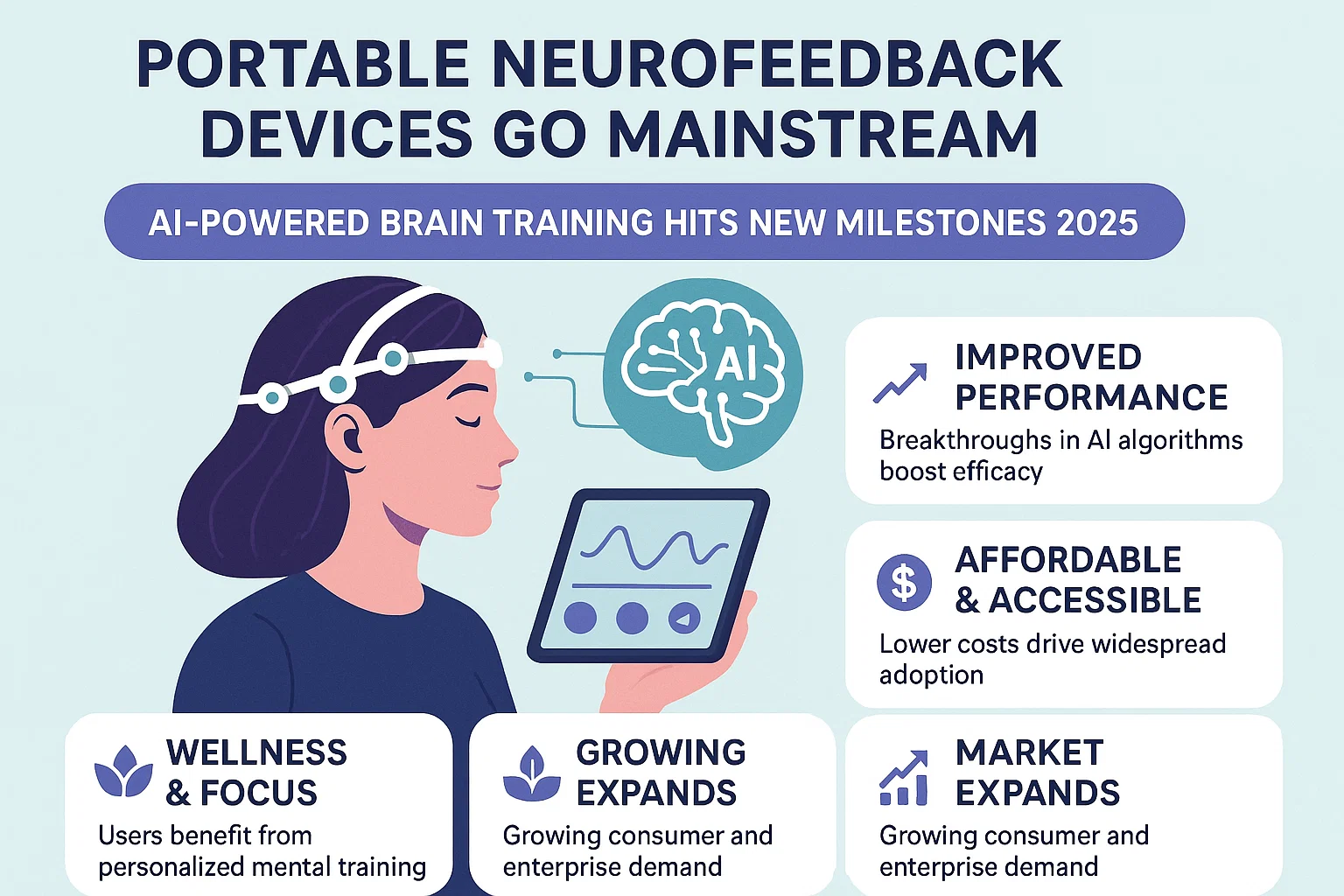
Portable Neurofeedback Devices Go Mainstream: AI-Powered Brain Training Hits New Milestones in 2025
In a world where mental performance and emotional balance are no longer luxuries but necessities, neurofeedback technology has emerged as a cornerstone in cognitive wellness. Once confined to research labs and clinical offices, neurofeedback is now going mobile — thanks to the rise of portable neurofeedback devices. These pocket-sized marvels are redefining how individuals train their brains, manage stress, improve focus, and cope with mental health conditions — all from the comfort of their homes.
As of 2024, the global portable neurofeedback device market was valued at USD 156 million, and it’s expected to reach USD 289 million by 2032, growing at a Compound Annual Growth Rate (CAGR) of 9.2% during the forecast period (2025–2032). This remarkable growth reflects not only advancements in wearable technology and AI but also a widespread shift toward proactive mental health care.
Access Your Free Sample Report- Portable Neurofeedback Device Market
What Are Portable Neurofeedback Devices?
Neurofeedback, also called EEG biofeedback, is a non-invasive technique that records brainwave activity and provides real-time feedback to help users regulate their mental state. Portable neurofeedback devices compress this sophisticated technology into compact, user-friendly wearables — such as headbands, ear cuffs, glasses, and even AR-compatible gear.
Using electroencephalography (EEG) sensors, these devices capture brain signals and deliver audio, visual, or tactile feedback. Users can monitor attention, relaxation, and stress levels, while some systems even guide meditation or cognitive training through gamification.
The aim? Empower individuals to take charge of their brain function, enhance performance, and build emotional resilience — anytime, anywhere.
Market Snapshot: Portable Neurofeedback Devices on a High-Growth Trajectory
Key Figures:
- Market Size in 2024: USD 156 million
- Forecast for 2032: USD 289 million
- CAGR (2025–2032): 9.2%
This robust growth is driven by:
- Increasing prevalence of stress-related disorders, ADHD, and anxiety.
- Demand for non-invasive, drug-free brain wellness tools.
- Greater public interest in biohacking, mental fitness, and self-optimization.
- Rising adoption of telehealth and home-based therapeutic devices post-COVID-19.
2025 Industry Developments: A Surge of Innovation
1. Muse Integrates fNIRS and AI for Cognitive Precision
Muse by InteraXon, already a leader in the space, upgraded its smart headbands with functional Near-Infrared Spectroscopy (fNIRS), combining it with AI algorithms that personalize neurofeedback based on each user’s brainwave patterns. This integration enables real-time adjustments in focus training and stress relief modules, enhancing outcomes dramatically.
The newest Muse S also includes advanced sleep tracking and guided meditation, appealing to wellness enthusiasts and professionals alike.
2. Narbis Smart Glasses: Neurofeedback That You Wear in Public
Narbis introduced smart glasses designed to train focus without looking like medical equipment. These glasses use EEG sensors behind the ears and embedded lenses that darken when your attention wanders, providing real-time behavioral feedback.
This subtle yet effective form of training is gaining traction among students, executives, and individuals with ADHD — making neurofeedback accessible in daily life.
3. Myndlift Hits 1 Million Sessions: Remote Therapy at Scale
Myndlift, a leading at-home neurofeedback platform, reached a significant milestone: over one million remote neurofeedback sessions conducted in 2024. The company launched:
- Alpha Peak mode: monitoring brainwave improvement over time.
- Rapid Session protocol: neurofeedback without electrode gel.
- Haptic feedback options to enhance immersion.
With clinician oversight and integration with teletherapy, Myndlift is bridging clinical neurofeedback and consumer accessibility.
4. BrainTap Combines Light and Sound for Cognitive Reset
Featured in New York Post‘s article on brain-hacking, BrainTap’s headset is attracting attention with its multisensory approach. Using synchronized light and sound pulses, BrainTap induces meditative brain states — promising the cognitive benefits of years of meditation in just weeks.
Its new “Neuro-Restore” protocol is being piloted in post-trauma therapy, burnout recovery, and corporate wellness.
5. AWEAR Ear-Cuff: Wearable EEG Goes Invisible
AWEAR’s minimalist EEG device — no bigger than an ear cuff — promises passive, continuous monitoring of emotional state and focus. It is aimed at people with anxiety, autism spectrum conditions, and those in high-stress professions.
Its stealth design and Bluetooth integration with mobile apps make it ideal for inconspicuous, everyday use.
Download Sample Report PDF- Portable Neurofeedback Device Market
Technology Trends Driving the Market
1. AI and Machine Learning Personalization
Modern neurofeedback systems now employ adaptive AI algorithms that interpret user-specific EEG patterns and adjust feedback protocols accordingly. This dynamic customization boosts the effectiveness of sessions and encourages consistent use.
2. Multi-Modal Biofeedback Integration
Neurofeedback is increasingly paired with heart rate variability (HRV), galvanic skin response (GSR), and breathing sensors, offering a more holistic picture of a user’s physiological and emotional state. This hybrid approach is useful for mental resilience and sports training.
3. Gamification and AR-Based Training
Platforms like Eggly are introducing gamified neurofeedback through Augmented Reality (AR), helping children with ADHD or autism learn through interactive play. These innovations increase user engagement and learning outcomes.
4. DIY & Open Source Neuroscience
Innovations like the PiEEG kit (based on Raspberry Pi) are empowering researchers and tech-savvy consumers to build their own EEG setups. This has democratized access to neurofeedback tools, especially in academic and maker communities.
Use Cases Across Industries
1. Mental Health and Therapy
- PTSD, ADHD, anxiety, and depression treatment protocols are increasingly using home-based neurofeedback.
- Platforms like Myndlift offer clinician-monitored programs that integrate with virtual therapy.
- Schools and universities are piloting neurofeedback tools to help students manage exam stress and attention issues.
2. Corporate Wellness
- Companies are adopting headbands and apps like Muse and BrainTap to support employee mental fitness, reduce burnout, and improve productivity.
- Neurofeedback “mind gyms” are appearing in executive coaching and leadership retreats.
3. Biohacking and Personal Optimization
- Influencers and entrepreneurs in the biohacking space (e.g. Dave Asprey) are using neurofeedback to enhance creativity, focus, and mindfulness.
- Wearables like the Muse S, NeuroSky, and Narbis are now part of daily wellness routines for high-performance individuals.
4. Autism and Developmental Disorders
- Devices like AWEAR and Eggly AR systems are aiding emotional regulation and learning in neurodiverse individuals.
- Non-intrusive design and game-based training ensure compliance and comfort for children.
5. Sports and Performance Training
- Athletes use neurofeedback to improve mental recovery, concentration, and flow state induction.
- Combined with HRV and muscle activity monitors, it is becoming part of elite sports psychology programs.
Regulation, Ethics, and Data Security
1. FDA & EU MDR Compliance
As these devices straddle the line between wellness and medical tools, regulatory agencies like the FDA and EU MDR are evaluating claims and enforcing compliance, especially for those marketed as therapeutic.
2. Data Privacy & Encryption
Because neurofeedback involves sensitive biometric and cognitive data, there is increasing pressure on manufacturers to comply with GDPR, HIPAA, and end-to-end encryption standards.
3. Efficacy Concerns
Critics note that while many devices show anecdotal success, large-scale, peer-reviewed clinical trials are still limited. Industry players are investing in independent validation studies to bolster credibility.
Regional Outlook
United States:
- Largest market share (estimated 35% in 2024).
- Strong presence of startups and wellness-focused consumers.
- Integration with mental health platforms like BetterHelp and Calm.
Europe:
- Rapid growth due to national healthcare endorsements (e.g., neurofeedback for ADHD in the UK and Germany).
- Strict MDR compliance shaping product design.
Asia-Pacific:
- Rising demand in South Korea, Japan, and India, particularly among tech-savvy young professionals and students.
- Smart healthcare and mindfulness movements accelerating adoption.
Future Outlook: What Lies Ahead?
2025–2032 Vision:
The next decade for portable neurofeedback looks remarkably promising, characterized by:
- Clinical validation and mainstream insurance coverage.
- Micro-form factors that blend into jewelry or smart clothing.
- Deep AI integration for predictive emotional state detection.
- Real-time brain-to-device interaction — bridging BCI (Brain-Computer Interface) with consumer devices.
Emerging tech like neuroadaptive environments, where lighting, sound, or temperature automatically adjusts to your brain state, may redefine smart homes altogether.
Click Here To Download Full Sample Report- Portable Neurofeedback Device Market
As mental health becomes a global priority, portable neurofeedback is emerging as a game-changing tool that empowers individuals to actively shape their mental state. No longer limited to labs or specialists, brain training is now as easy as wearing a headband or slipping on a pair of smart glasses.
With innovations in AI, gamification, wearable design, and therapeutic frameworks, the portable neurofeedback device market is poised not just for growth but for transformation. As the market scales from USD 156 million in 2024 to USD 289 million by 2032, it’s not just numbers that are rising — it’s awareness, access, and the ability for everyday people to take control of their cognitive well-being.
Whether you’re a high-performing executive, a therapist, a student, or simply someone seeking inner clarity, neurofeedback may soon be as common — and essential — as your smartwatch.

Comments (0)