

Mobile Payment Market: Key Companies, Growth Drivers, Trends, and Future Outlook
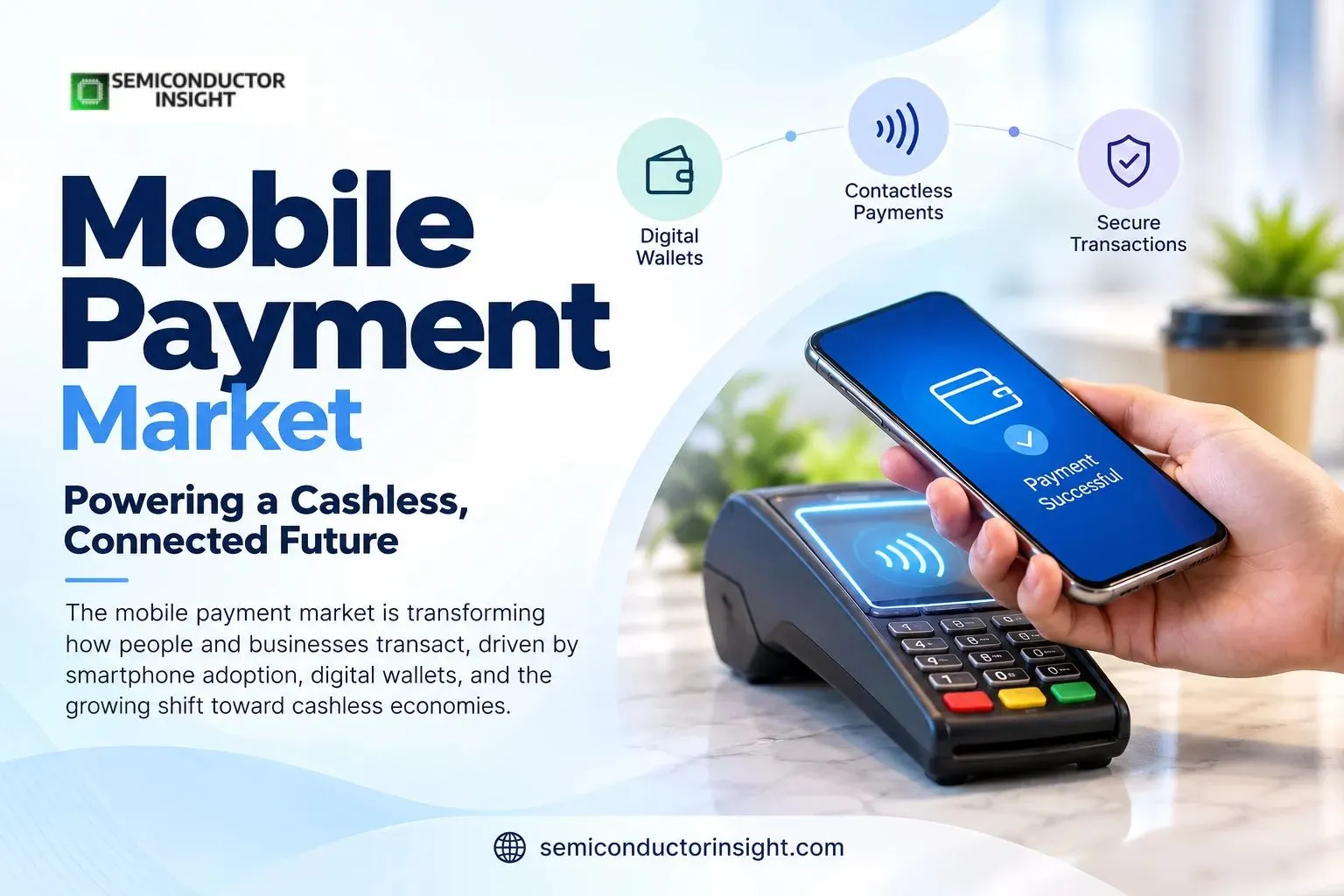
Mobile Payment Market is transforming how consumers and businesses exchange money, enabling transactions through smartphones, digital wallets, mobile banking applications, contactless technology, and QR codes. As digital commerce expands and consumers increasingly expect convenient payment experiences, mobile payments are becoming an important part of the global financial technology ecosystem.
From in-store purchases and online shopping to peer-to-peer transfers and merchant payments, mobile payment solutions offer faster transaction experiences and reduce reliance on cash. Improvements in smartphone connectivity, payment security, digital banking infrastructure, and financial technology are creating new opportunities for payment providers, banks, merchants, and technology companies.
The market’s development is also being shaped by changing consumer preferences, the expansion of e-commerce, and the adoption of contactless payments. However, cybersecurity risks, fraud prevention, regulatory requirements, and differences in digital infrastructure continue to influence adoption across regions.
What Is the Mobile Payment Market?
The mobile payment market includes technologies, platforms, and services that allow users to initiate, authorize, or complete financial transactions using mobile devices. These transactions may involve paying a retailer, transferring money to another individual, purchasing digital services, or accessing financial services through a mobile application.
Mobile payments generally include several approaches. Mobile wallets store payment credentials digitally, while near-field communication (NFC) enables compatible devices to communicate with payment terminals over a short distance. QR-code payments allow customers to scan a code to make a payment, and mobile banking applications enable transfers directly through financial institutions.
These methods serve different customer needs. Contactless wallets are widely suited to quick retail transactions, QR-code systems can support merchants with compatible smartphones or payment terminals, and peer-to-peer applications make it easier to transfer funds between individuals.
Although mobile payments and digital payments are closely related, they are not identical. Mobile payments specifically involve mobile devices in initiating or facilitating a transaction, whereas digital payments also include transactions completed through computers, cards, and other electronic channels.
Key Factors Driving Mobile Payment Market Growth
- Increasing Smartphone Adoption
Smartphones have become a central access point for shopping, banking, communication, and financial services. As more consumers use mobile devices for everyday activities, payment providers have additional opportunities to integrate checkout and money-transfer features into familiar applications.
Improved mobile connectivity and user-friendly interfaces also make mobile payment services accessible across a wider range of consumer and merchant environments.
- Expansion of E-Commerce and Digital Services
Online shopping, subscription services, food delivery, travel bookings, and digital entertainment have increased demand for convenient payment methods. Mobile payment options can reduce checkout friction by allowing customers to authorize transactions without repeatedly entering payment details.
For merchants, streamlined checkout experiences can improve usability and help support customers who prefer shopping on mobile devices.
- Growing Adoption of Contactless Payments
Contactless payments enable customers to pay by tapping compatible smartphones or wearable devices against supported terminals. Tokenization and device-level authentication can help protect payment credentials while simplifying the checkout process.
Retailers, restaurants, transport operators, and service providers are incorporating contactless options to meet demand for faster transactions.
- QR-Code Payment Ecosystems
QR-code payments provide an alternative to traditional card-based acceptance infrastructure. Depending on the payment system, merchants can display a code for customers to scan, or customers can present a code for the merchant to read.
This flexibility can make QR-based payments useful for small businesses, street vendors, restaurants, and digital commerce platforms. Their effectiveness depends on local payment networks, interoperability, merchant adoption, and customer familiarity.
- Financial Inclusion and Digital Banking
Mobile payment platforms can provide convenient access to electronic transactions for consumers and small businesses that face barriers to traditional banking services. In markets with established digital payment infrastructure, mobile applications can help users transfer money, pay bills, and conduct routine transactions.
However, the benefits depend on access to smartphones, connectivity, digital literacy, identification systems, and appropriate consumer protections.
Major Trends Shaping the Mobile Payment Industry
Digital Wallet Integration
Digital wallets are increasingly integrated into smartphones, banking applications, online marketplaces, and merchant platforms. This creates a more connected payment experience and can reduce the need to enter payment information for every transaction.
Competition increasingly involves not only transaction convenience but also loyalty programs, stored credentials, identity verification, and integration with other financial services.
Biometric Authentication and Tokenization
Payment providers are investing in technologies designed to strengthen transaction security. Fingerprint recognition, facial authentication, device verification, and tokenization can help reduce exposure of sensitive payment credentials.
These technologies are not a complete solution to fraud, however. Providers must also manage account takeovers, social engineering, compromised devices, and unauthorized transactions.
Artificial Intelligence in Fraud Detection
Artificial intelligence and machine learning can help payment systems identify unusual transaction patterns, assess potential fraud, and support risk-based authentication. These capabilities are particularly relevant as mobile transactions expand across digital commerce and cross-border services.
The effectiveness of these systems depends on data quality, appropriate model governance, privacy safeguards, and the ability to limit false declines of legitimate transactions.
Embedded and Cross-Border Payments
Mobile payments are increasingly connected with shopping applications, transport platforms, travel services, and other digital experiences. This integration allows customers to complete transactions within the services they already use.
Cross-border payments also present opportunities, although exchange rates, compliance requirements, fees, settlement arrangements, and differences between domestic payment networks remain important considerations.
Key Companies in the Mobile Payment Market
The competitive landscape includes digital wallet providers, financial technology companies, payment networks, banks, and technology platforms. The following organizations represent important parts of the wider mobile payment ecosystem; their services and geographic availability vary.
- Apple
Apple offers Apple Pay, a mobile payment service integrated with compatible Apple devices. It supports contactless payments at participating merchants and online or in-app purchases where accepted. Device authentication and tokenization are central elements of its payment experience.
Google provides Google Wallet and Google Pay-related payment capabilities across supported markets and services. Its ecosystem connects mobile devices, digital credentials, and payment experiences, with specific functionality varying by country and product.
- PayPal
PayPal operates digital payment services for consumers and businesses, including online checkout and mobile transactions. Its established merchant network and digital wallet capabilities make it an important participant in the broader digital payment industry.
- Block
Block, through products including Square and Cash App, participates in merchant payments and consumer financial services. Its ecosystem connects mobile transactions with payment acceptance tools and services for individuals and businesses.
- Samsung Electronics
Samsung supports mobile payment experiences through its wallet ecosystem on compatible devices and in supported markets. Its participation reflects the connection between smartphone platforms, digital credentials, and contactless payment services.
- Visa
Visa operates a global payment network and provides technologies that support digital and mobile transactions. Its role includes enabling secure payment processing and supporting banks, merchants, and technology partners across the payment’s ecosystem.
- Mastercard
Mastercard provides payment network infrastructure and technologies that support digital commerce and mobile payment transactions. Its capabilities include services related to tokenization, authentication, and payment security.
- Ant Group
Ant Group operates Alipay, a major digital payment platform associated with China’s mobile payment ecosystem. Its services connect payment functionality with a broader range of digital financial and lifestyle experiences, subject to local regulations and availability.
- Tencent
Tencent operates Weixin Pay, integrated into the Weixin ecosystem in China. The platform supports payments across participating merchants and services, illustrating how mobile payments can become embedded in messaging, commerce, and everyday digital activities.
- Adyen
Adyen provides payment technology for businesses operating across online, mobile, and in-person channels. Its platform helps merchants manage payment acceptance across different markets and customer touchpoints.
These companies operate in different parts of the industry. Some provide consumer wallets, others operate payment networks or merchant-processing platforms, and some combine several services. Their competitive positions should therefore be evaluated according to the specific market segment and geography being analysed.
Challenges Facing the Mobile Payment Market
Despite continued adoption, mobile payment providers face several challenges.
Cybersecurity and fraud: Digital wallets and mobile payment applications must protect users against account compromise, phishing, malware, identity theft, and unauthorized transactions.
Privacy and data protection: Payment services handle sensitive financial and transaction data. Companies must maintain appropriate safeguards and comply with applicable privacy and data-protection requirements.
Regulatory complexity: Licensing, customer verification, anti-money-laundering controls, consumer protection, and data-localization requirements differ across markets.
Interoperability: Consumers and merchants may encounter different wallet systems, payment networks, devices, and acceptance standards. Greater compatibility can improve usability but requires cooperation among payment providers and financial institutions.
Merchant costs and access: Smaller businesses may face equipment, service, connectivity, or integration costs. Adoption depends on whether mobile payment options are practical and economical for their operations.
Regional Outlook for Mobile Payments
Mobile payment adoption differs across regions because of variations in banking infrastructure, smartphone use, consumer habits, regulation, and merchant acceptance.
Asia-Pacific contains diverse mobile payment ecosystems, including QR-based systems, digital wallets, and real-time payment infrastructure. North America has a strong mix of digital wallets, contactless cards, payment networks, and mobile banking. Europe combines digital wallets with established banking systems and regulatory frameworks supporting electronic payments. Other regions are developing mobile payment capabilities through digital banking, fintech platforms, and local payment networks, although adoption varies significantly between countries.
A reliable regional market ranking or forecast should be based on the specific market report and its stated methodology rather than assumed from general adoption trends.
Future Outlook of the Mobile Payment Market
The future of mobile payments will be shaped by the convergence of digital wallets, real-time payment infrastructure, stronger authentication, embedded finance, and increasingly connected commerce platforms. Payment providers are likely to continue prioritizing convenience, security, interoperability, and integration with merchant systems.
Artificial intelligence may support more responsive fraud detection, while tokenization and biometric authentication can help strengthen transaction protection. At the same time, providers will need to address privacy, accessibility, regulation, and consumer trust.
Long-term opportunities will depend on delivering practical benefits to both customers and merchants. Solutions that combine simple user experiences with reliable security and broad acceptance are well positioned to remain important as digital commerce evolves.
Mobile payment market is an important part of the global shift toward connected financial services. Digital wallets, contactless transactions, QR-code systems, and mobile banking applications are changing how consumers pay and how businesses accept payments.
Companies such as Apple, Google, PayPal, Block, Visa, Mastercard, Ant Group, Tencent, and Adyen illustrate the diversity of the competitive landscape. As adoption expands, innovation in authentication, fraud prevention, interoperability, and embedded payments will help shape the industry’s development.
For businesses, financial institutions, and technology providers, understanding these trends is essential to evaluating opportunities in a market where convenience, trust, security, and merchant acceptance remain central to sustained growth.
Access All Data in the Related Report: https://semiconductorinsight.com/report/global-nfc-payment-devices-market/

Comments (0)