
Infineon Strengthens Electreon’s Wireless In-Road EV Charging with Advanced Silicon Carbide Technology
Infineon Technologies AG, based in Munich, Germany, has announced a new collaboration with Electreon, a global leader in wireless EV charging technology. Under this partnership, Infineon will supply customized silicon carbide (SiC) power modules designed specifically to support Electreon’s dynamic in-road wireless charging systems a next-generation solution that allows electric vehicles to charge seamlessly while in motion.
Proven Performance on the World’s First Wireless-Charging Highway
A major milestone was recently achieved on France’s A10 highway, which became the world’s first roadway capable of wirelessly charging heavy- and medium-duty trucks, buses, and passenger vehicles in motion.
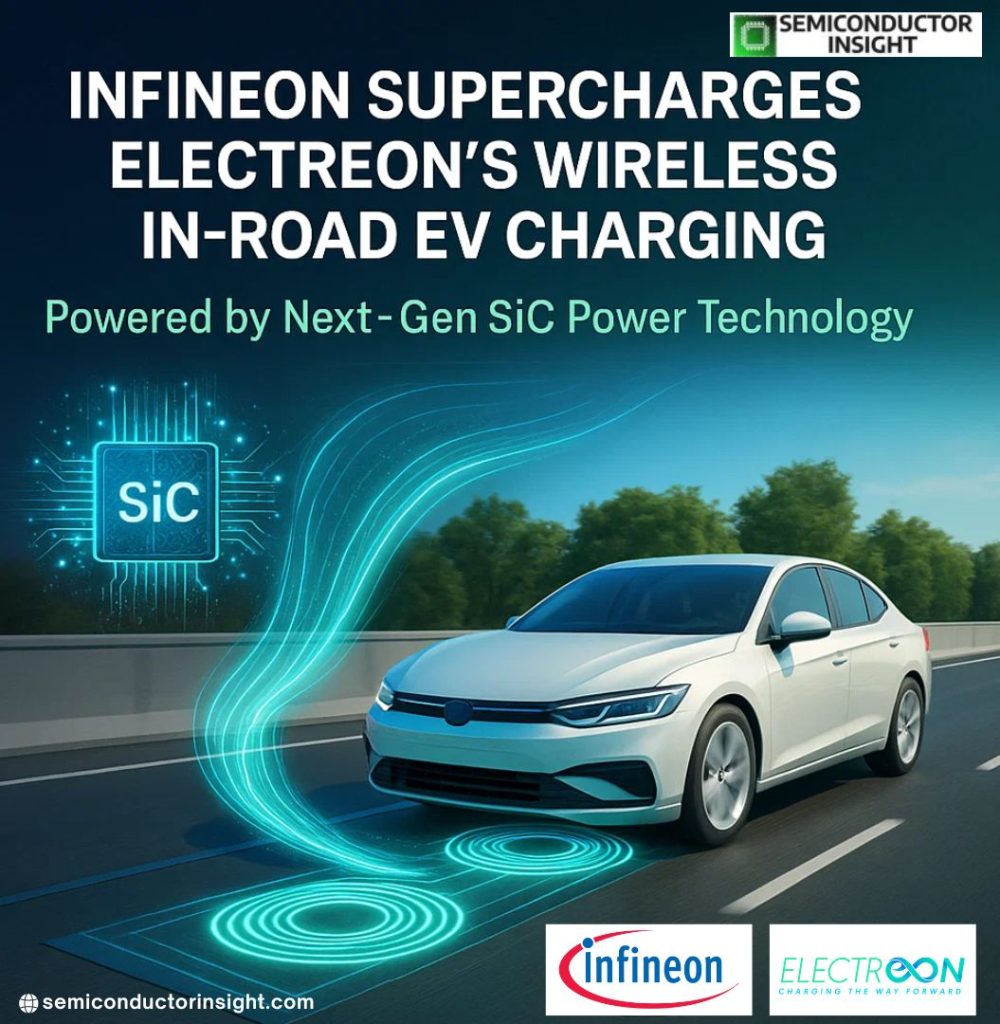
Performance tests confirmed:
- Average power delivery around 200 kW
- Peak power exceeding 300 kW
- Continuous charging capability during travel
- Reduced need for large battery packs
- Lower vehicle weight and manufacturing cost
Increased space availability for cargo in commercial fleets
Collaboration Benefits:
| Infineon Technologies AG | Electreon |
| Infineon’s contribution centres on high-performance EasyPACK 3B CoolSiC 2000V modules, customized to meet Electreon’s specific requirements for energy conversion and reliability. | Electreon’s wireless electric road system (wERS) represents a significant shift in EV charging infrastructure.
Instead of relying solely on static chargers, this system uses inductive charging coils installed beneath road surfaces, enabling EVs to draw energy as they drive over the embedded technology. |
Global Deployment and Future Expansion Plans
Electreon has already incorporated Infineon’s tailored SiC modules across various international test tracks, including:
USA, Germany, France, Norway, Portugal, Sweden, Italy, Israel, and Japan
These deployments pave the way for broader integration into long-distance routes, enabling the transition toward large-scale dynamic charging networks.

Comments (0)