

How Dominant Are SSD Solutions Becoming in Everyday Computing Devices?
Solid state drives have revolutionized how data is stored and accessed, replacing traditional spinning disks with flash memory arrays that deliver speed, durability, and lower power consumption. In semiconductor manufacturing ecosystems, these devices represent a critical convergence of NAND flash technology, controllers, and sophisticated firmware that together create reliable storage solutions for everything from personal laptops to massive data centers. Engineers and developers continue refining architectures to handle ever-growing information volumes generated by artificial intelligence, streaming services, and connected devices worldwide.
Production facilities have scaled output significantly, with global shipments of SSD units surpassing hundreds of millions annually in recent periods, reflecting widespread adoption across consumer and professional segments. This expansion supports everything from lightweight ultrabooks to high-capacity servers that keep digital infrastructure running smoothly.
Core Technology Components Driving Performance
· At the heart of every SSD lies NAND flash memory organized into cells that store bits of information without moving parts.
· Controllers manage data flow, error correction, and wear leveling to extend lifespan, while interfaces like NVMe enable faster communication with host systems.
· These elements work in harmony to provide read and write speeds that dramatically outperform older storage options, making real-time applications more responsive.
· Technical overviews from industry resources detail how multilayer cell designs increase density, allowing higher capacities in compact form factors suitable for slim devices.
· Ongoing refinements focus on reducing latency and improving endurance ratings, particularly important for environments with constant write cycles.
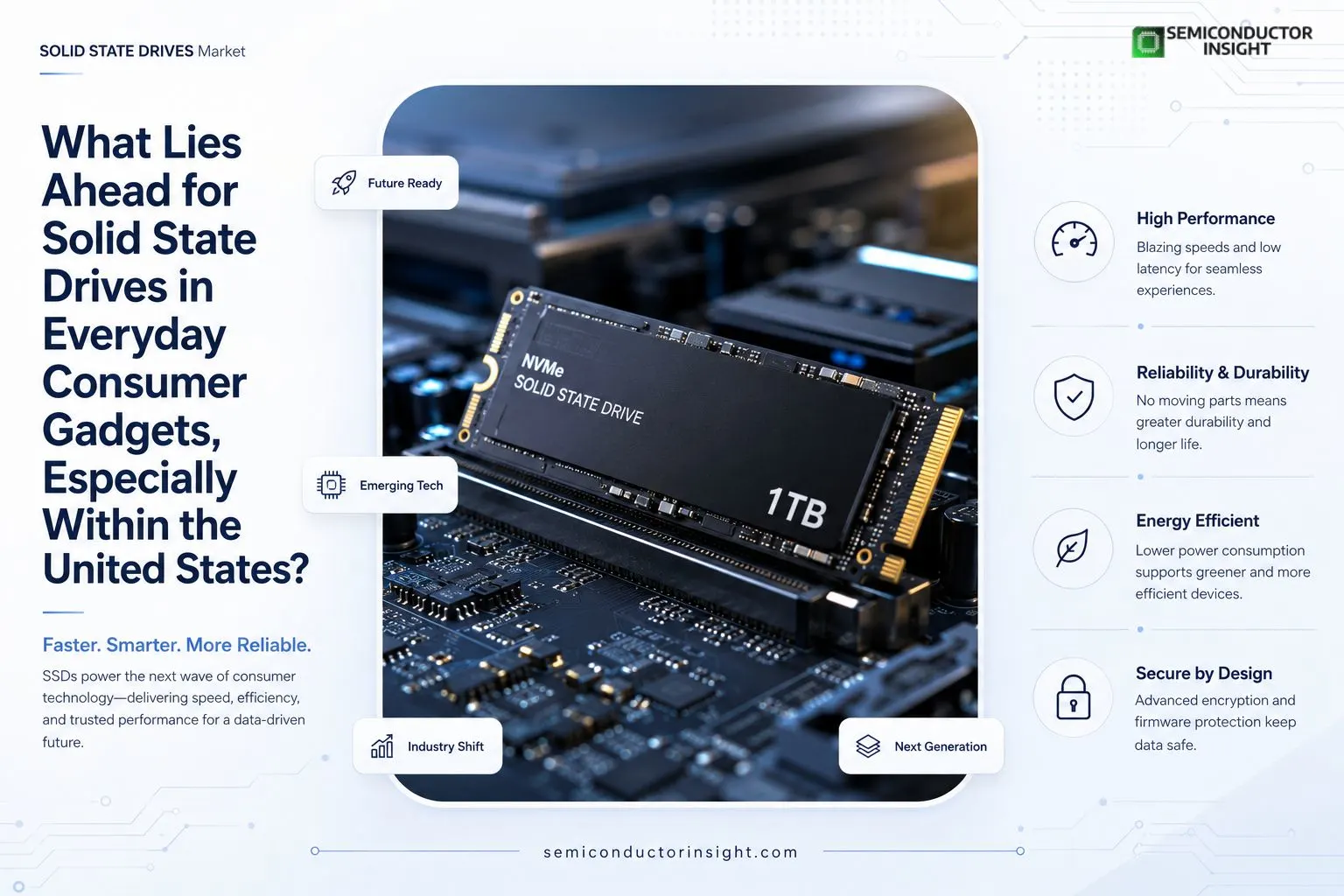
What Lies Ahead for Solid State Drives in Everyday Consumer Gadgets Especially Within the United States?
Looking forward, solid state drives are poised to become even more integral to consumer electronics, powering sleeker laptops, faster smartphones, and immersive gaming consoles where quick load times enhance user experiences. In the United States, domestic initiatives supporting semiconductor self-sufficiency are expected to strengthen local supply chains, potentially lowering costs and improving availability for everyday devices.
Government-backed programs aim to bolster manufacturing capabilities, which could translate into more affordable high-performance options for American households and small businesses. Case observations from tech publications suggest that integration with AI features in personal computers will drive demand for larger, more efficient SSDs capable of handling local processing tasks securely without constant cloud reliance. This shift promises greater privacy and responsiveness in tools ranging from creative software to educational platforms.
Explore the full report details in our recently refreshed edition anytime: https://semiconductorinsight.com/report/external-solid-state-drives-market/
1. Expanding Role in Data Intensive Industries
o Beyond personal use, SSDs support large-scale operations in cloud facilities where rapid data retrieval is essential for analytics and machine learning workloads.
o Providers deploy enterprise-grade units featuring advanced error handling and power loss protection to maintain uptime during critical operations.
o Real-world deployments in research institutions demonstrate how these drives accelerate simulations and data processing pipelines, shortening project timelines significantly.
2. Form Factor Innovations and Device Compatibility
o Manufacturers have introduced varied shapes, including M.2 modules and portable enclosures, to fit diverse hardware configurations.
o These adaptations allow seamless upgrades in legacy systems while enabling new designs in thin clients and embedded applications.
o Compatibility improvements ensure broader accessibility, helping users transition smoothly without extensive overhauls.
3. Sustainability and Efficiency Considerations
o Flash-based storage consumes less energy than mechanical alternatives, contributing to lower operational costs and reduced carbon footprints in large installations.
o Recycling programs for end-of-life units recover valuable materials, supporting circular economy principles within the semiconductor supply chain.
o Discussions in technical forums highlight efforts to minimize environmental impact through more efficient fabrication processes.
4. Security Features Embedded in Modern Designs
o Contemporary SSDs incorporate hardware encryption and secure erase functions that protect sensitive information.
o These capabilities prove valuable for government agencies, healthcare providers, and financial institutions handling confidential records.
o Firmware updates regularly address emerging threats, maintaining robust defenses as cyber risks evolve.
5. Integration With Next Generation Computing Platforms
o Developers pair SSDs with high-speed processors and memory systems to create balanced platforms for content creators and gamers.
o In professional settings, this combination facilitates smoother 4K video editing and complex 3D rendering without bottlenecks.
o Emerging standards continue pushing bandwidth limits, unlocking new possibilities for real-time collaboration tools.
Challenges in Maintaining Quality at Scale
Ensuring consistent performance across millions of units requires rigorous testing protocols at fabrication sites. Suppliers focus on thermal management and firmware optimization to prevent failures under heavy loads. Shared experiences from system integrators emphasize the value of selecting components matched to specific workload profiles for optimal longevity.
The solid state drive sector stands as a cornerstone of contemporary digital infrastructure, continually adapting to support faster, more reliable data handling across global applications. Its influence spans from individual users enjoying snappier devices to organizations managing vast information repositories, underscoring the technology’s foundational importance in an increasingly data-driven world.

Comments (0)