
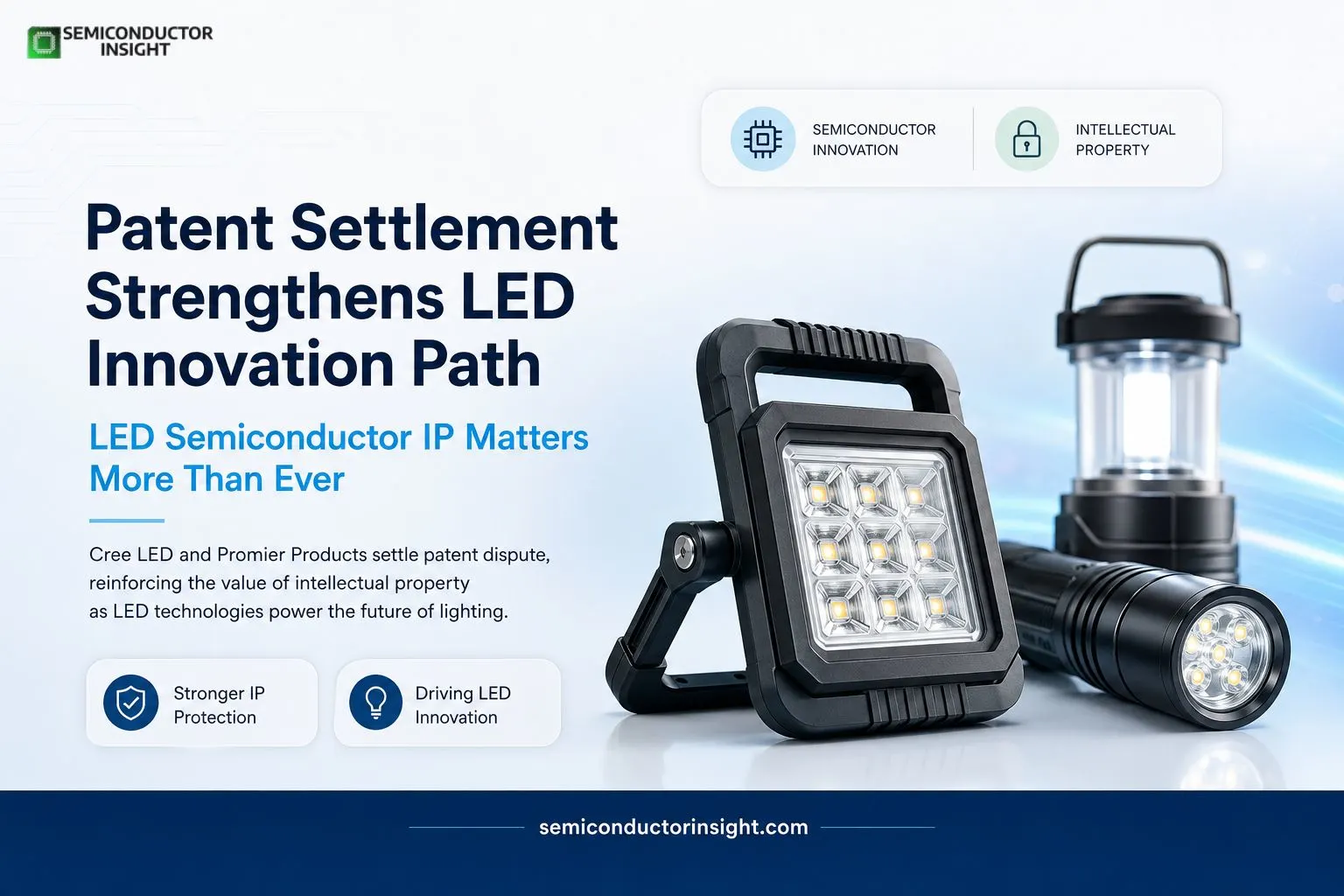
Cree LED and Promier Products Settle Patent Dispute, Opening New Path for Licensed LED Technology Use
Cree LED and Promier Products have reached a settlement over a patent infringement dispute involving LED components used in portable lighting, highlighting the growing importance of intellectual property protection as semiconductor and LED technologies become increasingly integrated into lighting applications.
Patent Dispute Moves toward Commercial Resolution
Cree LED Inc., a Durham, North Carolina-based company under the Penguin Solutions brand, and Promier Products Inc., operating as LitezAll, have mutually resolved their patent dispute through a limited license agreement.
The dispute centered on Cree LED patents covering LED components incorporated into portable lighting products. Under the settlement, Cree LED has granted Promier Products a limited license to certain patented technologies, providing a defined framework for the continued use of the covered LED components.
Rather than continuing through extended patent litigation, the agreement establishes a commercial resolution that allows both companies to move forward while maintaining the underlying intellectual property rights associated with Cree LED’s technologies.
Why LED Semiconductor IP Is Becoming More Strategic?
LEDs sit at the intersection of semiconductor technology, optoelectronics and advanced lighting, with component-level innovations influencing efficiency, performance, reliability and product design.
As LED technologies continue to expand across portable lighting, automotive systems, and consumer electronics, industrial equipment and other applications, patented semiconductor technologies can become strategically important throughout the value chain.
For technology developers, protecting proprietary LED architectures and component technologies is increasingly linked to maintaining differentiation in competitive markets. For product manufacturers, access to licensed technologies can provide greater clarity around the use of patented components while supporting continued product development.
Limited Licensing Creates a Defined Technology Path
The settlement’s limited license structure is particularly significant because it establishes specific permitted use of certain Cree LED patents rather than representing a broad transfer of intellectual property.
This approach allows Cree LED to retain control over its patented technology while providing Promier Products with an authorized route for the covered applications.
For the broader semiconductor and LED ecosystem, such agreements can help reduce uncertainty around technology deployment and create clearer boundaries between innovation ownership, licensing and commercial product development.
- Cree LED has emphasized its established position in portable lighting applications, where it says its products are recognized for performance and reliability.
- The company also highlighted its broader commitment to protecting its intellectual property and monitoring the global value chain for potential unauthorized use of its patented technologies.
- This reflects a wider trend across the semiconductor industry, where companies increasingly treat intellectual property portfolios as strategic assets rather than simply legal protections.
- Patents can cover critical elements of semiconductor devices, LED components, manufacturing processes, packaging technologies and other enabling technologies.
- Active monitoring of technology adoption can therefore play an important role in protecting investment in research and development while supporting the commercial value of proprietary innovations.
A Broader Signal for the LED and Semiconductor Market
The Cree LED-Promier Products settlement illustrates how intellectual property considerations continue to shape the commercialization of semiconductor-enabled technologies.
For LED manufacturers, component suppliers and lighting companies, maintaining a balance between technology innovation, patent protection and authorized market access is becoming increasingly important as applications become more sophisticated.
The agreement also demonstrates that patent disputes do not necessarily have to result in prolonged litigation. A structured licensing arrangement can provide a practical route for resolving technology-use conflicts while allowing companies to preserve commercial relationships and continue serving their respective markets.
As semiconductor and LED technologies become embedded across a wider range of connected, portable and high-performance products, intellectual property management is likely to remain a critical factor influencing technology adoption, licensing strategies and competitive positioning across the global electronics value chain.
A Brief Look at Our Detailed Analysis Related Report: https://semiconductorinsight.com/report/global-uv-led-technology-market/

Comments (0)