
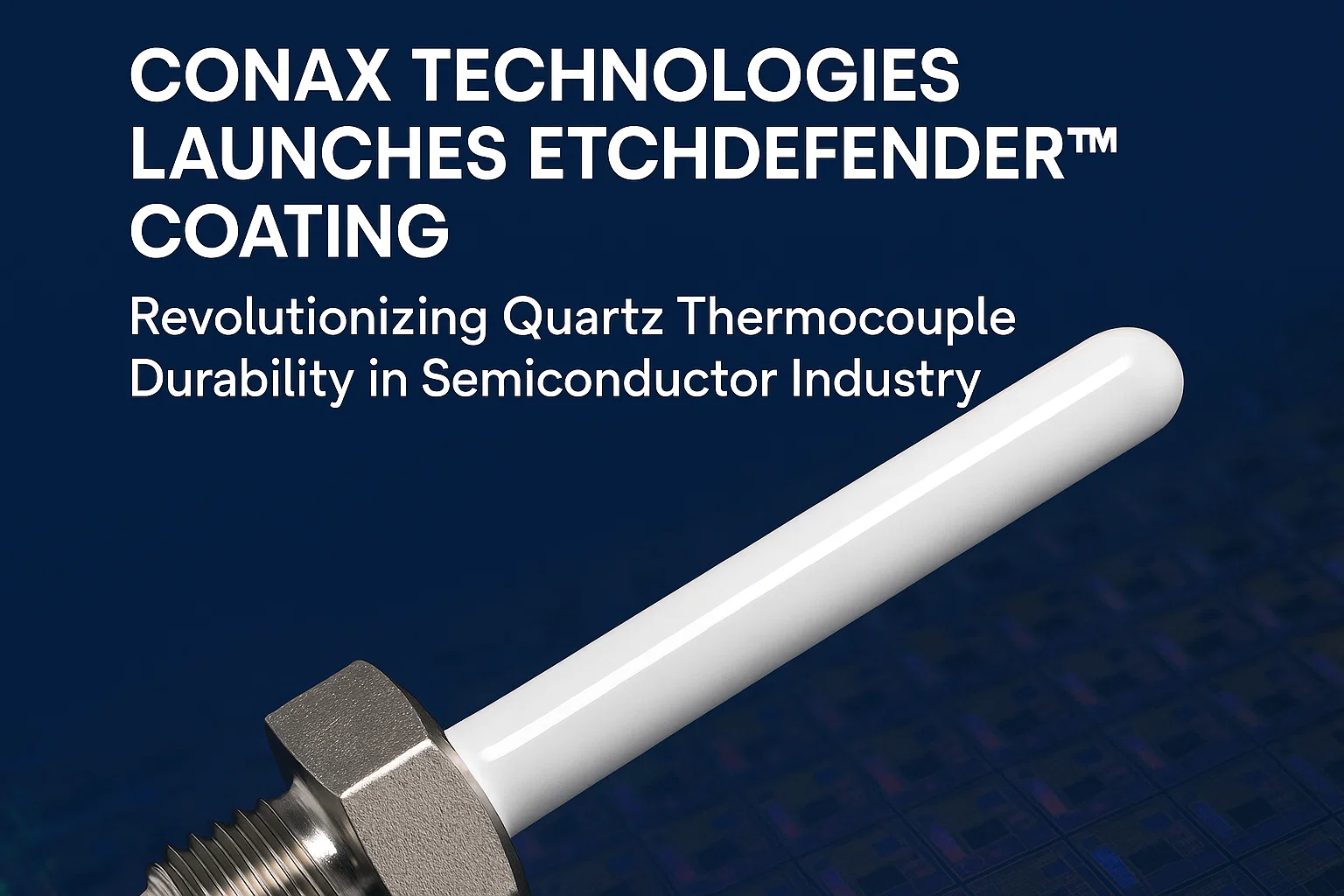
Conax Technologies Launches EtchDefender™ Coating, Revolutionizing Quartz Thermocouple Durability in Semiconductor Industry
In a world increasingly driven by precision engineering, process automation, and sustainability mandates, temperature measurement remains one of the most critical parameters in industrial monitoring. Among the various technologies enabling accurate thermal sensing, Profile Thermocouples have emerged as a backbone for diverse high-temperature applications, from semiconductor fabs to energy-intensive manufacturing plants.
According to recent insights, the global Profile Thermocouples market was valued at USD 456 million in 2024 and is forecasted to grow to USD 634 million by 2032, expanding at a CAGR of 4.2% during 2025–2032. But what exactly is driving this growth—and how are new technologies such as EtchDefender™, 300 mm wafer TCs, quantum thermocouples, and 3D-printed sensor designs reshaping the landscape?
Access Your Free Sample Report- Profile Thermocouples Market
What Are Profile Thermocouples?
Profile thermocouples are multi-point thermocouple assemblies used for measuring temperature gradients across a system or profile, rather than a single point. They’re indispensable in applications that demand:
- Precise thermal mapping (e.g., within a furnace or reactor)
- High-temperature endurance (up to 2000°C in extreme cases)
- Multi-zone feedback for process optimization
They are constructed with multiple thermocouple sensors embedded along a single probe or distributed spatially across a component. This enables a comprehensive view of thermal profiles—ideal for complex environments like:
- Semiconductor fabrication chambers
- Heat treatment furnaces
- Power plants
- Aerospace test rigs
- Petrochemical reactors
Market Snapshot (2024–2032)
| Parameter | Details |
| Market Size (2024) | USD 456 Million |
| Projected Market Size (2032) | USD 634 Million |
| CAGR (2025–2032) | 4.2% |
| Top Regions | Asia-Pacific, North America, Europe |
| Fastest Growing Applications | Semiconductor, EV battery systems, Clean Energy |
Asia-Pacific, led by China, Japan, and South Korea, continues to be the global powerhouse for thermocouple manufacturing and usage. North America, however, is where much of the R&D and innovation is unfolding, with firms like Conax Technologies, Cleveland Electric Labs (CEL), and Thermo Electric / Cotemp Sensing leading the charge.
Major Industry Developments & Innovations
1. EtchDefender™ Coating from Conax Technologies
Conax Technologies, a U.S.-based temperature sensor manufacturer, has released a game-changing advancement called EtchDefender™, a proprietary coating designed to extend the lifespan of quartz-sheathed thermocouples operating above 900°C.
Key Benefits:
- Protects against erosion, devitrification, and particle shedding
- Triples the service life of thermocouples in etching environments
- Reduces downtime and improves process stability in chip fabrication plants
Why It Matters:
Quartz-sheathed thermocouples are crucial in semiconductor plasma etching, but their short service life has long been a pain point. EtchDefender™ aims to mitigate material degradation, significantly lowering maintenance intervals and operational costs in wafer processing.
2. 300 mm Instrumented Thermocouple Wafer by Thermo Electric / Cotemp Sensing
In a significant leap forward for thermal mapping in semiconductor equipment, Thermo Electric announced the launch of a 300 mm instrumented wafer with 65 precise measurement points.
Features:
- ±0.5°C calibrated accuracy
- Custom data acquisition systems
- Designed for in-situ thermal diagnostics of semiconductor tools
Strategic Impact:
With semiconductor nodes shrinking and process uniformity becoming more crucial, this development gives fabs an accurate, real-time understanding of wafer temperature across various zones. This ultimately helps improve yield, reliability, and energy efficiency in fab operations.
Download Sample Report PDF- Profile Thermocouples Market
3. Patents & EV Integration by Cleveland Electric Labs (CEL)
Date: Mid-2025
Company: Cleveland Electric Labs (CEL)
Innovation Type: Patented Sensor Systems for Batteries and High Temp
Application: Electric Vehicles, Aerospace, Power
CEL has earned 10 new patents in the field of high-reliability sensors, many of which directly impact the profile thermocouples sector.
Highlights:
- Sensor systems for EV battery packs that detect localized overheating
- Advanced profile thermocouples for aerospace engine testing
- In-house R&D for rapid prototyping and calibration services
Industry Significance:
As thermal runaway remains a critical safety concern in EVs, CEL’s thermocouple assemblies are helping OEMs achieve more robust and predictive thermal diagnostics within battery modules—contributing to safer, more efficient electric transportation.
4. Emergence of Quantum & On-Chip Thermocouple Research
Several academic and industrial collaborations are pushing the boundaries of thermocouple miniaturization and sensitivity:
Key Papers (2024–2025):
- Quantum thermoelectric engines using thermocouples at nanoscale for autonomous power systems
- On-chip thin-film thermocouple calibration for microheat mapping
- 3D-printed ceramic-based sensors for ultrahigh temperature gradients
These breakthroughs may eventually lead to fully embedded smart sensors in microelectronic and MEMS devices, with thermocouple precision down to the nanoscale.
Integration with Industry 4.0
Modern profile thermocouples are not just about measurement anymore—they’re becoming smart nodes within larger industrial IoT (IIoT) ecosystems.
Key Trends:
- EtherNet/IP and Modbus-TCP connectivity
- Integration with predictive maintenance platforms
- Compatibility with cloud analytics and machine learning algorithms
Case Study:
In a high-capacity steel rolling mill in Germany, the integration of multi-point thermocouples into an IIoT platform enabled engineers to predict roll surface overheating 36 hours in advance, leading to a 27% reduction in unplanned downtime.
Segment-Wise Insights
By Type:
- Type K: Widely adopted for general industrial use (35% share in 2024)
- Type N: Fastest growing due to better oxidation resistance (~8.9% CAGR)
- Type R/S/B: Dominant in high-precision and high-temperature domains
By End-Use:
- Semiconductor & Electronics – 27% share in 2024
- Automotive & EV Batteries – Rapidly expanding at 12% CAGR
- Petrochemicals – Long-standing demand for profile sensors in refineries
- Power Generation – Especially nuclear and renewables (e.g., CSP)
Challenges Hindering Adoption
Despite all the promise, the profile thermocouples sector is not without its obstacles:
| Challenge | Impact |
| High Initial Cost | Custom sensors can be expensive, especially with exotic materials |
| Import Pressure | Influx of low-cost thermocouples from Asia affecting domestic manufacturers |
| Competition from RTDs & Fiber Optic Sensors | In certain environments, alternative sensors offer better accuracy or immunity to EMI |
| Calibration Complexity | Multi-point sensors require specialized calibration infrastructure |
Click Here To Download Full Sample Report- Profile Thermocouples Market
Opportunities Ahead
The convergence of materials science, AI-powered diagnostics, and advanced manufacturing offers promising avenues for innovation:
- Additive Manufacturing: 3D printing of sensor-embedded ceramic structures for jet engines, nuclear reactors, etc.
- Battery Monitoring: Custom multi-point thermocouples within lithium-ion and solid-state packs.
- Miniaturized Biomedical Sensors: High-precision body temperature profiling for wearable health tech.
- Zero-Power IoT Nodes: Using quantum thermoelectric effects to power sensors without batteries.
The era of smart thermal diagnostics is no longer a futuristic dream—it’s unfolding now, and profile thermocouples are right at its core. With advancements in coatings, quantum research, precision mapping, and connectivity, these multi-point sensors are more versatile, reliable, and integral than ever before.
As industries strive for more efficient, safer, and data-driven operations, the importance of accurate thermal profiling cannot be overstated. From chip foundries to EV battery plants, the profile thermocouple will continue to evolve—not just as a sensor, but as an intelligent enabler of smarter systems.

Comments (0)