
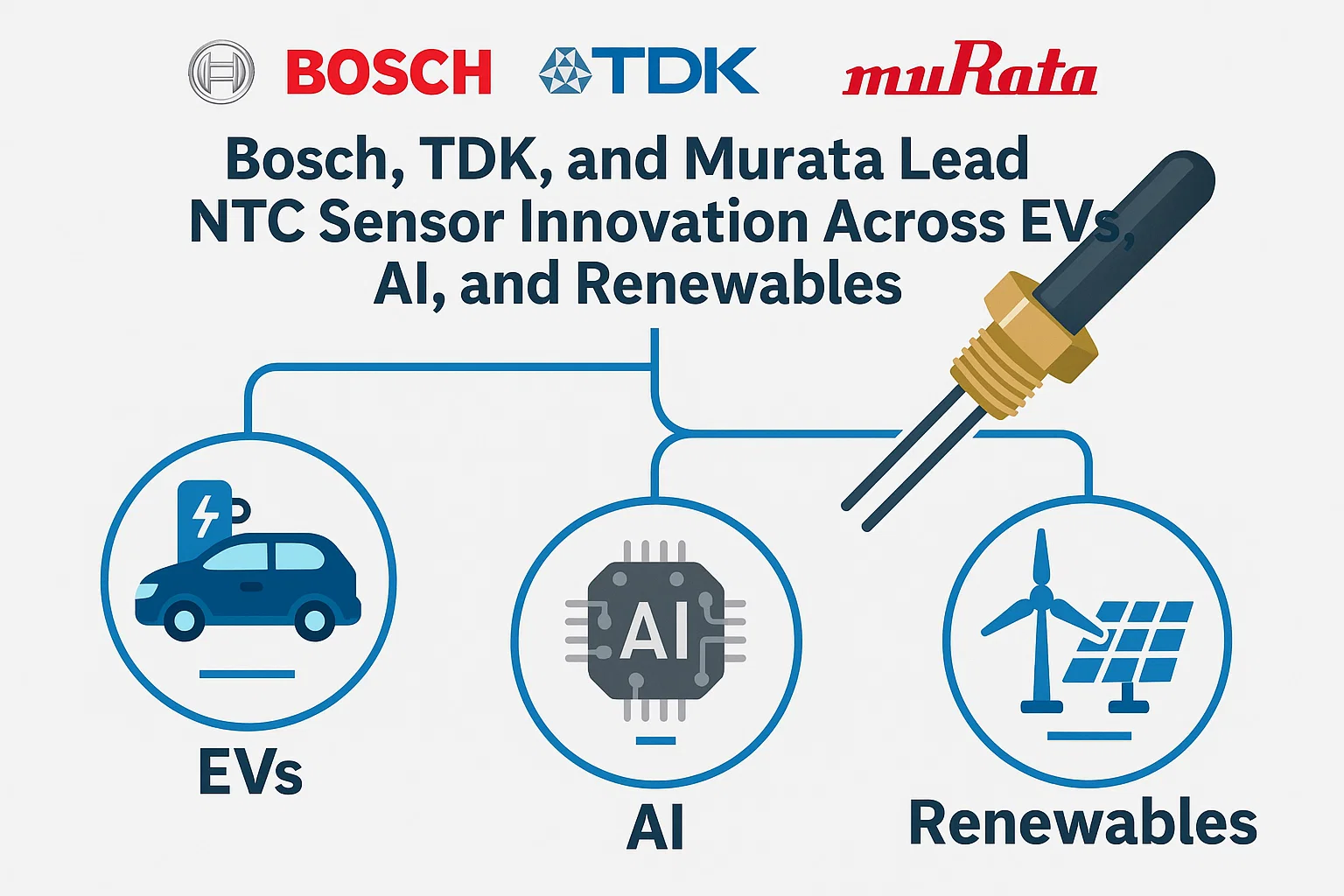
Bosch, TDK, and Murata Lead NTC Sensor Innovation Across EVs, AI, and Renewables
In a world increasingly dependent on precise, efficient, and compact electronics, Negative Temperature Coefficient (NTC) temperature sensors are quietly becoming the unsung heroes of smart devices, electric vehicles, industrial automation, and green energy systems. Whether it’s monitoring battery health in electric cars or regulating temperature in medical wearables, these sensors are at the heart of a technological transformation.
According to the latest industry data, the NTC temperature sensor market size was valued at USD 923 million in 2024 and is projected to reach USD 1.47 billion by 2032, growing at a compound annual growth rate (CAGR) of 6.8% during the 2025–2032 forecast period. This growth is no coincidence—it is fueled by the increasing demand for compact, accurate, and reliable temperature sensing solutions across high-growth sectors.
Access Your Free Sample Report- Negative Temperature Coefficient Temperature Sensor Marketx
What Are NTC Temperature Sensors?
Before diving into market trends, let’s define the basics. NTC thermistors are temperature sensors whose resistance decreases as temperature increases—hence the term “negative temperature coefficient.” These sensors are:
- Highly accurate
- Compact and cost-effective
- Fast-responding
- Widely compatible with modern electronics
They are extensively used in environments where rapid thermal feedback is required—think batteries, chargers, medical implants, HVAC systems, and more.
- Automotive Electrification and Battery Safety
Key Insight: EVs are driving explosive demand for compact and high-accuracy NTC sensors.
As electric vehicles (EVs) move from niche to mainstream, the thermal management of high-voltage battery systems is becoming more complex and critical. Improper heat management can lead to reduced battery life, thermal runaway, or even safety hazards.
Recent news from EE Times Europe reveals that Bosch and Continental—two automotive giants—are pioneering compact NTC thermistor systems tailored for:
- EV battery packs
- Fast-charging stations
- Power electronics (inverters, converters)
- Motor windings
These NTC sensors are being designed to withstand extreme thermal cycling and high-voltage environments while delivering millisecond-level responsiveness to prevent overheating during rapid charging or regenerative braking.
Additionally, automotive-grade NTC sensors are becoming ASIL-compliant (Automotive Safety Integrity Level), a critical requirement under ISO 26262 for functional safety in vehicle systems.
- Revolution in Wearables and Health Monitoring Devices
Key Insight: Ultra-small NTC sensors are transforming personal health tech.
As wearables become smaller, smarter, and more powerful, thermal management is no longer an afterthought—it’s a necessity. Recent launches by TDK and Murata, highlighted in Electronics Weekly, show the trend toward surface-mount (SMD) NTC thermistors tailored for:
- Smartwatches and fitness bands
- Continuous glucose monitors
- Smart earbuds and hearables
- Skin-contact temperature sensing
These sensors offer sub-millimeter size with ±0.1°C precision, enabling real-time health data without sacrificing comfort or device aesthetics.
One particularly interesting development is the integration of NTC thermistors into multi-sensor modules, combining them with accelerometers and optical sensors. This allows wearables to correlate body temperature with activity levels, sleep stages, or stress markers—an important feature for wellness and clinical diagnostics.
- Green Tech Applications: Solar, Wind, and Beyond
Key Insight: The decarbonization wave is boosting demand for robust NTCs in renewable systems.
With global energy systems pivoting to solar and wind energy, temperature control is crucial for optimizing performance and ensuring longevity in harsh, outdoor environments. According to EE Journal, companies like Vishay and Amphenol Advanced Sensors are leading the charge in developing ruggedized NTC probes for use in:
- Solar inverters
- Wind turbine gearboxes
- Battery energy storage systems (BESS)
- Grid-tied power electronics
These sensors are housed in hermetic, waterproof, and corrosion-resistant packaging, allowing them to operate in environments subject to UV radiation, humidity, and rapid temperature shifts.
Moreover, with energy providers pushing toward predictive maintenance, NTC sensors now feed real-time temperature data into edge AI systems, enabling early detection of component degradation.
Download Sample Report PDF- Negative Temperature Coefficient Temperature Sensor Market
- NTC Sensors in AI Edge Computing Devices
Key Insight: Compact AI modules need precision thermals to avoid throttling.
The rise of edge AI and compact GPUs in robotics, IoT, and embedded systems has created a thermal dilemma—how do you maintain peak processing power in a tight thermal envelope?
Analog Devices, as reported by IEEE Spectrum, has been developing NTC-integrated thermal management chips for use in:
- Edge computing platforms
- Smart surveillance systems
- AI-powered industrial sensors
- Drone navigation units
NTC thermistors in this context are used for dynamic thermal profiling, enabling devices to modulate performance based on real-time temperature data. This prevents thermal throttling, system crashes, and data corruption—all common risks in high-density computing environments.
- Regulatory Compliance and Material Innovation
Key Insight: Sustainability is shaping sensor design.
Environmental regulations such as RoHS, REACH, and the EU’s EcoDesign directive are putting pressure on component manufacturers to reduce hazardous substances. According to EDN Network, companies like Panasonic and TDK have begun releasing:
- Lead-free NTC thermistors
- Halogen-free sensor encapsulation materials
- Eco-packaging solutions
This isn’t just a box-ticking exercise. Compliant sensors open the door for adoption in medical, consumer electronics, and industrial automation markets—sectors where ESG
Market Breakdown: Who’s Leading and Why It Matters
Key Players Driving Innovation
- TDK Corporation
- Murata Manufacturing
- Vishay Intertechnology
- Amphenol Advanced Sensors
- TE Connectivity
- Panasonic
- Analog Devices
These companies dominate because of their strong R&D ecosystems, patent portfolios, and cross-industry adaptability. From automotive to healthcare, they’re building sensors that are:
- Smaller
- Smarter
- More sustainable
Regional Trends
- Asia-Pacific holds the lion’s share of the market, driven by electronics manufacturing hubs in China, Japan, and South Korea.
- North America is seeing increased uptake in EVs and smart homes.
- Europe is focused on industrial automation and green energy.
Segment Analysis
| Application Segment | Growth Outlook |
| Automotive | Very High (EV adoption) |
| Consumer Electronics | High (wearables, IoT) |
| Industrial & Energy | Moderate to High |
| Healthcare | Moderate (telemedicine rise) |
| Aerospace & Defense | Niche but steady |
Looking Ahead: What’s Next for NTC Sensors?
With their simple yet reliable behavior, NTC thermistors may seem like a “solved” technology—but innovation continues to surprise. Here are a few forward-looking developments to watch:
Printed NTC Sensors
Flexible electronics are enabling printed thermistors on curved or wearable substrates, allowing for skin-conforming health patches or smart textiles.
Smart Sensor Fusion
Future devices may combine NTC sensors with humidity, gas, or vibration sensors to provide holistic environmental monitoring, essential for climate control, agriculture, or indoor air quality systems.
Click Here To Download Full Sample Report- Negative Temperature Coefficient Temperature Sensor Market
AI-Powered Thermal Diagnostics
Edge AI platforms may use thermal sensor data to predict failures in real time, pushing toward zero-downtime maintenance models in industrial settings.
NTC temperature sensors may not grab headlines like AI or EVs, but they are the backbone of safe, sustainable, and high-performance electronics. From electric mobility to wearables, their role is growing more pivotal by the year.
The projected market value of $1.47 billion by 2032 reflects not just their ubiquity, but also their evolution—from simple thermistors to smart, connected, and sustainable components.
As industries prioritize energy efficiency, health monitoring, and device miniaturization, expect NTC sensors to keep things cool—literally and figuratively.

Comments (0)