
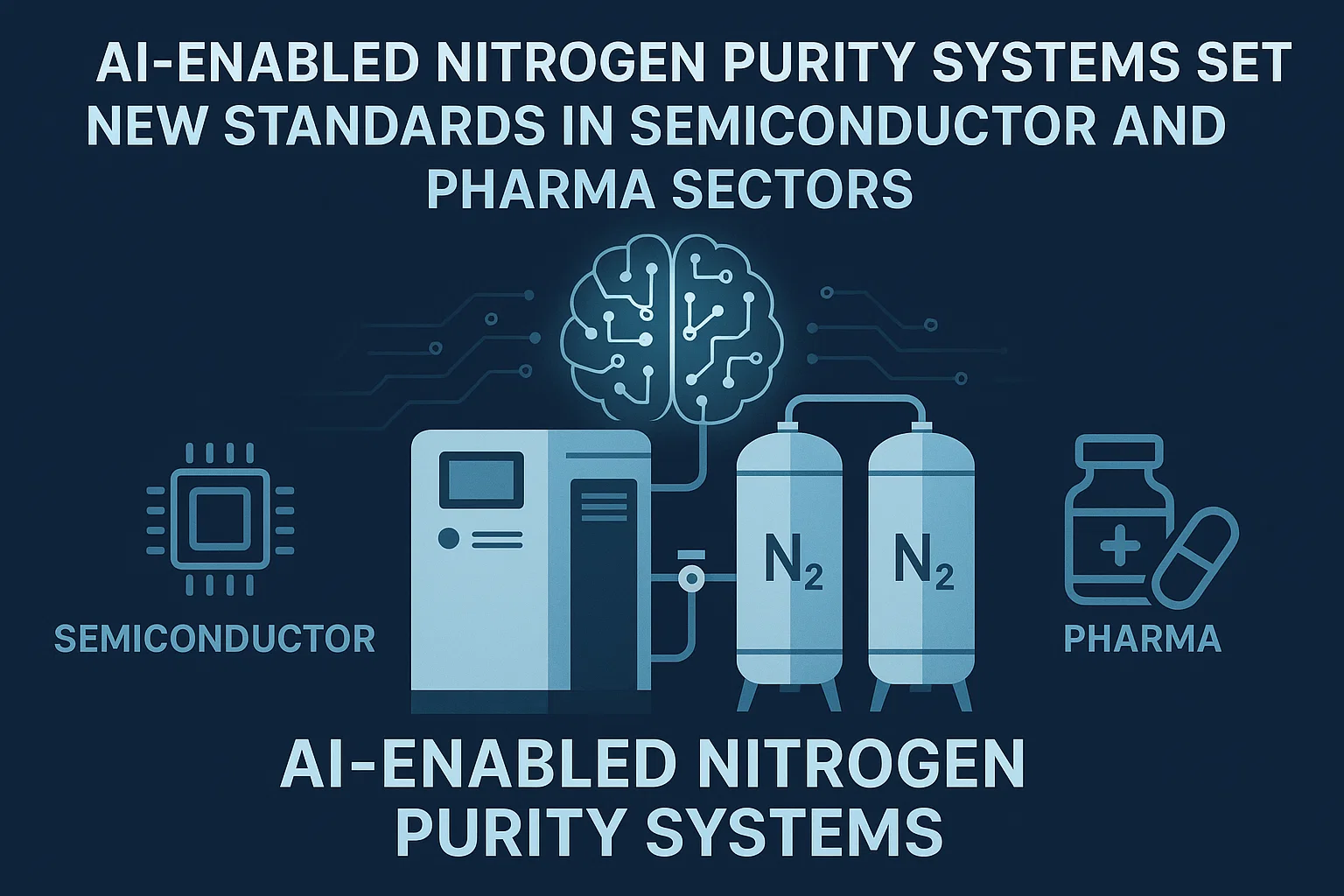
AI-Enabled Nitrogen Purity Systems Set New Standards in Semiconductor and Pharma Sectors
In a world where industrial accuracy is everything, Nitrogen Purity Analyzers (NPAs) have emerged as an essential instrument across a broad spectrum of sectors—from chemicals and semiconductors to pharmaceuticals and food processing. These specialized devices are crucial for measuring and maintaining the purity of nitrogen gas, ensuring the integrity and safety of complex processes. With industries becoming more digitized and quality-focused, the role of nitrogen purity analyzers is becoming more central than ever before.
In 2024, the Nitrogen Purity Analyzer Market was valued at US$ 78 million, and projections suggest it will reach US$ 103 million by 2032, growing at a CAGR of 4.0% during the forecast period 2025–2032. This growth is driven by both technological innovation and the growing industrial emphasis on high-purity nitrogen applications.
Access Your Free Sample Report- Nitrogen Purity Analyzer Market
1. Market Overview: A Catalyst for Industrial Transformation
Nitrogen gas, often dubbed the “silent protector,” is used widely across industries for its inert properties. It is non-reactive, stable, and ideal for applications where oxidation or contamination must be avoided.
The demand for ultra-high purity nitrogen has spiked in industries such as:
- Semiconductors and electronics
- Pharmaceutical manufacturing
- Food packaging
- Oil & gas refining
- Chemical synthesis and laboratories
To meet this rising demand, Nitrogen Purity Analyzers have undergone substantial transformations—from simple sensor-based monitors to complex systems equipped with AI, cloud integration, and remote diagnostics.
2. Recent Developments Shaping the Industry
a. KBR’s Digital Twin Deployment in India’s Nitric Acid Plants
One of the most significant recent advancements in the nitrogen-related ecosystem was KBR’s strategic digitalization project at Deepak Fertilisers & Petrochemicals’ nitric acid facilities in India.
- What happened?
KBR introduced a “Smart Factory” AI-powered digital twin across four nitric acid plants in Dahej and Taloja. - Why is it relevant?
Nitric acid production depends heavily on high-purity nitrogen. By embedding real-time diagnostics and AI tools, the system enables:- Continuous nitrogen purity monitoring
- Predictive maintenance alerts
- Enhanced control of chemical reactions
- Takeaway for NPA Market: As AI becomes embedded into plant control systems, analyzers like NPAs are evolving to offer seamless digital integration rather than standalone measurements.
b. Servomex and Pentatec Partnership to Automate Air Separation Units (ASUs)
Air Separation Units are the foundation of industrial gas generation. In a 2023 industry highlight, Servomex collaborated with Pentatec SRL to enhance ASU control and analysis systems.
- Key Features:
- Real-time gas purity analysis
- Automated cylinder fill systems
- Fully integrated data logs and compliance records
- Industry Impact:
Servomex’s gas analyzers are already known for their precision. With this partnership, NPAs benefit from smart automation, reducing human error and achieving tighter purity tolerances in nitrogen production. - Strategic Insight:
This development represents a move toward “lights-out” gas production environments, where intelligent analyzers maintain operations with minimal human oversight.
c. ABB’s Launch of the Sensi+ Platform
While ABB’s Sensi+ gas analyzer is designed mainly for natural gas quality, its laser-based technology and AI enhancements signify broader applicability across all gas analysis markets, including nitrogen.
- Tech Overview:
- Uses tunable diode laser absorption spectroscopy (TDLAS)
- Features self-diagnosing and auto-calibrating components
- Cloud connectivity for remote monitoring
- Why it matters:
The analytical precision and flexibility of ABB’s sensors pave the way for next-gen nitrogen analyzers capable of:- Detecting trace impurities at the parts-per-billion (ppb) level
- Operating in harsh industrial environments
- Supporting cloud-based IIoT ecosystems
3. Technology Trends Transforming Nitrogen Purity Analyzers
Beyond isolated product announcements, the entire NPA ecosystem is undergoing a technological evolution. Let’s explore the top trends driving innovation.
a. Integration with AI and Machine Learning
Modern NPAs are moving beyond passive monitoring. With AI algorithms now integrated into analyzer firmware, users can expect:
- Predictive analytics on equipment wear and purity drift
- Anomaly detection using historical data patterns
- Real-time decision support for plant managers
This is especially vital in the semiconductor and pharma sectors, where even a 0.01% drop in nitrogen purity can cause batch rejection.
b. Miniaturization and Portability
The emergence of handheld and portable analyzers is expanding the use of nitrogen analyzers in:
- Field inspections
- On-the-go purity checks
- Mobile nitrogen generation units
Smaller units are now capable of rivaling lab-grade precision, thanks to MEMS-based sensors and advanced data compression.
c. Cloud Connectivity and IoT Integration
Modern NPAs are increasingly cloud-enabled, allowing for:
- Remote configuration
- Automated calibration scheduling
- Real-time alarms and mobile notifications
This evolution supports Industry 4.0 goals and helps reduce downtime caused by delayed diagnostics or manual checks.
Download Sample Report PDF- Nitrogen Purity Analyzer Market
4. Challenges in the Nitrogen Purity Analyzer Market
Even as the market grows, it isn’t without its share of challenges:
a. Supply Chain Disruptions
- Global shortages of materials like zirconia ceramics, palladium membranes, and certified calibration gases (helium and hydrogen) have caused delays in analyzer manufacturing.
- Lead times for sensor modules and control boards have risen from 3 weeks to over 8 weeks in some cases.
b. Skilled Labor Shortage
The adoption of advanced NPA technology requires skilled technicians for:
- Calibration
- Maintenance
- System integration with plant-wide SCADA or DCS systems
However, the industrial sector faces a talent gap in AI- and IoT-integrated instrumentation.
c. Compliance and Certification Complexity
As analyzers become more complex, compliance with international purity standards such as:
- ISO 8573-1 (Compressed gases)
- USP 43/NF38 (Pharmaceutical nitrogen)
- ASTM D2866 (Analytical methods)
has become increasingly intricate, requiring in-house or outsourced compliance experts.
5. Application Spotlight: Where Nitrogen Purity Really Matters
a. Semiconductors
Semiconductor fabs demand ultra-high purity nitrogen (UHPN2) to prevent oxidation and contamination of wafer surfaces.
- Even parts-per-billion of O₂ or H₂O can damage a chip.
- NPAs with photoacoustic or laser-based sensors help ensure 99.9999% purity.
b. Pharmaceuticals
Pharma uses nitrogen to:
- Blank drug containers
- Prevent oxidation
- Maintain sterile manufacturing environments
Regulatory bodies like the FDA and EMA require regular documentation and traceability of nitrogen purity.
c. Food & Beverage
Modified Atmosphere Packaging (MAP) uses nitrogen to displace oxygen in food containers to extend shelf life.
- NPAs help verify the purity and consistency of nitrogen injected during packaging.
6. Competitive Landscape: Major Players Driving Innovation
Here are the major manufacturers leading the market’s transformation:
| Company | Notable Contributions |
| Servomex | Smart sensors for ASUs, advanced spectroscopy platforms |
| ABB | AI-integrated laser analyzers with cloud diagnostics |
| Mettler Toledo | Precision sensors for lab and industrial applications |
| Panasonic | Portable NPAs for mobile nitrogen generators |
| Yokogawa | Integrated analyzers with industrial SCADA/DCS compatibility |
These players are focusing on sustainability, automation, and data-driven decision-making, which are quickly becoming non-negotiable in industrial gas management.
7. Regional Insights: Global Adoption Patterns
North America
- Strongest market due to advanced pharma and semiconductor sectors.
- Major adoption of cloud-based analyzers in petrochemical plants.
Europe
- Driven by stringent EU industrial gas standards.
- Rapid deployment of green hydrogen facilities using nitrogen blanketing.
Asia-Pacific
- Fastest growing region due to electronics manufacturing in Taiwan, Japan, South Korea, and India’s fertilizer and specialty chemical growth.
- Government initiatives like “Make in India” and “China Manufacturing 2025” are pushing local analyzer demand.
Click Here To Download Full Sample Report- Nitrogen Purity Analyzer Market
8. Future Outlook: What Lies Ahead
As we approach the 2032 horizon, the Nitrogen Purity Analyzer market is set to evolve in the following directions:
a. Hybrid Analyzers
Expect next-gen NPAs to simultaneously analyze multiple gases (e.g., N₂, O₂, H₂O, CO₂) using multi-sensor fusion platforms.
b. Edge-AI Enabled Devices
Devices will no longer require cloud connectivity for intelligence; instead, edge computing will allow localized machine learning for faster insights.
c. Autonomous Calibration
Self-calibrating systems with built-in gas standards will eliminate the need for manual recalibration, reducing human error and downtime.
Nitrogen Purity Analyzers, once simple tools, are now becoming the nerve center of precision industrial ecosystems. From smart factories in India to cutting-edge ASUs in Europe, and from pharma cleanrooms to electronics fabs, these analyzers are empowering industries to maintain the highest levels of process integrity, safety, and efficiency.
As the market grows from US$ 78 million in 2024 to US$ 103 million by 2032, the focus will not just be on measurement—but on intelligent, automated, and adaptive purity assurance.
Whether you’re a plant operator, tech integrator, or investor, the message is clear: nitrogen purity is no longer a passive metric—it’s a strategic enabler.

Comments (0)