

A Deep Study into Technology and Consumer Behavior in the E-Cigarette Stick Market
E-Cigarette Stick Market has evolved far beyond simple nicotine delivery devices. What initially appeared as a smoking alternative has now become a technologically driven consumer electronics category. Modern vape sticks integrate miniature heating systems, battery management circuits, sensors, and semiconductor-based controllers that regulate vapor production and device safety.
In recent years, the market has been shaped by compact device engineering, smart temperature control, and improved nicotine formulations. These developments are closely linked to semiconductor components such as microcontrollers, power regulation chips, and thermal sensors embedded within the device architecture. The shift toward miniaturized electronics has made vape sticks smaller, safer, and more efficient, positioning the segment as a hybrid between consumer electronics and nicotine products.
E-Cigarette Sticks vs. Traditional Cigarettes
- One of the main reasons the category expanded rapidly is the perceived difference between electronic sticks and traditional cigarettes.
- Traditional cigarettes burn tobacco, producing smoke through combustion. This process releases tar, carbon monoxide, and thousands of chemicals.
- E-cigarette sticks, in contrast, vaporize liquid or heat tobacco without combustion. This reduces smoke production and odor.
- However, the comparison remains controversial. Some health organizations argue that while e-cigarettes may reduce exposure to certain toxic compounds, they still deliver addictive nicotine and aerosol particles.
- This debate has become a central factor shaping product regulation and innovation within the vaping ecosystem.
Technology inside the Modern Vape Stick
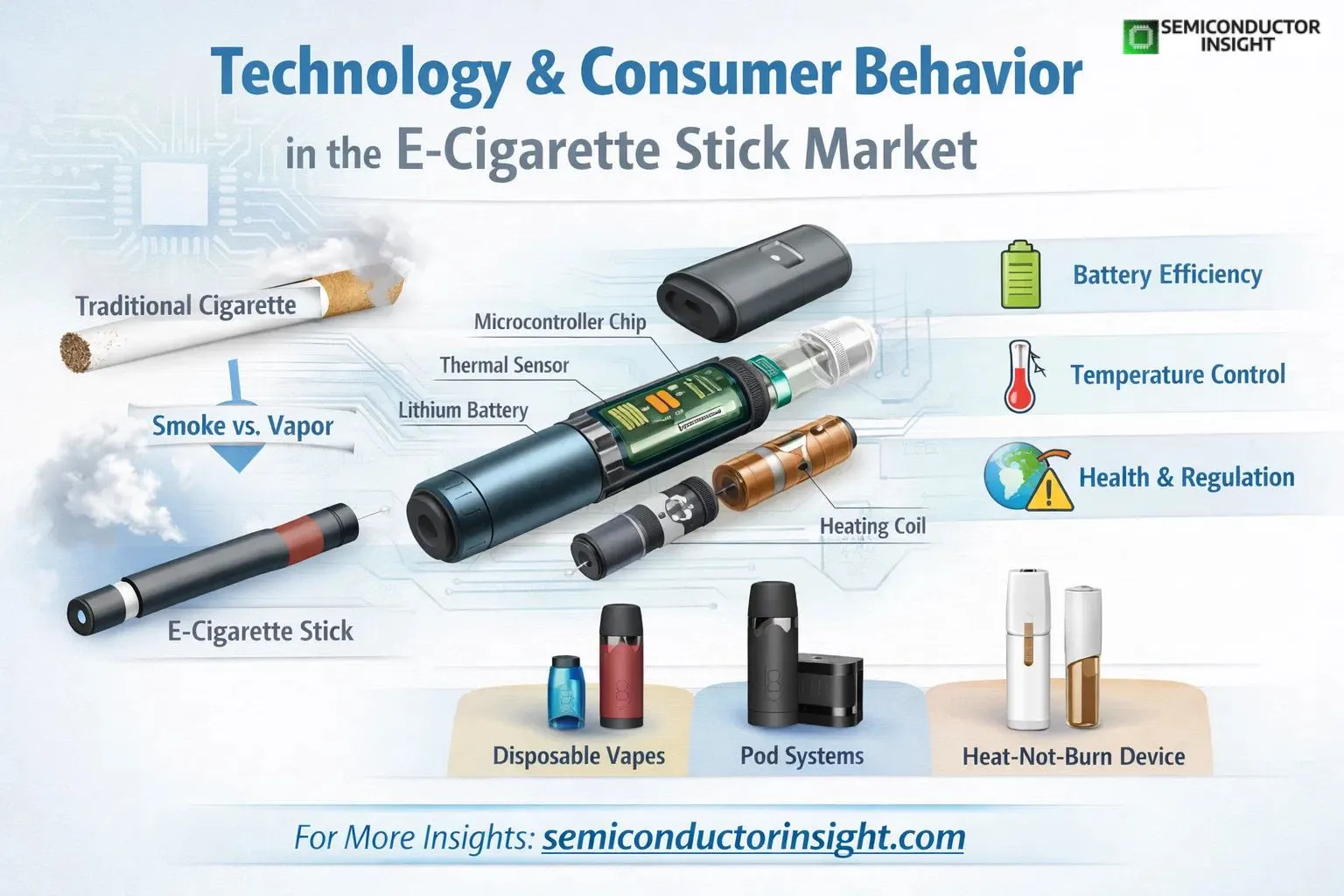
An e-cigarette stick may appear simple from the outside, but internally it contains a compact electronic system. A heating coil vaporizes the liquid, while semiconductor circuits manage voltage, temperature, and battery efficiency.
Temperature control chips are particularly important because they prevent overheating and regulate the vaporization process. In high-end products, sensors monitor the user’s inhalation and instantly activate the heating mechanism.
Battery management is another critical component. Lithium-ion micro batteries must deliver stable power in a very small form factor, requiring efficient semiconductor regulation systems.
A typical device architecture includes:
- Microcontroller chip
- Power management integrated circuit
- Thermal sensor and safety regulator
- Lithium-ion battery cell
- Ceramic or metal heating element
This electronic foundation explains why the segment increasingly overlaps with the semiconductor ecosystem. As manufacturers compete on performance and device safety, chip design and electronic integration are becoming essential differentiators.
Product Format Evolution within the Market
- The market now consists of several product styles, each addressing different consumer preferences.
- Disposable vape sticks dominate convenience-focused consumers because they require no charging or refilling. These products are widely sold in North America and parts of Europe.
- Rechargeable pod sticks represent a more technology-driven category. They contain replaceable nicotine pods and rechargeable batteries. Brands often compete through battery efficiency and temperature regulation features.
- Heat-not-burn sticks represent another specialized segment. Instead of vaporizing liquid, these devices heat processed tobacco sticks at controlled temperatures.
- A well-known example is the heated tobacco system developed by Philip Morris International under the IQOS platform, which uses electronically controlled heating blades to maintain precise temperatures.
Pros and Cons Shaping Consumer Perception
The popularity of e-cigarette sticks is largely driven by convenience and technology. Yet the category also faces significant scrutiny.
- Advantages
- E-cigarette sticks provide portability and ease of use. Slim stick designs resemble traditional cigarettes, making them familiar for transitioning smokers.
- Another advantage is controlled nicotine delivery. Users can choose nicotine strength levels through different e-liquid formulations.
- Technology also enhances safety through automated temperature controls and battery protection circuits.
- Limitations
- Despite technological progress, the products remain controversial due to nicotine addiction risks.
- Disposable sticks have also raised environmental concerns. Millions of single-use devices contain lithium batteries and plastic components that are difficult to recycle.
- Additionally, youth usage has become a major policy concern in several countries.
- The rapid adoption of devices from brands such as JUUL Labs demonstrated how quickly vaping products can spread among younger consumers, prompting regulatory responses worldwide.
To Know More about the Report, You Can Freely Browse Our Latest Updated Report: https://semiconductorinsight.com/report/e-cigarette-stick-market/
Subsections Driving Industry Development
Several specialized product and technology segments contribute to the broader market structure. For example, battery technology remains one of the most important areas. Manufacturers continuously attempt to increase battery life while maintaining compact form factors.
Heating materials also play a major role. Ceramic heating elements are gaining popularity because they distribute heat more evenly and reduce burning risks. Flavor delivery systems represent another competitive area. Advanced wick structures and airflow channels influence vapor density and taste. Also, device connectivity has also emerged as an experimental trend. Some premium vape sticks now include smartphone connectivity for usage tracking, firmware updates, and child-lock systems.
These developments show how the industry is gradually shifting toward smart vaping devices rather than simple nicotine delivery tools.

Comments (0)