Wire Marking Labels Market MARKET INSIGHTS
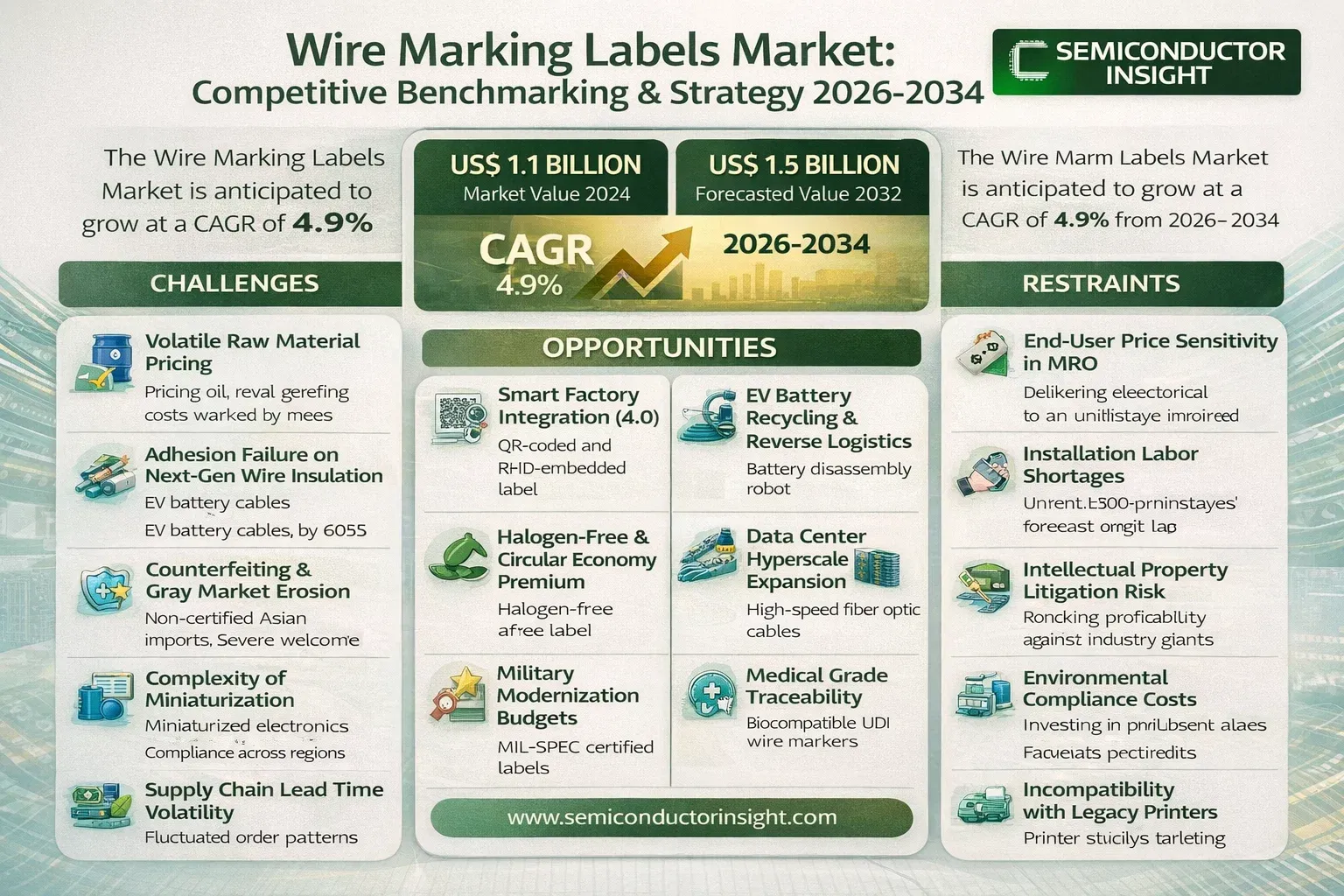
Global Wire Marking Labels Market was valued at 1057 million in 2024 and is projected to reach USD 1453 million by 2032, at a CAGR of 4.9% during the forecast period.
Wire Marking Labels are a form of wire markers that provide an easy method of identifying various wires and cables. These labels are critical for locating, upgrading, and repairing electrical, datacom, and telecommunication systems. They are available in a range of materials, including vinyl, polyester, and nylon, to suit many different environments and applications, ensuring durability and legibility. The primary function of these labels is to facilitate quick identification during troubleshooting, maintenance, or system expansion, thereby enhancing safety and operational efficiency.
The market is experiencing steady growth driven by the ongoing global expansion of infrastructure, particularly in the telecommunications and data center sectors. The rapid rollout of 5G networks and increasing investments in smart grid technologies are significant contributors. However, the market faces challenges from the adoption of wireless technologies, which can reduce the volume of new wired installations. Key players such as 3M, Brady Corporation, and Panduit continue to innovate, focusing on developing labels with improved adhesion, chemical resistance, and printability to meet evolving industry standards and requirements.
Wire Marking Labels Market MARKET DYNAMICS
Wire Marking Labels Market MARKET DRIVERS
Expanding Global Infrastructure Development to Drive Wire Marking Labels Demand
Global construction and infrastructure sector is experiencing robust growth, particularly in emerging economies, which is significantly driving demand for wire marking labels. With over D 4.5 trillion annually invested in global infrastructure projects, the need for organized electrical and communication systems has never been higher. These labels provide critical identification solutions for complex wiring systems in commercial buildings, industrial facilities, and telecommunications networks. The Asia-Pacific region, accounting for approximately 42% of Global market share, demonstrates particularly strong growth due to massive urbanization projects and smart city initiatives. Countries like China and India are investing heavily in infrastructure modernization, requiring sophisticated wire management solutions that ensure safety, compliance, and efficient maintenance operations.
Increasing Safety Regulations and Compliance Requirements to Boost Market Growth
Stringent safety regulations and compliance requirements across various industries are significantly contributing to market expansion. Regulatory bodies worldwide are implementing stricter standards for electrical installations and data communication systems to prevent accidents and ensure operational safety. Wire marking labels play a crucial role in meeting these requirements by providing clear identification that reduces installation errors, facilitates troubleshooting, and enhances overall system safety. The electrical and telecommunications sectors, representing approximately 40% of the market application segment, are particularly influenced by these regulatory developments. Compliance with standards such as the National Electrical Code (NEC) and international safety regulations mandates proper wire identification, creating sustained demand for high-quality marking solutions.
Technological Advancements in Label Manufacturing to Fuel Market Expansion
Continuous innovation in label materials and printing technologies is driving market growth by offering enhanced durability, readability, and application efficiency. Print-on wire labels, representing 46% of the product segment, have seen significant technological improvements including better adhesion properties, resistance to environmental factors, and compatibility with various printing systems. Recent developments include labels that withstand extreme temperatures, chemicals, and moisture while maintaining legibility throughout their lifespan. These advancements are particularly valuable in industrial environments where harsh conditions can compromise traditional labeling systems. The integration of RFID technology and smart labeling capabilities represents the next frontier, offering not just identification but also tracking and data management functionalities.
Furthermore, the growing adoption of automation in various industries necessitates more sophisticated wire management solutions. Automated systems require precise identification for maintenance and troubleshooting, creating additional demand for reliable wire marking labels that can withstand industrial environments and provide long-lasting performance.
Wire Marking Labels Market MARKET RESTRAINTS
Price Sensitivity in Emerging Markets to Limit Market Penetration
While the Wire Marking Labels Market shows strong growth potential, price sensitivity in developing economies presents a significant restraint. Many emerging markets prioritize cost-effectiveness over premium features, creating challenges for manufacturers offering advanced labeling solutions. The industrial and construction sectors in these regions often opt for basic labeling alternatives or traditional manual marking methods to reduce project costs. This price sensitivity is particularly evident in price-competitive markets where infrastructure development budgets are constrained, and contractors seek to minimize material expenses. The challenge is amplified by the presence of local manufacturers offering lower-cost alternatives that may not meet international quality standards but satisfy basic regulatory requirements.
Limited Awareness and Technical Expertise to Hinder Market Adoption
The market faces constraints due to limited awareness about the importance of proper wire identification and insufficient technical expertise in certain regions. Many small and medium-sized enterprises, particularly in developing economies, underestimate the long-term benefits of professional wire marking systems. This lack of awareness leads to the use of inadequate labeling methods that compromise system safety and efficiency. Additionally, the shortage of trained professionals who understand proper labeling techniques and standards affects market growth. The complexity of modern wiring systems requires specialized knowledge for effective label application and management, and the scarcity of such expertise in various markets limits the adoption of advanced wire marking solutions.
Environmental Regulations on Label Materials to Impact Manufacturing Processes
Increasing environmental regulations concerning label materials and adhesives present challenges for manufacturers. Stricter regulations on plastic materials, chemical compositions, and recycling requirements are forcing manufacturers to reformulate products and adapt manufacturing processes. These compliance requirements often increase production costs and may affect product performance characteristics. The industry must balance environmental compliance with maintaining the durability and functionality that customers expect from wire marking labels. This challenge is particularly significant in regions with stringent environmental policies, where manufacturers must invest in research and development to create eco-friendly alternatives that meet performance standards while complying with regulatory requirements.
Wire Marking Labels Market MARKET CHALLENGES
Intense Market Competition and Price Pressure to Challenge Profitability
Wire Marking Labels Market experiences significant competitive pressure, with the top five players holding over 14% market share collectively. This fragmentation creates intense price competition, particularly in the standardized product segments. Manufacturers face constant pressure to reduce costs while maintaining quality standards, challenging profitability margins. The market includes both global giants and numerous regional players, each competing on price, quality, and service differentiation. This competitive landscape forces companies to continuously innovate and optimize their operations to maintain market position. Additionally, the threat of substitution from alternative wire identification methods adds another layer of competitive challenge, requiring companies to demonstrate clear value proposition and superior performance.
Other Challenges
Supply Chain Vulnerabilities
Global supply chain disruptions and raw material price fluctuations present ongoing challenges for market stability. The industry relies on various specialized materials including polymers, adhesives, and printing inks, which are subject to price volatility and availability issues. Recent global events have highlighted the vulnerability of extended supply chains, forcing manufacturers to reassess their sourcing strategies and inventory management practices.
Technological Adaptation Pace
The rapid pace of technological change in both labeling technologies and end-user applications creates adaptation challenges. Manufacturers must continuously invest in research and development to keep pace with evolving customer requirements and emerging technologies. This requires significant financial commitment and organizational flexibility, particularly for medium-sized companies with limited R&D resources.
Wire Marking Labels Market MARKET OPPORTUNITIES
Growing Smart City Initiatives to Create Substantial Market Opportunities
Global movement toward smart city development presents significant growth opportunities for the Wire Marking Labels Market. Smart city projects involve extensive deployment of sophisticated electrical and communication infrastructure requiring precise wire identification and management. These projects typically involve integrated systems for transportation, energy, communication, and public services, all requiring organized wiring with clear identification. The complexity of these systems necessitates professional labeling solutions that ensure reliability and facilitate maintenance. With numerous global smart city initiatives underway and substantial investments being made in urban infrastructure modernization, the demand for high-quality wire marking labels is expected to increase substantially.
Expansion in Renewable Energy Sector to Drive New Application Opportunities
The rapid growth of the renewable energy sector offers promising opportunities for wire marking labels manufacturers. Solar and wind energy installations require extensive wiring systems that must be properly identified for installation, maintenance, and safety compliance. Global shift toward renewable energy has accelerated investment in these sectors, creating new demand for specialized labeling solutions that can withstand outdoor environments and provide long-term reliability. These applications often require labels with enhanced UV resistance, temperature tolerance, and durability against environmental factors. As renewable energy capacity continues to expand globally, the need for appropriate wire identification solutions will correspondingly increase.
Digitalization and Industry 4.0 Integration to Open New Market Frontiers
The ongoing digital transformation across industries creates opportunities for advanced wire marking solutions that integrate with digital management systems. Industry 4.0 initiatives involve connected systems where proper wire identification becomes crucial for digital twins, predictive maintenance, and automated documentation. The integration of QR codes, RFID tags, and other smart features into wire labels enables digital asset management and enhances operational efficiency. This evolution from simple identification to smart labeling solutions represents a significant opportunity for manufacturers to develop value-added products and services. The convergence of physical labeling with digital management systems is creating new market segments and revenue streams for innovative companies.
Additionally, the increasing emphasis on cybersecurity in critical infrastructure is driving demand for secure and traceable wire identification systems. Proper labeling supports security protocols by ensuring correct connections and facilitating audit trails, creating opportunities for manufacturers to develop solutions that address both identification and security requirements.
WIRE MARKING LABELS MARKET TRENDS
Rising Demand for Industrial Automation and Smart Infrastructure to Drive Market Growth
Global Wire Marking Labels Market is experiencing significant growth, primarily driven by the accelerating adoption of industrial automation and the expansion of smart infrastructure projects worldwide. The increasing complexity of electrical and data communication systems within manufacturing plants, data centers, and commercial buildings necessitates highly reliable and durable identification solutions to ensure operational safety and efficiency. This trend is particularly pronounced in the Asia-Pacific region, which commands approximately 42% of Global market share, fueled by massive investments in industrial and urban development. The proliferation of the Internet of Things (IoT) and the rollout of 5G networks are further amplifying the need for precise wire identification to manage the dense cabling required for these technologies. Consequently, the demand for wire marking labels that can withstand harsh environmental conditions, including extreme temperatures, moisture, and chemical exposure, is rising substantially. This surge is a direct response to the critical need for minimizing downtime and preventing costly errors during installation, maintenance, and troubleshooting of complex wiring systems.
Other Trends
Technological Advancements in Label Materials and Printing
Innovation in material science and printing technology is a pivotal trend shaping the Wire Marking Labels Market. There is a marked shift towards the development of labels made from advanced polymers and composite materials that offer superior durability, legibility, and resistance to abrasion, oils, and solvents. This is especially critical for applications in demanding sectors like oil & gas, automotive, and heavy machinery. Furthermore, the adoption of on-demand digital printing systems is gaining traction, enabling the production of highly customized, variable-data labels directly at the point of use. This technology allows for the printing of barcodes, QR codes, and complex alphanumeric sequences, which integrate seamlessly with asset management and digital twin systems. The Print-On Wire Labels segment, which holds a dominant 46% market share, is at the forefront of this innovation, providing unparalleled flexibility and efficiency compared to traditional pre-printed or write-on alternatives.
Stringent Regulatory Compliance and Safety Standards
Globally, the enforcement of stringent safety regulations and industry standards continues to be a major driver for the Wire Marking Labels Market. Regulatory bodies and international standards, such as those from the National Electrical Code (NEC) in the United States and the International Electrotechnical Commission (IEC) globally, mandate clear and permanent identification of wires and cables to prevent electrical hazards, ensure proper circuit identification, and facilitate safe maintenance procedures. Non-compliance can result in significant financial penalties and, more importantly, severe safety risks. This regulatory pressure compels industries across electrical, datacom, and telecom sectors—which together account for about 40% of the market—to invest in high-quality, compliant labeling solutions. This trend is fostering a competitive environment where manufacturers are increasingly focusing on producing labels that not only meet but exceed these safety requirements, thereby enhancing product value and reliability for end-users.
COMPETITIVE LANDSCAPE
Key Industry Players
Companies Strive to Strengthen their Product Portfolio to Sustain Competition
Global Wire Marking Labels Market exhibits a semi-consolidated competitive structure, characterized by a dynamic mix of large multinational corporations, specialized medium-sized enterprises, and numerous smaller regional players. This diverse ecosystem drives continuous innovation in labeling technologies and materials. 3M stands as a dominant force in the market, leveraging its extensive global distribution network and a robust portfolio of high-performance labeling solutions. The company’s leadership is reinforced by its strong brand recognition and significant investment in research and development, particularly for applications in harsh industrial environments and the rapidly expanding datacom sector.
Panduit and Brady Corporation also command substantial market shares, a position solidified through their comprehensive offerings that cater to both electrical and electronic identification needs. Their growth is largely driven by deep domain expertise and a strategic focus on providing complete identification systems, which include not just labels but also printers and software, creating a sticky customer ecosystem. Furthermore, these established players are actively expanding their geographical footprint, particularly within the high-growth Asia-Pacific region, which accounted for approximately 42% of Global market in 2024.
Meanwhile, other significant participants like HellermannTyton (Aptiv) and TE Connectivity are strengthening their market positions through strategic acquisitions and targeted product development. These companies are focusing on developing specialized labels that meet evolving industry standards for flame retardancy, chemical resistance, and durability. Their strategy involves deep integration with broader connectivity and component solutions, offering customers a streamlined, one-stop-shop experience for both hardware and identification needs.
The competitive intensity is further heightened by the presence of companies such as Lapp Group and Brother Industries, who compete effectively by focusing on specific niches. Lapp Group, for instance, capitalizes on its strong reputation in the cable and connection technology space, often bundling its ÖLFLEX® branded labels with its cable products. Brother Industries, on the other hand, has gained significant traction by offering user-friendly, desktop printing solutions for on-demand label creation, appealing to smaller workshops and facilities requiring flexibility. This ongoing pursuit of portfolio enhancement and market expansion ensures a vibrant and evolving competitive landscape.
List of Key Wire Marking Labels Companies Profiled
- 3M (U.S.)
- Brady Corporation (U.S.)
- LEM (Switzerland)
- Lapp Group (Germany)
- TE Connectivity (Switzerland)
- PHOENIX CONTACT (Germany)
- Panduit (U.S.)
- HellermannTyton (Aptiv) (U.K.)
- Brother Industries (Japan)
- Gardner Bender (U.S.)
- Dymo (Newell Brands) (U.S.)
- Partex Marking Systems (U.S.)
Segment Analysis:
By Type
Print-On Wire Labels Segment Dominates the Market Due to High Customization and Durability
The market is segmented based on type into:
- Print-On Wire Labels
- Subtypes: Laser-printable, Thermal-transfer, and others
- Pre-Printed Wire Labels
- Write-On Wire Labels
- Subtypes: Pen-based, Marker-based, and others
By Application
Electrical, Datacom and Telecom Segment Leads Due to Critical Need for Organized Infrastructure
The market is segmented based on application into:
- Electrical, Datacom and Telecom
- Industrial Wire Marking System
- Others
By Material
Vinyl-Based Labels Hold Significant Share Owing to Excellent Adhesion and Environmental Resistance
The market is segmented based on material into:
- Vinyl
- Polyester
- Nylon
- Others
By End-User
Industrial Manufacturing is a Key End-User Segment Driven by Safety and Compliance Requirements
The market is segmented based on end-user into:
- Industrial Manufacturing
- IT & Telecommunications
- Construction
- Others
Regional Analysis: Wire Marking Labels Market
Asia-Pacific
The Asia-Pacific region is the undisputed leader in Global Wire Marking Labels Market, commanding a significant 42% share. This dominance is fueled by massive infrastructure development, rapid industrialization, and extensive investments in telecommunications and power generation. China and India are the primary engines of growth, driven by government initiatives like China’s Belt and Road Initiative and India’s Smart Cities Mission, which necessitate vast electrical and data communication networks. While cost sensitivity keeps demand high for basic Write-On and Pre-Printed labels, there is a noticeable and accelerating shift toward more sophisticated Print-On solutions. This transition is propelled by the need for greater efficiency, accuracy, and durability in complex industrial and commercial applications. The region’s manufacturing boom, particularly in the automotive and electronics sectors, further amplifies the demand for reliable wire identification systems to ensure safety and compliance.
Europe
Europe holds the position of the second-largest market, accounting for approximately 27% of global demand. The market is characterized by stringent regulatory standards and a strong emphasis on quality, safety, and environmental sustainability. Regulations such as the Machinery Directive and ATEX for explosive atmospheres mandate clear and durable wire marking, creating a steady demand for high-performance labels. Furthermore, the region’s focus on Industry 4.0 and the modernization of aging industrial infrastructure are key drivers. Countries like Germany, France, and Italy, with their robust manufacturing bases, are major consumers. The market is sophisticated, with a pronounced preference for advanced Print-On Wire Labels that offer resistance to chemicals, extreme temperatures, and abrasion. The ongoing green transition and investments in renewable energy projects also present significant growth opportunities for wire marking solutions in solar and wind power installations.
North America
North America represents a mature and technologically advanced market, comprising about 25% of Global share. The region’s growth is underpinned by strict safety codes from organizations like the National Electrical Code (NEC) and OSHA, which enforce proper wire identification for safety and maintenance. The well-established telecommunications sector, ongoing data center expansion, and the modernization of the power grid are primary demand drivers. There is a high adoption rate of innovative and durable labeling solutions, including laser-printable and heat-shrink labels, particularly in critical applications within aerospace, defense, and IT infrastructure. While the market is saturated in some traditional sectors, new growth avenues are emerging from investments in electric vehicle manufacturing and 5G network rollout, which require extensive and precise wiring systems.
South America
The South American market for Wire Marking Labels is in a developing phase, presenting a mix of challenges and opportunities. Growth is primarily driven by gradual industrial development and infrastructure projects in countries like Brazil and Argentina. The mining, oil & gas, and power utility sectors are key end-users, creating demand for labels that can withstand harsh environmental conditions. However, the market’s expansion is often constrained by economic volatility, which impacts capital expenditure on industrial projects, and a less stringent enforcement of safety standards compared to North America or Europe. This often results in a higher reliance on cost-effective Write-On and Pre-Printed labels. Despite these hurdles, the long-term outlook remains positive as industrialization continues and awareness of the operational benefits of proper wire identification grows.
Middle East & Africa
The Middle East & Africa region is an emerging market with considerable long-term potential, albeit from a smaller base. Growth is concentrated in the Gulf Cooperation Council (GCC) countries, such as Saudi Arabia and the UAE, where massive investments in construction, smart city projects (like NEOM and Dubai Future District), and industrial diversification are underway. These mega-projects require extensive electrical and datacom wiring, fueling demand for wire marking labels. In contrast, the African market is more fragmented, with growth linked to gradual infrastructure development and mining activities. A significant challenge across the region is the price sensitivity that favors basic labeling solutions, alongside varying levels of regulatory enforcement. Nonetheless, the overarching trend of urbanization and economic development points toward a steady increase in market demand over the coming years.
Report Scope
This market research report provides a comprehensive analysis of Global and regional Wire Marking Labels Markets, covering the forecast period 2025–2032. It offers detailed insights into market dynamics, technological advancements, competitive landscape, and key trends shaping the industry.
Key focus areas of the report include:
- Market Size & Forecast: Historical data and future projections for revenue, unit shipments, and market value across major regions and segments.
- Segmentation Analysis: Detailed breakdown by product type, technology, application, and end-user industry to identify high-growth segments and investment opportunities.
- Regional Outlook: Insights into market performance across North America, Europe, Asia-Pacific, Latin America, and the Middle East & Africa, including country-level analysis where relevant.
- Competitive Landscape: Profiles of leading market participants, including their product offerings, R&D focus, manufacturing capacity, pricing strategies, and recent developments such as mergers, acquisitions, and partnerships.
- Technology Trends & Innovation: Assessment of emerging technologies, integration of automation, material science advancements, and evolving industry standards.
- Market Drivers & Restraints: Evaluation of factors driving market growth along with challenges, supply chain constraints, regulatory issues, and market-entry barriers.
- Stakeholder Analysis: Insights for component suppliers, OEMs, system integrators, investors, and policymakers regarding the evolving ecosystem and strategic opportunities.
Primary and secondary research methods are employed, including interviews with industry experts, data from verified sources, and real-time market intelligence to ensure the accuracy and reliability of the insights presented.
FREQUENTLY ASKED QUESTIONS:
What is the current market size of Global Wire Marking Labels Market?
-> Wire Marking Labels Market was valued at 1057 million in 2024 and is projected to reach USD 1453 million by 2032, at a CAGR of 4.9% during the forecast period.
Which key companies operate in Global Wire Marking Labels Market?
-> Key players include 3M, Panduit, Dymo (Newell Brands), Lapp Group, Brother Industries, Brady, TE Connectivity, PHOENIX CONTACT, HellermannTyton (Aptiv), among others.
What are the key growth drivers?
-> Key growth drivers include infrastructure modernization, data center expansion, industrial automation growth, and stringent safety regulations.
Which region dominates the market?
-> Asia-Pacific is the largest market with approximately 42% share, followed by Europe and North America with 27% and 25% respectively.
What are the emerging trends?
-> Emerging trends include smart labeling with RFID integration, sustainable materials, thermal transfer printing technology, and color-coded labeling systems.
Get Sample Report PDF for Exclusive Insights
Report Sample Includes
- Table of Contents
- List of Tables & Figures
- Charts, Research Methodology, and more...
 Download Sample Report PDF