
MARKET INSIGHTS
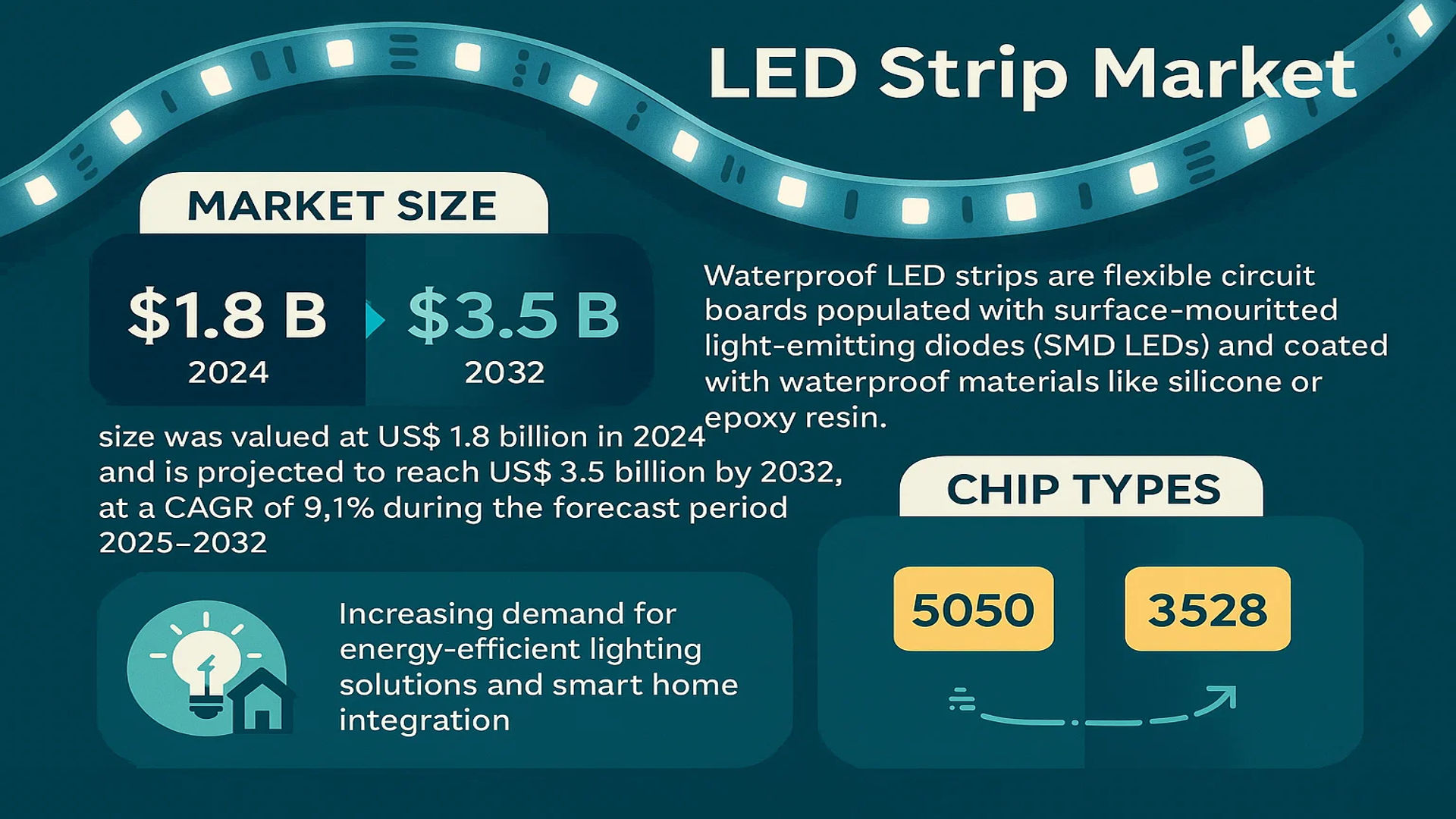
The global Waterproof LED Strip Market size was valued at US$ 1.8 billion in 2024 and is projected to reach US$ 3.5 billion by 2032, at a CAGR of 9.1% during the forecast period 2025-2032.
Waterproof LED strips are flexible circuit boards populated with surface-mounted light-emitting diodes (SMD LEDs) and coated with waterproof materials like silicone or epoxy resin. These lighting solutions are categorized by chip types such as 5050 and 3528, offering versatile applications in both residential and commercial spaces due to their energy efficiency, durability, and moisture-resistant properties.
The market growth is driven by increasing demand for energy-efficient lighting solutions and smart home integration. While North America leads in adoption due to stringent energy regulations, Asia Pacific shows the fastest growth owing to urbanization and infrastructure development. Key players including Osram, Philips, and LEDVANCE are expanding their product portfolios with IP65 and IP67 rated strips, catering to diverse applications from architectural lighting to automotive underglow.
MARKET DYNAMICS
MARKET DRIVERS
Rising Adoption in Architectural and Commercial Lighting Boosts Market Growth
The global waterproof LED strip market is experiencing robust growth driven by increasing adoption in architectural lighting and commercial applications. Waterproof LED strips are being widely incorporated into building facades, outdoor signage, and landscape lighting due to their durability and energy efficiency. The commercial sector accounted for over 65% of the market share in 2024, with hospitality, retail, and office spaces leading the adoption. Recent innovations in color mixing technology and smart connectivity allow for dynamic lighting scenarios that enhance aesthetic appeal while reducing energy consumption by up to 60% compared to traditional lighting solutions.
Growing Smart Home Ecosystem Accelerates Residential Demand
Home automation systems are creating significant demand for waterproof LED strips in residential applications. The market is seeing a surge in retrofitting projects where homeowners integrate LED strips into kitchens, bathrooms, and outdoor living spaces. Waterproof variants are particularly popular for pool lighting and outdoor decor due to their IP67 and IP68 ratings that ensure protection against moisture and dust. The Asia Pacific region leads this trend with residential sector growth projected at 12% CAGR through 2032, driven by urbanization and increasing disposable incomes.
Furthermore, technological advancements in LED packaging and miniaturization are enabling slimmer profiles without compromising brightness. The 5050 LED segment, representing over 45% of market revenue in 2024, continues to dominate due to its optimal balance between brightness and energy efficiency.
➤ The integration of IoT capabilities with waterproof LED strips allows users to control lighting via smartphones and voice assistants, creating new opportunities in the smart home segment.
MARKET RESTRAINTS
Price Volatility of Raw Materials Constrains Market Expansion
The waterproof LED strip market faces challenges from fluctuating prices of key raw materials like aluminum substrates and epoxy resins. Semiconductor shortages have led to inconsistent pricing for LED chips, creating budgeting difficulties for manufacturers and installers. While the 3528 segment offers cost advantages, its lower lumen output limits adoption in premium applications. Raw material costs constituted approximately 35-40% of total production expenses in 2024, putting pressure on profit margins across the value chain.
Other Restraints
Installation Complexities
Specialized installation requirements for waterproof LED strips, including proper sealing and power supply considerations, can increase total project costs by 15-20%. This creates hesitation among price-sensitive consumers and small contractors unfamiliar with IP-rated lighting solutions.
Regional Regulatory Variations
Differing safety certifications and efficiency standards across regions complicate global expansion strategies. Compliance with UL, CE, and CCC certifications adds administrative burdens and testing costs that smaller manufacturers struggle to absorb.
MARKET OPPORTUNITIES
Emerging Applications in Automotive and Marine Lighting Present Untapped Potential
The automotive sector offers promising growth avenues for waterproof LED strips, particularly in accent lighting and undercarriage applications. Luxury vehicle manufacturers are increasingly incorporating customizable LED lighting solutions, creating demand for durable, weatherproof variants. Similarly, the marine industry presents opportunities for IP68-rated strips in boat cabins and deck lighting, a segment projected to grow by 18% annually through 2032.
Advancements in flexible PCB technology are enabling curved and custom-shaped LED strips that expand design possibilities. Major players are investing in R&D to develop strips with higher color rendering indexes (CRI >90) for premium architectural applications. The integration of circadian rhythm tuning capabilities in waterproof LED systems is gaining traction in healthcare and hospitality settings, driving innovation in the high-end market segment.
MARKET CHALLENGES
Intense Competition from Local Manufacturers Squeezes Profit Margins
The market faces growing pricing pressures from regional manufacturers offering low-cost alternatives, particularly in Asia. While established brands maintain quality advantages, price-sensitive markets show increasing preference for budget options that may compromise on longevity and performance. The average selling price for waterproof LED strips declined by 8-12% between 2020-2024, challenging manufacturers to maintain profitability through value-added features.
Technical Challenges
Heat dissipation remains a critical challenge in high-density waterproof LED strips, with improper thermal management potentially reducing lifespan by up to 30%. Additionally, color consistency across long LED strip runs requires precise voltage regulation and binning processes that add to production complexity.
Supply Chain Vulnerabilities
Global component shortages continue to impact lead times, with some specialty waterproofing materials experiencing 20-25 week backlogs. This creates inventory management challenges and forces manufacturers to maintain higher safety stock levels, increasing working capital requirements.
WATERPROOF LED STRIP MARKET TRENDS
Growing Demand for Energy-Efficient Lighting Solutions Drives Market Expansion
The rising adoption of energy-efficient lighting solutions is significantly propelling the demand for waterproof LED strips worldwide. These strips offer higher durability and superior brightness compared to conventional lighting options, making them ideal for both indoor and outdoor applications. The market is witnessing a compound annual growth rate (CAGR) of over 8%, driven by advancements in smart lighting technologies and the increasing need for sustainable alternatives in residential and commercial spaces. Innovations such as tunable white lighting and RGB color-changing capabilities further enhance their appeal, positioning them as a versatile choice for decorative and functional applications.
Other Trends
Smart Home Integration and IoT Connectivity
The integration of waterproof LED strips with smart home ecosystems and IoT devices is reshaping consumer preferences. With the proliferation of home automation systems, these strips are increasingly being adopted for ambient lighting, security lighting, and aesthetic enhancements. Features such as voice control via Alexa or Google Assistant and synchronization with mobile apps have expanded their utility, particularly in upscale residential projects. Additionally, the trend towards human-centric lighting—where lighting conditions adapt to circadian rhythms—is boosting demand in wellness-focused applications.
Surge in Commercial and Architectural Applications
The commercial sector is emerging as a key growth driver for the waterproof LED strip market, with applications ranging from retail store displays to architectural lighting. Businesses are leveraging these strips for enhanced visual merchandising and brand differentiation, especially in hospitality and entertainment venues. In architecture, waterproof LED strips are being used extensively for facade lighting, bridges, and public installations due to their ability to withstand harsh weather conditions. The segment accounted for nearly 45% of total market revenue in 2024, with growth further supported by urbanization and infrastructure development in emerging economies.
COMPETITIVE LANDSCAPE
Key Industry Players
Competition Intensifies as Brands Invest in Technological Innovations and Global Expansion
The global waterproof LED strip market is characterized by a dynamic mix of established brands and emerging players vying for market share. Osram and Philips currently lead the segment, leveraging decades of lighting expertise and strong distribution networks across both residential and commercial markets. Their dominance is particularly evident in Europe and North America, where brand recognition gives them a competitive edge in premium product categories.
LEDVANCE has emerged as another key contender, particularly after expanding its product line to include IP68-rated LED strips for harsh environments. The company’s strategic partnerships with commercial developers have helped it secure significant contracts in architectural lighting projects. Meanwhile, Forge Europa has differentiated itself through high-output industrial-grade LED strips, capturing niche markets that require specialized lighting solutions.
Asian manufacturers like NVC Lighting and Opple are rapidly gaining traction through competitive pricing and improved product quality. Their focus on energy-efficient 5050 SMD LED strips has allowed them to capture substantial market share in price-sensitive regions while beginning to penetrate Western markets through online sales channels.
Recent industry trends show companies are increasingly pursuing vertical integration strategies. OML Technology recently acquired a silicone coating manufacturer to secure its waterproofing supply chain, while Jasco Lighting partnered with a leading adhesive producer to develop weather-resistant mounting solutions. These moves indicate a market where technological differentiation and supply chain control are becoming crucial competitive advantages.
List of Key Waterproof LED Strip Manufacturers
- Osram (Germany)
- Philips (Netherlands)
- LEDVANCE (Germany)
- Forge Europa (UK)
- Ledridge Lighting (China)
- Digital Advanced Lighting (U.S.)
- Lighting Ever (China)
- NVC Lighting (China)
- Opple (China)
- Jasco Lighting (U.S.)
Segment Analysis:
By Type
5050 Segment Dominates the Market Due to High Brightness and Versatile Applications
The market is segmented based on type into:
- 5050
- 3528
- Others
By Application
Commercial Use Segment Leads Driven by Demand for Architectural and Retail Lighting
The market is segmented based on application into:
- Home Use
- Commercial Use
By Waterproof Rating
IP67 Segment Gains Prominence for Outdoor and Wet Location Applications
The market is segmented based on waterproof rating into:
- IP65
- IP67
- IP68
By Color
RGB Segment Shows Significant Growth Owing to Smart Lighting Trends
The market is segmented based on color into:
- Single Color
- RGB
- RGBW
Regional Analysis: Waterproof LED Strip Market
Asia-Pacific
The Asia-Pacific region dominates the global Waterproof LED Strip market, driven by rapid urbanization, infrastructure development, and increasing adoption of smart lighting solutions in residential and commercial spaces. China, the largest market, benefits from strong manufacturing capabilities, competitive pricing, and government initiatives promoting energy-efficient lighting. India and Southeast Asia are witnessing rising demand due to expanding real estate projects and hospitality sectors. Japan and South Korea focus on high-quality, technologically advanced LED solutions, further stimulating market growth. The availability of cost-effective alternatives has made this region the preferred sourcing hub for waterproof LED strips globally.
North America
The North American Waterproof LED Strip market is characterized by stringent energy regulations and high demand for premium, durable lighting solutions. The U.S. leads with widespread applications in architectural lighting, signage, and outdoor installations. Consumers prioritize IP68-rated products with advanced features like smart controls and color-changing capabilities. Commercial segments, including retail and entertainment venues, contribute significantly to market expansion. Growing emphasis on sustainable lighting solutions and smart city projects further propels adoption, though higher product costs compared to Asian imports remain a challenge for mass-market penetration.
Europe
Europe’s mature Waterproof LED Strip market emphasizes quality, safety certifications, and environmental sustainability. Germany and the U.K. are key markets, driven by strict EU regulations on energy efficiency and hazardous substances. The region sees strong demand from automotive, marine, and industrial applications requiring waterproof capabilities. While premium brands dominate higher-value segments, price competition from Asian manufacturers impacts local suppliers. Innovation in flexible lighting solutions and integration with IoT platforms present growth opportunities, particularly in smart home and commercial automation sectors.
Middle East & Africa
This emerging market shows potential with increasing infrastructure projects and tourism-related developments requiring durable outdoor lighting solutions. The UAE and Saudi Arabia lead adoption through luxury real estate and commercial projects, while South Africa demonstrates steady growth in residential applications. Challenges include price sensitivity in developing economies and limited local manufacturing capabilities, resulting in heavy reliance on imports. However, government initiatives promoting LED adoption and urbanization trends indicate promising long-term prospects for market expansion.
South America
South America presents a developing market where economic fluctuations impact the pace of Waterproof LED Strip adoption. Brazil and Argentina show the strongest demand, primarily for commercial and hospitality applications. While affordability remains a key consideration, growing awareness of energy savings drives gradual market penetration. Infrastructure limitations and inconsistent regulatory frameworks hinder faster growth, though increasing foreign investments in construction projects create opportunities for premium waterproof lighting solutions in urban centers.
Report Scope
This market research report provides a comprehensive analysis of the global Waterproof LED Strip market, covering the forecast period 2024–2032. It offers detailed insights into market dynamics, technological advancements, competitive landscape, and key trends shaping the industry.
Key focus areas of the report include:
- Market Size & Forecast: Historical data and future projections for revenue, unit shipments, and market value across major regions and segments. The global Waterproof LED Strip market was valued at US$ 1.8 billion in 2024 and is projected to reach US$ 3.5 billion by 2032, growing at a CAGR of 9.1% during the forecast period.
- Segmentation Analysis: Detailed breakdown by product type (5050, 3528, Others), application (Home Use, Commercial Use), and end-user industry to identify high-growth segments and investment opportunities.
- Regional Outlook: Insights into market performance across North America, Europe, Asia-Pacific, Latin America, and the Middle East & Africa, including country-level analysis where relevant. The U.S. market size is estimated at USD million in 2024, while China is projected to reach USD million by 2032.
- Competitive Landscape: Profiles of leading market participants, including their product offerings, R&D focus, manufacturing capacity, pricing strategies, and recent developments such as mergers, acquisitions, and partnerships. The global top five players (Forge Europa, LEDVANCE, Ledridge Lighting, Digital Advanced Lighting, Lighting Ever) held approximately % market share in 2024.
- Technology Trends & Innovation: Assessment of emerging technologies in LED lighting, including waterproofing techniques, smart lighting integration, and energy efficiency improvements.
- Market Drivers & Restraints: Evaluation of factors driving market growth along with challenges, supply chain constraints, regulatory issues, and market-entry barriers.
- Stakeholder Analysis: Insights for component suppliers, OEMs, system integrators, investors, and policymakers regarding the evolving ecosystem and strategic opportunities.
Primary and secondary research methods are employed, including interviews with industry experts, data from verified sources, and real-time market intelligence to ensure the accuracy and reliability of the insights presented.
FREQUENTLY ASKED QUESTIONS:
What is the current market size of Global Waterproof LED Strip Market?
-> Waterproof LED Strip Market size was valued at US$ 1.8 billion in 2024 and is projected to reach US$ 3.5 billion by 2032, at a CAGR of 9.1% during the forecast period 2025-2032..
Which key companies operate in Global Waterproof LED Strip Market?
-> Key players include Forge Europa, LEDVANCE, Ledridge Lighting, Digital Advanced Lighting, Lighting Ever, LEDMY, OML Technology, Jiasheng Lighting, Osram, and Philips, among others.
What are the key growth drivers?
-> Key growth drivers include increasing demand for energy-efficient lighting solutions, growth in architectural lighting applications, and rising adoption in commercial spaces.
Which region dominates the market?
-> Asia-Pacific is the fastest-growing region, driven by infrastructure development in China and India, while North America remains a significant market due to high adoption in commercial applications.
What are the emerging trends?
-> Emerging trends include smart LED strip integration with IoT systems, development of ultra-thin waterproof strips, and increasing use of RGB color-changing strips for decorative purposes.

Get Sample Report PDF for Exclusive Insights
Report Sample Includes
- Table of Contents
- List of Tables & Figures
- Charts, Research Methodology, and more...
 Download Sample Report PDF


