
MARKET INSIGHTS
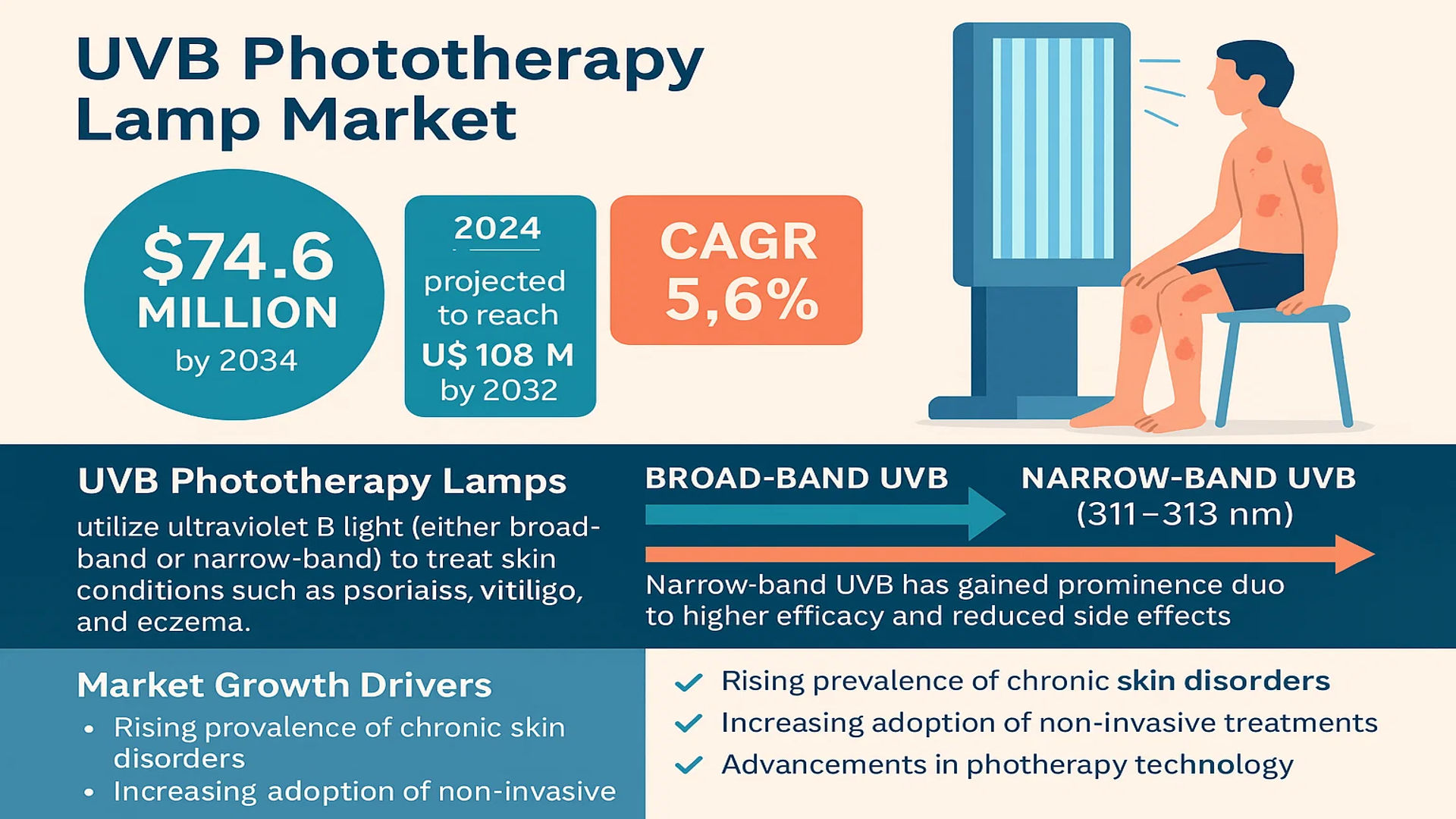
The global UVB Phototherapy Lamp Market was valued at 74.6 million in 2024 and is projected to reach US$ 108 million by 2032, at a CAGR of 5.6% during the forecast period.
UVB phototherapy lamps utilize ultraviolet B light (either broad-band or narrow-band) to treat skin conditions such as psoriasis, vitiligo, and eczema. These devices emit wavelengths between 290–320 nm, which help reduce inflammation and slow excessive skin cell growth. While broad-band UVB lamps cover a wider spectrum, narrow-band UVB (311–313 nm) has gained prominence due to its higher efficacy and reduced side effects.
The market growth is primarily driven by the rising prevalence of chronic skin disorders, increasing adoption of non-invasive treatments, and advancements in phototherapy technology. Furthermore, growing healthcare expenditure and the expansion of home-based treatment options are contributing to market expansion. Key players like Philips Lighting, Signify, and National Biological are actively innovating portable and energy-efficient UVB lamp solutions, further propelling industry growth.
MARKET DYNAMICS
MARKET DRIVERS
Rising Prevalence of Skin Disorders to Propel UVB Phototherapy Lamp Demand
The global surge in dermatological conditions, particularly psoriasis and eczema, is significantly driving the UVB phototherapy lamp market. Narrowband UVB therapy has become a gold-standard treatment for moderate-to-severe psoriasis, with clinical studies demonstrating over 75% clearance rates in patients undergoing regular treatment. This efficacy, combined with the growing disease burden – global psoriasis prevalence currently affects approximately 125 million people worldwide – creates sustained demand for phototherapy solutions. The therapy’s non-invasive nature and minimal systemic side effects compared to oral medications make it particularly attractive for long-term management of chronic skin conditions.
Technological Advancements in Phototherapy Devices Enhance Treatment Outcomes
Recent innovations in UVB lamp technology are transforming treatment protocols and patient experiences. New generation devices now incorporate precision dosing controls, automated safety shutoffs, and integrated skin sensors that measure treatment effectiveness in real-time. The shift toward handheld and portable units has increased accessibility, allowing patients to continue treatment at home while maintaining clinical efficacy. Manufacturers are developing UVB lamps with optimized spectral outputs that maximize therapeutic benefits while minimizing potential side effects, resulting in devices that are 30-40% more efficient than previous models. These technological improvements are driving both replacement demand and first-time adoption across healthcare facilities.
Growing Preference for Non-pharmacological Treatments Boosts Market Expansion
Increasing patient and physician preference for drug-free treatment options is creating significant momentum for UVB phototherapy solutions. Concerns about the long-term side effects of systemic medications and biologics, particularly in pediatric and adolescent populations, have positioned phototherapy as a preferred first-line treatment. Clinical guidelines now recommend UVB therapy before considering more aggressive pharmaceutical interventions for many dermatological conditions. This paradigm shift is evident in treatment patterns, with phototherapy utilization rates increasing by an estimated 18-22% annually in developed markets. The therapy’s favorable safety profile and cost-effectiveness compared to biologics further strengthen its position in treatment algorithms.
MARKET RESTRAINTS
High Treatment Cost and Limited Insurance Coverage Restrict Market Penetration
The significant upfront investment required for UVB phototherapy systems presents a substantial barrier to market growth. Professional-grade clinical units typically range between $5,000-$15,000, while even home-use devices often exceed $1,000, placing them out of reach for many patients. Insurance reimbursement policies vary widely by region and payer, with many requiring extensive documentation of treatment failure with less expensive options before approving coverage. This financial burden suppresses adoption rates, particularly in price-sensitive markets and among patients with high-deductible health plans. The cumulative costs of maintenance, bulb replacements, and professional supervision further compound affordability challenges.
Safety Concerns and Potential Side Effects Limit Patient Adoption
While generally safe when properly administered, UVB phototherapy carries risks that deter some patients and clinicians. Potential side effects include erythema (sunburn-like reactions), premature skin aging, and in rare cases, increased risk of skin cancers with long-term use. These concerns are particularly acute for patients with photosensitive conditions or those requiring extended treatment regimens. The necessity for careful dose titration and regular dermatological monitoring adds complexity to treatment protocols. Patient apprehension about UV exposure, fueled by public health campaigns about sun safety, creates additional psychological barriers that must be overcome through education and counseling.
Technical Complexity and Maintenance Requirements Challenge Market Growth
The operational requirements of UVB phototherapy systems impose practical constraints on widespread adoption. Treatment efficacy depends on precise calibration of lamp intensity, which degrades over time and requires regular bulb replacement – typically every 500-1,000 hours of use. Clinics must maintain rigorous quality control protocols to ensure consistent dosing, necessitating specialized equipment and trained personnel. The physical space requirements for full-body treatment units limit implementation in smaller practices. These technical and logistical challenges create significant overhead costs for healthcare providers and contribute to the therapy’s underutilization in resource-constrained settings.
MARKET OPPORTUNITIES
Expansion of Home-Use Phototherapy Devices Opens New Market Segments
The growing availability of FDA-cleared home phototherapy devices presents a significant growth opportunity for market players. These systems, which typically cost 60-70% less than clinical units, are increasingly popular among patients seeking convenience and reduced treatment costs. Manufacturers are developing sophisticated home-use devices with safety features and connectivity options that allow remote monitoring by healthcare providers. This segment is projected to grow at nearly 2.5 times the rate of clinical systems as payers recognize the cost benefits of decentralized treatment. The COVID-19 pandemic accelerated this trend, with many patients preferring home-based alternatives to clinic visits.
Emerging Markets Present Significant Untapped Potential for Growth
Developing regions with large patient populations and improving healthcare infrastructure offer substantial expansion opportunities for UVB phototherapy providers. Countries in Asia, Latin America, and the Middle East are experiencing rapid growth in dermatological service demand alongside rising disposable incomes. Local manufacturers are introducing competitively priced systems tailored to regional needs, often at 30-50% lower price points than imported devices. Governments in these markets are increasingly including phototherapy in public health programs for chronic skin conditions. Strategic partnerships with local distributors and targeted physician education initiatives could unlock significant market potential in these high-growth regions.
Integration with Digital Health Platforms Enhances Treatment Monitoring Capabilities
The convergence of phototherapy with digital health technologies creates innovative opportunities to enhance treatment outcomes and patient engagement. New systems now incorporate Bluetooth connectivity, mobile apps for treatment tracking, and cloud-based platforms that enable providers to monitor patient adherence and response remotely. These connected solutions provide valuable data to optimize treatment protocols and demonstrate clinical effectiveness to payers. Advanced analytics capabilities allow for personalized dosing adjustments based on individual treatment responses, potentially improving outcomes while minimizing side effects. As healthcare systems increasingly emphasize value-based care, these integrated solutions will become critical differentiators in the phototherapy market.
MARKET CHALLENGES
Intense Competition from Biologic Therapies Pressures Market Share
The rapid development and adoption of biologic drugs for dermatological conditions present a formidable challenge to UVB phototherapy growth. These targeted therapies, while significantly more expensive, offer superior convenience with less frequent dosing requirements compared to phototherapy’s typical 2-3 sessions per week. Pharmaceutical companies’ aggressive marketing and patient assistance programs make biologics increasingly accessible despite their high costs. The introduction of new drug classes with improved safety profiles continues to shift treatment paradigms, particularly for severe cases. Phototherapy must demonstrate clear advantages in long-term safety and cost-effectiveness to maintain its position in treatment algorithms against these advanced pharmaceutical options.
Regulatory Variability Across Regions Complicates Market Expansion
Divergent regulatory frameworks for medical devices create significant hurdles for global UVB phototherapy manufacturers. Classification requirements, safety standards, and approval processes vary considerably between the FDA, CE Mark, and emerging market regulators. Changes in radiation safety regulations often necessitate costly product modifications and retesting. The lack of harmonization in device classification – with some regions considering phototherapy lamps as medical devices while others regulate them as general radiation-emitting products – adds complexity to market entry strategies. These regulatory challenges particularly impact smaller manufacturers seeking international expansion, slowing the pace of global market growth.
Patient Compliance and Treatment Adherence Issues Impact Outcomes
The demanding treatment regimen required for effective phototherapy creates substantial compliance challenges that limit real-world effectiveness. Most protocols require patients to commit to 15-30 treatments over 8-12 weeks, with maintenance sessions often needed indefinitely. The inconvenience of frequent clinic visits, especially for working adults and caregivers, leads to high dropout rates estimated at 25-40% in some populations. Treatment response is highly dependent on consistent adherence, making these compliance issues a significant barrier to realizing the full therapeutic potential of UVB phototherapy. Developing strategies to improve patient engagement and retention remains a critical challenge for the industry.
UVB PHOTOTHERAPY LAMP MARKET TRENDS
Increasing Prevalence of Psoriasis and Skin Disorders Driving Market Growth
The rising incidence of psoriasis, eczema, vitiligo, and other chronic skin conditions is significantly boosting the demand for UVB phototherapy lamps globally. Narrowband UVB therapy, in particular, has shown clinical efficacy in treating moderate-to-severe psoriasis with fewer side effects compared to traditional PUVA therapy. Studies indicate that approximately 2-3% of the global population suffers from psoriasis, creating a substantial patient pool requiring phototherapy treatment. Furthermore, the non-invasive nature of UVB therapy makes it a preferred choice for dermatologists and patients alike. While the hospital segment remains the dominant end-user, the residential application market is projected to witness accelerated growth as compact, user-friendly devices become more accessible.
Other Trends
Technological Advancements in Lamp Design
Recent years have seen remarkable innovations in UVB phototherapy lamp technology, including the development of wearable devices for targeted treatment and smart LED-based systems with adjustable intensity controls. Manufacturers are focusing on improving patient comfort with features like cooling mechanisms and ergonomic designs while maintaining therapeutic efficacy. The shift from traditional fluorescent bulbs to more energy-efficient LED UVB sources is particularly noteworthy, offering longer lifespans and precise wavelength control. Some cutting-edge devices now incorporate IoT connectivity, allowing patients to track treatment protocols and dermatologists to monitor progress remotely.
Growing Home-Use Segment Transforming Market Dynamics
The home phototherapy segment is experiencing substantial growth due to increasing awareness and the convenience of self-administered treatment. While hospital-grade systems still account for approximately 65% of total market revenue, portable and handheld devices are gaining rapid adoption. This trend has been further accelerated by the COVID-19 pandemic, as patients sought alternatives to clinical visits. However, concerns about proper usage and safety protocols remain a challenge that manufacturers are addressing through improved instructional materials and automated dosage controls. The residential segment is projected to grow at a CAGR of 6.8% from 2024 to 2032, outpacing the overall market growth rate.
COMPETITIVE LANDSCAPE
Key Industry Players
Innovation and Strategic Expansion Drive Market Competition
The global UVB Phototherapy Lamp market exhibits a competitive yet fragmented landscape, characterized by a mix of established medical device manufacturers and specialized phototherapy solution providers. Philips Lighting (now Signify) leads the market with its comprehensive range of medical-grade UVB lamps, leveraging its strong brand recognition and widespread distribution networks across Europe and North America. The company holds an estimated 18% revenue share in 2024, driven by its clinically validated narrow-band UVB solutions for psoriasis treatment. However, emerging Asian manufacturers are gaining traction through cost-effective alternatives.
National Biological Corporation (NatBio) maintains a robust position in therapeutic UV devices, with its patented UVB-NB technology being adopted by 3,500+ dermatology clinics worldwide. Meanwhile, LightSources Group differentiates itself through customized UV lamp solutions, catering to both clinical and residential applications. Their vertical integration strategy—from raw material sourcing to finished product assembly—gives them a 12% cost advantage over competitors, according to industry benchmarks.
The market sees increasing R&D investments, particularly in wearable UVB devices for home use. Startups like Dermfix are disrupting traditional models with app-connected phototherapy systems, though they face regulatory hurdles in key markets. Established players respond through strategic acquisitions—notably, Signify’s 2023 purchase of a German UV technology firm to bolster its dermatology portfolio.
List of Key UVB Phototherapy Lamp Manufacturers
- Signify (Netherlands)
- National Biological Corporation (U.S.)
- LightSources Group (U.S.)
- Dermfix (U.K.)
- International Light Technologies (U.S.)
- SIGMA-Aldrich (Germany)
- Xuzhou Kejian (China)
- Yonker (China)
Regional dynamics shape competition—European and U.S. firms dominate the high-end therapeutic segment with FDA/CE-certified devices, while Asian manufacturers like Xuzhou Kejian capture 32% of the entry-level market through aggressive pricing. This geographical segmentation creates distinct competitive battlegrounds, with multinationals increasingly localizing production to address cost sensitivity in emerging markets.
Segment Analysis:
By Type
Narrowband UVB Segment Dominates the Market Due to Higher Efficacy in Treating Skin Conditions
The market is segmented based on type into:
- Narrowband UVB
- Subtypes: 311nm wavelength, 312nm wavelength
- Broadband UVB
- Targeted UVB
- Subtypes: Handheld devices, comb devices
- Combination UVB/UVA
- Others
By Application
Psoriasis Treatment Leads the Market Due to High Prevalence of Skin Disorders Globally
The market is segmented based on application into:
- Psoriasis treatment
- Vitiligo treatment
- Eczema treatment
- Dermatitis treatment
- Others
By End User
Hospitals Segment Holds Largest Share Due to Increasing Adoption of Phototherapy Clinics
The market is segmented based on end user into:
- Hospitals
- Dermatology clinics
- Home care settings
- Others
Regional Analysis: UVB Phototherapy Lamp Market
North America
North America dominates the global UVB phototherapy lamp market, accounting for nearly 35% of total revenue. The region’s leadership stems from advanced healthcare infrastructure, high adoption of phototherapy for skin conditions like psoriasis and eczema, and strong reimbursement policies. The United States, in particular, sees robust demand from dermatology clinics and hospitals, where narrowband UVB treatment has become a standard protocol. Major manufacturers, including Philips Lighting and National Biological, have established strong distribution networks across the region. However, stringent FDA approval processes for medical devices can slow product launches. Rising awareness of phototherapy’s benefits and increasing healthcare expenditure (projected to reach $6.2 trillion by 2028) continue to drive market expansion.
Europe
Europe represents the second-largest UVB phototherapy lamp market, with Germany and the U.K. as key contributors. The region benefits from universal healthcare systems that cover phototherapy treatments, coupled with high prevalence rates of psoriasis (affecting 2-3% of the population). EU medical device regulations ensure product safety but create barriers for new entrants. Water-based and energy-efficient UVB lamps are gaining traction due to sustainability initiatives. The market shows particular strength in residential UVB devices, as patients increasingly seek home-treatment options post-COVID-19. Nevertheless, pricing pressures from national health services and competition from biologics pose challenges to market growth.
Asia-Pacific
Asia-Pacific is the fastest-growing UVB phototherapy lamp market, projected to expand at a CAGR of 7.1% through 2032. China and India drive demand due to large patient pools, improving healthcare access, and increasing disposable incomes. Local manufacturers like Xuzhou Kejian and Yonker compete aggressively on price, though quality concerns persist. While hospitals remain the primary end-users, the residential segment shows strong potential as awareness grows. Regulatory environments vary widely – Japan maintains rigorous standards comparable to the West, while emerging markets have more lenient approval processes. Challenges include uneven healthcare infrastructure and preference for traditional treatments in rural areas.
South America
The South American UVB phototherapy lamp market remains nascent but shows steady growth. Brazil leads regional adoption, accounting for over 40% of demand, followed by Argentina. Economic instability and currency fluctuations deter major investments, keeping prices volatile. Public healthcare systems increasingly incorporate phototherapy, but device availability remains concentrated in urban centers. Import dependency (particularly from U.S. and Chinese manufacturers) elevates costs. Nevertheless, rising dermatology awareness and gradual healthcare modernization present long-term opportunities. The market favors multi-functional devices that combine UVB with other therapies to justify higher pricing.
Middle East & Africa
This emerging market is characterized by stark contrasts – while Gulf nations like UAE and Saudi Arabia boast advanced dermatology clinics with cutting-edge UVB equipment, much of Africa lacks basic phototherapy access. Turkey and Israel serve as regional hubs for medical tourism, driving premium device adoption. Challenges include low insurance coverage for phototherapy and cultural hesitancy towards light-based treatments in some communities. However, government initiatives to upgrade healthcare infrastructure and partnerships with international manufacturers (particularly from Europe) are gradually expanding market penetration. The focus remains on hospital-grade equipment rather than residential solutions.
Report Scope
This market research report provides a comprehensive analysis of the Global UVB Phototherapy Lamp Market, covering the forecast period 2024–2032. It offers detailed insights into market dynamics, technological advancements, competitive landscape, and key trends shaping the industry.
Key focus areas of the report include:
- Market Size & Forecast: Historical data and future projections for revenue, unit shipments, and market value across major regions and segments. The Global UVB Phototherapy Lamp Market was valued at USD 74.6 million in 2024 and is projected to reach USD 108 million by 2032, growing at a CAGR of 5.6%.
- Segmentation Analysis: Detailed breakdown by product type (Handheld, Desktop) and application (Hospital, Residential) to identify high-growth segments and investment opportunities. In 2024, the handheld segment accounted for a significant market share, while hospitals dominated the application segment.
- Regional Outlook: Insights into market performance across North America, Europe, Asia-Pacific, Latin America, and the Middle East & Africa, including country-level analysis. North America leads in market share, followed by Europe and Asia-Pacific, with increasing adoption in emerging economies.
- Competitive Landscape: Profiles of leading market participants, including their product offerings, R&D focus, manufacturing capacity, pricing strategies, and recent developments such as mergers, acquisitions, and partnerships.
- Technology Trends & Innovation: Assessment of emerging technologies in phototherapy, including narrow-band UVB advancements and portable device developments.
- Market Drivers & Restraints: Evaluation of factors driving market growth (rising psoriasis prevalence, healthcare infrastructure development) along with challenges (high device costs, regulatory hurdles).
- Stakeholder Analysis: Insights for medical device manufacturers, healthcare providers, distributors, investors, and policymakers regarding the evolving ecosystem and strategic opportunities.
Primary and secondary research methods are employed, including interviews with industry experts, data from verified sources, and real-time market intelligence to ensure the accuracy and reliability of the insights presented.
FREQUENTLY ASKED QUESTIONS:
What is the current market size of Global UVB Phototherapy Lamp Market?
-> UVB Phototherapy Lamp Market was valued at 74.6 million in 2024 and is projected to reach US$ 108 million by 2032, at a CAGR of 5.6% during the forecast period.
Which key companies operate in Global UVB Phototherapy Lamp Market?
-> Key players include Philips Lighting, Dermfix, LightSources Group, International Light Technologies, Signify, National Biological (NatBio), SIGMA, Xuzhou Kejian, and Yonker.
What are the key growth drivers?
-> Key growth drivers include rising prevalence of skin disorders, increasing healthcare expenditure, technological advancements in phototherapy devices, and growing awareness about UVB treatment efficacy.
Which region dominates the market?
-> North America currently dominates the market, while Asia-Pacific is expected to witness the fastest growth during the forecast period.
What are the emerging trends?
-> Emerging trends include development of portable UVB devices, integration of smart features in phototherapy lamps, and increasing adoption of home-use UVB treatment solutions.

Get Sample Report PDF for Exclusive Insights
Report Sample Includes
- Table of Contents
- List of Tables & Figures
- Charts, Research Methodology, and more...
 Download Sample Report PDF


