MARKET INSIGHTS
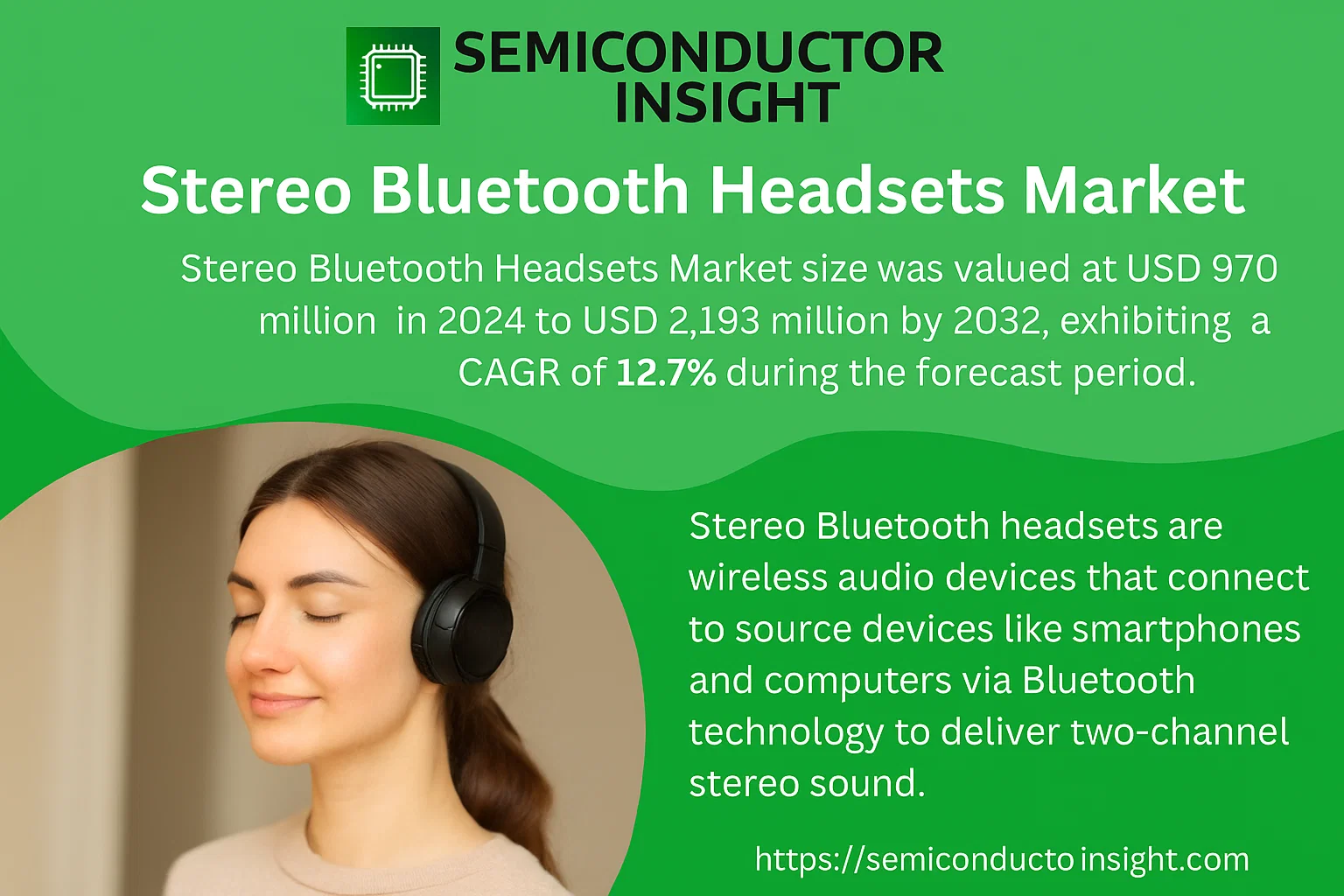
Global Stereo Bluetooth Headsets Market size was valued at USD 970 million in 2024 to USD 2,193 million by 2032, exhibiting a CAGR of 12.7% during the forecast period.
Stereo Bluetooth headsets are wireless audio devices that connect to source devices like smartphones and computers via Bluetooth technology to deliver two-channel stereo sound. These headsets allow for both listening to audio content and, when equipped with a microphone, engaging in communication. Product categories primarily include on-ear and over-ear designs, with some models featuring virtual surround sound capabilities through ear cups that fully enclose the ear.
The market is experiencing robust growth driven by several factors, including the widespread adoption of smartphones, the removal of the 3.5mm headphone jack by many manufacturers, and increasing consumer demand for wireless convenience during activities such as commuting, sports, and remote work. Furthermore, technological advancements in battery life, active noise cancellation (ANC), and audio codecs like aptX and LDAC are enhancing user experience and contributing to market expansion. Initiatives by key players are also propelling the market forward. For instance, Apple Inc., with its AirPods series, continues to dominate the market landscape. Other significant players such as LG Electronics, Sony Corporation, Samsung (Harman), and Sennheiser operate in the market with diverse and innovative product portfolios.
MARKET DRIVERS
Proliferation of High-Fidelity Wireless Audio Codecs
The growing consumer demand for high-quality audio experiences, supported by widespread adoption of codecs like aptX, aptX HD, and LDAC, is a primary driver. These technologies enable stereo Bluetooth headsets to deliver near-CD quality sound, making them a viable alternative to wired headphones for audiophiles and casual listeners alike. The integration of these codecs into an increasing number of smartphones and media players is accelerating market growth.
Integration of Active Noise Cancellation (ANC)
The incorporation of Active Noise Cancellation technology has become a standard feature in mid-to-high-end stereo Bluetooth headsets. This feature significantly enhances the user experience in noisy environments like public transport or open-plan offices, driving consumer upgrades and replacement purchases.
➤ The global market for true wireless stereo (TWS) earbuds, a dominant segment, is projected to experience a compound annual growth rate exceeding 15% over the next five years.
Furthermore, the convergence of stereo Bluetooth headsets with smart assistant functionalities—such as hands-free access to Siri, Google Assistant, and Alexa—adds a layer of convenience and productivity, making them indispensable for multitasking users.
MARKET CHALLENGES
Intense Price Competition and Market Saturation
The market is highly competitive, with numerous brands ranging from premium audio specialists to low-cost manufacturers. This leads to intense price pressure, squeezing profit margins and making it challenging for companies to differentiate their products solely on features.
Other Challenges
Battery Life Limitations
Despite improvements, battery life remains a significant constraint, especially for headsets with power-intensive features like ANC and high-resolution audio streaming. Consumers often have to choose between feature-rich performance and all-day battery endurance.
Latency Issues for Real-Time Applications
Audio lag or latency can be problematic for gaming and video streaming, where audio-visual synchronization is critical. While low-latency codecs exist, their inconsistent support across devices presents a persistent challenge.
MARKET RESTRAINTS
Concerns Regarding Hearing Health
Growing awareness and concern about potential hearing damage from prolonged headphone use, especially at high volumes, is a notable market restraint. This has led to increased scrutiny and the implementation of volume-limiting regulations in some regions, which could potentially dampen the appeal of high-volume listening experiences.
Environmental and E-Waste Regulations
Stringent environmental regulations concerning electronic waste and the use of certain materials are increasing manufacturing costs and complexity. The short life cycle of consumer electronics, including headsets, contributes significantly to e-waste, prompting regulatory actions that can restrain market growth.
MARKET OPPORTUNITIES
Expansion into the Gaming and Esports Sector
There is a significant opportunity to develop specialized stereo Bluetooth headsets tailored for the gaming and esports market. Features like ultra-low latency, spatial audio, and robust connectivity are in high demand, creating a new, high-value segment for manufacturers.
Growth in Health and Fitness Integration
The integration of biometric sensors for monitoring heart rate, blood oxygen levels, and activity tracking presents a major growth avenue. Merging audio functionality with health metrics creates a compelling product category for health-conscious consumers and athletes.
Stereo Bluetooth Headsets Market Trends
Robust Market Growth Driven by Multimedia Usage and Wireless Convenience
Global Stereo Bluetooth Headsets Market demonstrates strong expansion, valued at USD 970 million in 2024 and projected to reach USD 2193 million by 2032, representing a compound annual growth rate (CAGR) of 12.7%. This significant growth is fueled by the increasing integration of these devices into daily life, moving beyond simple communication to becoming essential tools for multimedia consumption. The unique capability of stereo Bluetooth headsets to handle two-channel audio for listening to music and games, while also supporting monaural communications, makes them highly versatile. Features like virtual surround sound, which uses ear cups that cover the entire ear to create an immersive experience, are particularly attractive to consumers seeking premium entertainment.
Other Trends
Dominant Market Leadership and Widening Competitive Gaps
The competitive landscape is heavily consolidated, with Apple leading the market with a 37% share. LG and Sony follow with 11% and 8% shares, respectively. A key ongoing trend is the widening gap in market share among these top players, attributed to divergent strategic approaches. Apple’s strong ecosystem integration and brand loyalty continue to drive its dominance, while competitors focus on specific features like high-fidelity audio or gaming optimization to capture niche segments. This trend suggests an intensifying battle for market positioning beyond the top three.
Geographical Market Concentration and Application Diversification
From a regional perspective, the United States is the largest market, accounting for 30% of global sales volume. Europe follows as the second-largest market with a 25% share, indicating a mature but still growing consumer base. In terms of product segmentation, the market is divided into On-Ear and Over-Ear headsets, catering to different user preferences for portability and sound isolation. Application-wise, usage spans Communication, Sports, Music, and others. The music application segment is a primary driver, but growth in sports and fitness uses is accelerating as consumers seek durable, sweat-resistant models for active lifestyles. This diversification across types and applications underpins the market’s resilience and broad appeal.
COMPETITIVE LANDSCAPE
Key Industry Players
Leadership Consolidates as the Market Expands Rapidly
Global Stereo Bluetooth Headsets Market is characterized by a high degree of consolidation, with a clear leader and a chasing pack of established consumer electronics giants. Apple Inc. has established a dominant position, commanding approximately 37% of the market share, largely driven by the immense popularity and ecosystem integration of its AirPods product line. This leadership is maintained through strong brand loyalty, seamless connectivity with iOS devices, and continuous innovation in features like Active Noise Cancellation and spatial audio. LG and Sony follow as the second and third largest players, holding market shares of approximately 11% and 8%, respectively. These companies leverage their deep expertise in audio technology and broad product portfolios to maintain strong positions, though the gap in market share with Apple has been widening due to divergent strategic focuses.
Beyond the top three, the competitive landscape includes several other significant players who have carved out substantial niches. Companies like Samsung (through its Harman subsidiary with brands like JBL), Sennheiser, and Bose are renowned for their high-fidelity audio quality and strong presence in the premium segment. Plantronics (now Poly) and Jabra (GN Group) are key players in the professional and enterprise communication segment, offering headsets optimized for business and call center use. Other major consumer electronics brands such as Microsoft, Logitech (Jaybird), Motorola, and Skullcandy compete aggressively in the mid-range and value segments, often focusing on specific use cases like sports, gaming, or fashion. The market is further populated by a long tail of regional and specialized manufacturers catering to diverse consumer preferences and price points.
List of Key Stereo Bluetooth Headsets Companies Profiled
- Apple
- LG
- Sony
- Plantronics (Poly)
- GN/Jabra
- Samsung (Harman)
- Sennheiser
- Motorola
- Microsoft
- Logitech (Jaybird)
- Bose
- Skullcandy
- Anker (Soundcore)
- Beats by Dre (Apple)
- JBL (Harman)
Segment Analysis:
| Segment Category | Sub-Segments | Key Insights |
| By Type |
|
On-Ear Headsets are experiencing strong consumer traction due to their balanced profile of portability and audio immersion. Their compact and lightweight nature makes them highly favored for active and on-the-go lifestyles. Conversely, Over-Ear Headsets command a leading position for premium audio experiences, offering superior passive noise isolation and larger drivers for a more immersive soundscape, which appeals to audiophiles and professionals requiring extended wearing comfort. |
| By Application |
|
Music remains the leading application segment, driven by the universal consumer demand for high-fidelity wireless audio streaming for entertainment. The proliferation of music and video streaming services continues to fuel this demand. The Sports application is a rapidly growing segment, with products increasingly featuring secure-fit designs, sweat and water resistance, and enhanced battery life to cater to the needs of health-conscious consumers. |
| By End User |
|
Individual Consumers constitute the dominant end-user segment, driven by widespread adoption for daily personal use with smartphones and laptops. The market is characterized by a high volume of purchases from this demographic seeking convenience and style. The Enterprise & Professional segment is showing significant growth potential, with increasing adoption for remote work, video conferencing, and call centers, demanding features like superior microphone clarity and all-day comfort. |
| By Distribution Channel |
|
Online Retail has emerged as the leading distribution channel, offering consumers unparalleled convenience, a wide selection, competitive pricing, and detailed product reviews that heavily influence purchasing decisions. Despite this dominance, Electronics Specialty Stores maintain a crucial role by allowing customers to experience the product firsthand, providing expert advice, and facilitating immediate purchase, which is particularly important for high-value audio equipment. |
| By Technology Feature |
|
Active Noise Cancellation (ANC) is the most influential and rapidly advancing technology segment, becoming a key differentiator in the premium and mid-range markets. The ability to create a quiet listening environment is highly valued by commuters, travelers, and professionals. Alongside ANC, Voice Assistant Integration has become a standard expectation, enhancing user convenience and hands-free functionality, which is increasingly integrated across all product tiers to improve the overall smart device ecosystem experience. |
Regional Analysis: Stereo Bluetooth Headsets Market
The region’s dominance is underpinned by its unparalleled manufacturing ecosystem. A dense network of component suppliers and assembly plants, particularly in China and Vietnam, allows for efficient production scaling and rapid response to fluctuating global demand. This creates a significant competitive advantage in terms of cost and speed-to-market for brands operating within the region, making it the world’s primary production hub for stereo Bluetooth headsets.
Consumer behavior in Asia-Pacific is characterized by a high demand for feature-rich, stylish audio devices. There is a strong preference for brands that offer the latest technology, such as ultra-low latency for gaming and high-resolution audio codecs. The market is highly dynamic, with consumers frequently upgrading their devices to access new functionalities, creating a vibrant replacement and upgrade cycle that continuously fuels market growth.
The competitive environment is intense and diverse. Alongside dominant international players, numerous strong local and regional brands have cultivated significant market share by tailoring products to local tastes and price sensitivities. This competition drives rapid innovation in design, battery technology, and user interface features, pushing the entire market forward and offering consumers a wide array of choices across different price segments.
Asia-Pacific leads in the integration of stereo Bluetooth headsets with broader digital lifestyles. Headsets are increasingly seen as essential accessories for a connected life, seamlessly pairing with smartphones, tablets, laptops, and smart home devices. The region is often the first to see widespread adoption of new connectivity standards and features like voice assistant integration, making it a critical testing ground for global product strategies.
North America
North America represents a mature and highly lucrative market for stereo Bluetooth headsets, characterized by strong brand loyalty and a high willingness to pay for premium products. Consumers in this region prioritize sound quality, brand reputation, and seamless integration within the Apple or Android ecosystems. The market is heavily influenced by major technology companies headquartered in the region, whose product launches and ecosystem developments set trends. There is a robust demand for headsets tailored for professional use, including remote work and virtual meetings, alongside high-performance models for fitness and entertainment. Marketing and strong retail presence are key drivers, with consumers having high expectations for build quality, customer support, and advanced features like spatial audio and superior active noise cancellation.
Europe
The European market for stereo Bluetooth headsets is diverse, with distinct preferences across Western and Eastern Europe. Western European consumers exhibit a strong affinity for established premium audio brands and place a high value on design aesthetics, durability, and sustainability features. Northern European countries show particularly high adoption rates for headsets used in conjunction with cycling and outdoor activities. The market is generally more fragmented than in North America, with stricter regulatory standards influencing product design and marketing claims. There is a growing demand for products with longer product lifecycles and repairability, aligning with broader environmental consciousness. Competition is fierce, with a mix of global leaders and specialist European brands vying for market share.
South America
The stereo Bluetooth headsets market in South America is a growing market where affordability and value for money are primary purchase drivers. Economic fluctuations can significantly impact consumer spending, making the mid-range and budget segments particularly active. Despite this, there is a growing appetite for quality audio products, especially in major urban centers. The market is dominated by a handful of international brands that have established strong distribution networks. Consumers are highly sensitive to price points but also seek products that are durable and offer good battery life. Growth is closely tied to the increasing smartphone penetration and the expansion of 4G and 5G networks, which enable greater consumption of streaming audio content.
Middle East & Africa
The Middle East and Africa region presents a market with significant growth potential, though it is highly varied. Gulf Cooperation Council (GCC) countries represent a premium segment where consumers have a high disposable income and demand luxury and high-tech audio products from leading global brands. In contrast, other parts of the region are more price-sensitive, with growth driven by increasing mobile internet adoption and a young, tech-savvy population. The market is still developing its distribution channels, and online sales are becoming increasingly important. Brand awareness is growing, but practical features like battery life and compatibility across a range of devices are often prioritized over cutting-edge technological specs in many areas.
Report Scope
This market research report provides a comprehensive analysis of the Stereo Bluetooth Headsets Market , covering the forecast period 2025–2032. It offers detailed insights into market dynamics, technological advancements, competitive landscape, and key trends shaping the industry.
Key focus areas of the report include:
- Market Overview: The report begins with an overview outlining its current market scenario, key growth indicators, and industry transformation drivers. It discusses macroeconomic factors, demand–supply balance, regulatory landscape, and the strategic role of semiconductors in powering advancements across industries such as automotive, telecommunications, consumer electronics, and industrial automation.
- Market Size & Forecast: Historical data and future projections for revenue, unit shipments, and market value across major regions and segments.
- Segmentation Analysis: Detailed breakdown by product type, technology, application, and end-user industry to identify high-growth segments and investment opportunities.
- Regional Insights: Insights into market performance across North America, Europe, Asia-Pacific, Latin America, and the Middle East & Africa, including country-level analysis where relevant.
- Competitive Landscape: Profiles of leading market participants, including their product offerings, R&D focus, manufacturing capacity, pricing strategies, and recent developments such as mergers, acquisitions, and partnerships.
- Technology Trends & Innovation: Assessment of emerging technologies, integration of AI/IoT, semiconductor design trends, fabrication techniques, and evolving industry standards.
- Market Drivers & Restraints: Evaluation of factors driving market growth along with challenges, supply chain constraints, regulatory issues, and market-entry barriers.
- Stakeholder Insights: Insights for component suppliers, OEMs, system integrators, investors, and policymakers regarding the evolving ecosystem and strategic opportunities.
Primary and secondary research methods are employed, including interviews with industry experts, data from verified sources, and real-time market intelligence to ensure the accuracy and reliability of the insights presented.
FREQUENTLY ASKED QUESTIONS:
What is the current market size of Stereo Bluetooth Headsets Market?
-> Stereo Bluetooth Headsets Market was valued at USD 970 million in 2024 and is projected to reach USD 2193 million by 2032, exhibiting a CAGR of 12.7% during the forecast period.
Which key companies operate in Stereo Bluetooth Headsets Market?
-> Key players include Apple, LG, Sony, Plantronics, GN (Jabra), Samsung (Harman), Sennheiser, Motorola, Microsoft, and Logitech (Jaybird), among others.
What are the key growth drivers?
-> Key growth drivers include increasing demand for wireless audio solutions, adoption in communication and music applications, and technological advancements in Bluetooth connectivity.
Which region dominates the market?
-> United States has the largest global sales quantity with 30% market share, while Europe is the second-largest market with 25% of sales volume.
What are the emerging trends?
-> Emerging trends include the use of virtual surround sound technology, the integration of headsets for both stereo listening and communication, and the expansion of product portfolios by leading companies.

Get Sample Report PDF for Exclusive Insights
Report Sample Includes
- Table of Contents
- List of Tables & Figures
- Charts, Research Methodology, and more...
 Download Sample Report PDF