
Speech Generating Devices Market MARKET INSIGHTS
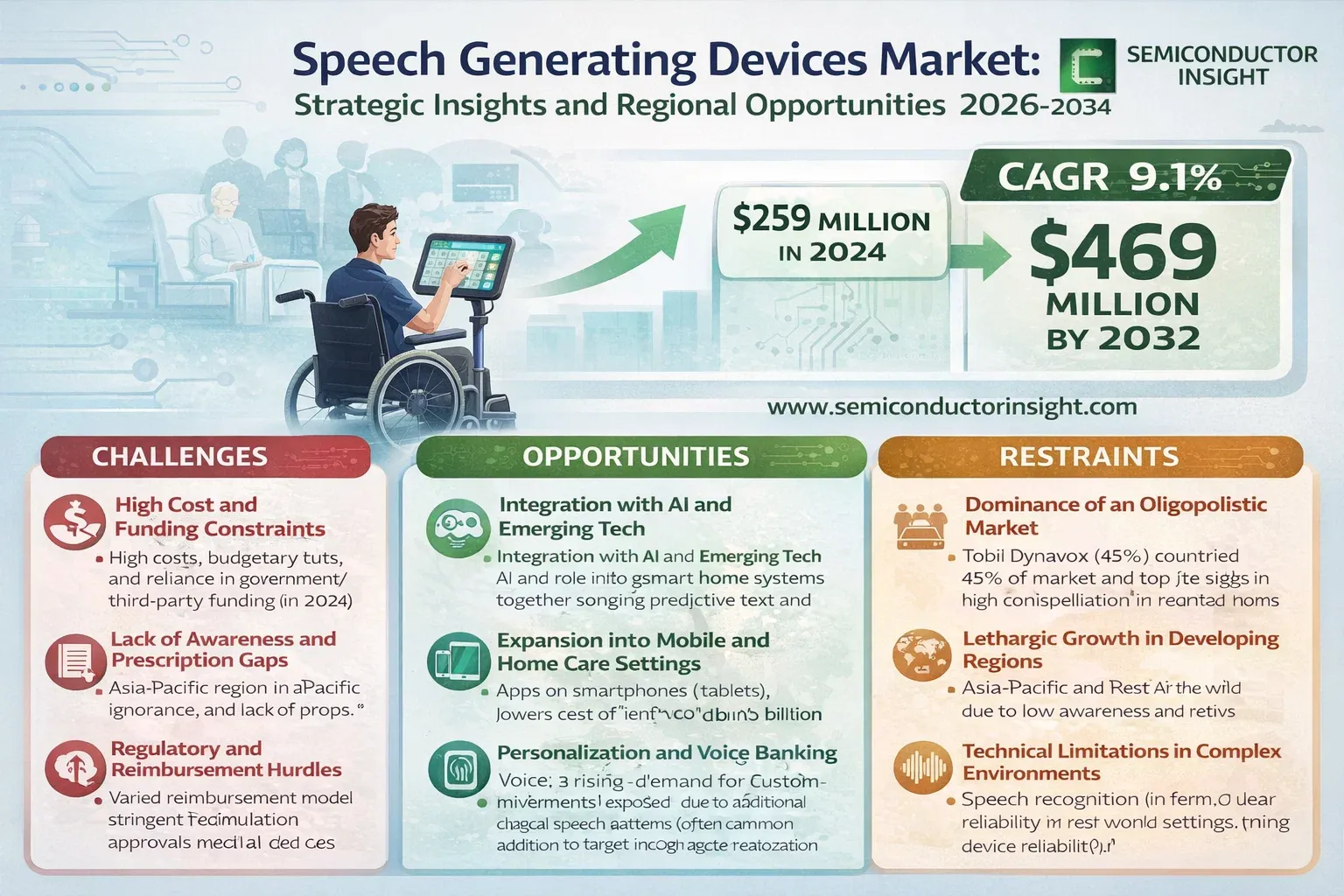
Global Speech Generating Devices Market was valued at 259 million in 2024 and is projected to reach USD 469 million by 2032, at a CAGR of 9.1% during the forecast period.
Speech Generating Devices (SGDs), also known as voice output communication aids (VOCAs), are electronic augmentative and alternative communication (AAC) systems used to supplement or replace speech or writing for individuals with severe speech impairments. These devices are crucial for enabling verbal communication for people who have limited means of interacting, such as those suffering from conditions like Amyotrophic Lateral Sclerosis (ALS), aphasia, cerebral palsy, or autism spectrum disorders. They empower users to become active participants in daily communication.
The market growth is primarily driven by the rising prevalence of neurological and speech disorders, coupled with increasing awareness and adoption of assistive technologies. Furthermore, technological advancements, such as the integration of eye-tracking technology and AI, are enhancing device capabilities and user experience. The competitive landscape is concentrated, with Tobii Dynavox holding a dominant 45% revenue share, followed by Prentke Romich Company at 13%. These key players are continuously innovating and expanding their product portfolios to cater to the diverse needs of this growing patient population.
Speech Generating Devices Market MARKET DYNAMICS
Speech Generating Devices Market MARKET DRIVERS
Rising Prevalence of Neurological and Speech Disorders to Propel Market Expansion
The increasing global incidence of neurological conditions such as amyotrophic lateral sclerosis (ALS), cerebral palsy, aphasia, and autism spectrum disorders is a primary catalyst for the speech generating devices market. Over 5 million people worldwide are affected by ALS and related motor neuron diseases, with approximately 15,000 new cases diagnosed annually in the United States alone. These conditions often result in severe speech impairments, creating substantial demand for augmentative and alternative communication solutions. The growing awareness and improved diagnostic capabilities for these disorders have led to earlier intervention and adoption of speech generating devices, particularly in pediatric applications where early communication development is critical for cognitive and social growth.
Technological Advancements and Integration of AI to Enhance Device Capabilities
Recent technological innovations have significantly improved the functionality and user experience of speech generating devices. The integration of artificial intelligence, machine learning algorithms, and natural language processing has enabled more intuitive communication systems that can predict user intent and streamline message composition. Advanced eye-tracking technology, particularly from market leaders, has revolutionized access for users with limited mobility, allowing control through eye movement alone. The development of dynamic display devices with high-resolution touchscreens and customizable interfaces has expanded communication possibilities, while cloud connectivity enables seamless synchronization across multiple devices and remote therapy integration.
Furthermore, regulatory support and reimbursement policies in developed markets have facilitated broader adoption. Many healthcare systems now recognize speech generating devices as medically necessary equipment, providing coverage that reduces financial barriers for patients.
The convergence of these technological advancements with supportive healthcare policies creates a robust foundation for sustained market growth, particularly as devices become more sophisticated and accessible to diverse user populations.
Speech Generating Devices Market MARKET CHALLENGES
High Cost and Limited Reimbursement Coverage to Impede Market Penetration
Despite growing demand, the speech generating devices market faces significant financial barriers that limit accessibility. Advanced devices with eye-tracking technology and dynamic displays typically range from D 5,000 to D 15,000 per unit, creating substantial cost challenges for patients and healthcare systems. While insurance coverage exists in some developed markets, reimbursement rates often cover only a portion of the total cost, and approval processes can be lengthy and complex. In emerging economies and developing regions, the absence of comprehensive healthcare coverage makes these devices largely inaccessible to most potential users, restricting market growth to affluent segments or those with exceptional funding support.
Other Challenges
Technical Complexity and Training Requirements
The sophisticated nature of modern speech generating devices presents significant challenges in user adoption and implementation. Many users, particularly elderly patients or those with cognitive impairments, struggle with the learning curve associated with advanced interfaces and programming requirements. The need for extensive training for both users and caregivers creates additional barriers, as professional speech-language pathologists with specialized training in augmentative and alternative communication are often required for proper device setup and ongoing support. This shortage of qualified professionals, combined with the time-intensive nature of device customization, can delay implementation and reduce overall effectiveness.
Device Customization and Individual Adaptation Challenges
Creating effective communication solutions requires extensive personalization to match each user’s specific abilities, needs, and environment. This customization process involves careful assessment of motor skills, cognitive abilities, visual capabilities, and communication requirements. The challenge of developing devices that can adapt to progressive conditions like ALS, where users’ abilities may change rapidly, adds another layer of complexity. Manufacturers must balance advanced features with simplicity of use, often requiring multiple device iterations and ongoing adjustments that increase costs and implementation time.
Speech Generating Devices Market MARKET RESTRAINTS
Limited Awareness and Diagnostic Capabilities in Developing Regions to Constrain Market Growth
Speech Generating Devices Market faces substantial constraints due to uneven awareness and diagnostic capabilities across global regions. In many developing countries, speech disabilities often go undiagnosed or are misattributed to other conditions, resulting in limited recognition of the need for augmentative communication solutions. The lack of specialized healthcare professionals trained in speech-language pathology and assistive technology further compounds this issue, with some regions having fewer than one qualified specialist per million people. This professional shortage creates a significant barrier to device prescription and implementation, as proper assessment and training are essential for successful adoption.
Additionally, cultural perceptions and stigma surrounding communication disabilities in certain regions can discourage families from seeking assistive devices. In some communities, speech impairments may be viewed through non-medical lenses, leading to reduced demand for technological solutions. The combination of limited clinical infrastructure, cultural barriers, and economic constraints creates a challenging environment for market expansion in emerging economies, despite the substantial unmet need in these regions.
Infrastructure limitations, including unreliable electricity and limited internet connectivity in rural areas, further restrict the practicality of electronic speech generating devices. These challenges collectively restrain market growth potential in regions representing significant portions of the global population.
Speech Generating Devices Market MARKET OPPORTUNITIES
Expansion into Pediatric and Educational Applications to Unlock New Growth Frontiers
The increasing recognition of speech generating devices as vital educational tools presents substantial growth opportunities for market expansion. Educational institutions are increasingly adopting augmentative and alternative communication technologies to support students with communication disorders, driven by inclusive education policies and legislation mandating appropriate accommodations. The implementation of individualized education programs that incorporate speech generating devices has shown significant improvements in academic performance and social integration for non-verbal students. This educational application represents a growing market segment as schools and therapy centers seek to provide comprehensive support services.
Furthermore, the development of specialized pediatric devices with age-appropriate interfaces and content has opened new avenues for early intervention. Devices designed specifically for children feature simplified navigation, engaging visual elements, and educational content that supports both communication and learning development. The integration of speech generating technology with standard educational tablets and devices creates additional opportunities for mainstream adoption, reducing stigma and increasing accessibility.
The growing body of research demonstrating the cognitive and social benefits of early communication intervention is driving increased investment in pediatric augmentative and alternative communication solutions. This evidence-based approach is encouraging healthcare providers and educational institutions to prioritize communication device implementation, creating sustained demand across both clinical and educational settings.
SPEECH GENERATING DEVICES MARKET TRENDS
Integration of Artificial Intelligence and Machine Learning to Emerge as a Dominant Trend
The integration of Artificial Intelligence (AI) and Machine Learning (ML) is revolutionizing the Speech Generating Devices Market by significantly enhancing predictive text capabilities, personalization, and user experience. Modern SGDs now utilize sophisticated algorithms that learn from user patterns to anticipate frequently used phrases and vocabulary, thereby accelerating communication speed and reducing user effort. This technological evolution is particularly impactful for individuals with degenerative conditions like ALS, where communication speed deteriorates over time. Devices are increasingly incorporating natural language processing to generate more contextually appropriate and fluid sentences, moving beyond simple phrase-based communication. Furthermore, AI-driven eye-tracking and switch access technologies have improved accuracy and reduced fatigue for users with limited mobility, making these devices more accessible and effective for long-term use.
Other Trends
Expansion of Indications and Growing Prevalence of Neurological Disorders
The market is experiencing substantial growth due to the rising prevalence of neurological and speech-impairing conditions globally. Conditions such as autism spectrum disorder, cerebral palsy, aphasia, and traumatic brain injuries are significant drivers. For instance, approximately 1 in 36 children are diagnosed with autism spectrum disorder, many of whom benefit from AAC devices. The aging global population is also contributing to increased cases of stroke and neurodegenerative diseases, which often result in acquired communication disabilities. This expanding patient demographic creates a sustained and growing demand for sophisticated SGDs, pushing manufacturers to develop devices tailored to specific conditions and age groups, from pediatric to geriatric users.
Cloud Connectivity and Interoperability with IoT Ecosystems
A prominent trend is the shift towards cloud-connected devices that offer seamless synchronization across multiple platforms, including smartphones, tablets, and computers. This interoperability allows users to maintain their communication aids across different environments, enhancing continuity and convenience. Cloud-based systems enable remote updates, backup of user settings and vocabularies, and real-time technical support, which is crucial for minimizing device downtime. The integration with the Internet of Things (IoT) extends functionality, allowing users to control smart home devices—such as lights, thermostats, and entertainment systems—directly from their SGD. This not only fosters greater independence but also positions the SGD as a central hub for environmental control, significantly improving the quality of life for individuals with severe physical limitations.
COMPETITIVE LANDSCAPE
Key Industry Players
Innovation and Strategic Positioning Drive Market Leadership
Global Speech Generating Devices Market exhibits a semi-consolidated competitive structure, characterized by a mix of established multinational corporations and specialized niche players. Tobii Dynavox is the undisputed market leader, commanding a significant 45% revenue share in 2024. This dominance is largely attributed to its comprehensive product ecosystem, which integrates advanced eye-tracking technology with intuitive software, and its robust distribution network across North America and Europe. The company’s focus on developing solutions for complex conditions like ALS and aphasia has solidified its position as a clinical and consumer favorite.
Prentke Romich Company (PRC) holds the second-largest market share at approximately 13%, cementing its status as a key contender. PRC’s growth is driven by its deep-rooted expertise in AAC and a strong reputation for creating durable, high-performance devices tailored for educational and long-term therapeutic use. Their language systems, such as Unity and LAMP Words for Life, are widely adopted in clinical and school settings, contributing to their steady market presence.
Beyond the top two, companies are aggressively pursuing growth through innovation and expansion. For instance, Saltillo Corporation and Lingraphica are strengthening their positions by focusing on user-friendly, app-based solutions and dedicated devices for the adult aphasia population, respectively. Their strategies include forming partnerships with speech-language pathologists and securing funding from healthcare providers, which are critical for adoption in key markets.
Meanwhile, other players like Abilia Toby Churchill and Jabbla are concentrating on geographical expansion and product diversification to capture emerging opportunities. These companies are investing in R&D to incorporate artificial intelligence for more predictive and personalized communication, ensuring their offerings remain competitive in a rapidly evolving technological landscape.
List of Key Speech Generating Devices Companies Profiled
- Tobii Dynavox (Sweden)
- Prentke Romich Company (PRC) (U.S.)
- ZYGO-USA (U.S.)
- Abilia Toby Churchill (U.K.)
- Monroe Wheelchair (U.S.)
- Saltillo Corporation (U.S.)
- Lingraphica (U.S.)
- Attainment Company (U.S.)
- Jabbla (Belgium)
Segment Analysis:
By Type
Dynamic Display Devices Segment Dominates the Market Due to Superior Flexibility and Customization
The market is segmented based on type into:
- Fixed Display Devices
- Dynamic Display Devices
By Application
Aphasia Segment Leads Due to High Prevalence of Stroke and Neurological Disorders
The market is segmented based on application into:
- Aphasia
- Non-Aphasia
By End User
Hospitals and Clinics Segment Leads Due to High Patient Influx and Professional Rehabilitation Services
The market is segmented based on end user into:
- Hospitals and Clinics
- Rehabilitation Centers
- Home Care Settings
- Educational Institutions
By Technology
Eye-Tracking Segment Shows Significant Growth Due to Advancements in Assistive Technology
The market is segmented based on technology into:
- Symbol-based Systems
- Text-to-Speech Systems
- Eye-Tracking Systems
- Touch-based Systems
Regional Analysis: Speech Generating Devices Market
North America
North America is the leading market for Speech Generating Devices, driven by advanced healthcare infrastructure, robust reimbursement policies, and high awareness of augmentative and alternative communication (AAC) technologies. The United States, in particular, dominates the regional market due to strong regulatory support from the FDA and funding from programs like Medicare and Medicaid, which cover a significant portion of SGD costs for eligible individuals. The region is characterized by early adoption of technologically advanced devices, including eye-tracking and AI-integrated systems. Key players like Tobii Dynavox and Prentke Romich Company have a strong presence here, driving innovation. However, the market faces challenges related to high device costs and varying insurance coverage policies across states, which can limit accessibility for some patient groups.
Europe
Europe represents a mature and steadily growing market for Speech Generating Devices, supported by well-established healthcare systems and strong government initiatives promoting disability inclusion. Countries like Germany, the UK, and France are at the forefront, with national health services often providing funding for AAC devices. The region benefits from a high level of awareness among healthcare professionals and educators regarding speech impairments. Strict regulatory standards ensure device safety and efficacy. While the adoption rate is high, market growth is somewhat tempered by lengthy reimbursement processes and budget constraints within public healthcare systems. Nonetheless, continuous technological advancements and an aging population presenting with conditions like ALS and aphasia sustain demand.
Asia-Pacific
The Asia-Pacific region is experiencing the fastest growth in the Speech Generating Devices Market, fueled by increasing healthcare expenditure, rising awareness of speech disabilities, and expanding rehabilitation infrastructure. Countries such as Japan, Australia, and South Korea lead in adoption due to their advanced medical systems and government support. However, in emerging economies like China and India, the market is still developing. While awareness is growing, high device costs and limited reimbursement options remain significant barriers. There is a notable shift from basic, low-cost devices toward more advanced dynamic display systems, particularly in urban areas. The vast population base and increasing diagnosis rates of conditions like autism spectrum disorder present substantial long-term growth opportunities.
South America
The Speech Generating Devices Market in South America is nascent but shows potential for growth, driven by gradual improvements in healthcare access and increasing recognition of the needs of individuals with communication disabilities. Brazil and Argentina are the most active markets, with some government initiatives and non-profit organizations working to improve AAC device availability. However, economic volatility and limited healthcare funding severely restrict market expansion. High import costs for advanced devices make them inaccessible to most of the population, and reliance is often on donated or lower-tech alternatives. Despite these challenges, growing awareness and advocacy efforts are slowly creating a more favorable environment for market development.
Middle East & Africa
The market for Speech Generating Devices in the Middle East & Africa is emerging, with growth concentrated in more economically developed nations such as Israel, Saudi Arabia, and the UAE. These countries have begun integrating AAC solutions into special education and healthcare programs, driven by government initiatives and increasing healthcare modernization. However, across the broader region, access to SGDs is extremely limited due to underdeveloped healthcare infrastructure, lack of awareness, and significant economic constraints. There is a heavy reliance on international aid and non-governmental organizations for device provision. While the market potential is recognized, progress is slow, and adoption is currently restricted to urban centers and higher-income groups.
Report Scope
This market research report provides a comprehensive analysis of the global Speech Generating Devices Market, covering the forecast period 2024–2032. It offers detailed insights into market dynamics, technological advancements, competitive landscape, and key trends shaping the industry.
Key focus areas of the report include:
- Market Size & Forecast: Historical data and future projections for revenue, unit shipments, and market value across major regions and segments.
- Segmentation Analysis: Detailed breakdown by product type, application, and end-user to identify high-growth segments and investment opportunities.
- Regional Outlook: Insights into market performance across North America, Europe, Asia-Pacific, Latin America, and the Middle East & Africa, including country-level analysis where relevant.
- Competitive Landscape: Profiles of leading market participants, including their product offerings, R&D focus, manufacturing capacity, pricing strategies, and recent developments such as mergers, acquisitions, and partnerships.
- Technology Trends & Innovation: Assessment of emerging technologies, integration of AI, eye-tracking systems, and evolving industry standards.
- Market Drivers & Restraints: Evaluation of factors driving market growth along with challenges, reimbursement policies, regulatory issues, and market-entry barriers.
- Stakeholder Analysis: Insights for device manufacturers, software developers, healthcare providers, investors, and policymakers regarding the evolving ecosystem and strategic opportunities.
Primary and secondary research methods are employed, including interviews with industry experts, data from verified sources, and real-time market intelligence to ensure the accuracy and reliability of the insights presented.
FREQUENTLY ASKED QUESTIONS:
What is the current market size of Global Speech Generating Devices Market?
-> Speech Generating Devices Market was valued at 259 million in 2024 and is projected to reach USD 469 million by 2032, at a CAGR of 9.1% during the forecast period.
Which key companies operate in Global Speech Generating Devices Market?
-> Key players include Tobii Dynavox, Prentke Romich Company, ZYGO-USA, Abilia Toby Churchill, Saltillo Corporation, and Lingraphica, among others.
What are the key growth drivers?
-> Key growth drivers include rising prevalence of neurological disorders, increasing healthcare expenditure, technological advancements in AAC devices, and improved reimbursement policies.
Which region dominates the market?
-> North America is the dominant market, holding the largest revenue share, while Asia-Pacific is expected to witness the fastest growth during the forecast period.
What are the emerging trends?
-> Emerging trends include integration of artificial intelligence for predictive text and personalization, cloud-based solutions for remote therapy, and the development of more portable and affordable devices.
Get Sample Report PDF for Exclusive Insights
Report Sample Includes
- Table of Contents
- List of Tables & Figures
- Charts, Research Methodology, and more...
 Download Sample Report PDF


