MARKET INSIGHTS
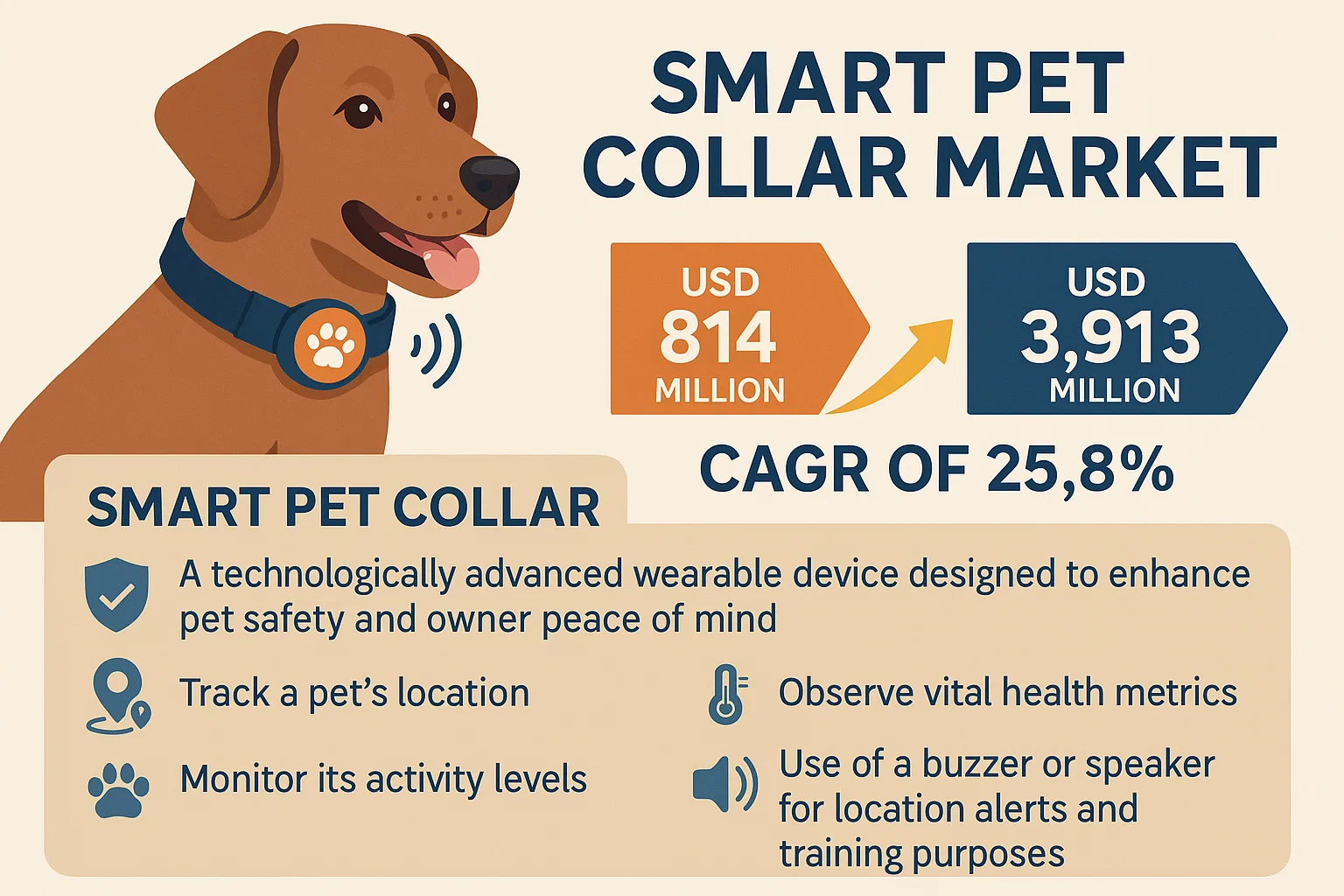
Global Smart Pet Collar Market size was valued at USD 814 million in 2024 to USD 3,913 million by 2032, exhibiting a CAGR of 25.8% during the forecast period.
A smart pet collar is a technologically advanced wearable device designed to enhance pet safety and owner peace of mind. These collars integrate various sensors and connectivity options to track a pet’s location, monitor its activity levels, and observe vital health metrics. Core functionalities typically include GPS tracking, temperature monitoring, and the use of a buzzer or speaker for location alerts and training purposes.
The market is experiencing robust growth driven by several key factors, including the rising trend of pet humanization and increased spending on pet care products. Furthermore, growing concerns over pet safety and the prevention of loss or theft are significant contributors to market expansion. Technological advancements in IoT and cellular connectivity are also making these devices more reliable and accessible. The competitive landscape is dynamic, with the top four manufacturers holding a collective market share of nearly 25%. North America dominates the market, accounting for approximately 50% of global revenue, due to high pet ownership rates and strong consumer purchasing power. Key players operating in this space with diverse product portfolios include Garmin, Whistle (Tagg), FitBark, and Petsafe.
MARKET DRIVERS
Increasing Pet Humanization and Safety Concerns
The rising trend of pet humanization, where pets are considered family members, drives demand for advanced safety and monitoring solutions. Owners increasingly invest in technologies that provide real-time location tracking and health monitoring, ensuring their pets’ safety and well-being.
Technological Advancements and Smart Home Integration
Rapid advancements in IoT, GPS, and sensor technologies have significantly enhanced smart collar capabilities. Integration with smart home ecosystems allows seamless control through smartphones and voice assistants, creating additional value for consumers.
➤ The integration of advanced sensors and connectivity options enables continuous health monitoring and real-time location tracking, addressing both safety and training needs.
Furthermore, the growing adoption of pet insurance and wellness programs creates additional demand for monitoring solutions that can integrate with broader healthcare ecosystems.
MARKET CHALLENGES
High Product Cost and Limited Affordability
The premium pricing of advanced smart collars remains a significant barrier, particularly in developing regions where disposable income is lower. This limits market penetration and adoption rates among middle-income consumers who seek affordable alternatives.
Other Challenges
Technical Complexity and Reliability Concerns
Manufacturers face challenges in ensuring long-term reliability of complex electronic components in outdoor conditions. Battery life limitations and the need for frequent charging create inconvenience for users, potentially affecting product satisfaction and brand reputation.
MARKET RESTRAINTS
Market Fragmentation and Standardization Issues
The absence of universal standards for connectivity and data sharing between different manufacturers’ products creates interoperability challenges. This lack of standardization may slow adoption as consumers hesitate to invest in ecosystems that might become obsolete or incompatible with future developments.
MARKET OPPORTUNITIES
Emerging Markets and Untapped Potential
Rapid urbanization in developing countries presents substantial growth opportunities. As disposable incomes rise, more consumers can afford advanced pet care products. Emerging markets in Asia Pacific and Latin America show particularly strong growth potential with increasing pet ownership rates and digital adoption.
Global Smart Pet Collar Market Trends
Rising Demand for Pet Safety and Health Monitoring
The growing emphasis on pet safety and health monitoring is a primary driver for smart pet collar adoption. These devices offer real-time location tracking, activity monitoring, and health metrics collection, providing pet owners with unprecedented insights into their pets’ well-being. This trend is particularly strong in North America and Europe where pet humanization trends are most advanced.
Other Trends
Integration with Smart Home Ecosystems
Smart pet collars are increasingly integrated with broader smart home ecosystems, allowing seamless connectivity with other smart devices. This interoperability enhances user experience and creates additional value propositions for consumers considering smart pet technology investments.
Expansion into Emerging Markets
Emerging markets are showing increased adoption rates as disposable incomes rise and technology infrastructure improves. Manufacturers are developing cost-effective solutions specifically for these markets while maintaining core functionality, driving market expansion beyond traditional Western markets.
Advancements in Battery Technology and Miniaturization
Continuous improvements in battery life and miniaturization of components have significantly enhanced smart collar functionality while maintaining comfort for pets. These technological advancements are crucial for extended operational periods and improved form factors, making the devices more appealing to a wider consumer base.
Market Consolidation and Partnership Strategies
Leading manufacturers are increasingly forming strategic partnerships with veterinary service providers, pet insurance companies, and pet service providers to create integrated ecosystems. These partnerships enhance product value propositions and create new revenue streams while improving overall pet care solutions.
COMPETITIVE LANDSCAPE
Key Industry Players
Smart Pet Collar Market Leaders and Specialists
The smart pet collar market is dominated by established pet technology companies that have pioneered GPS and activity tracking for pets. Whistle (acquired by Mars Petcare) and FitBark lead the market with comprehensive health and location tracking platforms, while Tractive has gained significant European market share through aggressive expansion. These companies leverage partnerships with veterinary networks and pet insurance providers to drive adoption.
Specialized manufacturers like PetPace focus exclusively on health monitoring with medical-grade sensors, collaborating with veterinary research institutions. Newer entrants like WÜF and Gibi Technologies focus on subscription-based services and AI-driven behavior prediction. The market also includes tracking-focused companies like Loc8tor and Link AKC that integrate with broader smart home ecosystems, while companies like Marco Polo develop specialized long-range tracking technology for rural and wilderness areas.
List of Key Smart Pet Collar Companies
- Garmin Ltd.
- Whistle (Tagg)
- FitBark Inc.
- PetSafe (Radio Systems Corporation)
- Tractive GmbH
- PetPace LLC
- Loc8tor Ltd.
- Marco Polo (Eureka Technology Partners)
- Gibi Technologies Inc.
- WÜF International
- Nuzzle Inc.
- LINK AKC (Link AKc, LLC)
- KYON Electronics
Segment Analysis:
| Segment Category | Sub-Segments | Key Insights |
| By Type |
|
GPS-Enabled Collars dominate due to their real-time tracking capabilities and integration with smartphone applications, making them the preferred choice for urban pet owners. |
| By Application |
|
Real-Time Tracking leads as it addresses the core need of pet owners to locate their pets instantly, while health monitoring gains traction for preventive veterinary care. |
| By End User |
|
Individual Pet Owners constitute the largest segment as they directly purchase these devices for personal use, while veterinary applications remain niche but growing. |
| By Distribution Channel |
|
Online Retailers show strongest growth due to consumer preference for comparing features and prices online, while specialty stores offer hands-on experience that appeals to certain demographics. |
| By Technology |
|
Hybrid Systems combining GPS and cellular networks show strongest adoption as they offer uninterrupted tracking regardless of environment, while Bluetooth-only systems remain limited to proximity alerts. |
Regional Analysis: Smart Pet Collar Market
North American smart pet collars increasingly integrate with smart home systems like Amazon Alexa and Google Home, creating interconnected pet management ecosystems. This drives additional revenue through cross-device functionality and premium subscription models for advanced analytics.
North American products lead in health metric tracking with sophisticated algorithms detecting early signs of illness through behavioral changes. This creates strong veterinary industry partnerships and additional revenue streams through health service subscriptions.
Manufacturers successfully implement premium pricing models due to high consumer willingness to pay for advanced features. This funds ongoing innovation in GPS accuracy and battery optimization while maintaining profitability.
North America’s robust e-commerce infrastructure and specialty pet retail presence enables direct-to-consumer sales and premium product positioning. Strategic partnerships with major retailers create widespread accessibility despite premium pricing.
Europe
Europe represents the second largest smart pet collar market, characterized by stringent regulatory frameworks ensuring device safety and data protection. The EU’s focus on animal welfare drives demand for non-invasive health monitoring solutions. European consumers show strong interest in sustainability, influencing manufacturers to develop eco-friendly materials and longer-lasting battery technologies. The market shows particular strength in Western Europe with Germany and the UK leading in adoption rates.
Asia-Pacific
Asia-Pacific demonstrates the fastest growth rate globally, driven by rising disposable incomes and urbanization across major economies. China leads in manufacturing capabilities, producing cost-effective alternatives that increase accessibility. Japan and South Korea show strong adoption of premium products with focus on compact design and multi-pet household compatibility. India and Southeast Asia present untapped potential with growing middle-class interest in pet technology as urbanization accelerates.
South America
South America shows emerging but fragmented adoption, primarily concentrated in Brazil and Argentina. Economic constraints limit market penetration to upper-middle class households, but growing interest in pet safety drives demand. Local manufacturers focus on essential features at accessible price points, while international brands position as premium options in major metropolitan areas.
Middle East & Africa
Middle East & Africa represent niche markets with strongest adoption in Gulf Cooperation Council countries. High-net-worth individuals drive demand for luxury pet products including smart collars with premium materials and custom designs. Africa shows minimal adoption except South Africa, where urban centers show growing interest in pet tech. The market remains largely untapped with infrastructure challenges limiting widespread adoption.
Report Scope
This market research report provides a comprehensive analysis of the Smart Pet Collar Market, covering the forecast period 2025–2032. It offers detailed insights into market dynamics, technological advancements, competitive landscape, and key trends shaping the industry.
Key focus areas of the report include:
- Market Overview: The report begins with an overview outlining the current market scenario, key growth indicators, and industry transformation drivers. It discusses macroeconomic factors, demand–supply balance, regulatory landscape, and the strategic role of advanced technologies in enhancing pet safety and monitoring solutions.
- Market Size & Forecast: Historical data and future projections for revenue, unit shipments, and market value across major regions and segments.
- Segmentation Analysis: Detailed breakdown by product type, technology, application, and end-user industry to identify high-growth segments and investment opportunities.
- Regional Insights: Insights into market performance across North America, Europe, Asia-Pacific, Latin America, and the Middle East & Africa, including country-level analysis where relevant.
- Competitive Landscape: Profiles of leading market participants, including their product offerings, R&D focus, manufacturing capacity, pricing strategies, and recent developments such as mergers, acquisitions, and partnerships.
- Technology Trends & Innovation: Assessment of emerging technologies, integration of AI/IoT, semiconductor design trends, fabrication techniques, and evolving industry standards.
- Market Drivers & Restraints: Evaluation of factors driving market growth along with challenges, supply chain constraints, regulatory issues, and market-entry barriers.
- Stakeholder Insights: Insights for component suppliers, OEMs, system integrators, investors, and policymakers regarding the evolving ecosystem and strategic opportunities.
Primary and secondary research methods are employed, including interviews with industry experts, data from verified sources, and real-time market intelligence to ensure the accuracy and reliability of the insights presented.
FREQUENTLY ASKED QUESTIONS:
What is the current market size of Smart Pet Collar Market?
-> Smart Pet Collar Market size was valued at USD 814 million in 2024 to USD 3,913 million by 2032, exhibiting a CAGR of 25.8% during the forecast period..
What is the growth rate of Smart Pet Collar Market?
-> The market is expected to grow at a CAGR of 25.8% during the forecast period 2024-2032.
Which are the key companies in Smart Pet Collar Market?
-> Key players include Whistle (Tagg), FitBark, Petsafe, Tractive, Garmin, PetPace, Loc8tor, Marco Polo, Gibi Technologies Inc, WÜF, Nuzzle, LINK AKC, and KYON among others.
What are the key market segments?
-> The market is segmented by technology into GPS-based and Radio-based systems. Application segments include tracking, training, monitoring, and others.
Which region dominates the market?
-> North America currently holds the largest market share, accounting for nearly 50% of the global market, followed by Europe and Asia-Pacific.

Get Sample Report PDF for Exclusive Insights
Report Sample Includes
- Table of Contents
- List of Tables & Figures
- Charts, Research Methodology, and more...
 Download Sample Report PDF