MARKET INSIGHTS
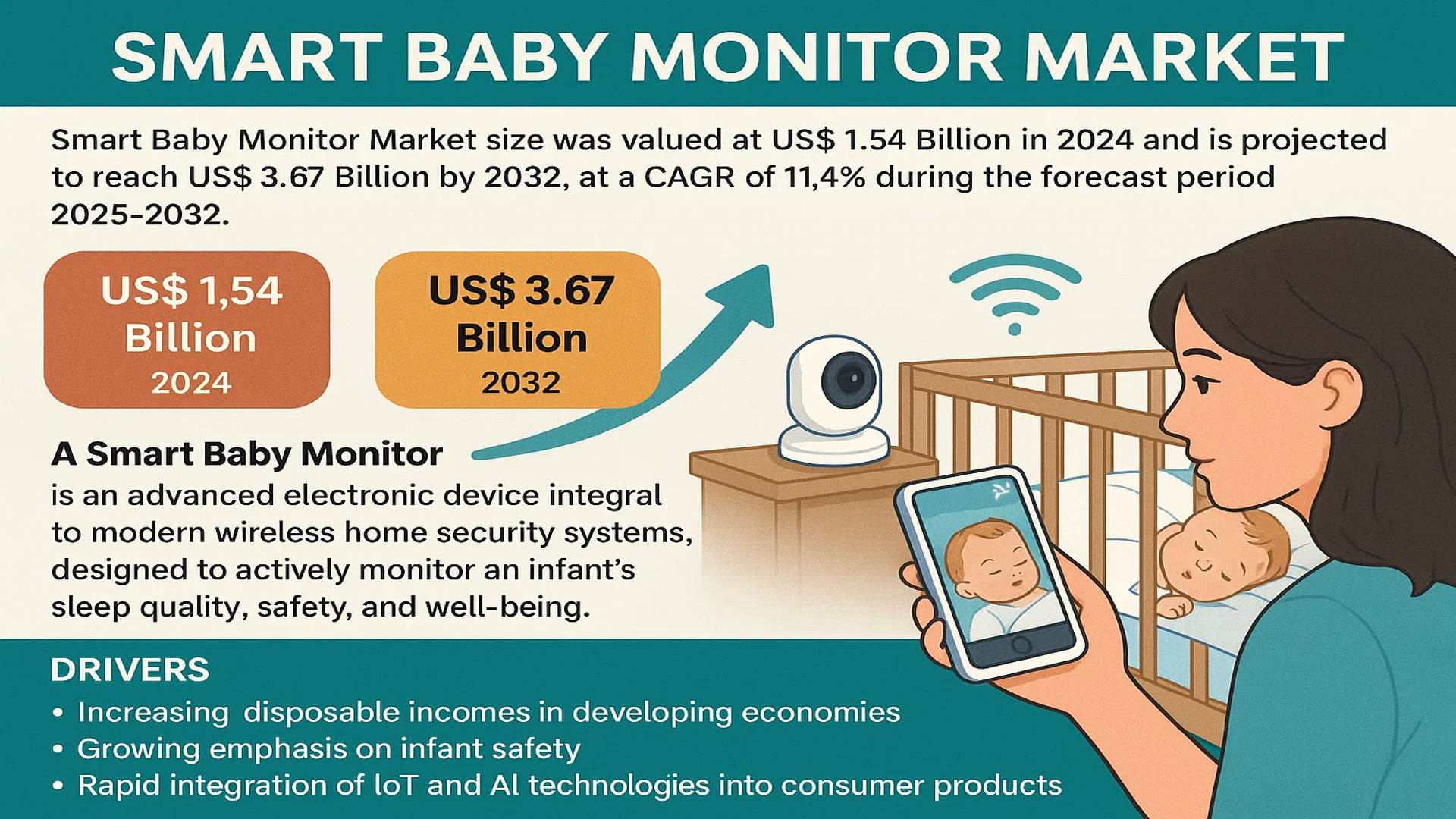
The global Smart Baby Monitor Market size was valued at US$ 1.54 billion in 2024 and is projected to reach US$ 3.67 billion by 2032, at a CAGR of 11.4% during the forecast period 2025-2032.
A Smart Baby Monitor is an advanced electronic device integral to modern wireless home security systems, designed to actively monitor an infant’s sleep quality, safety, and well-being. These systems typically consist of two primary components: the baby unit, which is placed in the nursery, and the parent unit, which provides real-time audio, video, and sensor data to caregivers, often via smartphone applications or dedicated displays.
This robust market expansion is primarily driven by increasing disposable incomes in developing economies, a growing emphasis on infant safety, and the rapid integration of IoT and AI technologies into consumer products. Furthermore, the rising number of nuclear families and dual-income households globally is creating a sustained demand for reliable remote monitoring solutions. Key industry players such as Infant Optics, Samsung, and Angelcare are continuously innovating, with recent developments focusing on enhanced features like cry detection analytics, vital signs tracking, and improved night vision, which are significantly contributing to market growth and consumer adoption.
MARKET DYNAMICS
MARKET DRIVERS
Rising Parental Awareness and Health Consciousness to Drive Market Expansion
Increasing parental awareness regarding infant safety and health monitoring is significantly propelling the smart baby monitor market forward. Modern parents are increasingly investing in technologies that provide real-time insights into their child’s well-being, including sleep patterns, breathing rates, and room conditions. This trend is particularly strong in developed regions where disposable incomes are higher and technology adoption rates exceed 75% among new parents. The growing emphasis on preventing Sudden Infant Death Syndrome (SIDS) has made these devices indispensable in nursery rooms globally. Enhanced features like oxygen level monitoring and sleep analytics are becoming standard expectations rather than luxury additions, creating sustained demand across demographic segments.
Technological Advancements and IoT Integration to Accelerate Adoption
The integration of Internet of Things (IoT) technology and artificial intelligence into baby monitoring systems is revolutionizing market dynamics. Advanced monitors now incorporate machine learning algorithms that can distinguish between different crying patterns, detect irregular breathing, and even predict potential health issues based on historical data. The connectivity offered through smartphone applications allows parents to monitor their infants remotely from anywhere with internet access, addressing the needs of modern dual-income households. This technological evolution has transformed basic audio monitors into comprehensive health and safety systems, with video monitors capturing over 60% of the premium segment market share. The continuous innovation in sensor technology and data analytics ensures these devices remain relevant throughout early childhood development stages.
Increasing Birth Rates and Nuclear Family Trends to Boost Demand
Global demographic shifts toward nuclear family structures and rising birth rates in developing economies are creating substantial market opportunities. Urbanization has led to smaller household sizes where both parents often work outside the home, increasing the need for reliable infant monitoring solutions. In emerging markets, the growing middle class with increasing disposable income is driving adoption of smart baby monitors, with annual sales growth exceeding 15% in regions like Southeast Asia and Latin America. Furthermore, government initiatives promoting child safety and healthcare infrastructure development are indirectly supporting market expansion. The trend toward later parenthood in developed regions also contributes to higher spending on premium baby care products, including advanced monitoring systems.
MARKET RESTRAINTS
High Product Costs and Economic Sensitivity to Limit Market Penetration
The premium pricing of advanced smart baby monitors remains a significant barrier to widespread adoption, particularly in price-sensitive markets and developing economies. Advanced models with features like HD video streaming, temperature monitoring, and movement detection often carry price tags that are 300-400% higher than basic audio monitors, placing them out of reach for many consumers. This economic barrier is especially pronounced in regions where average monthly incomes are below $500, limiting market penetration to upper-middle and high-income households. Additionally, the ongoing global economic uncertainties and inflationary pressures have made consumers more cautious about discretionary spending on non-essential baby products, affecting sales volume growth despite technological advancements.
Data Privacy and Security Concerns to Hinder Consumer Confidence
Growing apprehensions regarding data privacy and cybersecurity vulnerabilities present substantial challenges to market growth. Smart baby monitors connected to home Wi-Fi networks and cloud services have become potential targets for hacking incidents, with several documented cases of unauthorized access to baby monitors raising parental concerns. The collection and storage of sensitive child data, including video footage and health metrics, create regulatory compliance challenges under various data protection laws. Consumers are increasingly demanding transparent data handling practices and robust security protocols, which add to manufacturing costs and development complexity. These concerns are particularly impactful in European markets where GDPR regulations impose strict requirements on data processing and storage.
Technical Complexity and Reliability Issues to Affect User Experience
The increasing sophistication of smart baby monitors introduces technical challenges that can undermine user experience and product reliability. Connectivity issues, false alarms, and software glitches are frequently reported problems that affect consumer satisfaction. The complexity of setting up and maintaining these devices often requires technical proficiency that some users lack, leading to underutilization of advanced features. Battery life limitations and constant need for recharging also present practical challenges for continuous monitoring. Furthermore, compatibility issues with various smartphone operating systems and home network configurations create additional barriers to seamless operation, potentially discouraging repeat purchases and brand loyalty.
MARKET OPPORTUNITIES
Expansion into Emerging Markets to Unlock Substantial Growth Potential
Emerging economies present significant untapped opportunities for smart baby monitor manufacturers, particularly in Asia-Pacific and Latin American regions. Rising disposable incomes, increasing urbanization, and growing awareness of child safety products are creating favorable market conditions. The middle-class population in these regions is projected to grow by over 30% in the next five years, representing a substantial consumer base for entry-level and mid-range smart monitors. Localized product offerings that account for regional preferences, housing conditions, and price sensitivity could capture market share effectively. Partnerships with local distributors and e-commerce platforms provide accessible channels to reach consumers in these rapidly developing markets.
Healthcare Integration and Medical-grade Features to Create New Applications
The convergence of consumer baby monitors and healthcare applications opens new market segments and revenue streams. Integration with healthcare systems allows for remote pediatric consultations and early detection of potential health issues, creating value beyond basic monitoring. Features such as medical-grade respiratory monitoring, fever detection, and heart rate tracking are gaining interest from both consumers and healthcare providers. This trend is particularly relevant in regions with limited access to pediatric care, where remote monitoring solutions can bridge healthcare gaps. Collaborations with healthcare institutions and insurance companies could drive adoption through recommended use and potential insurance coverage for medically-certified devices.
Subscription-based Services and Ecosystem Development to Enhance Revenue Models
The development of complementary services and ecosystem offerings represents a significant opportunity for market players to enhance customer lifetime value. Subscription models offering cloud storage for video footage, advanced analytics, personalized insights, and premium support services create recurring revenue streams. Integration with other smart home devices and baby care products allows for ecosystem development where the baby monitor becomes the central hub for infant care. These value-added services not only improve profitability but also increase customer retention and brand loyalty. The market for such services is growing rapidly, with adoption rates increasing among tech-savvy parents seeking comprehensive digital parenting solutions.
MARKET CHALLENGES
Intense Market Competition and Price Pressure to Impact Profitability
The smart baby monitor market faces intense competition from both established electronics manufacturers and new entrants, creating significant pricing pressures and margin compression. The market includes numerous players offering similar features, leading to product commoditization in certain segments. Large consumer electronics brands leverage their existing distribution networks and brand recognition to capture market share, while smaller specialized companies compete through innovation and niche targeting. This competitive landscape forces continuous investment in research and development while maintaining aggressive pricing strategies, particularly affecting profit margins for companies without substantial economies of scale. The rapid pace of technological obsolescence further compounds these challenges, requiring constant product updates and refreshes.
Other Challenges
Regulatory Compliance and Certification Requirements
Navigating diverse regulatory frameworks across different regions presents complex challenges for manufacturers. Products must comply with various safety standards, wireless communication regulations, and medical device certifications where applicable. The certification process can be time-consuming and costly, particularly for features involving health monitoring capabilities. Differences in regulatory requirements between markets often necessitate product variations, increasing development and production costs. Additionally, evolving regulations concerning wireless emissions, data privacy, and product safety require continuous monitoring and adaptation of product designs and business practices.
Despite technological advancements, many consumers underutilize the full capabilities of smart baby monitors due to lack of awareness or understanding. The gap between product features and actual usage patterns represents a significant challenge for market growth and customer satisfaction. Manufacturers must invest in comprehensive educational resources and user-friendly interfaces to ensure consumers derive maximum value from their purchases. This challenge is particularly relevant for older parents and those less familiar with technology, who may prefer simpler alternatives despite the availability of advanced features. Effective communication of product benefits and practical applications remains crucial for market expansion beyond early adopters.
SMART BABY MONITOR MARKET TRENDS
Integration of AI and Advanced Sensors to Emerge as a Dominant Trend
The integration of Artificial Intelligence (AI) and sophisticated sensor technology is fundamentally reshaping the smart baby monitor landscape, moving beyond simple audio and video transmission to proactive health and wellness management systems. Modern monitors now incorporate features such as real-time breathing and heart rate monitoring using non-contact sensor technology, which analyzes micro-movements to provide critical health data without any physical contact with the infant. This technological leap is a direct response to growing parental concerns over Sudden Infant Death Syndrome (SIDS) and the desire for continuous, non-intrusive wellness tracking. Furthermore, AI-powered cry detection and analysis can now differentiate between types of cries—indicating hunger, discomfort, or fatigue—and provide actionable insights to parents, thereby reducing anxiety and improving response times. The market has seen a significant uptick in demand for these advanced features, with premium AI-integrated models now commanding a substantial portion of overall sales, reflecting a consumer shift towards value-added, data-driven parenting tools.
Other Trends
Rising Demand for Ecosystem Integration and Smart Home Connectivity
Consumer preference is increasingly leaning towards devices that seamlessly integrate into the broader smart home ecosystem. Parents are no longer satisfied with standalone monitors; they seek products that can connect with other smart devices, such as Amazon Alexa, Google Home, and Apple HomeKit, allowing for centralized control and notifications. This trend is driven by the convenience of receiving alerts on multiple personal devices, including smartphones, tablets, and smartwatches, ensuring constant connectivity regardless of location. The ability to review historical data, such as sleep patterns and room environment metrics (temperature and humidity), through dedicated mobile applications is also becoming a standard expectation. This push towards interconnectedness is compelling manufacturers to prioritize robust software development and cloud integration, making interoperability a key differentiator in a crowded marketplace.
Growing Emphasis on Data Privacy and Security
As smart baby monitors become more connected and data-rich, concerns regarding data privacy and cybersecurity have moved to the forefront of consumer purchasing decisions. High-profile incidents of monitor hacking have made parents acutely aware of the vulnerabilities associated with internet-connected devices in the nursery. In response, manufacturers are heavily investing in end-to-end encryption, multi-factor authentication, and regular firmware updates to fortify their products against unauthorized access. This trend is not merely a technical specification but a core marketing message, with trust and security now being paramount brand attributes. Regulatory bodies are also beginning to take notice, leading to a more standardized approach to cybersecurity in consumer IoT devices, which in turn influences product development and corporate strategy across the industry.
COMPETITIVE LANDSCAPE
Key Industry Players
Companies Strive to Strengthen their Product Portfolio to Sustain Competition
The global Smart Baby Monitor market exhibits a fragmented yet dynamic competitive landscape, characterized by a mix of established electronics giants, specialized infant care brands, and innovative tech startups. This diversity drives continuous innovation, particularly in features like high-definition video streaming, real-time health vitals monitoring, and AI-driven sleep analytics. While no single player dominates globally, the market is led by companies with strong brand recognition, extensive distribution networks, and a proven track record in product reliability and safety.
Infant Optics and Motorola have emerged as significant players, largely due to their reliable product performance and strong foothold in the North American market. Infant Optics, in particular, is renowned for its DXR-8 Pro model, which has become a benchmark for video baby monitors. Their growth is further propelled by strategic retail partnerships and positive consumer reviews emphasizing ease of use and durability.
Meanwhile, Philips Avent and Samsung leverage their broader consumer electronics expertise to integrate advanced technologies into their baby monitoring solutions. Philips, for instance, has successfully incorporated its healthcare know-how into monitors that track an infant’s breathing and sleep patterns, appealing to safety-conscious parents. These companies are aggressively expanding their market presence through significant investments in R&D, focusing on connectivity enhancements like 5G compatibility and smarter home ecosystem integration.
The competitive intensity is further heightened by the entry of tech-focused companies like Withings and iBaby, which are strengthening their positions through disruptive innovations. Their strategy often involves direct-to-consumer sales models, robust mobile app ecosystems, and features that appeal to digitally-native parents, such as cloud storage for video clips and remote access via smartphones. These growth initiatives, coupled with strategic partnerships with pediatricians and parenting influencers, are expected to significantly increase their market share over the coming years.
List of Key Smart Baby Monitor Companies Profiled
- Infant Optics (U.S.)
- Motorola (U.S.)
- Summer Infant, Inc. (U.S.)
- Samsung Electronics Co., Ltd. (South Korea)
- Angelcare Monitors Inc. (Canada)
- Philips Avent (Netherlands)
- Withings (France)
- iBaby (U.S.)
- VTech Holdings Limited (Hong Kong)
Segment Analysis:
By Type
Video Baby Monitor Segment Leads Due to Enhanced Features and Real-Time Monitoring Capabilities
The market is segmented based on type into:
- Audio Baby Monitor
- Subtypes: Analog and Digital
- Video Baby Monitor
- Subtypes: Standard Definition, High Definition, and Ultra High Definition
- Internet Baby Monitor
- Subtypes: Wi-Fi Enabled and Cellular Network Connected
- Sensor-Based Monitor
- Subtypes: Movement Sensors, Breathing Sensors, and Temperature Sensors
- Wearable Baby Monitor
By Application
Home Family Segment Dominates Due to High Adoption Among New Parents for Infant Safety
The market is segmented based on application into:
- Home Family
- Commercial
- Subtypes: Hospitals and Early Learning Centers
- Special Needs Care
By Connectivity
Wi-Fi Enabled Segment Shows Strong Growth Due to Remote Access and Smart Home Integration
The market is segmented based on connectivity into:
- Wireless
- Subtypes: Radio Frequency and DECT
- Wi-Fi Enabled
- Wired
By Distribution Channel
Online Retail Segment Expands Rapidly Due to E-commerce Penetration and Convenient Shopping
The market is segmented based on distribution channel into:
- Online Retail
- Subtypes: Company Websites and E-commerce Platforms
- Offline Retail
- Subtypes: Specialty Stores and Supermarkets/Hypermarkets
Regional Analysis: Smart Baby Monitor Market
North America
North America represents the most mature and technologically advanced market for smart baby monitors, driven by high disposable income, strong consumer awareness of child safety technology, and a culture of early technology adoption. The United States is the dominant force, accounting for a significant portion of the region’s estimated 35% global market share. Demand is heavily skewed toward premium video and Wi-Fi-enabled monitors with features like high-definition night vision, temperature and humidity sensors, and seamless integration with smart home ecosystems from Apple and Google. However, this sophistication brings challenges, primarily heightened consumer concerns over data privacy and cybersecurity, leading to stringent demands for encrypted data transmission. Key players like Infant Optics, Motorola, and VTech maintain strong brand loyalty, competing through continuous innovation in app functionality and sensor accuracy.
Europe
The European market is characterized by a strong regulatory environment, particularly the General Data Protection Regulation (GDPR), which profoundly influences product development and marketing. Manufacturers must ensure robust data protection protocols, making privacy-by-design a key selling point. Consumer preferences vary significantly across the region; Western European nations like Germany, the UK, and France show a high appetite for feature-rich, connected monitors, while Eastern European markets are more price-sensitive, often favoring reliable audio models. Sustainability is also a growing purchase driver, with brands like Philips leading with eco-design initiatives. The market is highly competitive, with both global giants and specialized European brands vying for share through a focus on compliance, safety certifications, and premium materials.
Asia-Pacific
As the fastest-growing region, the Asia-Pacific market is propelled by rising middle-class populations, increasing urbanization, and growing expenditure on child wellness in countries like China, India, and Japan. China is the production and consumption hub, with local brands offering a wide range of products from basic audio units to advanced AI-powered monitors that can analyze sleep patterns and detect crying causes. While cost-competitiveness is crucial, there is a clear trend toward upgrading to video monitors as disposable incomes rise. However, the market is also fragmented, with varying levels of brand trust and concerns over product quality from lesser-known manufacturers. E-commerce platforms are the primary sales channel, facilitating rapid market penetration and allowing international brands to compete effectively with local players.
South America
The South American market is in a developing phase, with growth potential tempered by economic volatility and fluctuating currency values. Brazil and Argentina are the primary markets, where demand is concentrated in urban centers among middle and upper-income families. Affordability and basic functionality are the main purchase drivers, making reliable audio monitors the most common type. While awareness of smart features is growing, the adoption of high-end video or Wi-Fi models is limited to a premium segment. Market development is further challenged by less developed retail and e-commerce infrastructure compared to other regions, though this is gradually improving. Brands operating here must navigate complex import regulations and tailor their strategies to be highly price-sensitive.
Middle East & Africa
This region presents an emerging opportunity with growth concentrated in more affluent Gulf Cooperation Council (GCC) countries like the UAE, Saudi Arabia, and Israel. High net-worth individuals and expatriate communities drive demand for the latest international premium brands and models. Features like remote monitoring are highly valued by households employing nannies or with multiple residences. In contrast, broader regional adoption is hindered by economic disparities, lower overall purchasing power, and a lack of widespread awareness. The market is largely import-dependent, with distribution channels still developing. Long-term growth is expected as urbanization increases and retail infrastructure expands, but it will likely remain a niche, high-value market in the near term.
Report Scope
This market research report provides a comprehensive analysis of the global Smart Baby Monitor market, covering the forecast period 2025–2032. It offers detailed insights into market dynamics, technological advancements, competitive landscape, and key trends shaping the industry.
Key focus areas of the report include:
- Market Size & Forecast: Historical data and future projections for revenue, unit shipments, and market value across major regions and segments.
- Segmentation Analysis: Detailed breakdown by product type, technology, application, and end-user industry to identify high-growth segments and investment opportunities.
- Regional Outlook: Insights into market performance across North America, Europe, Asia-Pacific, Latin America, and the Middle East & Africa, including country-level analysis where relevant.
- Competitive Landscape: Profiles of leading market participants, including their product offerings, R&D focus, manufacturing capacity, pricing strategies, and recent developments such as mergers, acquisitions, and partnerships.
- Technology Trends & Innovation: Assessment of emerging technologies, integration of AI/IoT, connectivity standards, sensor advancements, and evolving consumer safety features.
- Market Drivers & Restraints: Evaluation of factors driving market growth along with challenges, supply chain constraints, regulatory issues, and market-entry barriers.
- Stakeholder Analysis: Insights for component suppliers, OEMs, system integrators, investors, and policymakers regarding the evolving ecosystem and strategic opportunities.
Primary and secondary research methods are employed, including interviews with industry experts, data from verified sources, and real-time market intelligence to ensure the accuracy and reliability of the insights presented.
FREQUENTLY ASKED QUESTIONS:
What is the current market size of Global Smart Baby Monitor Market?
-> Smart Baby Monitor Market size was valued at US$ 1.54 billion in 2024 and is projected to reach US$ 3.67 billion by 2032, at a CAGR of 11.4% during the forecast period 2025-2032.
Which key companies operate in Global Smart Baby Monitor Market?
-> Key players include Infant Optics, Angelcare, Samsung, Motorola, Safety 1st, Summer Infant, Graco, Philips, Vtech, and iBaby, among others.
What are the key growth drivers?
-> Key growth drivers include rising birth rates in developing economies, increasing disposable income, growing awareness of infant safety, and technological advancements in AI and IoT integration.
Which region dominates the market?
-> North America holds the largest market share, while Asia-Pacific is the fastest-growing region due to rapid urbanization and growing middle-class populations.
What are the emerging trends?
-> Emerging trends include integration of health monitoring sensors (heart rate, oxygen levels), AI-powered cry detection, eco-friendly materials, and enhanced data security features.

Get Sample Report PDF for Exclusive Insights
Report Sample Includes
- Table of Contents
- List of Tables & Figures
- Charts, Research Methodology, and more...
 Download Sample Report PDF