
MARKET INSIGHTS
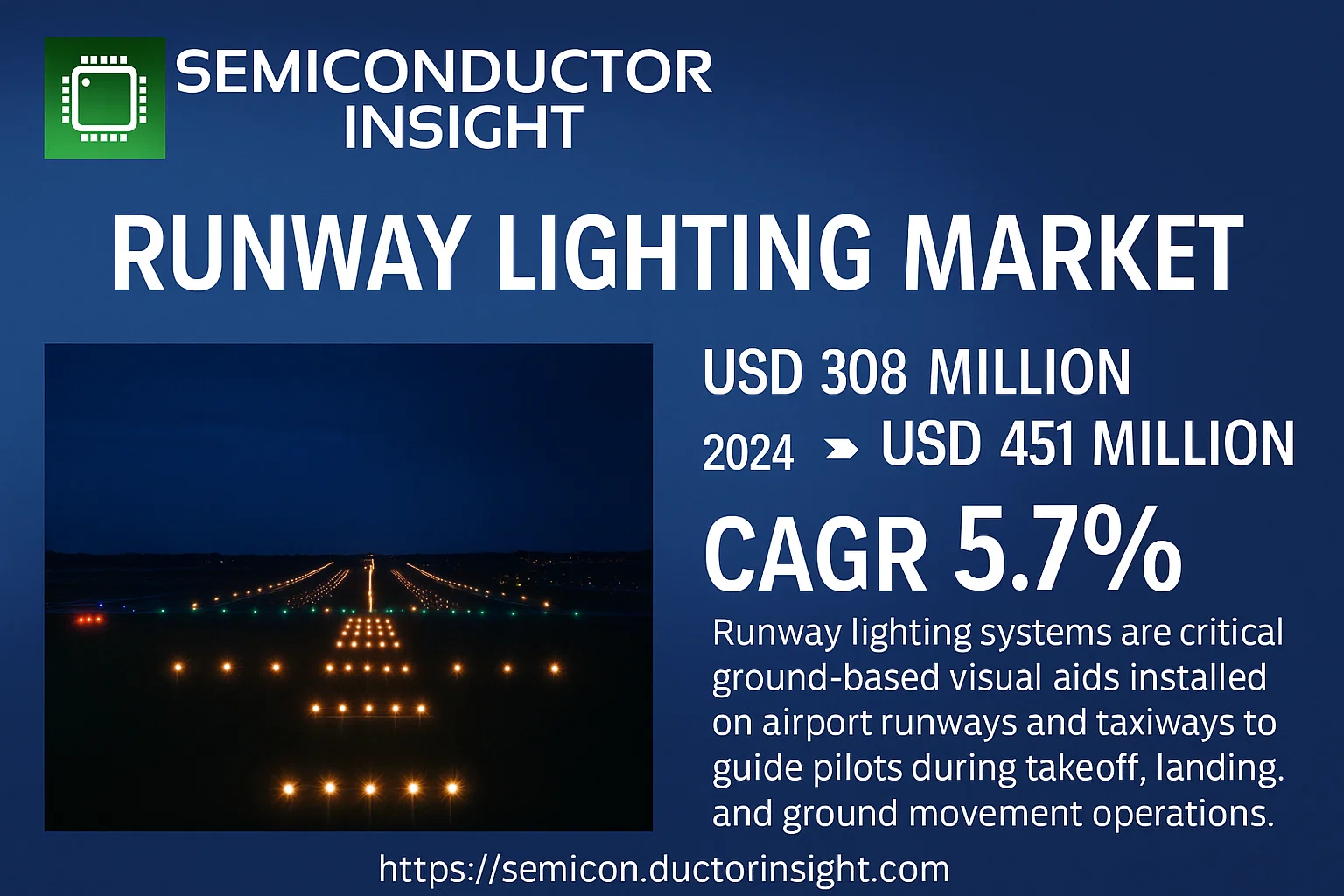
Global Runway Lighting Market size was valued at USD 308 million in 2024 to USD 451 million by 2032, exhibiting a CAGR of 5.7% during the forecast period.
Runway lighting systems are critical ground-based visual aids installed on airport runways and taxiways to guide pilots during takeoff, landing, and ground movement operations. These systems encompass various light types, including runway edge lights (white, transitioning to amber), threshold lights (green at the approach end), and runway end identifier lights (REIL) (red). Furthermore, recessed in-pavement lights are increasingly common at major airports to enhance visibility and safety.
The market is experiencing steady growth driven by rising global air passenger traffic, which necessitates airport expansions and upgrades. A key trend is the rapid adoption of LED technology, which now holds over 60% market share due to its superior energy efficiency, longer lifespan, and lower maintenance costs compared to traditional halogen lighting. While Europe leads as the largest regional market with over a 30% share, significant growth potential exists in the Asia-Pacific region due to ongoing aviation infrastructure development. Key players such as ADB SAFEGATE, Honeywell, and Hella (TKH) are actively innovating with smart lighting solutions that integrate with airport control systems for enhanced operational efficiency.
MARKET DRIVERS
Global Surge in Airport Infrastructure Modernization
Governments and airport authorities worldwide are investing heavily in upgrading aging airport infrastructure to enhance safety, capacity, and operational efficiency. This includes the replacement of obsolete runway lighting systems with modern, energy-efficient LED technology, which offers superior visibility, longer lifespan, and reduced maintenance costs.
Stringent Regulatory Standards for Aviation Safety
International aviation bodies, such as the International Civil Aviation Organization (ICAO) and the Federal Aviation Administration (FAA), mandate strict guidelines for runway visual aids. Compliance with these standards, which specify requirements for light intensity, configuration, and reliability, is a primary driver for the adoption of advanced runway lighting systems.
➤ The integration of advanced technologies, such as precision approach path indicator (PAPI) systems and runway status lights (RWSL), is becoming standard for new installations and upgrades, further stimulating market growth.
The rising global passenger and cargo air traffic is placing greater demand on airport operations, necessitating reliable runway lighting for 24/7 operations and during adverse weather conditions, thereby sustaining market demand.
MARKET CHALLENGES
High Initial Investment and Installation Complexity
The procurement and installation of a complete runway lighting system, including in-pavement lights, control systems, and power circuits, involve substantial capital expenditure. The complexity of retrofitting existing runways without disrupting airport operations presents a significant logistical and financial challenge.
Other Challenges
Stringent Certification and Maintenance Requirements
Runway lighting systems must undergo rigorous testing and certification processes to meet aviation safety standards. The ongoing maintenance, especially for in-pavement fixtures susceptible to damage from aircraft loads and weather, requires specialized skills and can lead to high operational costs.
Environmental and Climatic Factors
Systems must be designed to withstand extreme weather conditions, including heavy rain, snow, ice, and high temperatures. Ensuring consistent performance and preventing light obstruction under these conditions adds to the technical challenges and cost.
MARKET RESTRAINTS
Budgetary Constraints and Lengthy Approval Cycles
Airport infrastructure projects are often subject to public funding and lengthy governmental approval processes. Budgetary limitations, particularly in developing regions, can delay or scale back planned runway lighting upgrades, acting as a significant restraint on market growth.
Dependency on Airport Expansion Projects
The market for new runway lighting is closely tied to the construction of new airports or the expansion of existing runways. A slowdown in such large-scale infrastructure development projects directly impacts the demand for new lighting systems.
MARKET OPPORTUNITIES
Adoption of LED and Smart Lighting Technologies
The shift from traditional incandescent and halogen lighting to LED technology represents a major opportunity. LEDs offer significant advantages, including up to 75% energy savings, a lifespan exceeding 10 years, and improved reliability. The integration of smart controls for remote monitoring and predictive maintenance further enhances their value proposition.
Growth in Emerging Economies and Regional Airports
Rapid economic growth in Asia-Pacific, the Middle East, and Latin America is driving the development of new airports and the modernization of existing ones. Furthermore, the expansion of regional and low-cost carrier networks is creating demand for upgraded lighting systems at smaller airports, opening new market segments.
Development of Sustainable and Solar-Powered Solutions
There is growing interest in eco-friendly airport operations. This creates opportunities for the development and deployment of solar-powered runway lighting systems, particularly for general aviation and remote airfields, reducing dependency on the electrical grid and lowering the carbon footprint.
Runway Lighting Market Trends
Steady Market Growth Fueled by Safety and Modernization
Global Runway Lighting Market, valued at USD 308 million in 2024, is on a trajectory of stable expansion, projected to reach USD 451 million by 2032, representing a compound annual growth rate (CAGR) of 5.7%. This robust growth is primarily driven by the non-negotiable requirement for airport safety and the ongoing global push for airport infrastructure modernization and expansion. Runway lights are critical fixtures that guide pilots during takeoff, landing, and taxiing procedures, forming a foundational element of aviation safety. This essential function underpins consistent market demand as air traffic volumes continue to recover and grow worldwide.
Other Trends
LED Technology Dominance
A definitive trend is the overwhelming dominance of LED lighting technology within the market. LED runway lights currently hold a market share exceeding 60%, and this segment is expected to continue its growth. The shift from traditional halogen lighting is fueled by the superior benefits of LEDs, including significantly higher energy efficiency, longer operational lifespans that reduce maintenance frequency and costs, and enhanced visibility for pilots in various weather conditions. This technological shift represents a key investment area for both new airport developments and retrofit projects at existing facilities.
Regional Market Dynamics
Europe stands as the largest regional market, accounting for over 30% of the global share, supported by extensive airport networks and stringent safety regulations. North America and the Asia-Pacific region, particularly China, are also major markets, collectively holding approximately 40% of the global share. Growth in the Asia-Pacific region is particularly strong, driven by rapid airport construction and modernization programs in emerging economies. These regional dynamics highlight the global nature of aviation infrastructure investment and its direct impact on the runway lighting sector.
Consolidated Competitive Landscape and Application Focus
The market features a consolidated competitive landscape, with the top five manufacturers including ADB SAFE GATE, Honeywell, and Hella (TKH) collectively holding about 60% of the market share. In terms of application, civilian and commercial airports constitute the largest end-user segment, followed by military airports. This reflects the scale of the global commercial aviation industry. The focus for manufacturers remains on developing innovative, reliable, and cost-effective lighting solutions that meet the evolving regulatory standards and operational needs of airports worldwide, ensuring safety remains paramount.
COMPETITIVE LANDSCAPE
Key Industry Players
A Highly Concentrated Market Led by Aviation Safety Specialists
Global Runway Lighting Market is characterized by a consolidated structure, with the top five manufacturers collectively holding approximately 60% of the market share. This dominance is attributed to the high technical expertise, stringent safety certifications, and long-term contracts required in the aviation infrastructure sector. ADB SAFEGATE stands as a clear market leader, offering integrated solutions that extend from apron to runway. This company, along with other major players like Honeywell and Hella (part of the TKH Group), leverages extensive R&D capabilities to develop advanced LED lighting systems, which now constitute over 60% of the market. These leading firms benefit from global reach and long-standing relationships with airport authorities and construction firms, making market entry challenging for new competitors.
Beyond the dominant players, the market includes several significant niche and regional competitors who specialize in specific product segments or geographic areas. Companies such as OCEM Airfield Technology and ATG Airports have established strong positions, particularly in the European market, which is the largest regional market with over 30% share. Similarly, Astronics is a key player in North America, providing critical lighting and power systems. Other manufacturers like Youyang and Airsafe Airport Equipment cater to growing demand in the Asia-Pacific region, while firms such as Avlite Systems and Carmanah Technologies are recognized for their portable and solar-powered airfield lighting solutions, serving remote and military applications.
List of Key Runway Lighting Companies Profiled
- ADB SAFEGATE
- Honeywell
- Hella (TKH Group)
- Eaton
- OSRAM
- OCEM Airfield Technology
- Astronics
- Youyang
- Airsafe Airport Equipment
- Carmanah Technologies
- Vosla (NARVA)
- ATG Airports
- Avlite Systems (Sealite)
- Transcon
Segment Analysis:
| Segment Category | Sub-Segments | Key Insights |
| By Type |
|
LED technology represents the dominant and most rapidly advancing segment within the runway lighting market, driven by its superior operational advantages. The shift towards LED is primarily fueled by its significantly lower energy consumption, which translates to substantial cost savings for airport operators over the long term. LEDs also boast an exceptionally long operational life, dramatically reducing the frequency and associated costs of maintenance and replacement, a critical factor for ensuring uninterrupted airport operations. Furthermore, LED lights offer superior brightness and clarity, enhancing visibility for pilots during critical approach, landing, and takeoff phases, particularly in adverse weather conditions. The industry-wide push for modernization and sustainability is accelerating the replacement cycle of older halogen systems with these more efficient and reliable LED solutions. |
| By Application |
|
Runway Edge Lights are a foundational and critical application segment, essential for defining the runway’s usable boundaries for pilots. These white lights, which transition to amber near the runway’s end, provide vital spatial orientation during ground operations and low-visibility conditions. Their fundamental role in basic runway demarcation ensures consistent demand, particularly as global air traffic continues to grow. While other specialized lights like recessed in-pavement fixtures are crucial for high-visibility guidance at major hubs and are part of modernization projects, the universal necessity and widespread installation of robust and reliable edge lighting systems across airports of all sizes cement their leading position in the market. |
| By End User |
|
Civilian and Commercial Airports constitute the primary end-user segment, driving the bulk of demand for runway lighting systems. This dominance is underpinned by the continuous expansion and modernization of global commercial aviation infrastructure to accommodate rising passenger and cargo traffic. These airports require comprehensive, high-intensity lighting systems that adhere to strict international safety standards to facilitate round-the-clock operations. Major airport expansion projects, runway upgrades, and the retrofitting of existing systems with energy-efficient LED technology are key growth drivers. In contrast, military airports, while requiring specialized and robust systems, represent a more stable and niche market with procurement cycles heavily influenced by specific defense budgets and operational requirements. |
| By Technology Integration |
|
Advanced AGL Management Systems represent the high-growth frontier of the market, moving beyond simple illumination to intelligent control. These integrated systems allow for centralized monitoring, control, and diagnostics of the entire airfield ground lighting network. This technology enables features like remote brightness adjustment based on visibility conditions, predictive maintenance alerts to prevent failures, and seamless integration with other airport systems for enhanced operational efficiency. As airports strive for greater automation, safety, and cost-effectiveness, the demand for these smart, connected solutions is experiencing robust growth, particularly in new airport constructions and major upgrades of existing infrastructure. |
| By Operational Control |
|
Tower Controlled Lighting is the prevailing operational standard, especially at commercial airports with significant traffic volumes. This method provides air traffic controllers with direct and centralized command over runway lighting intensity and patterns, allowing them to optimize conditions for current weather, visibility, and traffic flow. This centralized control is critical for maintaining stringent safety protocols and operational efficiency in complex airspace environments. While pilot-controlled lighting offers flexibility and cost savings for smaller, non-towered airports by allowing aircraft to activate lights via radio, the requirement for precise, real-time management at busy hubs ensures the continued dominance and advancement of sophisticated tower-controlled systems. |
Regional Analysis: Runway Lighting Market
The stringent and proactive safety regulations set by the FAA are a primary market driver. Continuous updates to advisory circulars mandate the adoption of newer, safer lighting technologies, compelling airports to invest regularly in compliant systems. This regulatory pressure ensures a consistent and technologically advanced market, prioritizing runway safety above all else and creating a predictable demand cycle for manufacturers and contractors specializing in high-quality installations.
North America is at the forefront of adopting LED runway lighting, driven by its superior energy efficiency, longer lifespan, and lower maintenance costs compared to traditional systems. Airports are integrating these lights with advanced control and monitoring systems, allowing for remote management and real-time status updates. This push for smart airport infrastructure creates substantial opportunities for suppliers of integrated lighting solutions and control software, keeping the market dynamic.
The region benefits from sustained investment in airport infrastructure, including numerous large-scale expansion and modernization projects. Many existing airports are undergoing runway extensions and upgrades, which necessitate complete overhauls of their lighting systems. This retrofitting market is a significant segment, as older incandescent and halogen systems are systematically replaced with modern, efficient LED alternatives to meet new operational and environmental standards.
The market is characterized by the presence of several globally recognized, established manufacturers headquartered in the region. These companies possess strong technical expertise, extensive product portfolios, and long-standing relationships with major airport authorities. This concentration of key players fosters a competitive yet stable environment, encouraging continuous product innovation and reliable supply chains, which in turn supports the region’s leadership position in the global runway lighting landscape.
Europe
Europe represents a highly developed and regulated market for runway lighting, driven by the unified standards of the European Union Aviation Safety Agency (EASA). The region’s focus on sustainability and green airport initiatives is a major force, accelerating the transition to energy-efficient LED lighting systems to reduce carbon footprints. Numerous airports across Western Europe are engaged in modernization programs to enhance operational capacity and safety, creating consistent demand. The presence of leading international aviation hubs, coupled with a strong emphasis on implementing advanced technologies like Precision Approach Path Indicator (PAPI) systems and runway status lights, ensures a sophisticated and steady market. Eastern European countries are also gradually upgrading their aviation infrastructure, presenting emerging growth opportunities alongside the mature Western markets.
Asia-Pacific
The Asia-Pacific region is the fastest-growing market for runway lighting, fueled by massive investments in aviation infrastructure. Rapid economic growth, increasing air passenger traffic, and the construction of new greenfield airports, particularly in China, India, and Southeast Asian nations, are primary drivers. Governments are heavily investing in airport expansion projects, which include the installation of state-of-the-art runway lighting systems to support all-weather operations and accommodate larger aircraft. The shift from basic lighting to advanced, compliant systems presents a significant upgrade cycle. While the market is highly dynamic, it also shows varying levels of technological adoption, with leading hubs implementing cutting-edge solutions while regional airports gradually modernize.
South America
The runway lighting market in South America is characterized by moderate growth, focused primarily on the modernization of key international airports in countries like Brazil, Chile, and Colombia. Economic fluctuations can impact the pace of public investment in infrastructure, leading to a less consistent market compared to North America or Europe. Projects often center on upgrading existing runways and taxiways to improve safety and efficiency, with a growing interest in adopting LED technology for its long-term cost savings. The region’s market dynamics are heavily influenced by government-led initiatives and international funding for airport development, creating a potential for growth as aviation traffic continues to increase across the continent.
Middle East & Africa
The market in the Middle East is driven by ambitious aviation strategies, with major hub airports in the Gulf Cooperation Council (GCC) countries investing in world-class, technologically advanced runway lighting systems to support their status as global transit points. In contrast, the African market is more fragmented, with growth concentrated in key economic centers like South Africa, Nigeria, and Kenya, where airport upgrades are underway. The continent presents long-term potential driven by the need to improve aviation safety and connectivity, but growth is often challenged by funding constraints and uneven infrastructure development. The region overall shows a clear divide between the high-investment, advanced markets of the Middle East and the emerging, opportunity-rich markets of Africa.
Report Scope
This market research report provides a comprehensive analysis of the Runway Lighting Market, covering the forecast period 2025–2032. It offers detailed insights into market dynamics, technological advancements, competitive landscape, and key trends shaping the industry.
Key focus areas of the report include:
- Market Overview: The report begins with an overview outlining the current market scenario, key growth indicators, and industry transformation drivers. It discusses macroeconomic factors, demand–supply balance, regulatory landscape, and the strategic role of runway lighting in ensuring safe and efficient aircraft operations during takeoff, landing, and taxiing at global airports.
- Market Size & Forecast: Historical data and future projections for revenue, unit shipments, and market value across major regions and segments.
- Segmentation Analysis: Detailed breakdown by product type (e.g., Halogen, LED), application, and end-user industry (Civilian & Commercial Airport, Military Airport) to identify high-growth segments and investment opportunities.
- Regional Insights: Insights into market performance across North America, Europe, Asia, South America, and the Middle East & Africa, including country-level analysis where relevant.
- Competitive Landscape: Profiles of leading market participants, including their product offerings, R&D focus, manufacturing capacity, pricing strategies, and recent developments such as mergers, acquisitions, and partnerships.
- Technology Trends & Innovation: Assessment of emerging lighting technologies, such as the transition to LED, integration of advanced control systems, and evolving industry standards for airfield safety.
- Market Drivers & Restraints: Evaluation of factors driving market growth along with challenges, supply chain constraints, regulatory issues, and market-entry barriers.
- Stakeholder Insights: Insights for component suppliers, OEMs, system integrators, investors, and policymakers regarding the evolving ecosystem and strategic opportunities.
Primary and secondary research methods are employed, including interviews with industry experts, data from verified sources, and real-time market intelligence to ensure the accuracy and reliability of the insights presented.
FREQUENTLY ASKED QUESTIONS:
What is the current market size of Runway Lighting Market?
-> Runway Lighting Market size was valued at USD 308 million in 2024 to USD 451 million by 2032, exhibiting a CAGR of 5.7% during the forecast period.
Which key companies operate in Runway Lighting Market?
-> Key players include ADB SAFEGATE, Honeywell, Hella (TKH), Eaton, and OSRAM, among others. The global top five manufacturers hold a share of about 60%.
What are the key growth drivers?
-> Key growth drivers include global airport infrastructure modernization, increasing air traffic, and stringent regulations mandating enhanced airfield safety systems.
Which region dominates the market?
-> Europe is the largest market with a share of over 30%, followed by North America and China.
What are the emerging trends?
-> Emerging trends include the widespread adoption of LED technology, which holds over 60% market share, and the integration of advanced control and monitoring systems for runway lighting.

Get Sample Report PDF for Exclusive Insights
Report Sample Includes
- Table of Contents
- List of Tables & Figures
- Charts, Research Methodology, and more...
 Download Sample Report PDF



