MARKET INSIGHTS
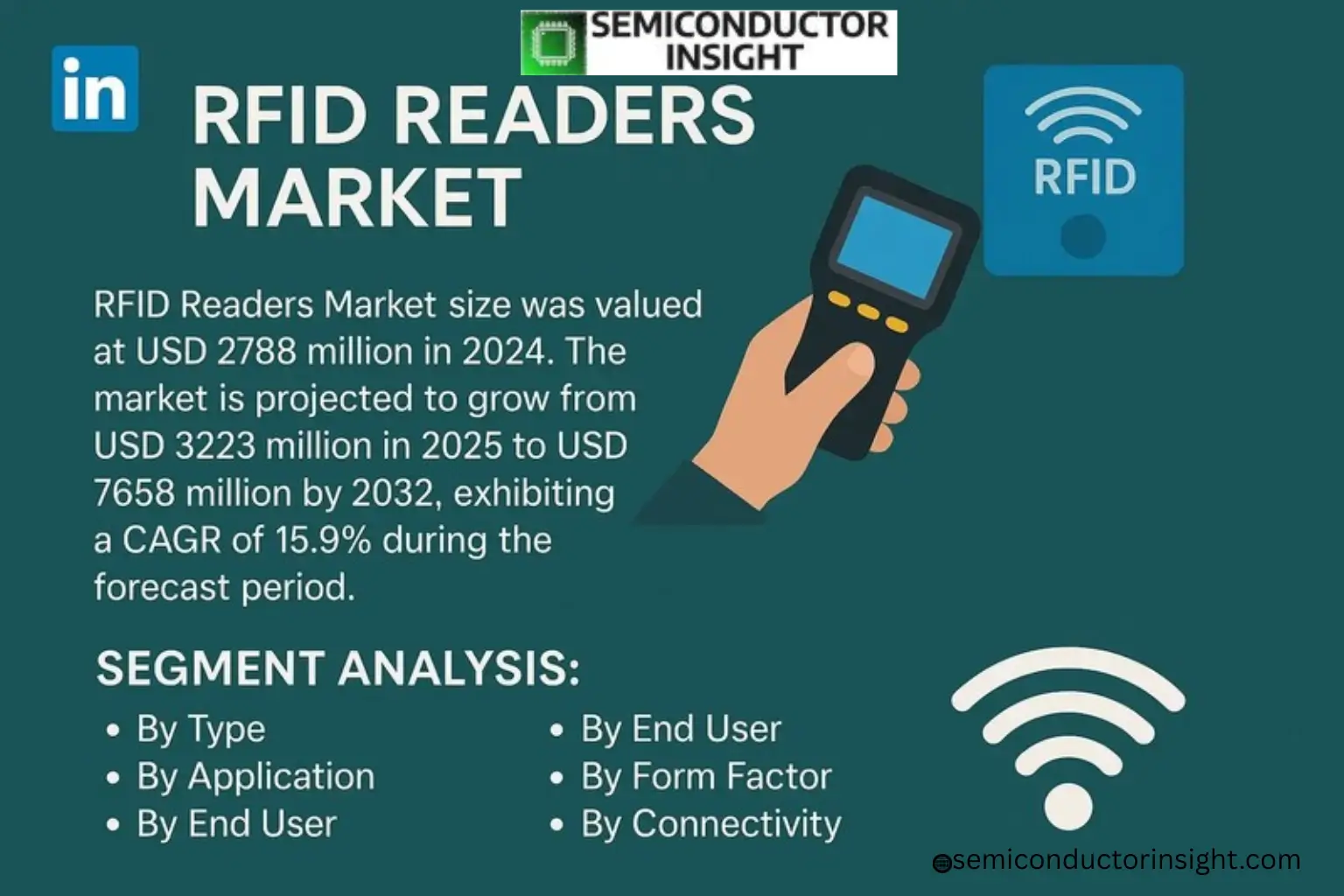
Global RFID Readers Market size was valued at USD 2788 million in 2024. The market is projected to grow from USD 3223 million in 2025 to USD 7658 million by 2032, exhibiting a CAGR of 15.9% during the forecast period.
An RFID reader, also known as an interrogator, is a device that provides the connection between the tag data and the enterprise system software that needs the information. These readers communicate with tags within their operational field, performing tasks such as continuous inventorying, filtering for specific tags, and writing or encoding data to selected tags. The reader uses an attached antenna to capture data from tags and then passes this information to a computer for processing.
The market is experiencing robust growth due to several factors, including the rising demand for supply chain transparency and the rapid adoption of automation across industries like retail and manufacturing. Furthermore, technological advancements in UHF RFID systems are contributing significantly to market expansion. Initiatives by key players are also expected to fuel market growth; for instance, Zebra Technologies continues to launch new handheld and fixed readers with enhanced capabilities for inventory management. Honeywell, Datalogic, Impinj, and Alien Technology are some of the key players that operate in the market with a wide range of portfolios
MARKET DRIVERS
Increasing Demand for Supply Chain Visibility
Global supply chains are becoming more complex, driving demand for real-time asset tracking. The RFID Readers Market is directly benefiting from this trend, enabling companies to monitor inventory from production to delivery with high accuracy. This technology reduces manual errors and improves operational efficiency across logistics and retail sectors.
Adoption of Industry 4.0 and Smart Manufacturing
The integration of RFID technology is a cornerstone of Industry 4.0 initiatives. In smart factories, RFID readers automate data collection for work-in-progress tracking, tool management, and quality control, leading to a projected market growth of over 10% annually as manufacturers seek to optimize production lines.
Furthermore, the declining cost of RFID tags and readers has made the technology accessible to small and medium-sized enterprises, expanding the potential customer base for the RFID Readers Market significantly.
MARKET CHALLENGES
High Initial Implementation Costs
Despite falling component prices, the total cost of ownership for a comprehensive RFID system, including software integration and infrastructure changes, remains a significant barrier for many organizations. This can deter adoption, particularly in cost-sensitive industries, slowing the growth of the RFID Readers Market.
Other Challenges
Interoperability and Standardization Issues
The lack of global frequency standards can create compatibility problems between RFID readers and tags from different vendors, complicating international deployments and increasing system complexity.
Data Security and Privacy Concerns
As RFID systems collect vast amounts of data, ensuring its security against unauthorized access and addressing consumer privacy worries, especially in retail applications, presents an ongoing challenge for market players.
MARKET RESTRAINTS
Competition from Alternative Technologies
Emerging technologies like Bluetooth Low Energy (BLE) and QR codes offer lower-cost alternatives for certain identification and tracking applications. For simple asset tracking tasks, these technologies can limit the addressable market for more sophisticated RFID reader systems.
Technical Limitations in Harsh Environments
The performance of UHF RFID systems, which are common in the RFID Readers Market, can be adversely affected by metal surfaces and liquids. This restricts their effectiveness in industries like automotive or food and beverage, requiring more expensive specialized solutions.
MARKET OPPORTUNITIES
Expansion into Healthcare and Pharmaceuticals
The healthcare sector presents a major growth avenue for the RFID Readers Market. Applications range from tracking medical equipment and pharmaceuticals to managing patient flow, driven by stringent regulations and the critical need for accuracy to enhance patient safety and operational efficiency.
Growth of IoT and Connected Devices
The proliferation of the Internet of Things (IoT) is creating seamless integration opportunities. RFID readers are increasingly being embedded into smart devices and IoT platforms, enabling new use cases in smart cities, connected vehicles, and automated retail, which is expected to unlock significant market potential.
RFID Readers Market Trends
Accelerated Market Expansion and Technological Diversification
Global RFID Readers Market is experiencing a period of robust growth, with a projected valuation increase from USD 2788 million in 2024 to USD 7658 million by 2032, representing a strong compound annual growth rate of 15.9%. This expansion is primarily fueled by the escalating demand for efficient supply chain management and inventory tracking solutions across diverse sectors. As a critical component, the RFID reader acts as the essential interrogator, bridging the data on RFID tags with enterprise software systems to enable real-time asset visibility. The market is characterized by a wide array of reader types, from stationary installations in warehouses to handheld and vehicle-mounted mobile devices, catering to the specific needs of different operational environments.
Other Trends
Dominance of UHF Technology and the Asia-Pacific Production Hub
UHF RFID Reader Writers are the dominant product segment, commanding over 70% of the market share. This segment’s leadership is attributed to its longer read range and faster data transfer capabilities, making it ideal for applications in logistics and retail. Concurrently, the Asia-Pacific region has emerged as the largest production area for RFID readers, accounting for approximately 35% of global output. This is closely followed by the Americas and Europe, which collectively hold over 55% of the market, highlighting a globally distributed but concentrated manufacturing landscape. The region’s manufacturing strength supports the widespread adoption and cost-effectiveness of RFID technology.
Application-Driven Growth in Key Industries
The application landscape is led by the Transportation & Logistics sector, which represents the largest end-user segment for the RFID Readers Market. This is followed by significant adoption in Manufacturing and other industries. The need for enhanced operational efficiency, reduced losses, and automated data capture is driving investments in RFID infrastructure. The competitive landscape features key global players such as Zebra, Honeywell, and Datalogic, with the top five manufacturers holding a combined market share exceeding 10%, indicating a fragmented market with room for innovation and consolidation. The ongoing integration of RFID readers into IoT ecosystems and Industry 4.0 frameworks is a key trend shaping the market’s future trajectory towards greater connectivity and data intelligence.
COMPETITIVE LANDSCAPE
Key Industry Players
A Concentrated Market Poised for Strategic Growth
Global RFID Readers Market is characterized by a moderately concentrated competitive environment, with the top five manufacturers collectively accounting for a significant portion of the global market share. Leaders such as Zebra Technologies, Honeywell, and Datalogic have established strong positions through comprehensive product portfolios catering to high-volume applications like transportation, logistics, and manufacturing. Their dominance is reinforced by extensive global distribution networks, robust R&D capabilities focused on UHF technology which constitutes the largest product segment and strategic acquisitions to broaden their technological and geographic reach. These players compete intensely on product innovation, reliability, and the ability to provide integrated solutions that connect physical assets to enterprise software systems.
Beyond the market leaders, a cohort of significant niche and regional players contributes to the dynamic landscape. Companies like Impinj, a key player in RAIN RFID and chip technology, and Alien Technology provide critical components and specialized readers. Regionally, Asia-Pacific is the largest production area, and companies such as Fieg Electronics, Invengo Technology, and Chinareader have substantial influence. Other important contributors include ThingMagic (owned by Trimble), TSL, Unitech, and Mojix, which focus on specific applications or advanced technologies like real-time location systems (RTLS). This diverse ecosystem ensures competition across different price points, technologies (LF, HF, UHF, MW), and application-specific solutions, fostering continuous innovation.
List of Key RFID Reader Companies Profiled
- Honeywell
- Datalogic
- Zebra Technologies
- Impinj
- Fieg Electronics
- Unitech
- ThingMagic
- TSL
- Alien Technology
- Mojix
- AWID
- Cipher Lab
- Invengo Technology
- Sense Technology
- Chafon group
- CSL
- Chinareader
Segment Analysis:
| Segment Category | Sub-Segments | Key Insights |
| By Type |
|
UHF RFID Reader Writers dominate the market due to their critical advantages in modern supply chains and retail operations.
|
| By Application |
|
Transportation & Logistics represents the largest application segment, driven by the industry’s relentless pursuit of efficiency and visibility.
|
| By End User |
|
Large Enterprises are the primary adopters, leveraging RFID technology to maintain competitive advantages at scale.
|
| By Form Factor |
|
Fixed Readers lead this segment due to their reliability and continuous operation capabilities in established workflows.
|
| By Connectivity |
|
Wireless Connectivity is experiencing accelerated adoption, driven by the need for flexible and scalable deployment options.
|
Regional Analysis: RFID Readers Market
Asia-Pacific
The region’s status as the world’s factory creates immense demand for RFID readers in automated production lines and warehouse management. They are crucial for tracking components, managing work-in-progress, and ensuring just-in-time inventory systems, driving operational excellence in the competitive manufacturing landscape of the RFID Readers Market.
The booming e-commerce sector, coupled with modern retail chains, relies heavily on RFID technology for inventory accuracy and loss prevention. RFID readers enable real-time stock visibility from distribution centers to store shelves, addressing the challenges of high-volume, fast-paced consumer markets across the region.
National digital transformation programs are a key growth driver. Governments are deploying RFID readers for smart toll collection, public library systems, and asset management within municipalities. These large-scale public projects significantly contribute to the expansion of the RFID Readers Market in Asia-Pacific.
The concentration of leading electronics firms fosters a hotbed for RFID reader innovation. Continuous research and development focus on enhancing reader sensitivity, reducing size and power consumption, and integrating with IoT platforms, ensuring the region remains a leader in the evolving RFID Readers Market.
North America
North America represents a mature yet highly innovative segment of the RFID Readers Market, characterized by early adoption and sophisticated application ecosystems. The United States dominates, with strong demand from the retail, healthcare, and aerospace & defense sectors. Strict regulatory requirements in pharmaceuticals and food safety drive the need for robust supply chain tracking using RFID technology. Furthermore, the region’s focus on enhancing patient safety and hospital operational efficiency is accelerating the deployment of RFID readers for asset and patient tracking. The presence of major technology firms ensures a continuous pipeline of advanced, high-performance reader solutions, often integrating with cloud platforms and analytics software. This mature market focuses on upgrading existing systems and deploying RFID for high-value, complex applications.
Europe
Europe maintains a significant position in the global RFID Readers Market, driven by stringent regulatory standards, a strong automotive industry, and a focus on sustainability. The European Union’s regulations concerning product authentication and supply chain transparency, particularly in pharmaceuticals and luxury goods, create a steady demand for RFID solutions. The automotive sector utilizes RFID readers extensively for tracking parts and managing complex assembly lines. There is also growing adoption in the retail sector for improving inventory accuracy and enhancing the customer experience. A strong emphasis on circular economy principles is encouraging the use of RFID for tracking reusable assets and managing waste streams, presenting unique growth avenues for the RFID Readers Market within the region.
South America
The RFID Readers Market in South America is experiencing steady growth, albeit from a smaller base compared to other regions. Growth is primarily fueled by the retail and logistics sectors in countries like Brazil and Argentina. Retailers are increasingly adopting the technology to combat shrinkage and improve inventory management in large urban centers. The mining and agriculture industries also present potential application areas for asset tracking. While economic volatility can impact investment cycles, the long-term trend points towards gradual modernization of supply chains and increased security concerns, which will continue to drive demand for RFID reader solutions across the region.
Middle East & Africa
The Middle East & Africa region shows emerging potential within the RFID Readers Market, with growth concentrated in the Gulf Cooperation Council (GCC) countries and South Africa. Major drivers include large-scale infrastructure projects, smart city developments, and the need for enhanced security in the transportation and oil & gas sectors. Airports in the region are deploying RFID for baggage handling, while governments are exploring its use for national ID programs and document tracking. Although market penetration is still developing, the high level of investment in digital infrastructure and a focus on economic diversification present significant future opportunities for RFID reader adoption.
Report Scope
This market research report provides a comprehensive analysis of the RFID Readers Market , covering the forecast period 2025–2032. It offers detailed insights into market dynamics, technological advancements, competitive landscape, and key trends shaping the industry.
Key focus areas of the report include:
- Market Overview: The report begins with an overview outlining its current market scenario, key growth indicators, and industry transformation drivers. It discusses macroeconomic factors, demand–supply balance, regulatory landscape, and the strategic role of semiconductors in powering advancements across industries such as automotive, telecommunications, consumer electronics, and industrial automation.
- Market Size & Forecast: Historical data and future projections for revenue, unit shipments, and market value across major regions and segments.
- Segmentation Analysis: Detailed breakdown by product type, technology, application, and end-user industry to identify high-growth segments and investment opportunities.
- Regional Insights: Insights into market performance across North America, Europe, Asia-Pacific, Latin America, and the Middle East & Africa, including country-level analysis where relevant.
- Competitive Landscape: Profiles of leading market participants, including their product offerings, R&D focus, manufacturing capacity, pricing strategies, and recent developments such as mergers, acquisitions, and partnerships.
- Technology Trends & Innovation: Assessment of emerging technologies, integration of AI/IoT, semiconductor design trends, fabrication techniques, and evolving industry standards.
- Market Drivers & Restraints: Evaluation of factors driving market growth along with challenges, supply chain constraints, regulatory issues, and market-entry barriers.
- Stakeholder Insights: Insights for component suppliers, OEMs, system integrators, investors, and policymakers regarding the evolving ecosystem and strategic opportunities.
Primary and secondary research methods are employed, including interviews with industry experts, data from verified sources, and real-time market intelligence to ensure the accuracy and reliability of the insights presented.
FREQUENTLY ASKED QUESTIONS:
What is the current market size of RFID Readers Market?
-> RFID Readers Market size was valued at USD 2788 million in 2024. The market is projected to grow from USD 3223 million in 2025 to USD 7658 million by 2032, exhibiting a CAGR of 15.9% during the forecast period
Which key companies operate in RFID Readers Market?
-> Key players include Zebra, Honeywell, Datalogic, Impinj, Alien Technology, among others. Global top five manufacturers hold a share over 10%.
What are the key growth drivers?
-> Key growth drivers include increasing adoption in supply chain management, advancements in IoT integration, and demand for efficient asset tracking solutions.
Which region dominates the market?
-> Asia-Pacific is the largest production area, with a share about 35%, followed by Americas and Europe.
What are the emerging trends?
-> Emerging trends include integration with AI for data analytics, development of compact and mobile readers, and growing application in smart manufacturing and retail automation.

Get Sample Report PDF for Exclusive Insights
Report Sample Includes
- Table of Contents
- List of Tables & Figures
- Charts, Research Methodology, and more...