Refurbished PC Market MARKET INSIGHTS
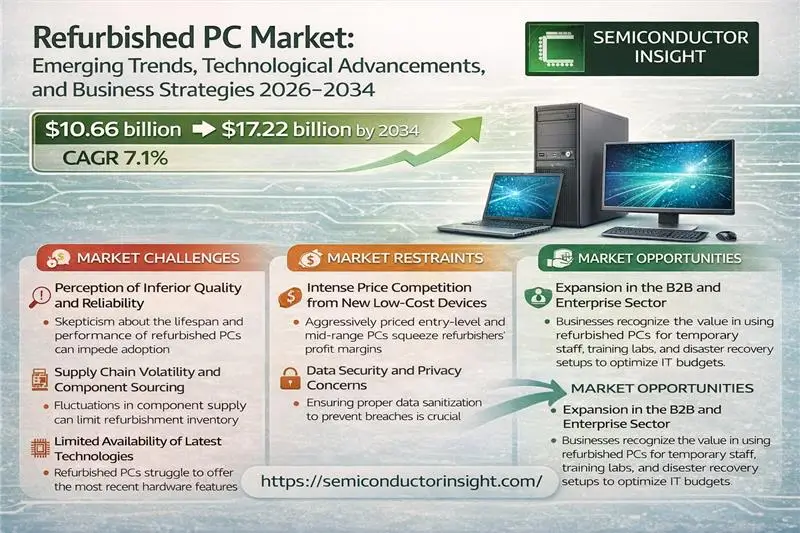
Global Refurbished PC Market was valued at USD 10.66 billion in 2024 and is projected to reach USD 17.22 billion by 2032, at a CAGR of 7.1% during the forecast period.
Refurbished PCs are computing devices that have been previously used, returned to the manufacturer or retailer, and then professionally refurbished to a fully functional condition. These devices undergo rigorous testing, repair, and data wiping processes to ensure they meet quality standards comparable to new products, often coming with limited warranties. The market is driven by growing consumer focus on sustainability, the need for affordable computing solutions, and the increasing adoption of circular economy models by both businesses and individuals.
The market is experiencing rapid growth due to several factors, including the rising demand for cost-effective computing solutions across educational institutions, small businesses, and developing regions. Furthermore, the growing global awareness of electronic waste (e-waste) and the push for sustainable IT procurement practices are accelerating market expansion. Initiatives by key players in the market, such as expanding trade-in programs and partnerships with corporate IT asset disposition (ITAD) providers, are also expected to fuel market growth. For instance, many large corporations now have programs to refresh their IT assets every 3-4 years, creating a steady supply of high-quality used equipment that enters the refurbishment pipeline.
Refurbished PC Market MARKET DRIVERS
Rising Demand for Cost-Effective Computing Solutions
Global Refurbished PC Market is experiencing significant growth, primarily driven by the increasing need for affordable and reliable computing devices. In both consumer and commercial segments, cost-conscious buyers are turning to refurbished PCs as a viable alternative to new hardware, achieving savings of up to 40-70%. This trend is particularly strong in educational institutions, small and medium-sized enterprises (SMEs), and budget-constrained buyers in emerging economies who require functional technology without the premium price tag.
Sustainability and Corporate Environmental Initiatives
Growing environmental consciousness and corporate sustainability goals are major factors propelling the market. The circular economy model promotes the extension of product lifecycles, reducing electronic waste. Many large corporations are establishing formal IT asset disposition (ITAD) programs and opting for refurbished equipment for non-critical roles, aligning with ESG (Environmental, Social, and Governance) criteria. This shift is not just a financial decision but a strategic one, enhancing brand image and meeting regulatory pressures.
Furthermore, the rapid pace of technological refresh cycles in large organizations creates a steady supply of high-quality used equipment. As companies upgrade their fleets every 3-4 years, a robust pipeline of recent-model business-grade laptops and desktops enters the refurbishment channel, ensuring availability of reliable products for the secondary market. The standardization of warranty and certification processes by major OEMs and reputable refurbishers has also bolstered consumer confidence significantly.
Refurbished PC Market MARKET CHALLENGES
Perception of Inferior Quality and Reliability
A primary challenge remains overcoming the persistent perception that refurbished PCs are less reliable than new ones. Despite rigorous testing and certification standards employed by reputable vendors, some potential customers harbor concerns about the lifespan and performance of these devices. This skepticism can be a significant barrier to adoption, particularly among individual consumers who lack the technical expertise to assess quality, requiring vendors to invest heavily in marketing, education, and robust warranty offerings to build trust.
Other Challenges
Supply Chain Volatility and Component Sourcing
The market is susceptible to fluctuations in the supply of core components and finished goods from the primary market. Disruptions in new PC production, such as those caused by chip shortages, can limit the inflow of devices for refurbishment, leading to inventory shortages and price increases. Sourcing a consistent and high-volume supply of desirable models remains a logistical hurdle for refurbishers.
Limited Availability of Latest Technologies
Refurbished PCs, by nature, are previous-generation models. This creates a challenge in catering to customers who require the absolute latest processing power, graphics capabilities, or hardware features found only in newly released devices. The market inherently lags behind the cutting edge, which can limit its appeal to power users and certain business applications demanding top-tier performance.
Refurbished PC Market MARKET RESTRAINTS
Intense Price Competition from New Low-Cost Devices
The aggressive pricing of new entry-level and mid-range PCs from various manufacturers poses a significant restraint. In some segments, the price gap between a new budget device and a refurbished business-class PC has narrowed, compelling refurbishers to compete on factors beyond just price, such as superior build quality, extended warranties, and bundled services. This price pressure can squeeze profit margins across the value chain.
Data Security and Privacy Concerns
Data sanitization is a critical concern for both organizations disposing of old equipment and buyers of refurbished units. The risk of residual data remaining on storage drives if proper erasure procedures are not followed can lead to serious data breaches and non-compliance with regulations like GDPR and HIPAA. Ensuring and certifying complete data destruction adds to operational costs and requires specialized expertise, acting as a restraint for less sophisticated players in the market.
Additionally, in some regions, a lack of clear regulatory standards and consumer protection laws specifically governing the refurbished electronics market can create uncertainty and hinder market growth. The absence of a universally recognized certification for refurbished products can make it difficult for consumers to differentiate between high-quality and substandard offerings.
Refurbished PC Market MARKET OPPORTUNITIES
Expansion in the B2B and Enterprise Sector
A significant opportunity lies in the deepening penetration of the B2B market. Enterprises are increasingly recognizing the value of deploying refurbished PCs for specific use cases, such as for temporary workers, training labs, call centers, and disaster recovery setups. This allows them to optimize IT budgets significantly. The rise of Hardware-as-a-Service (HaaS) models, which often incorporate refurbished assets, presents a compelling recurring revenue stream for refurbishers.
Growth in Emerging Economies and Educational Markets
Emerging economies represent a vast, largely untapped market where affordability is a primary concern. Governments and educational institutions in these regions are major potential customers for large-scale procurements of refurbished PCs to bridge the digital divide. Programs aimed at providing technology access to students and underserved communities create substantial demand, offering volume-driven growth opportunities for market players who can navigate local regulations and logistics.
The growing trend of remote and hybrid work models also opens new avenues. As employees and freelancers seek to set up home offices cost-effectively, the demand for reliable, budget-friendly desktop computers and monitors from the refurbished market has surged. This segment values the durability and performance of business-grade refurbished equipment over consumer-grade new alternatives at similar price points.
REFURBISHED PC MARKET TRENDS
Sustainability and Circular Economy Initiatives Drive Market Expansion
Global Refurbished PC Market is experiencing significant growth, largely propelled by the increasing emphasis on sustainability and the adoption of circular economy principles. Corporations and individual consumers alike are becoming more environmentally conscious, seeking to reduce electronic waste, which amounts to over 53 million metric tons annually worldwide. Refurbished PCs offer a viable solution by extending the lifecycle of electronic devices, thereby conserving resources and minimizing landfill contributions. This trend is particularly strong in Europe, which holds 41% of the global market share, where stringent environmental regulations and corporate sustainability mandates are pushing businesses toward greener IT procurement policies. Furthermore, the economic advantages cannot be overlooked; refurbished PCs typically cost 30% to 50% less than their brand-new counterparts, making them an attractive option for budget-conscious organizations and educational institutions aiming to equip large numbers of users with reliable technology without the premium price tag.
Other Trends
Enterprise Adoption and Remote Work Infrastructure
The shift to remote and hybrid work models has fundamentally altered corporate IT procurement strategies, creating a substantial demand for cost-effective and scalable computing solutions. Enterprises are increasingly turning to refurbished PCs to quickly outfit home offices and satellite locations, a trend accelerated by the need for rapid deployment during the pandemic. This segment now accounts for a significant portion of the enterprise application market, which comprises 44% of the total Refurbished PC Market by application. The reliability of refurbished units has improved dramatically, with major OEMs like Dell, Lenovo, and HP offering certified refurbished programs that include warranties and technical support comparable to new products. This has reduced the perceived risk for IT managers, who are under pressure to manage costs while maintaining performance and security standards for a distributed workforce.
Technological Standardization and E-commerce Channel Growth
The maturation of the refurbishment process itself is a critical trend underpinning market confidence and growth. Standardized testing protocols, advanced data wiping software that meets NIST 800-88 guidelines, and quality grading systems have created a more transparent and trustworthy market for buyers. This is complemented by the rapid growth of specialized e-commerce platforms and marketplaces that exclusively sell refurbished electronics. These platforms provide detailed product descriptions, warranty information, and customer reviews, which help overcome the hesitation associated with buying pre-owned technology. The dominance of refurbished laptops, which hold an 88% share of the market by type, is a direct result of their portability and suitability for modern flexible work and learning environments. As internet penetration increases in emerging economies within Asia-Pacific, which holds a 27% market share, e-commerce will continue to be the primary channel for market expansion, making refurbished PCs accessible to a broader global audience.
COMPETITIVE LANDSCAPE
Key Industry Players
OEM Dominance and a Fragmented Ecosystem Define Market Structure
Global Refurbished PC Market is characterized by the strong presence of original equipment manufacturers (OEMs) who leverage their brand reputation, established supply chains, and technical expertise to capture a significant market share. The top three players, Lenovo, Dell, and Apple, collectively hold approximately 21% of the global market. These companies operate certified refurbishment programs, offering products that are meticulously tested, repaired, and warranted, which builds consumer trust and commands premium pricing. Their direct control over the refurbishment process ensures quality standards that are often comparable to new devices. The market structure is thus heavily influenced by these vertically integrated players who refurbish their own returned or off-lease equipment, creating a competitive environment where brand loyalty and certified quality are key differentiators.
Beyond the leading OEMs, the market includes a vast landscape of specialized refurbishers, value-added resellers (VARs), and niche players that cater to specific segments such as budget-conscious consumers, small and medium-sized enterprises, educational institutions, and government bodies. These players often compete on price and flexibility, sourcing equipment from various channels including corporate lease returns and bulk auctions. They play a crucial role in market penetration by making technology accessible in price-sensitive regions and for specific use cases where the latest specifications are not a primary requirement. This secondary tier of competition is more fragmented but essential for driving volume and reaching diverse customer bases.
List of Key Refurbished PC Companies Profiled
- Lenovo
- Dell Technologies
- Apple Inc.
- HP Inc.
- Acer Inc.
- ASUS
- Microsoft
- Samsung Electronics
- Gigabyte Technology
- MSI (Micro-Star International)
- Toshiba
- Amazon Renewed
- Arrow Electronics
- Sims Lifecycle Services
- Ingram Micro
Segment Analysis:
| Segment Category | Sub-Segments | Key Insights |
| By Type |
|
Refurbished Laptops are the dominant segment, driven by their inherent portability which aligns with modern flexible and remote working trends. The demand is further amplified by the widespread adoption of laptops in educational settings and for personal use. The high volume of corporate laptop refreshes and consumer upgrades creates a consistent and substantial supply of used units for the refurbishment market. Desktops remain relevant for specific use cases requiring high performance and stability, while workstations cater to a niche professional market with specialized computing needs. |
| By Application |
|
Personal application represents the most significant adoption area, as cost-conscious consumers seek affordable access to reliable computing power for everyday tasks, education, and entertainment. The value proposition of a high-quality device at a lower price point is highly attractive to students, freelancers, and budget-aware families. The Enterprise segment is a major driver of supply through regular IT asset refresh cycles and demonstrates growing demand from SMBs seeking to optimize their technology budgets. Educational institutions are also key players, utilizing refurbished PCs to equip computer labs and support digital learning initiatives cost-effectively. |
| By End User |
|
Individual Consumers form the bedrock of demand, prioritizing affordability and sufficient performance for non-specialized tasks. This segment is highly sensitive to price and brand reputation, often purchasing through online marketplaces. Small and Medium Businesses are a rapidly growing user base, as refurbished PCs offer a financially viable way to build or expand their IT infrastructure without compromising on quality, often with the benefit of enterprise-grade features at a fraction of the cost. Large Enterprises primarily contribute to the market’s supply side but are increasingly adopting refurbished devices for specific, non-critical roles and to meet corporate sustainability goals. |
| By Grade/Quality |
|
Premium/Certified Refurbished segments, often backed by manufacturer warranties and rigorous testing, are increasingly preferred by both businesses and discerning individual buyers seeking near-new reliability. This grade commands higher confidence and prices, effectively bridging the gap between new and used equipment. The Standard Refurbished category appeals to a broad market with a balance of cost and assured functionality. The Budget/Economy Grade attracts the most price-sensitive segments, though it requires buyers to be more cautious, creating opportunities for vendors who can provide transparent quality assessments to build trust. |
| By Sales Channel |
|
Online Marketplaces & E-commerce channels are the dominant force, offering unparalleled convenience, extensive choice, and competitive pricing that drives the consumer and SMB segments. The ability to compare products, read reviews, and access detailed specifications online is crucial for building buyer confidence in a refurbished product. Direct Sales from OEMs and major vendors are critical for the B2B market and for consumers seeking certified, warrantied products directly from the brand. Specialist Refurbishers and Retailers play a vital role by providing expert curation, localized services, and personalized customer support, often catering to specific niches or regional markets. |
Regional Analysis: Refurbished PC Market
North America
The highly structured corporate environment in North America generates a consistent and high-volume stream of off-lease PCs from large enterprises. These devices are often only a few years old and are ideal for refurbishment, creating a premium supply chain that underpins the market’s stability and quality assurance standards, appealing to budget-conscious businesses and educational institutions.
A well-developed e-commerce ecosystem, including dedicated refurbished goods platforms and major retailers with certified programs, provides seamless access for consumers. This infrastructure includes trusted certification processes, transparent grading systems, and reliable logistics, which are critical for building consumer confidence and driving the widespread adoption of refurbished PCs across the region.
Strong regulatory frameworks and a cultural shift towards sustainability encourage electronic waste reduction. Many states and corporations have implemented e-waste recycling mandates and green procurement policies, which indirectly support the refurbished market by validating its environmental benefits and creating a favorable environment for its growth and acceptance.
Significant demand originates from cost-sensitive segments like schools, universities, and small-to-medium businesses (SMBs). These sectors value the cost savings of refurbished PCs without significant compromises on performance, enabling them to equip labs, offices, and remote workers with reliable technology, thus forming a substantial and stable demand base for the market.
Europe
Europe represents a highly mature and diverse market for refurbished PCs, characterized by stringent regulatory environments that promote a circular economy. The Waste Electrical and Electronic Equipment (WEEE) directive and strong consumer protection laws have fostered a culture of sustainability and trust in certified pre-owned goods. Markets in Western Europe, such as Germany, the UK, and France, are particularly advanced, with established networks for collection, testing, and resale. Demand is driven by both environmentally conscious consumers and businesses seeking to meet corporate sustainability targets. The market benefits from a high level of standardization in refurbishment processes, although it remains fragmented with varying maturity levels across Eastern and Western European countries, presenting both challenges and opportunities for market consolidation and growth.
Asia-Pacific
The Asia-Pacific region is the fastest-growing market for refurbished PCs, fueled by massive populations, rapid digitalization, and strong price sensitivity. Countries like India and China are major hubs, with vast volumes of PCs entering the secondary market from both domestic consumption and imports. The market is largely driven by individual consumers, small businesses, and the education sector seeking affordable computing solutions. While the market is expansive, it is also highly fragmented, with a significant presence of informal and unorganized players. Challenges include varying quality standards and less developed consumer protection frameworks in some countries. However, increasing internet penetration and the growth of e-commerce platforms are gradually formalizing the market and boosting consumer confidence, indicating substantial potential for future expansion.
South America
Refurbished PC Market in South America is an emerging market shaped primarily by economic factors, where affordability is a key driver. Countries like Brazil and Argentina see strong demand from price-conscious consumers and small enterprises that cannot afford new hardware. The market supply is often supplemented by imports of used electronics. However, growth is tempered by economic volatility, less developed recycling infrastructures, and sometimes unclear regulatory landscapes regarding the import and certification of used electronics. Despite these challenges, there is a growing recognition of the economic and environmental value of refurbished products, with local initiatives beginning to emerge to create more structured and trustworthy market channels.
Middle East & Africa
Refurbished PC Market in the Middle East and Africa is characterized by significant disparity between sub-regions. More affluent Gulf Cooperation Council (GCC) countries exhibit growing demand from businesses and expatriate communities, with a focus on higher-end corporate refurbished units. In contrast, markets in Africa are almost entirely driven by extreme price sensitivity and the need for basic computing access. The market faces considerable challenges, including limited formal collection systems, concerns over product quality and warranties, and a reliance on imports. Nonetheless, the fundamental need for affordable technology to bridge the digital divide presents a substantial long-term opportunity, with potential for growth as digital infrastructure improves and awareness increases.
Report Scope
This market research report provides a comprehensive analysis of the Refurbished PC Market , covering the forecast period 2025–2032. It offers detailed insights into market dynamics, technological advancements, competitive landscape, and key trends shaping the industry.
Key focus areas of the report include:
- Market Overview: The report begins with an overview outlining its current market scenario, key growth indicators, and industry transformation drivers. It discusses the definition of refurbished PCs, market demand-supply balance, regulatory landscape, and the strategic role of refurbished technology in providing cost-effective solutions across industries and consumers.
- Market Size & Forecast: Historical data and future projections for revenue, unit shipments, and market value across major regions and segments.
- Segmentation Analysis: Detailed breakdown by product type (Laptops, Desktops, Workstations), application (Enterprise, Educational Institute, Government, Personal, Others), and end-user industry to identify high-growth segments and investment opportunities.
- Regional Insights: Insights into market performance across North America, Europe, Asia-Pacific, South America, and the Middle East & Africa, including country-level analysis where relevant.
- Competitive Landscape: Profiles of leading market participants, including their product offerings, market share, pricing strategies, and recent developments such as mergers, acquisitions, and partnerships.
- Technology Trends & Innovation: Assessment of product refurbishment processes, quality testing standards, and evolving consumer acceptance of refurbished electronics.
- Market Drivers & Restraints: Evaluation of factors driving market growth along with challenges, supply chain constraints, and market-entry barriers.
- Stakeholder Insights: Insights for manufacturers, retailers, distributors, investors, and policymakers regarding the evolving ecosystem and strategic opportunities.
Primary and secondary research methods are employed, including interviews with industry experts, data from verified sources, and real-time market intelligence to ensure the accuracy and reliability of the insights presented.
FREQUENTLY ASKED QUESTIONS:
What is the current market size of Refurbished PC Market?
-> Refurbished PC Market was valued at USD 10.66 billion in 2024 and is projected to reach USD 17.22 billion by 2032, at a CAGR of 7.1% during the forecast period.
Which key companies operate in Refurbished PC Market?
-> Key players include Lenovo, Dell, Apple, HP, Acer, ASUS, and Microsoft, among others. The top three players hold a share of about 21%.
What are the key growth drivers?
-> Key growth drivers include cost-effectiveness for consumers and businesses, increased product lifecycle management, and growing acceptance of refurbished electronics due to rigorous testing and certification standards.
Which region dominates the market?
-> Europe is the largest market, holding a share of about 41%, followed by Asia-Pacific and North America, with shares of 27% and 20%, respectively.
What are the emerging trends?
-> Emerging trends include the dominance of refurbished laptops, which account for 88% of the market by product type, and the significant share of personal use, which represents about 56% of the market by application.
Get Sample Report PDF for Exclusive Insights
Report Sample Includes
- Table of Contents
- List of Tables & Figures
- Charts, Research Methodology, and more...