MARKET INSIGHTS
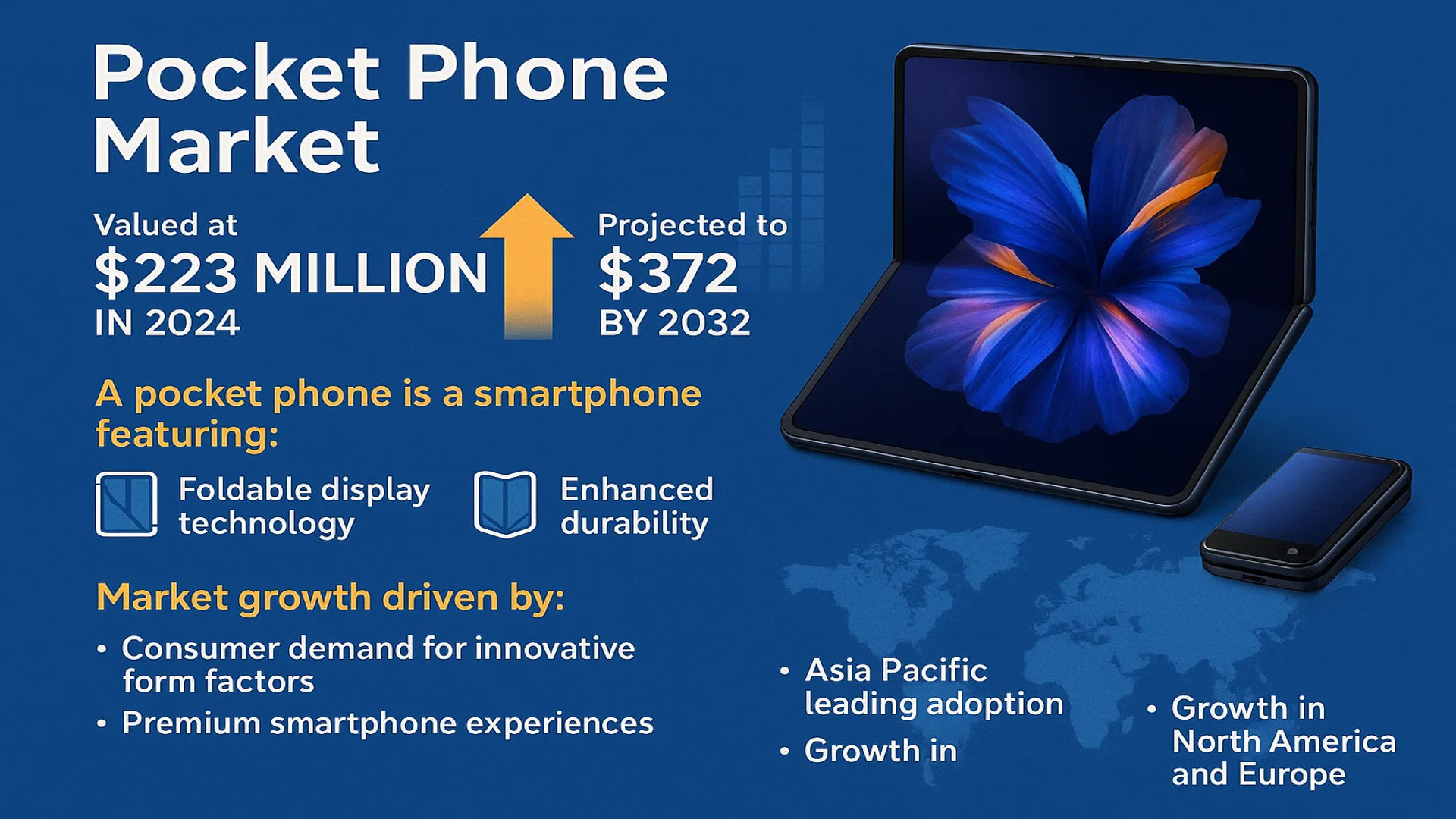
The global Pocket Phone Market was valued at 223 million in 2024 and is projected to reach US$ 372 million by 2032, at a CAGR of 7.7% during the forecast period.
A pocket phone is a smartphone featuring foldable display technology that enhances portability while maintaining a larger screen experience. These devices utilize flexible OLED panels and precision hinges to allow seamless transformation between compact and expanded states. Key features include multitasking capabilities, enhanced durability, and space-efficient designs ideal for both consumer and professional use.
Market growth is driven by increasing consumer demand for innovative form factors and premium smartphone experiences. While Asia Pacific currently leads adoption, North America and Europe show accelerating growth due to higher disposable incomes. Major manufacturers like Samsung and Huawei continue pushing technological boundaries, with recent advancements including ultra-thin glass displays and improved hinge mechanisms extending product lifespans beyond 200,000 folds.
MARKET DYNAMICS
MARKET DRIVERS
Rising Consumer Demand for Compact and Multi-Functional Devices to Fuel Market Expansion
The global pocket phone market is experiencing robust growth driven by increasing consumer preference for compact yet powerful smartphones. Traditional smartphones with fixed displays often compromise between screen size and portability, creating a gap that foldable pocket phones effectively fill. The foldable display technology allows these devices to offer tablet-like screen sizes when unfolded while maintaining smartphone portability when folded. Market data indicates that adoption rates for foldable phones have grown by over 200% year-on-year since 2021, reflecting strong consumer interest in this innovative form factor. Leading manufacturers are capitalizing on this trend by introducing increasingly sophisticated models with enhanced durability and functionality.
Technological Advancements in Flexible Display Technology to Accelerate Growth
Significant improvements in flexible display technology are serving as a key growth accelerator for the pocket phone market. Recent developments in ultra-thin glass (UTG) and advanced hinge mechanisms have addressed earlier concerns regarding display durability and crease visibility. These technological breakthroughs have extended device lifespans while enhancing user experience. The production yield for foldable displays has also improved dramatically, falling from nearly 50% rejection rates in early production runs to current rates below 15%, making them more commercially viable. As research and development investments in flexible OLED technology continue to increase, manufacturers are able to offer more affordable and reliable pocket phone options to consumers.
Growing Preference for Productivity-Oriented Devices Among Professionals
The business and professional user segment is emerging as a significant driver for pocket phone adoption. Professionals increasingly demand devices that combine mobility with enhanced productivity features. Foldable smartphones allow for seamless multitasking with their expanded screen real estate, enabling features like split-screen applications and desktop-like interfaces. Surveys indicate that nearly 40% of pocket phone purchases in 2024 were made by business users who value the improved multitasking capabilities. This trend is particularly strong in markets with high mobile workforce penetration, where professionals seek devices that can function as both smartphones and compact productivity tools.
MARKET RESTRAINTS
High Production Costs and Premium Pricing to Limit Mass Adoption
Despite strong growth potential, the pocket phone market faces significant restraints from high manufacturing costs. The complex engineering required for foldable displays and specialized hinge mechanisms results in production costs that are approximately 2-3 times higher than conventional smartphones. These elevated costs are subsequently passed on to consumers, with flagship pocket phone models typically priced between 30-50% higher than their traditional counterparts. Market analysis shows that this price premium places these devices out of reach for many mainstream consumers, particularly in price-sensitive emerging markets. While costs are gradually decreasing as production scales up, this pricing barrier continues to restrict the market’s expansion beyond early adopters and premium segments.
Other Restraints
Durability Concerns
Consumer apprehensions about device longevity remain a significant market restraint. Although recent generations have shown marked improvements, foldable phones still face skepticism regarding their ability to withstand daily wear and tear. Testing indicates that current models typically withstand 200,000-300,000 folds before showing signs of wear, falling short of the 400,000+ folds that would equal five years of typical usage. These durability limitations discourage some consumers from investing in premium-priced pocket phones.
Limited App Optimization
The market faces challenges from inconsistent app optimization for foldable form factors. Many popular applications have yet to be fully optimized for the variable aspect ratios and screen transitions unique to pocket phones. This results in a fragmented user experience where certain apps may display improperly or lack functionality when switching between folded and unfolded states.
MARKET CHALLENGES
Intense Competition from Established Smartphone Form Factors Creates Market Barriers
The pocket phone market faces significant challenges from the entrenched position of traditional smartphone designs. Consumers have grown accustomed to the familiar form factor of conventional smartphones, creating resistance to adopting new designs. Furthermore, these established models continue to benefit from continuous improvements in features and performance at increasingly competitive price points. Market data shows that standard smartphones still account for over 97% of total smartphone shipments globally, demonstrating the uphill battle pocket phones face in terms of market penetration. Overcoming this inertia requires not just technological superiority, but also significant consumer education about the benefits of foldable devices.
Other Challenges
Supply Chain Complexities
Manufacturing pocket phones presents unique supply chain challenges due to their specialized components. The production of flexible displays and associated components requires highly specialized manufacturing processes and equipment that are not yet widely available. This creates potential bottlenecks in production capacity and makes the supply chain more vulnerable to disruptions compared to conventional smartphones.
Battery Life Limitations
While pocket phones offer larger displays, they face constraints in battery capacity due to the need to maintain slim form factors when folded. Consumers expect these devices to power larger displays without sacrificing battery life, creating engineering challenges that manufacturers must address to meet user expectations.
MARKET OPPORTUNITIES
Emerging Applications in Niche Segments to Create New Growth Avenues
The pocket phone market presents significant opportunities in specialized application areas beyond general consumer use. Sectors such as healthcare, education, and field services are increasingly recognizing the potential of foldable devices. In healthcare, for instance, pocket phones can serve as compact diagnostic tools when folded and transform into display devices for medical imaging when unfolded. Similarly, educational applications benefit from the dual functionality of pocket phones, where students can use them as both standard smartphones for communication and as tablets for digital learning. This expansion into vertical markets represents a substantial growth opportunity for manufacturers to diversify their customer base beyond typical smartphone users.
Technological Convergence to Drive Innovation and Market Expansion
The integration of pocket phones with other emerging technologies creates numerous opportunities for market growth. Developments in 5G connectivity, augmented reality, and AI-powered interfaces are particularly synergistic with foldable device capabilities. The larger display area when unfolded makes pocket phones ideal platforms for AR applications and advanced multitasking features. As these complementary technologies continue to evolve and gain mainstream acceptance, they will naturally drive increased adoption of pocket phones that can best showcase their capabilities. Manufacturers that successfully integrate these parallel technological advancements into their pocket phone offerings stand to gain significant competitive advantages in the market.
Emerging Market Expansion to Fuel Long-Term Growth Potential
While currently concentrated in developed markets, pocket phones present substantial growth opportunities in emerging economies as production costs decrease and local manufacturing capabilities improve. As disposable incomes rise in these regions and infrastructure for premium mobile devices develops, manufacturers can expect increasing demand from these markets. Early signs of this trend are already visible, with select manufacturers introducing more affordable pocket phone models specifically targeted at price-sensitive emerging markets. This geographic expansion strategy, combined with the natural replacement cycle of existing smartphones, creates a long-term growth pathway for the pocket phone segment within the broader smartphone market.
POCKET PHONE MARKET TRENDS
Foldable Display Innovation Driving Market Expansion
The pocket phone market is experiencing rapid growth, fueled by advancements in foldable display technology. With major manufacturers like Samsung, Huawei, and Motorola introducing sleek, durable folding mechanisms, consumer adoption has surged. In 2024 alone, the market was valued at $223 million, with projections indicating a rise to $372 million by 2032, reflecting a 7.7% CAGR. Flexible AMOLED screens, coupled with ultra-thin glass (UTG) technology, have enhanced durability while reducing creasing—a critical factor in improving user experience. Moreover, innovations such as multi-angle folding and waterproof designs are broadening the appeal of pocket phones beyond early adopters.
Other Trends
Increasing Demand for High-Capacity Storage
The shift toward content-heavy applications, including high-resolution gaming and 4K video streaming, has driven demand for pocket phones with larger storage options. The 256GB memory segment is projected to witness significant growth, alongside emerging preferences for 512GB and 1TB variants among power users. This trend aligns with the growing reliance on cloud integration, where seamless synchronization between offline and online storage enhances convenience. Additionally, enterprises increasingly favor high-capacity models for business applications, further driving revenue potential in premium segments.
Regional Growth Dynamics and Competitive Landscape
Asia-Pacific dominates the pocket phone market, led by China’s thriving tech ecosystem and aggressive product launches from brands like Xiaomi, OPPO, and Huawei. Meanwhile, North America remains a key revenue generator, with the U.S. contributing substantially to global sales, particularly in the business and office segment. Europe follows closely, with a preference for premium models featuring enhanced multitasking capabilities. The competitive landscape is marked by continuous R&D investments, with manufacturers focusing on reducing device thickness and improving battery efficiency to differentiate their offerings.
COMPETITIVE LANDSCAPE
Key Industry Players
Tech Giants and Emerging Players Battle for Market Share in the Rapidly Evolving Foldable Segment
The global pocket phone market exhibits a competitive landscape dominated by established smartphone manufacturers and emerging challengers investing heavily in foldable display technology. Samsung Electronics currently leads the market with its Galaxy Z Fold and Z Flip series, which accounted for approximately 80% of global foldable shipments in 2024. The company’s dominance stems from its proprietary Ultra Thin Glass (UTG) technology and vertically integrated supply chain.
Huawei maintains strong positioning in China and select international markets through its Mate X series, despite facing supply chain constraints. Meanwhile, Xiaomi and OPPO have made significant strides with competitively priced offerings that target mass-market adoption of foldable devices, particularly in Asia-Pacific markets.
Recent developments show companies increasingly focusing on durability improvements and price reductions to accelerate consumer adoption. For instance, Motorola’s latest Razr models utilize a redesigned hinge mechanism that has improved reliability by 30% compared to previous generations. These technological advancements, coupled with expanding distribution channels, are reshaping the competitive dynamics of the market.
The competitive intensity is expected to increase as Honor (now independent from Huawei) and ZTE introduce more affordable foldable models in 2024-2025, potentially disrupting the current pricing paradigm dominated by premium segment offerings.
List of Key Pocket Phone Manufacturers (2024)
- Samsung Electronics (South Korea)
- Huawei Technologies (China)
- Xiaomi Corporation (China)
- OPPO (China)
- Honor (China)
- Motorola Mobility (U.S.)
- ZTE Corporation (China)
- vivo (China)
Segment Analysis:
By Type
The 256GB Segment Dominates Due to Its Balanced Storage Capacity and Affordability
The market is segmented based on internal storage capacity into:
- Memory: 256GB
- Memory: 512GB
- Memory: 1TB
By Application
Business and Office Segment Leads Due to Rising Productivity Demands
The market is segmented based on application into:
- Leisure and Entertainment
- Business and Office
By Display Technology
OLED Screens Dominate for Their Superior Visual Quality in Foldable Devices
The market is segmented based on display technology into:
- LCD
- OLED
- AMOLED
By Price Range
Premium Segment Leads the Market with High-End Foldable Devices
The market is segmented based on price range into:
- Budget ($200-$700)
- Mid-Range ($700-$1,200)
- Premium (Above $1,200)
Regional Analysis: Pocket Phone Market
Asia-Pacific
The Asia-Pacific region dominates the global pocket phone market, driven by strong consumer demand in China, South Korea, and India. China alone is projected to account for over 40% of global sales by 2032, fueled by local players like Huawei, Xiaomi, and OPPO aggressively expanding their foldable smartphone portfolios. South Korea’s Samsung leads technological innovation through its Galaxy Z series, while India’s growing middle class presents significant untapped potential. However, price sensitivity remains a market constraint, with consumers showing preference for mid-range 256GB models over premium 1TB variants.
North America
North America represents the second-largest pocket phone market, characterized by premium device adoption and strong brand loyalty toward Samsung and Motorola. The U.S. market shows particular interest in high-capacity 512GB and 1TB models for business applications, though high average selling prices somewhat limit mass-market penetration. Carrier partnerships and trade-in programs help offset cost barriers, while enterprise adoption for mobile productivity continues growing. Regulatory scrutiny on foldable display durability standards may influence future product development cycles.
Europe
European consumers demonstrate strong appetite for premium pocket phones, particularly in Germany, the UK and France where business users drive demand for larger storage variants. EU regulations on repairability and battery life are prompting manufacturers to improve device sustainability – a key differentiator in this environmentally conscious market. While Samsung maintains leadership, Chinese brands face challenges gaining share due to consumer preference for established brands and concerns over data privacy. The region shows above-average growth potential for foldable devices used in creative professional workflows.
Middle East & Africa
The MEA pocket phone market remains nascent but promising, with growth concentrated in UAE, Saudi Arabia and South Africa where affluent consumers view foldables as status symbols. Limited 5G infrastructure outside major cities currently restricts functionality, while economic pressures have slowed adoption rates. However, manufacturers see long-term potential through installment payment plans and growing interest in dual-use devices that combine productivity and entertainment. Chinese brands like Honor and Tecno are making strategic inroads through competitive pricing.
South America
South America represents the smallest but fastest-growing regional market, with Brazil leading adoption. Economic volatility forces manufacturers to focus on more affordable foldable options, though this limits available storage capacities to primarily 256GB models. Carrier subsidies remain scarce, making direct imports through gray markets surprisingly common. The lack of local service centers for foldable devices presents both a challenge and opportunity for manufacturers willing to invest in regional support infrastructure.
Report Scope
This market research report provides a comprehensive analysis of the Global Pocket Phone Market, covering the forecast period 2024–2032. It offers detailed insights into market dynamics, technological advancements, competitive landscape, and key trends shaping the industry.
Key focus areas of the report include:
- Market Size & Forecast: Historical data and future projections for revenue, unit shipments, and market value across major regions and segments. The global pocket phone market was valued at USD 223 million in 2024 and is projected to reach USD 372 million by 2032, growing at a CAGR of 7.7%.
- Segmentation Analysis: Detailed breakdown by product type (Memory: 256G, 512G, 1TB), application (Leisure and Entertainment, Business and Office), and end-user industry to identify high-growth segments and investment opportunities.
- Regional Outlook: Insights into market performance across North America, Europe, Asia-Pacific, Latin America, and the Middle East & Africa, including country-level analysis. The U.S. and China are key markets driving growth.
- Competitive Landscape: Profiles of leading market participants, including their product offerings, R&D focus, manufacturing capacity, pricing strategies, and recent developments. Key players include Huawei, Honor, OPPO, Xiaomi, Samsung, ZTE, and Motorola.
- Technology Trends & Innovation: Assessment of emerging technologies, including foldable display advancements, integration of AI/IoT, and evolving industry standards.
- Market Drivers & Restraints: Evaluation of factors driving market growth, such as demand for compact yet high-performance devices, along with challenges like high production costs and supply chain constraints.
- Stakeholder Analysis: Insights for component suppliers, OEMs, system integrators, investors, and policymakers regarding the evolving ecosystem and strategic opportunities.
Primary and secondary research methods are employed, including interviews with industry experts, data from verified sources, and real-time market intelligence to ensure the accuracy and reliability of the insights presented.
FREQUENTLY ASKED QUESTIONS:
What is the current market size of the Global Pocket Phone Market?
-> Pocket Phone Market was valued at 223 million in 2024 and is projected to reach US$ 372 million by 2032, at a CAGR of 7.7% during the forecast period.
Which key companies operate in the Global Pocket Phone Market?
-> Key players include Huawei, Honor, OPPO, Xiaomi, Samsung, ZTE, and Motorola, among others.
What are the key growth drivers?
-> Key growth drivers include rising demand for foldable display technology, increasing adoption of compact yet high-performance devices, and technological advancements in smartphone design.
Which region dominates the market?
-> Asia-Pacific is the fastest-growing region, driven by strong demand in China and other emerging markets, while North America remains a significant market.
What are the emerging trends?
-> Emerging trends include advancements in foldable display technology, integration of AI-driven features, and increasing focus on sustainable manufacturing practices.

Get Sample Report PDF for Exclusive Insights
Report Sample Includes
- Table of Contents
- List of Tables & Figures
- Charts, Research Methodology, and more...
 Download Sample Report PDF