Market Insights
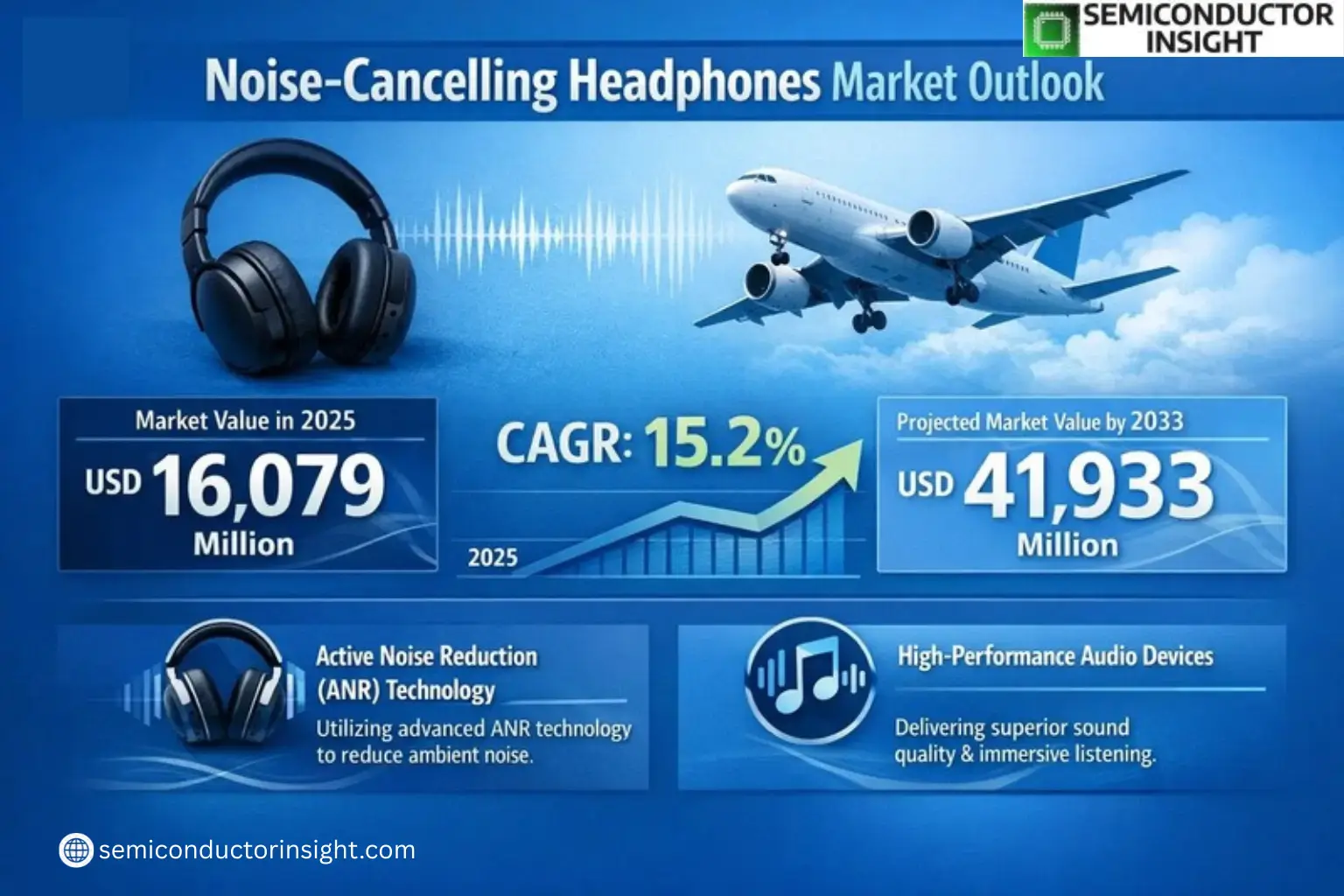
Global Noise-Cancelling Headphones Market was valued at USD 16,079 million in 2025 and is projected to reach USD 41,933 million by 2033, exhibiting a CAGR of 15.2% during the forecast period.
Noise-Cancelling Headphones are high-performance audio devices that utilize Active Noise Reduction (ANR) technology to minimize unwanted ambient sounds. Unlike passive headphones, which rely on physical soundproofing materials, active noise-canceling models employ advanced algorithms and microphones to detect and counteract external noise frequencies in real time. These headphones are widely adopted across consumer electronics, aviation, and professional audio applications due to their ability to enhance audio clarity and reduce listening fatigue.
The market growth is driven by increasing demand for premium audio experiences, rising adoption in corporate environments for remote work setups, and technological advancements such as adaptive noise cancellation powered by AI. Leading manufacturers like Sony, Bose, and Sennheiser continue to dominate the sector with innovations including spatial audio integration and biometric monitoring features. However, challenges such as high production costs and regulatory pressures regarding sustainable materials may influence future market dynamics.
MARKET DRIVERS
Increasing Demand for Premium Audio Experiences
Noise-Cancelling Headphones Market is witnessing robust growth driven by consumers seeking high-quality audio experiences in noisy environments. With over 65% of urban commuters experiencing hearing fatigue, advanced ANC technology has become essential. The rise of remote work has further accelerated adoption, as professionals seek undistracted focus in home office settings.
Technological Advancements in ANC Systems
Manufacturers are investing heavily in hybrid ANC technology, combining feedforward and feedback microphones for superior noise reduction. The latest models now achieve up to 95% ambient noise cancellation, with processing speeds under 0.01 seconds. Integration with AI-powered sound optimization is creating smarter, context-aware listening experiences.
Increasing air travel volumes and stricter workplace noise regulations are creating additional growth opportunities for professional-grade noise-cancelling solutions across multiple industries.
MARKET CHALLENGES
High Production Costs and Price Sensitivity
Premium noise-cancelling headphones carry production costs 65-80% higher than standard models due to complex DSP chipsets and multiple microphones. This creates adoption barriers in price-sensitive emerging markets, where over 70% of consumers prioritize affordability over ANC features.
Other Challenges
Battery Life Limitations
Extended ANC usage drains power 40% faster than passive listening, requiring frequent recharging that impacts mobile usability. Even premium models average just 30 hours per charge with ANC active.
Comfort and Fit Issues
28% of users report ear fatigue during prolonged ANC headphone use, with 15% returning units due to pressure discomfort or inadequate noise isolation.
MARKET RESTRAINTS
Market Saturation in Premium Segments
With 85% penetration among high-income demographics in developed markets, noise-cancelling headphone brands face diminishing returns on customer acquisition. Intense competition has compressed product lifecycles to under 18 months, forcing continuous R&D investments to maintain brand differentiation.
MARKET OPPORTUNITIES
Expansion into Healthcare and Enterprise Sectors
Noise-cancelling technology is gaining traction in medical environments, with studies showing 42% improvement in focus for surgeons using ANC headsets. Enterprises are deploying these solutions in open-office layouts, creating a USD 3.1 billion B2B market opportunity by 2026 for corporate wellness applications.
Innovative Form Factors
The emergence of true wireless ANC earbuds has captured 38% of the market share previously held by over-ear models. Next-generation designs featuring bone conduction technology with ANC capabilities present new growth avenues, particularly among safety-conscious industrial users.
Noise-Cancelling Headphones Market Trends
Rapid Market Expansion and Technological Advancements
Global Noise-Cancelling Headphones Market reached USD 16.08 billion in 2025 and is projected to grow at 15.2% CAGR through 2033. This growth is fueled by increasing demand for premium audio solutions in both consumer and professional sectors, alongside significant technological innovations in active noise cancellation (ANC) systems.
Other Trends
AI-Driven Noise Reduction
Major manufacturers are integrating adaptive noise cancellation systems that use AI to analyze ambient sounds in real-time. The Sennheiser MOMENTUM 4 employs gyroscope and bone conduction to reduce “aural pressure,” while Umelody Ux models feature fatigue monitoring to automatically adjust noise cancellation intensity.
Open-Circuit Noise Reduction Breakthroughs
NTT’s microphone array solutions now deliver effective noise reduction in open-circuit headphones up to 3000Hz frequency range. Air directional sound transmission technologies are gaining adoption, improving environmental awareness without compromising audio quality.
Evolving Consumer Preferences and Sustainability
The market is shifting toward eco-conscious products, with EU regulations pushing for 50% carbon footprint reduction across product lifecycles. Manufacturers are adopting biodegradable materials, targeting 30% market coverage by 2026. Simultaneously, Bluetooth 5.4 adoption has reduced latency below 60ms, while nano-absorbing materials boost passive noise reduction efficiency by 35%.
Regional Market Dynamics
North America currently dominates with 38% market share, while Asia-Pacific shows the fastest growth at 18.3% CAGR. This reflects increasing disposable incomes in emerging economies and premiumization trends among younger demographics.
Competitive Landscape Challenges
The high-end segment faces pricing pressures as flagship models exceed USD 250 due to advanced ANC chipsets. Market leaders including Bose, Sony, and Apple collectively hold 62% market share through continuous innovation in spatial audio integration and hybrid ANC technologies.
COMPETITIVE LANDSCAPE
Key Industry Players
Noise-Cancelling Headphones Market Dominated by Audio Tech Giants and Emerging Challengers
Noise-Cancelling Headphones Market is led by established audio technology leaders like Sony, Bose, and Sennheiser, which collectively hold over 40% market share. These companies have pioneered advanced active noise cancellation (ANC) technologies and maintain strong brand loyalty. Bose’s QuietComfort series and Sony’s WH-1000XM line continue to set industry benchmarks for noise suppression and audio fidelity through proprietary chip designs and adaptive sound algorithms.
Emerging competitors like Apple (through Beats), Samsung, and Xiaomi are rapidly gaining traction by integrating ANC features into their ecosystem products. Chinese manufacturers such as Huawei and 1More are challenging premium brands with competitive pricing while implementing hybrid ANC solutions. Specialty audio brands like Bang & Olufsen and Audio-Technica maintain strong niches among audiophiles with high-fidelity noise-cancelling models.
List of Key Noise-Cancelling Headphones Companies Profiled
- Sony Corporation
- Bose Corporation
- Sennheiser Electronic
- Apple (Beats)
- Bang & Olufsen
- Audio-Technica
- JBL (Harman)
- Samsung Electronics
- Xiaomi
- Huawei
- 1More
- Bowers & Wilkins
- AKG
- Edifier
- Jabra
Segment Analysis:
| Segment Category | Sub-Segments | Key Insights |
| By Type |
|
Active Noise-Cancelling Headphones dominate the market with superior sound isolation through advanced microphone arrays and AI-driven adaptive algorithms.
|
| By Application |
|
Travel & Aviation represents the most demanding application segment requiring high-performance noise cancellation.
|
| By End User |
|
Consumer Electronics account for the largest adoption rate, driven by premium audio experiences.
|
| By Technology |
|
Hybrid ANC is emerging as the technology leader, combining the best features of different approaches.
|
| By Connectivity |
|
Wireless (Bluetooth) connectivity dominates due to consumer preference for cable-free operation.
|
Regional Analysis: Noise-Cancelling Headphones Market
The concentration of tech giants in Silicon Valley and Seattle creates natural partnerships between headphone manufacturers and software/platform developers, enabling seamless ecosystem integration that enhances product stickiness.
Open-office culture and urban noise pollution have normalized all-day headphone use, with noise-cancelling becoming a standard expectation rather than premium feature in professional environments across major metros.
Best Buy, Apple Stores, and Amazon’s physical presence provide experiential retail environments where consumers can compare noise cancellation effectiveness across brands before purchasing.
Heavy R&D investment focuses on hybrid ANC technologies that adapt to diverse environments, addressing both consistent low-frequency and sudden high-frequency noise scenarios common in North American cities.
Europe
Europe represents the second-largest noise-cancelling headphones market, characterized by stringent product quality standards and environmental regulations. The region shows strong adoption among frequent train travelers and urban commuters dealing with public transit noise. Germany and UK lead in workplace adoption, while Scandinavian countries prioritize outdoor-active models with weather resistance. EU-wide standardization of wireless protocols facilitates cross-border compatibility. Manufacturers face pressure to meet sustainability requirements through recyclable materials and energy-efficient designs, shaping product development priorities differently than other regions.
Asia-Pacific
Asia-Pacific demonstrates the fastest growth for noise-cancelling headphones, driven by expanding middle-class populations and mobile-first consumers. China dominates regional sales through domestic brands like Huawei and Edifier competing with global players. Japan maintains preference for high-fidelity audio components, while Southeast Asian markets show price sensitivity favoring affordable ANC options. Unique use cases emerge including privacy in dense living spaces and noise isolation in crowded public areas, creating localized product adaptation needs across sub-regions.
South America
South America’s noise-cancelling headphones market grows steadily despite economic volatility, with Brazil and Argentina showing strongest demand. The region exhibits polarization between premium imports for affluent consumers and value-focused domestic alternatives. Tropical climates influence product durability needs, while long commutes in congested cities drive adoption. Gray market imports pose challenges for authorized retailers, though official distributor networks are expanding gradually through partnerships with mobile carriers.
Middle East & Africa
The MEA region presents emerging opportunities in Gulf countries where luxury electronics thrive, contrasted with slower adoption in price-sensitive African markets. Dubai serves as a regional hub for premium audio products with travelers purchasing high-end noise-cancelling headphones at duty-free outlets. Heat resistance becomes a key product differentiator, while religious practices create demand for discreet designs suitable for prayer environments. Infrastructure limitations in some African nations affect wireless performance expectations.
Report Scope
This market research report provides a comprehensive analysis of the Noise-Cancelling Headphones Market, covering the forecast period 2025–2033. It offers detailed insights into market dynamics, technological advancements, competitive landscape, and key trends shaping the industry.
Key focus areas of the report include:
- Market Overview: The report begins with an overview outlining its current market scenario, key growth indicators, and industry transformation drivers. It discusses macroeconomic factors, demand–supply balance, regulatory landscape, and the strategic role of advanced audio technologies in powering advancements across industries such as consumer electronics, telecommunications, and entertainment.
- Market Size & Forecast: Historical data and future projections for revenue, unit shipments, and market value across major regions and segments.
- Segmentation Analysis: Detailed breakdown by product type, technology, application, and end-user industry to identify high-growth segments and investment opportunities.
- Regional Insights: Insights into market performance across North America, Europe, Asia-Pacific, Latin America, and the Middle East & Africa, including country-level analysis where relevant.
- Competitive Landscape: Profiles of leading market participants, including their product offerings, R&D focus, manufacturing capacity, pricing strategies, and recent developments such as mergers, acquisitions, and partnerships.
- Technology Trends & Innovation: Assessment of emerging technologies, integration of AI/IoT, noise-cancellation advancements, and evolving industry standards.
- Market Drivers & Restraints: Evaluation of factors driving market growth along with challenges, supply chain constraints, regulatory issues, and market-entry barriers.
- Stakeholder Insights: Insights for component suppliers, OEMs, system integrators, investors, and policymakers regarding the evolving ecosystem and strategic opportunities.
Primary and secondary research methods are employed, including interviews with industry experts, data from verified sources, and real-time market intelligence to ensure the accuracy and reliability of the insights presented.
FREQUENTLY ASKED QUESTIONS:
What is the current market size of Noise-Cancelling Headphones Market?
-> Noise-Cancelling Headphones Market was valued at USD 16,079 million in 2025 and is projected to reach USD 41,933 million by 2033, exhibiting a CAGR of 15.2% during the forecast period.
What is the projected CAGR for the Noise-Cancelling Headphones Market?
-> The market is expected to grow at a CAGR of 15.2% during the forecast period (2025-2033).
Which key companies operate in the Noise-Cancelling Headphones Market?
-> Key players include SONY, Bose, Sennheiser, Apple (Beats), Bang & Olufsen, AKG, JBL, and Audio-Technica, among others.
What are the key technology trends in noise-cancelling headphones?
-> Emerging trends include adaptive noise reduction intelligence, integration of biosensing technology, open-circuit noise reduction breakthroughs, and spatial audio integration.
Which segment dominates the Noise-Cancelling Headphones Market?
-> Active Noise-Cancelling Headphones currently hold the largest market share, driven by superior noise reduction capabilities.

Get Sample Report PDF for Exclusive Insights
Report Sample Includes
- Table of Contents
- List of Tables & Figures
- Charts, Research Methodology, and more...
 Download Sample Report PDF