MARKET INSIGHTS
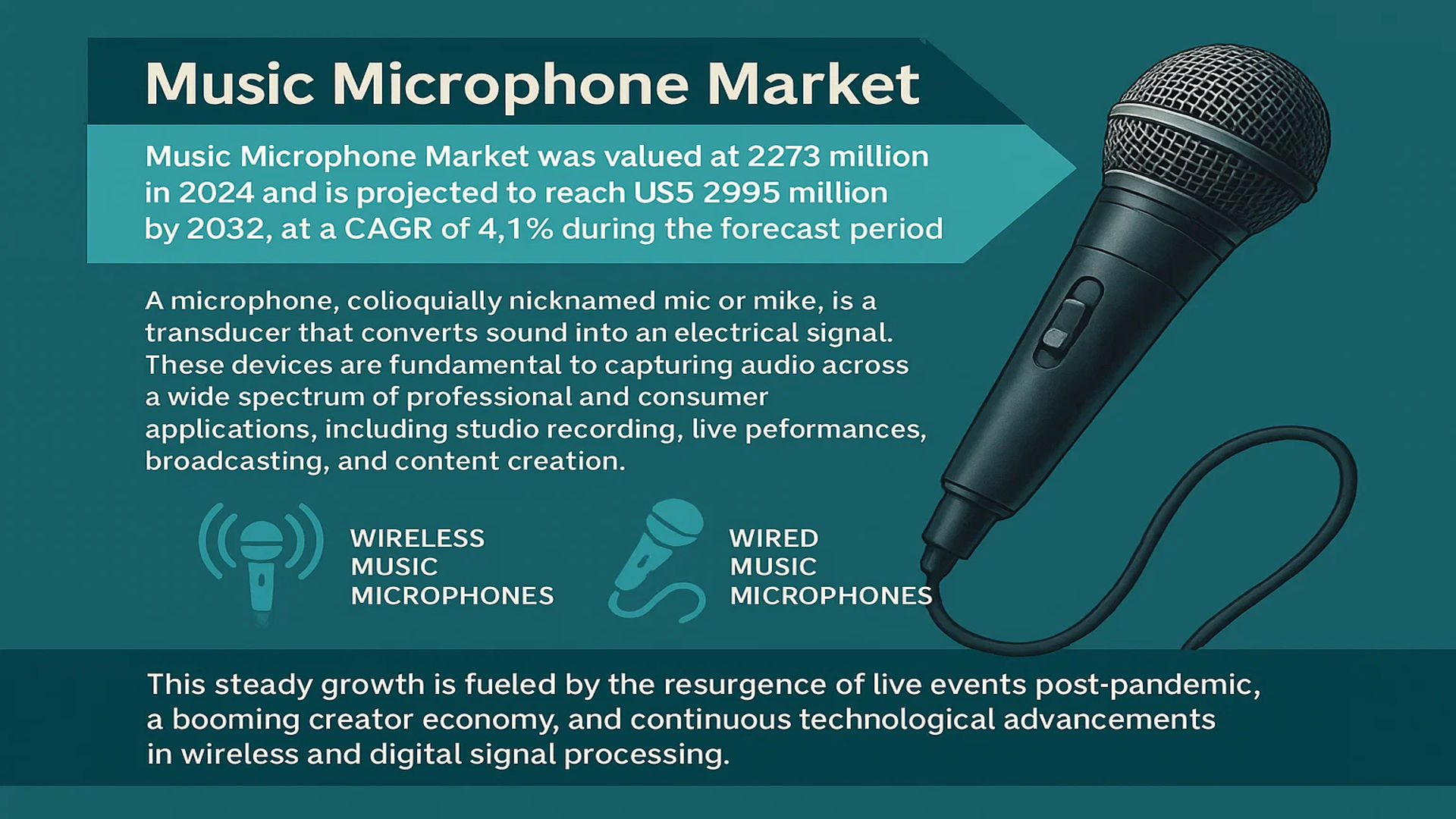
The global Music Microphone Market was valued at 2273 million in 2024 and is projected to reach US$ 2995 million by 2032, at a CAGR of 4.1% during the forecast period.
A microphone, colloquially nicknamed mic or mike, is a transducer that converts sound into an electrical signal. These devices are fundamental to capturing audio across a wide spectrum of professional and consumer applications, including studio recording, live performances, broadcasting, and content creation. The market is broadly segmented into two primary types: wireless music microphones and wired music microphones, each catering to specific user needs for mobility and audio fidelity.
This steady growth is fueled by the resurgence of live events post-pandemic, a booming creator economy, and continuous technological advancements in wireless and digital signal processing. The market is highly competitive, with the top four players—Sennheiser, Audio-Technica, Shure, and AKG—collectively holding a significant 28% market share, underscoring a landscape driven by innovation and brand reputation.
MARKET DYNAMICS
MARKET DRIVERS
Rising Demand for High-Quality Audio Production to Drive Music Microphone Market Growth
The global music microphone market is experiencing robust growth driven by the increasing demand for high-quality audio production across multiple industries. The proliferation of digital content creation, including music streaming, podcasts, and video production, has created unprecedented demand for professional-grade microphones. The music streaming industry alone has witnessed exponential growth, with platforms hosting over 100 million tracks and generating billions of streams monthly. This content creation boom requires superior audio capture equipment, pushing musicians, podcasters, and content creators to invest in professional microphones that deliver studio-quality sound. Furthermore, the post-pandemic resurgence of live events and concerts has accelerated microphone sales, as event organizers and performers seek reliable audio equipment to enhance audience experiences.
Technological Advancements in Wireless Systems to Boost Market Expansion
Technological innovation represents a significant driver for the music microphone market, particularly in the wireless segment. The transition from analog to digital wireless systems has revolutionized live performances and studio recordings, offering enhanced frequency agility, reduced interference, and improved audio quality. Modern wireless microphone systems now incorporate advanced features such as automatic frequency scanning, encryption security, and extended battery life, making them indispensable for professional applications. The adoption of digital wireless microphones has grown by approximately 18% annually as performers and audio engineers seek the freedom of movement without compromising audio fidelity. Additionally, integration with smart devices and compatibility with various recording software has expanded the user base beyond professional musicians to include home studio enthusiasts and content creators.
Expanding Music Education and Home Studio Markets to Fuel Growth
The democratization of music production through affordable technology has created substantial market opportunities. Music education institutions worldwide are incorporating recording technology into their curricula, driving demand for reliable microphones in academic settings. Simultaneously, the home studio market has exploded, with an estimated 35% year-over-year growth in personal recording equipment sales. This trend is fueled by increasingly accessible digital audio workstations and the growing popularity of remote collaboration among musicians. The rising number of independent artists and content creators establishing home recording setups has created a sustained demand for quality microphones across various price points, from entry-level models to professional studio equipment.
MARKET CHALLENGES
Frequency Spectrum Regulations and Allocation Changes to Challenge Wireless Microphone Adoption
The music microphone market faces significant regulatory challenges, particularly affecting wireless systems. Ongoing spectrum reallocation for mobile broadband services has reduced available frequencies for wireless microphones, creating operational constraints for users. Regulatory changes have necessitated equipment upgrades and frequency coordination, increasing costs for both manufacturers and end-users. Professional audio companies must continuously adapt their products to comply with evolving regulations across different regions, requiring substantial investment in research and development. These regulatory pressures particularly impact live event organizers and broadcasters who rely on multiple wireless systems simultaneously and must navigate complex licensing requirements and frequency coordination challenges.
Other Challenges
Intense Price Competition and Counterfeit Products
The market faces persistent challenges from counterfeit products and intense price competition, particularly in the entry-level and mid-range segments. The proliferation of low-cost alternatives from emerging manufacturers has created pricing pressures that affect profit margins for established brands. Counterfeit products not only undermine brand reputation but also create safety concerns and performance issues for unsuspecting consumers. The presence of substandard products in the market creates confusion among buyers and can potentially damage the perceived value of professional audio equipment.
Supply Chain Vulnerabilities and Component Shortages
Global supply chain disruptions have exposed vulnerabilities in microphone manufacturing, affecting production timelines and costs. Critical components, including specialized capacitors, transformers, and wireless transmission modules, have experienced extended lead times and price fluctuations. These challenges have forced manufacturers to reassess their supply chain strategies and increase inventory buffers, ultimately affecting product pricing and availability in the market.
MARKET RESTRAINTS
High Cost of Professional Equipment to Limit Market Penetration in Price-Sensitive Segments
The premium pricing of professional-grade music microphones acts as a significant restraint for market expansion, particularly in developing regions and among budget-conscious consumers. Professional microphone systems often require substantial investment, with high-end models costing several thousand dollars, creating barriers for individual musicians and small studios. This pricing challenge is compounded by the need for additional equipment such as preamps, interfaces, and acoustic treatment to achieve optimal performance. While entry-level options exist, the performance gap between consumer and professional equipment remains substantial, limiting upgradation from amateur to professional gear. The cost sensitivity is particularly evident in educational institutions and community organizations that require multiple units but operate within constrained budgets.
Technical Complexity and Skill Requirements to Hinder Market Adoption
The technical sophistication of modern microphone systems presents adoption barriers for non-technical users. Professional audio equipment often requires understanding of acoustic principles, polar patterns, frequency response, and impedance matching, creating a steep learning curve for new users. This complexity discourages potential customers who may opt for simpler solutions or delay purchasing decisions. The industry’s transition to digital systems and software integration has further increased the technical knowledge required for optimal operation. Users must navigate driver compatibility, software updates, and system configuration issues that can be daunting for those without technical backgrounds. This knowledge gap between professional users and casual enthusiasts continues to restrain market growth in consumer segments.
Economic Uncertainty and Reduced Disposable Income to Affect Consumer Spending
Global economic fluctuations and reduced disposable income significantly impact the music microphone market, as audio equipment often represents discretionary spending. During economic downturns, both individual consumers and organizations tend to postpone equipment upgrades and limit capital expenditures. The professional audio industry is particularly sensitive to economic cycles, as live events, studio projects, and educational programs often face budget constraints during challenging economic periods. This economic sensitivity affects not only direct sales but also the replacement cycle of existing equipment, as users extend the lifespan of their current gear rather than investing in new technology.
MARKET OPPORTUNITIES
Rapid Growth of Content Creation Economy to Open New Market Frontiers
The explosive growth of digital content creation presents substantial opportunities for music microphone manufacturers. The podcasting industry alone has experienced over 200% growth in the past three years, creating demand for broadcast-quality microphones among content creators. Similarly, the gaming streaming market continues to expand, with streamers investing in professional audio equipment to enhance production quality. This content creation boom extends beyond traditional media to social media platforms, where high-quality audio has become a differentiator for successful creators. Manufacturers are developing products specifically tailored for these emerging user segments, incorporating features such as USB connectivity, built-in processing, and streamlined setups that appeal to content creators who prioritize ease of use and quick deployment.
Integration with Smart Technologies and IoT to Create Innovative Product Categories
The convergence of audio technology with smart devices and Internet of Things (IoT) platforms creates exciting opportunities for market expansion. Modern microphones are increasingly incorporating smart features such as automatic mixing, noise cancellation, and voice recognition capabilities. The integration with virtual assistants and smart home systems opens new application areas beyond traditional music production. Manufacturers are developing connected microphones that can interface with various digital platforms, providing users with enhanced functionality and seamless workflow integration. This technological convergence enables new product categories that bridge professional audio with consumer electronics, potentially expanding the addressable market beyond traditional music industry boundaries.
Emerging Markets and Regional Expansion to Provide Growth Momentum
Developing regions represent significant growth opportunities as music education expands and local music industries mature. Countries across Asia, Latin America, and Africa are witnessing rapid growth in music production infrastructure, including recording studios, broadcasting facilities, and educational institutions. This development creates sustained demand for audio equipment across various quality tiers and price points. Manufacturers are adapting their strategies to address these emerging markets through localized products, competitive pricing, and distribution partnerships. The growing middle class in these regions, combined with increasing digital connectivity and content consumption, creates a favorable environment for microphone market expansion beyond traditional Western markets.
MUSIC MICROPHONE MARKET TRENDS
Wireless Technology Integration to Emerge as a Dominant Trend
The global music microphone market is undergoing a significant transformation driven by the rapid integration of wireless technology. This shift is largely fueled by the increasing demand for mobility and flexibility in both live performances and studio recording environments. Wireless microphone systems, which accounted for approximately 38% of the market share in 2024, are projected to grow at a CAGR of 5.7% through 2032, outpacing the overall market growth. This acceleration is attributed to advancements in digital transmission protocols that offer enhanced audio fidelity, reduced latency, and improved signal stability. The adoption of UHF and 2.4 GHz bands, coupled with sophisticated encryption technologies, has addressed previous concerns over interference and security, making wireless systems a reliable choice for professional applications. Furthermore, the proliferation of digital streaming and content creation has created a new class of users who prioritize convenience without compromising on audio quality, thereby expanding the consumer base for high-end wireless microphones.
Other Trends
Rise of Home Recording and Content Creation
The surge in home recording studios and content creation is substantially driving market growth, with an estimated 72% year-over-year increase in sales of entry-level and mid-range studio microphones since 2020. This trend is propelled by the democratization of music production technology, making professional-grade equipment more accessible and affordable. The growing popularity of podcasts, streaming, and social media content has created a substantial demand for versatile microphones capable of delivering broadcast-quality audio in non-professional environments. USB condenser microphones, in particular, have seen remarkable adoption due to their plug-and-play functionality, capturing a significant portion of the amateur and prosumer segments. This segment’s expansion is further supported by the increasing number of independent artists and creators who require reliable, high-quality audio capture tools for digital distribution.
Advancements in Microphone Capsule and Polar Pattern Technology
Technological innovation in microphone design, specifically in capsule construction and polar pattern versatility, is a critical factor shaping the market. Manufacturers are increasingly focusing on developing multi-pattern condenser microphones that offer users the flexibility to switch between cardioid, omnidirectional, and figure-8 polar patterns, catering to diverse recording scenarios. Recent developments in large-diaphragm condenser technology have led to improvements in transient response and lower self-noise, with some models now achieving a noise floor as low as 5 dB-A. These advancements are particularly important for vocal recording and acoustic instrument capture, where nuance and clarity are paramount. Additionally, the integration of built-in DSP processing in certain microphone models allows for real-time audio enhancement, reducing the need for extensive post-production. This trend toward smarter, more adaptive microphones is meeting the demands of modern recording workflows, where efficiency and quality are equally prioritized.
COMPETITIVE LANDSCAPE
Key Industry Players
Leading Brands Drive Innovation Amidst Intensifying Global Competition
The global music microphone market exhibits a semi-consolidated structure, characterized by a dynamic mix of established industry titans, specialized mid-tier firms, and agile emerging players. Dominating this landscape, Sennheiser (Germany), Audio-Technica (Japan), Shure (U.S.), and AKG (Austria) collectively command a significant portion of the market, holding an estimated 28% revenue share as of 2024. Their leadership is anchored in decades of brand heritage, relentless investment in acoustic research and development, and a deeply entrenched global distribution network that serves professional studios, live sound venues, and broadcasting corporations worldwide.
While these top four players set the benchmark for quality and reliability, companies like Rode (Australia) and Blue Microphones (U.S.) have carved out substantial niches. Their growth is largely fueled by strategically targeting the burgeoning creator economy—including podcasters, streamers, and home studio enthusiasts—with innovative USB and broadcast-quality condenser microphones that blend professional performance with accessibility.
Furthermore, technological evolution is a primary battleground. The shift towards wireless systems and integration with digital audio workstations (DAWs) has prompted widespread strategic initiatives. Key players are aggressively expanding their wireless product portfolios and forming software partnerships to ensure seamless compatibility, which is critical for maintaining market relevance. Concurrently, geographical expansion into high-growth markets in Asia-Pacific, particularly China and India, remains a focal point for capturing new customer bases.
Meanwhile, other significant contributors such as SONY (Japan), Behringer (Germany/Music Group), and Lewitt Audio (Austria) are strengthening their positions through competitive pricing strategies, robust manufacturing capabilities, and a focus on delivering high value across both entry-level and professional product segments. Their continued investment in R&D and marketing is expected to further intensify competition and drive innovation throughout the forecast period.
List of Key Music Microphone Companies Profiled
- Sennheiser electronic GmbH & Co. KG (Germany)
- Audio-Technica Corporation (Japan)
- Shure Incorporated (U.S.)
- AKG Acoustics GmbH (Austria)
- Rode Microphones (Australia)
- Blue Microphones (U.S.)
- Behringer (Music Group) (Germany)
- Lewitt Audio (Austria)
- SONY Corporation (Japan)
- Takstar Audio Equipment Co., Ltd. (China)
- Superlux Professional Audio (Taiwan)
- Samson Technologies Corp. (U.S.)
- SE Electronics (U.S.)
- Electro-Voice, Inc. (U.S.)
- M-Audio (U.S.)
- Apogee Electronics Corp. (U.S.)
Segment Analysis:
By Type
Wireless Music Microphones Segment Leads the Market Due to Unprecedented Demand for Mobility and Advanced Connectivity
The market is segmented based on type into:
- Wireless Music Microphones
- Subtypes: UHF Systems, VHF Systems, and Digital Wireless Systems
- Wired Music Microphones
- Subtypes: Dynamic Microphones, Condenser Microphones, and Ribbon Microphones
By Application
Studio Applications Dominate the Market Owing to Critical Demands for High-Fidelity Recording and Professional Audio Production
The market is segmented based on application into:
- Studio
- Performance
- Audio for video
- Others
By End User
Professional Musicians and Recording Artists Segment Holds Significant Share Due to High Equipment Standards and Frequent Upgrades
The market is segmented based on end user into:
- Professional Musicians and Recording Artists
- Broadcasting Companies
- Live Event Organizers
- Educational Institutions
- Home Studio Enthusiasts
By Polar Pattern
Cardioid Microphones Lead the Market Driven by Superior Noise Rejection and Versatility in Live Sound Applications
The market is segmented based on polar pattern into:
- Cardioid
- Omnidirectional
- Figure-8 (Bidirectional)
- Shotgun
- Others
Regional Analysis: Music Microphone Market
Asia-Pacific
The Asia-Pacific region represents the largest and fastest-growing market for music microphones globally, driven by expansive entertainment industries, rapid urbanization, and increasing disposable income. China and India are the primary growth engines, with China alone accounting for over 35% of regional microphone sales. The proliferation of home studios, fueled by the creator economy and platforms like Douyin and YouTube, has significantly boosted demand for both entry-level and professional microphones. While cost sensitivity keeps wired and budget models prevalent, there is a noticeable shift toward wireless systems in professional settings, particularly in live performances and broadcasting. Major manufacturers like Sennheiser, Shure, and Audio-Technica have established strong distribution networks, while local brands such as Takstar and Superlux compete effectively in the budget segment. The region’s growth is further supported by government investments in media infrastructure and the rising popularity of music festivals and K-pop culture.
North America
North America is a mature yet innovation-driven market characterized by high consumer spending on premium audio equipment and strong adoption of advanced technologies. The United States dominates the region, accounting for approximately 78% of the market revenue. Demand is particularly robust in professional segments, including recording studios, broadcast media, and live sound reinforcement. The shift toward wireless microphone systems is pronounced here, driven by their convenience and the need for mobility in dynamic performance environments. Key players such as Shure and Audio-Technica hold significant market share, with Shure’s SM58 and Beta series remaining industry standards. Recent trends include the integration of USB and digital connectivity in microphones to cater to podcasters and home content creators. Regulatory standards, including FCC compliance for wireless frequencies, also shape product development and availability.
Europe
Europe is a well-established market with a strong emphasis on quality, innovation, and compliance with stringent regulatory standards. Germany and the UK are the largest markets, supported by thriving music production, broadcasting, and live event industries. The region shows a high preference for renowned brands such as Sennheiser and AKG, which are headquartered in Germany and Austria respectively. European consumers and professionals prioritize durability, sound fidelity, and environmental sustainability, leading to increased adoption of robust and eco-designed products. Wireless systems are widely used in large venues and events, though wired microphones remain popular in studio settings due to their reliability and superior sound quality. The market is also influenced by EU regulations on wireless spectrum usage and noise emission standards, ensuring products meet high performance and safety benchmarks.
South America
The music microphone market in South America is emerging, with growth primarily driven by Brazil and Argentina. The region exhibits strong potential due to a vibrant cultural scene, increasing investments in entertainment infrastructure, and growing music production activities. However, economic volatility and currency fluctuations often restrain market expansion, making affordability a key factor for consumers. Wired microphones dominate sales due to their lower cost, but wireless adoption is gradually rising in professional sectors such as live concerts and television broadcasting. International brands face competition from local manufacturers and importers offering budget-friendly options. Despite these challenges, the market is expected to grow steadily, supported by rising music education initiatives and the expansion of regional media outlets.
Middle East & Africa
The Middle East & Africa region is a developing market with varied growth patterns across countries. The UAE, Israel, and South Africa are the most active markets, driven by investments in entertainment, media, and event management. Demand is primarily centered around durable and reliable microphones for live performances, religious gatherings, and broadcasting. Wireless systems are gaining traction in high-budget projects and modern venues, although wired microphones remain common due to their cost-effectiveness and simplicity. The market is constrained by limited local manufacturing and reliance on imports, which can lead to higher prices and supply chain challenges. Nevertheless, increasing urbanization, rising disposable incomes, and the growth of the music and event industry in the region indicate promising long-term opportunities for market players.
Report Scope
This market research report provides a comprehensive analysis of the global Music Microphone market, covering the forecast period 2024–2032. It offers detailed insights into market dynamics, technological advancements, competitive landscape, and key trends shaping the industry.
Key focus areas of the report include:
- Market Size & Forecast: Historical data and future projections for revenue, unit shipments, and market value across major regions and segments.
- Segmentation Analysis: Detailed breakdown by product type, connectivity, application, and end-user industry to identify high-growth segments and investment opportunities.
- Regional Outlook: Insights into market performance across North America, Europe, Asia-Pacific, Latin America, and the Middle East & Africa, including country-level analysis where relevant.
- Competitive Landscape: Profiles of leading market participants, including their product offerings, R&D focus, manufacturing capacity, pricing strategies, and recent developments such as mergers, acquisitions, and partnerships.
- Technology Trends & Innovation: Assessment of emerging technologies, integration of digital signal processing, wireless advancements, and evolving industry standards.
- Market Drivers & Restraints: Evaluation of factors driving market growth along with challenges, supply chain constraints, regulatory issues, and market-entry barriers.
- Stakeholder Analysis: Insights for component suppliers, OEMs, system integrators, investors, and policymakers regarding the evolving ecosystem and strategic opportunities.
Primary and secondary research methods are employed, including interviews with industry experts, data from verified sources, and real-time market intelligence to ensure the accuracy and reliability of the insights presented.
FREQUENTLY ASKED QUESTIONS:
What is the current market size of Global Music Microphone Market?
->Music Microphone Market was valued at 2273 million in 2024 and is projected to reach US$ 2995 million by 2032, at a CAGR of 4.1% during the forecast period.
Which key companies operate in Global Music Microphone Market?
-> Key players include Sennheiser, Audio-Technica, Shure, AKG, Blue Microphones, Behringer, Sony, and Rode, among others.
What are the key growth drivers?
-> Key growth drivers include rising content creation, live event resurgence, podcasting growth, and technological advancements in wireless systems.
Which region dominates the market?
-> North America holds the largest market share, while Asia-Pacific is the fastest-growing region.
What are the emerging trends?
-> Emerging trends include USB-C connectivity, AI-enhanced audio processing, hybrid work models, and sustainable manufacturing practices.

Get Sample Report PDF for Exclusive Insights
Report Sample Includes
- Table of Contents
- List of Tables & Figures
- Charts, Research Methodology, and more...
 Download Sample Report PDF