
MARKET INSIGHTS
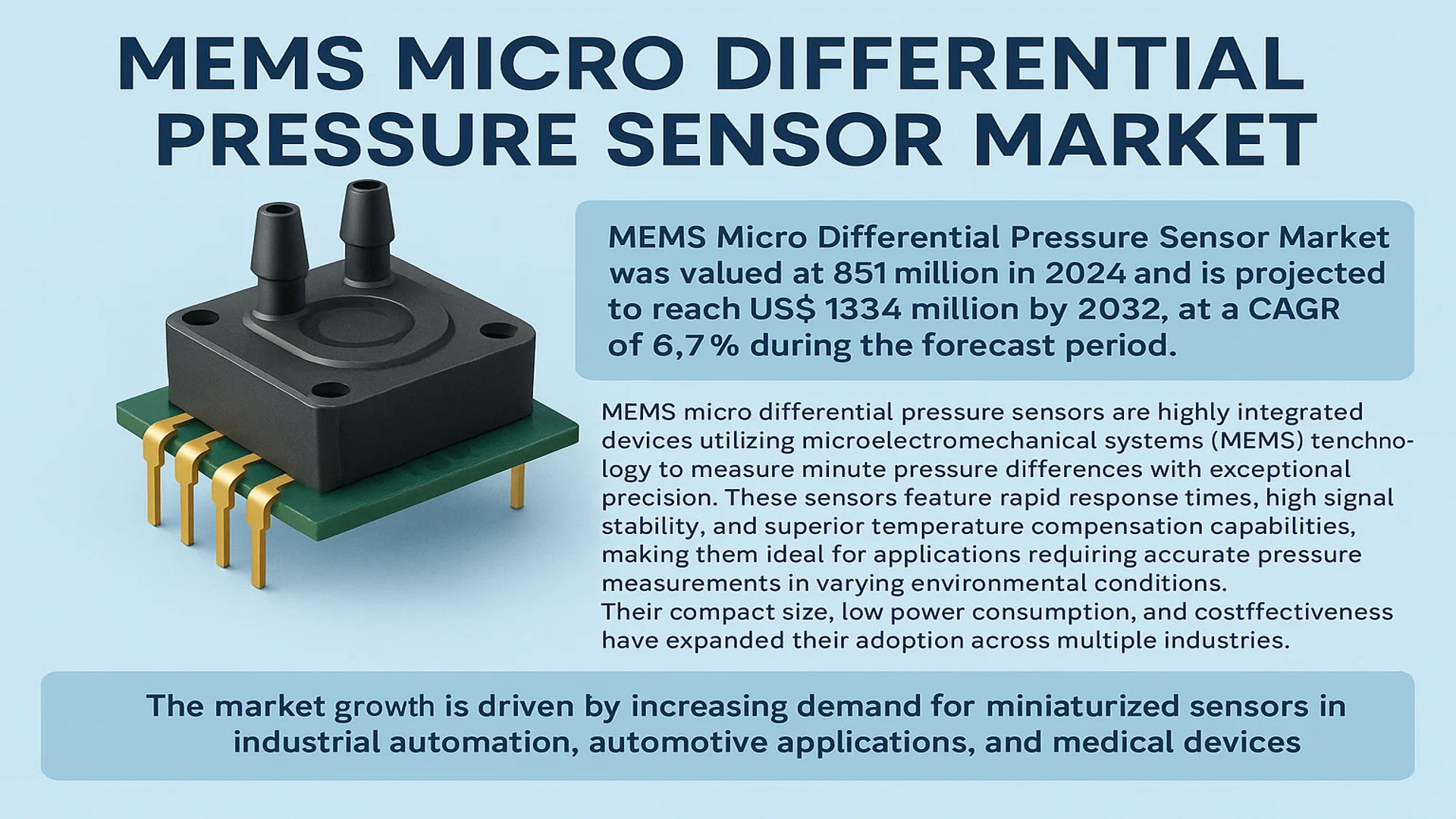
The global MEMS Micro Differential Pressure Sensor Market was valued at 851 million in 2024 and is projected to reach US$ 1334 million by 2032, at a CAGR of 6.7% during the forecast period.
MEMS micro differential pressure sensors are highly integrated devices utilizing microelectromechanical systems (MEMS) technology to measure minute pressure differences with exceptional precision. These sensors feature rapid response times, high signal stability, and superior temperature compensation capabilities, making them ideal for applications requiring accurate pressure measurements in varying environmental conditions. Their compact size, low power consumption, and cost-effectiveness have expanded their adoption across multiple industries.
The market growth is driven by increasing demand for miniaturized sensors in industrial automation, automotive applications, and medical devices. The compensated pressure sensor segment, which offers enhanced accuracy through integrated temperature compensation, is expected to witness significant growth. Leading players like TE Connectivity (SMI), Honeywell, and NXP are investing in advanced MEMS technologies to expand their product portfolios and cater to evolving industry requirements.
MARKET DYNAMICS
MARKET DRIVERS
Rising Adoption in Consumer Electronics and IoT Applications to Propel Market Growth
The MEMS micro differential pressure sensor market is experiencing robust growth due to increasing integration in consumer electronics and IoT devices. Smartphones, wearables, and smart home appliances increasingly utilize these sensors for advanced functionalities like altitude measurement, indoor navigation, and ventilation control. The miniaturization and low power consumption of MEMS sensors make them ideal for battery-operated portable devices. As IoT adoption accelerates globally, the demand for precise pressure sensing in smart buildings, industrial automation, and connected devices will continue expanding.
Advancements in Automotive Safety Systems Driving Demand
Modern vehicles incorporate an increasing number of MEMS pressure sensors across various systems including engine management, brake boosters, and cabin air quality monitoring. The automotive industry’s shift toward smart mobility solutions and stricter emission regulations have made differential pressure measurement crucial for optimizing combustion efficiency and filtering systems. Emerging applications in advanced driver assistance systems (ADAS) and autonomous vehicles offer significant growth potential for high-precision MEMS pressure sensors.
➤ For instance, electric vehicle battery management systems increasingly rely on differential pressure sensors for thermal management and safety monitoring.
Healthcare Sector Growth Fueling Medical Applications
Medical applications represent a high-growth vertical for MEMS micro differential pressure sensors, particularly in respiratory devices, ventilators, and patient monitoring equipment. The COVID-19 pandemic accelerated demand for medical-grade pressure sensors with improved accuracy and reliability. These sensors play critical roles in hospital infrastructure for monitoring air flow in isolation rooms, operating theaters, and critical care units, creating sustained market demand.
MARKET RESTRAINTS
Technical Complexity and High Development Costs Limit Market Penetration
While MEMS technology offers significant advantages, the development and production of micro differential pressure sensors involves substantial technical challenges. The design of accurate differential measurement systems requires sophisticated membrane structures and advanced signal conditioning capabilities. These complexities result in extended development cycles and significant upfront investments in cleanroom facilities and specialized equipment.
Performance Limitations in Harsh Environments Constrain Applications
MEMS pressure sensors face reliability challenges in extreme operating conditions including high temperatures, corrosive media, and intense vibration environments. While packaging innovations have improved durability, many industrial applications still require more robust sensing solutions. This performance gap limits adoption in sectors like oil & gas, heavy manufacturing, and aerospace where traditional pressure sensors currently dominate.
Other Constraints
Supply Chain Vulnerabilities
The MEMS manufacturing process relies on specialized materials and equipment with limited suppliers, creating vulnerability to supply disruptions and price volatility.
Standardization Challenges
Lack of universal performance standards across different sensor specifications complicates system integration and creates compatibility issues.
MARKET CHALLENGES
Intense Price Competition from Alternative Technologies
The MEMS pressure sensor market faces growing competition from alternative sensing technologies including piezoelectric and optical pressure sensors. While MEMS solutions are generally more cost-effective for mass applications, emerging technologies offer superior performance characteristics for niche applications. This competitive landscape pressures MEMS manufacturers to continuously improve performance while reducing costs through wafer-level packaging and other manufacturing innovations.
Other Challenges
Testing and Calibration Complexities
Achieving and maintaining high measurement accuracy requires sophisticated calibration procedures that increase production costs and time-to-market.
Thermal Sensitivity Management
Temperature compensation remains a critical challenge for maintaining measurement precision across wide operating temperature ranges.
MARKET OPPORTUNITIES
Emerging Applications in Renewable Energy Systems Create Growth Potential
The transition toward renewable energy presents numerous opportunities for MEMS differential pressure sensors in applications such as wind turbine condition monitoring, fuel cell systems, and hydrogen infrastructure. These sensors play critical roles in optimizing system efficiency and enabling predictive maintenance strategies. The growing emphasis on energy efficiency in industrial and commercial buildings also drives demand for advanced pressure monitoring solutions in HVAC systems.
Development of Smart Cities to Accelerate Adoption
Urban digital transformation initiatives worldwide are creating new applications for pressure sensing technology in infrastructure monitoring, including water distribution networks, sewage systems, and smart ventilation. The integration of MEMS sensors with wireless connectivity enables real-time monitoring of critical infrastructure parameters. Governments and municipalities are increasingly investing in smart city technologies, providing a significant market growth catalyst.
Additionally
The expansion of industrial automation and Industry 4.0 implementations will continue driving demand for precise process monitoring solutions. MEMS manufacturers are developing sensors with enhanced digital interfaces and self-diagnostic capabilities to meet these evolving industrial requirements.
MEMS MICRO DIFFERENTIAL PRESSURE SENSOR MARKET TRENDS
Miniaturization and IoT Integration Driving Market Expansion
The MEMS micro differential pressure sensor market is experiencing robust growth due to the rising demand for miniaturized and highly accurate sensing solutions in IoT and smart device applications. These sensors, which measure pressure differences with high precision, are increasingly being integrated into wearables, HVAC systems, and industrial monitoring equipment. By 2024, the market is valued at $851 million, and it is projected to grow at a 6.7% CAGR, reaching $1,334 million by 2032. The adoption of MEMS technology in automotive applications, particularly for tire pressure monitoring and engine control, further reinforces this trend. Additionally, advancements in semiconductor manufacturing have enabled lower production costs while maintaining superior performance.
Other Trends
Automotive Electrification and Smart HVAC Systems
The shift toward electric vehicles (EVs) and advanced climate control systems is significantly boosting the demand for MEMS micro differential pressure sensors. In modern EVs, these sensors play a crucial role in battery thermal management and cabin air quality monitoring. Similarly, smart HVAC systems leverage these sensors to optimize energy efficiency by precisely adjusting airflow. The automotive segment alone is projected to increase its market share by 9% year-over-year, driven by policies promoting sustainable transportation and stricter emission regulations.
Medical and Industrial Applications Expanding Market Footprint
In the medical sector, MEMS micro differential pressure sensors are becoming indispensable in ventilators, sleep apnea devices, and portable diagnostic equipment—especially after the increased focus on respiratory healthcare post-pandemic. Beyond healthcare, industrial applications such as leak detection in pipelines and process automation are also propelling market growth. The Asia-Pacific region leads this expansion, witnessing a 25% increase in sensor deployments for industrial automation. Furthermore, key manufacturers like TE Connectivity, Honeywell, and NXP are continuously innovating to improve sensor accuracy and reliability, ensuring their dominance in these high-growth segments.
COMPETITIVE LANDSCAPE
Key Industry Players
Innovation and Strategic Expansion Drive Competition in MEMS Pressure Sensor Market
The global MEMS micro differential pressure sensor market features a dynamic competitive landscape dominated by established semiconductor leaders and specialized sensor manufacturers. TE Connectivity (SMI) currently holds a strong market position, leveraging decades of experience in precision sensor technology and wide adoption across automotive and industrial applications. Their recent product enhancements focusing on miniaturization and IoT integration have further strengthened their competitive advantage.
Honeywell and Sensirion AG have emerged as key innovators in this space, particularly in medical and HVAC applications where accuracy and reliability are paramount. These companies have consistently invested in R&D to develop temperature-compensated sensors with improved long-term stability, addressing critical industry demands.
The competitive intensity is increasing as Chinese manufacturers like Suzhou Novosense Microelectronics and Hefei Duwei Technology expand their global footprint through cost-competitive offerings. While these companies currently focus on the domestic market, their improving quality standards and aggressive pricing strategies are enabling gradual penetration into international markets.
A notable trend among leading players involves strategic partnerships with system integrators and IoT platform providers. NXP Semiconductors recently collaborated with several industrial automation providers to develop integrated sensing solutions, reflecting the growing importance of ecosystem development beyond standalone sensor components.
List of Key MEMS Micro Differential Pressure Sensor Manufacturers
- TE Connectivity (SMI) (Switzerland)
- Honeywell International Inc. (U.S.)
- Sensirion AG (Switzerland)
- NXP Semiconductors (Netherlands)
- Amphenol Corporation (U.S.)
- Merit Sensor Systems (U.S.)
- Suzhou Novosense Microelectronics (China)
- Shanghai MISTechnology (China)
- Hefei Duwei Technology (China)
- Shandong Gettop Acoustic (China)
Segment Analysis:
By Type
Compensated Pressure Sensor Segment Dominates Due to Enhanced Accuracy and Temperature Stability
The market is segmented based on type into:
- Compensated Pressure Sensor
- Features built-in temperature compensation for high precision in variable environments
- Uncompensated Pressure Sensor
- Requires external compensation circuits for optimal performance
By Application
Industrial Applications Lead Market Adoption Due to Widespread Use in Process Control Systems
The market is segmented based on application into:
- Consumer Electronics
- Used in smartphones, wearables, and smart home devices
- Medical
- Critical for respiratory devices and diagnostic equipment
- Industrial
- Essential for HVAC systems, industrial automation, and process control
- Automotive
- Applied in engine management and emissions control systems
- Others
By End User
Manufacturing Sector Represents Major Demand Due to Process Optimization Needs
The market is segmented based on end user into:
- Electronics Manufacturers
- Medical Device Companies
- Industrial Equipment Providers
- Automotive OEMs
- Research Institutions
By Technology
Piezoresistive Technology Holds Significant Share Due to Cost-Effectiveness
The market is segmented based on technology into:
- Piezoresistive
- Capacitive
- Optical
- Resonant
Regional Analysis: MEMS Micro Differential Pressure Sensor Market
Asia-Pacific
The Asia-Pacific region dominates the MEMS micro differential pressure sensor market, primarily driven by China’s thriving consumer electronics and automotive sectors. With China accounting for over 40% of global MEMS sensor production, local manufacturers like Suzhou Novosense Microelectronics and Shanghai MISTechnology are rapidly expanding their market share. The region benefits from extensive manufacturing infrastructure, cost-efficient production, and strong government support for semiconductor advancements. Japan and South Korea contribute significantly to high-precision industrial and medical applications, while India’s growing IoT ecosystem presents emerging opportunities. However, supply chain vulnerabilities and intellectual property concerns remain key challenges.
North America
North America maintains technological leadership in MEMS differential pressure sensors, with major players like TE Connectivity (SMI) and Honeywell headquartered in the U.S. The market thrives on precision-driven applications in aerospace, medical devices, and industrial automation, supported by stringent FDA and FAA regulations. Investments in smart manufacturing (Industry 4.0) and electric vehicles are accelerating demand. Despite higher production costs compared to Asia, the region’s focus on innovation and reliability ensures premium pricing power. Canada is emerging as a hub for MEMS R&D, particularly in environmental monitoring systems.
Europe
Europe’s market is characterized by strong adoption in automotive and industrial sectors, with Germany at the forefront due to its robust automotive OEM base. The EU’s emphasis on energy-efficient systems under the Green Deal is boosting demand for MEMS sensors in HVAC and renewable energy applications. Companies like Sensirion AG (Switzerland) and NXP (Netherlands) lead in developing low-power, high-accuracy sensors. However, slower growth in consumer electronics and reliance on imports for mass-produced components create competitive pressures. The region’s focus remains on niche, high-value applications.
South America
South America’s market is nascent but shows gradual growth in oil & gas and agricultural automation. Brazil’s local manufacturing capabilities are developing, though economic instability limits large-scale investments. Most demand is met through imports from North America and Asia. The lack of domestic semiconductor fabrication units and limited R&D funding hinder technological progression. Nevertheless, collaborations with global players to modernize industrial infrastructure offer long-term potential.
Middle East & Africa
The MEA region demonstrates sporadic growth, primarily driven by oilfield instrumentation and healthcare modernization in GCC countries. Limited local expertise forces reliance on international suppliers, though partnerships with firms like Amphenol are fostering gradual capability building. Sub-Saharan Africa’s adoption is minimal, constrained by infrastructural gaps and low industrialization. Future opportunities may arise from smart city projects in the UAE and Saudi Arabia’s Vision 2030 initiatives.
Report Scope
This market research report provides a comprehensive analysis of the global and regional MEMS Micro Differential Pressure Sensor markets, covering the forecast period 2024–2032. It offers detailed insights into market dynamics, technological advancements, competitive landscape, and key trends shaping the industry.
Key focus areas of the report include:
- Market Size & Forecast: Historical data and future projections for revenue, unit shipments, and market value across major regions and segments. The Global MEMS Micro Differential Pressure Sensor market was valued at USD 851 million in 2024 and is projected to reach USD 1334 million by 2032, at a CAGR of 6.7% during the forecast period.
- Segmentation Analysis: Detailed breakdown by product type (Compensated and Uncompensated Pressure Sensors), technology, application (Consumer Electronics, Medical, Industrial, Automotive, Others), and end-user industry to identify high-growth segments and investment opportunities.
- Regional Outlook: Insights into market performance across North America (US, Canada, Mexico), Europe (Germany, France, UK, Italy, Russia), Asia-Pacific (China, Japan, South Korea, India), Latin America, and the Middle East & Africa, including country-level analysis where relevant.
- Competitive Landscape: Profiles of leading market participants, including TE Connectivity (SMI), BOURNS, Merit Sensor, Sensirion AG, NXP, Honeywell, Amphenol, Suzhou Novosense Microelectronics, and others, covering their product offerings, R&D focus, and recent developments.
- Technology Trends & Innovation: Assessment of emerging MEMS technologies, integration of IoT capabilities, miniaturization trends, and evolving industry standards in pressure sensing applications.
- Market Drivers & Restraints: Evaluation of factors driving market growth such as increasing demand from automotive and medical sectors, along with challenges like supply chain constraints and high development costs.
- Stakeholder Analysis: Insights for component suppliers, OEMs, system integrators, investors, and policymakers regarding the evolving ecosystem and strategic opportunities in the MEMS sensor market.
Primary and secondary research methods are employed, including interviews with industry experts, data from verified sources, and real-time market intelligence to ensure the accuracy and reliability of the insights presented.
FREQUENTLY ASKED QUESTIONS:
What is the current market size of Global MEMS Micro Differential Pressure Sensor Market?
-> MEMS Micro Differential Pressure Sensor Market was valued at 851 million in 2024 and is projected to reach US$ 1334 million by 2032, at a CAGR of 6.7% during the forecast period.
Which key companies operate in Global MEMS Micro Differential Pressure Sensor Market?
-> Key players include TE Connectivity (SMI), BOURNS, Merit Sensor, Sensirion AG, NXP, Honeywell, Amphenol, Suzhou Novosense Microelectronics, Shanghai MISTechnology, and Hefei Duwei Technology, among others.
What are the key growth drivers?
-> Key growth drivers include increasing demand from automotive applications, medical device miniaturization, industrial automation trends, and IoT integration.
Which region dominates the market?
-> Asia-Pacific is the fastest-growing region due to manufacturing expansion, while North America leads in technological innovation.
What are the emerging trends?
-> Emerging trends include smart sensor integration, AI-powered pressure monitoring, ultra-low power designs, and MEMS-ASIC combination solutions.

Get Sample Report PDF for Exclusive Insights
Report Sample Includes
- Table of Contents
- List of Tables & Figures
- Charts, Research Methodology, and more...



