
MARKET INSIGHTS
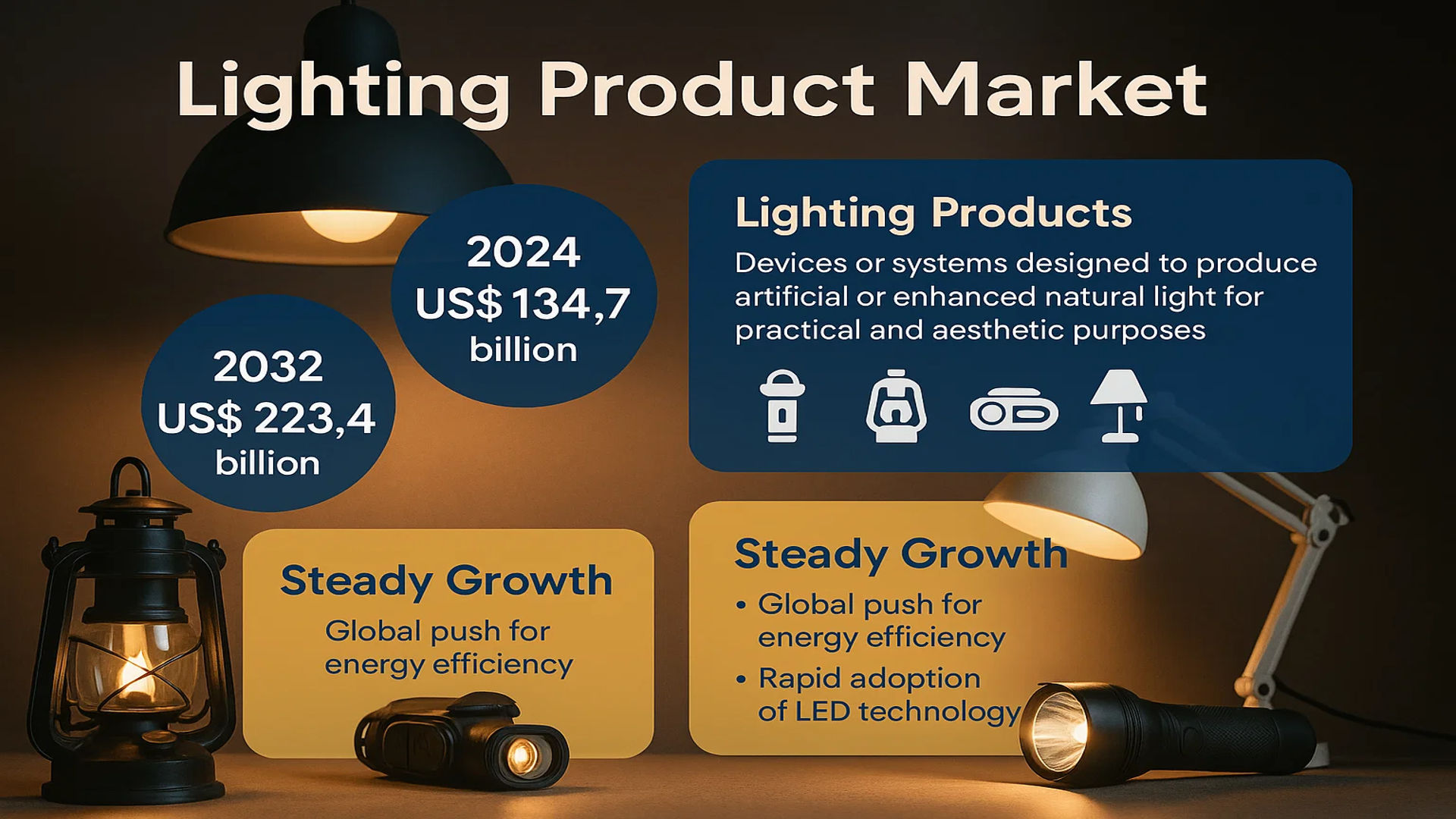
The global Lighting Product Market size was valued at US$ 134.7 billion in 2024 and is projected to reach US$ 223.4 billion by 2032, at a CAGR of 6.5% during the forecast period 2025-2032.
Lighting products are devices or systems designed to produce artificial or enhanced natural light for practical and aesthetic purposes. These products encompass a wide range of solutions, including flashlights, lanterns, headlights, and battery or fuel-powered camping lighting, as well as architectural and residential fixtures. The core function is to provide illumination, enhance safety, and create ambiance across various environments.
The market is experiencing steady growth driven by several key factors, including the global push for energy efficiency and the rapid adoption of LED technology. Furthermore, increasing urbanization and infrastructure development projects, particularly in emerging economies, are significantly boosting demand. However, the market also faces challenges such as raw material price volatility and intense competition. Key players like Signify (Philips Lighting), Acuity Brands, and Osram maintain strong market positions through continuous innovation in smart and connected lighting solutions.
MARKET DYNAMICS
MARKET DRIVERS
Global Push for Energy Efficiency and Sustainability to Accelerate Market Expansion
The global lighting product market is experiencing robust growth driven by stringent energy efficiency regulations and sustainability initiatives worldwide. Over 40 countries have implemented mandatory phase-outs of inefficient incandescent bulbs, creating sustained demand for energy-saving alternatives like LEDs. LED lighting now accounts for over 50% of the global market share, with penetration rates exceeding 60% in developed markets. This transition is supported by the superior energy efficiency of LED products, which consume up to 80% less energy than traditional lighting solutions while offering longer lifespans exceeding 25,000 hours. Government incentives and rebate programs further accelerate adoption, particularly in commercial and industrial sectors where lighting represents approximately 20-30% of total energy consumption. The continuous innovation in smart lighting systems, integrating IoT connectivity and advanced controls, creates additional value propositions for consumers and businesses seeking energy management solutions.
Rapid Urbanization and Infrastructure Development to Fuel Market Growth
Global urbanization trends are creating substantial opportunities for lighting product manufacturers, with over 55% of the world’s population currently residing in urban areas and this figure projected to reach 68% by 2050. This urban expansion drives massive infrastructure development projects requiring extensive lighting solutions across residential, commercial, and public spaces. The construction industry’s growth, particularly in emerging economies, contributes significantly to market expansion. Smart city initiatives worldwide are incorporating advanced lighting systems as fundamental components of urban infrastructure, with investments exceeding $100 billion annually globally. These projects prioritize energy-efficient, connected lighting solutions that enhance public safety, reduce energy consumption, and provide data collection capabilities. The integration of lighting with broader smart city ecosystems creates synergistic growth opportunities across multiple application segments.
Technological Advancements and Smart Home Integration to Drive Consumer Adoption
The lighting industry is undergoing a technological transformation with the integration of smart features and connectivity options. Smart lighting systems, which represented approximately 15% of the global market in 2024, are projected to grow at a compound annual growth rate of over 20% through 2032. These systems offer consumers unprecedented control over lighting environments through mobile applications, voice commands, and automated scheduling. The convergence of lighting with Internet of Things technology enables seamless integration with other smart home devices, creating comprehensive home automation ecosystems. Advanced features such as color tuning, circadian rhythm synchronization, and presence detection enhance user experience while optimizing energy usage. Manufacturers are continuously introducing innovative products with improved connectivity protocols, enhanced user interfaces, and expanded compatibility with popular smart home platforms.
MARKET RESTRAINTS
High Initial Costs and Price Sensitivity to Limit Market Penetration
Despite the long-term benefits of energy-efficient lighting solutions, high initial acquisition costs remain a significant barrier to widespread adoption, particularly in price-sensitive markets and developing economies. Advanced LED and smart lighting systems typically command premium prices compared to traditional lighting options, with price differentials ranging from 30% to 300% depending on product sophistication. This cost disparity creates adoption challenges in residential markets where consumers prioritize upfront costs over long-term savings. In commercial and industrial segments, while the return on investment calculations favor energy-efficient solutions, capital budget constraints and lengthy payback periods can delay purchasing decisions. The market also faces price erosion pressures due to intense competition and manufacturing efficiencies, which while benefiting consumers, compress profit margins for manufacturers and may impact investment in research and development.
Technical Complexity and Interoperability Challenges to Hinder Market Growth
The increasing sophistication of lighting products introduces technical complexities that can impede market growth. Smart lighting systems require reliable connectivity, robust software platforms, and seamless integration with other smart devices, creating implementation challenges for both consumers and professionals. Interoperability issues between different manufacturers’ products and various smart home ecosystems remain a significant concern, with limited standardization across the industry. Consumers often face compatibility problems when attempting to mix products from different brands or integrate new lighting solutions with existing smart home infrastructure. The technical knowledge required for proper installation, configuration, and troubleshooting of advanced lighting systems can be overwhelming for average consumers, potentially limiting adoption rates. These complexities also increase the need for professional installation services, adding to the total cost of ownership.
Supply Chain Vulnerabilities and Component Shortages to Constrain Market Expansion
The lighting industry faces ongoing challenges related to global supply chain disruptions and component availability. The industry’s reliance on semiconductor components, particularly for smart and connected lighting products, creates vulnerability to supply chain constraints that have affected various technology sectors. LED chips, drivers, and connectivity modules experience periodic shortages and price fluctuations due to concentrated manufacturing capacities and geopolitical factors. These supply chain issues can lead to extended lead times, production delays, and cost increases that ultimately impact market availability and consumer pricing. The global nature of lighting product manufacturing, with significant production concentrated in specific geographic regions, creates additional risks related to trade policies, transportation costs, and regional instability. These factors collectively constrain market growth and create operational challenges for manufacturers and distributors.
MARKET CHALLENGES
Intense Market Competition and Price Erosion to Challenge Profitability
The lighting products market is characterized by intense competition among established manufacturers and new market entrants, leading to significant price pressure and margin compression. The market includes numerous players ranging from global giants to specialized niche manufacturers, creating a highly fragmented competitive landscape. This competition is particularly intense in the LED segment, where manufacturing efficiencies and technological advancements have driven substantial price reductions over recent years. While benefiting consumers, this price erosion challenges manufacturers’ profitability and limits resources available for innovation and quality improvement. The market also faces competition from low-cost producers, particularly in emerging manufacturing regions, which can undercut pricing while sometimes compromising on quality and performance standards. These competitive dynamics require established players to continuously innovate while optimizing production costs to maintain market position.
Other Challenges
Rapid Technological Obsolescence
The lighting industry experiences rapid technological evolution, creating challenges related to product lifecycle management and inventory management. New innovations and improved products are introduced frequently, making existing inventory obsolete more quickly than in traditional lighting markets. This rapid pace of change requires manufacturers and distributors to carefully manage inventory levels and product introductions to minimize losses from obsolete stock. Consumers face challenges in making purchasing decisions due to concerns about technology longevity and future compatibility, potentially delaying adoption decisions.
Regulatory Compliance Complexity
The lighting market operates under increasingly complex regulatory frameworks covering energy efficiency, environmental impact, wireless communications, and product safety. These regulations vary significantly across different regions and countries, creating compliance challenges for global manufacturers. The continuous evolution of regulatory requirements necessitates ongoing product redesign and certification processes, increasing development costs and time-to-market. Manufacturers must maintain vigilance regarding regulatory changes and invest significant resources in compliance management across multiple jurisdictions.
MARKET OPPORTUNITIES
Emerging IoT Integration and Data Services to Create New Revenue Streams
The convergence of lighting with Internet of Things technology presents substantial growth opportunities beyond traditional lighting functions. Connected lighting systems are evolving into platforms for data collection and analysis, enabling new service-based business models. These systems can monitor occupancy patterns, environmental conditions, and space utilization, providing valuable insights for facility management, retail analytics, and urban planning. The integration of sensors and connectivity into lighting infrastructure creates opportunities for value-added services including predictive maintenance, energy management, and space optimization. This transformation from product-centric to service-oriented business models allows manufacturers to develop recurring revenue streams and deepen customer relationships. The market for lighting-as-a-service is experiencing rapid growth, particularly in commercial and municipal applications where customers prefer operational expenditure models over capital investments.
Circular Economy Initiatives and Sustainable Lighting Solutions to Drive Market Innovation
Sustainability concerns and circular economy principles are creating opportunities for innovative lighting solutions focused on recyclability, reparability, and environmental impact reduction. The lighting industry is developing products with improved environmental credentials, including reduced hazardous material content, enhanced energy efficiency, and designs facilitating end-of-life recycling. Manufacturers are implementing take-back programs and developing recycling technologies for LED products, addressing concerns about electronic waste. These sustainability initiatives align with growing consumer and corporate environmental consciousness, creating competitive advantages for forward-thinking companies. The market for sustainable lighting solutions is expanding rapidly, driven by corporate sustainability commitments, green building certifications, and environmentally conscious consumer preferences. This trend encourages innovation in materials, manufacturing processes, and product design while opening new market segments focused on environmental performance.
Healthcare and Human-Centric Lighting Applications to Expand Market Boundaries
Growing understanding of light’s impact on human health and well-being is creating new market opportunities in human-centric lighting solutions. Research demonstrating the effects of light on circadian rhythms, sleep patterns, and overall wellness is driving demand for lighting systems that support human health. These systems, which can adjust color temperature and intensity throughout the day, are finding applications in healthcare facilities, educational institutions, corporate offices, and residential settings. The healthcare lighting segment is particularly promising, with specialized requirements for patient care, surgical procedures, and therapeutic applications. The integration of biometric sensors and adaptive lighting algorithms creates opportunities for personalized lighting environments that respond to individual needs and preferences. This expansion into health and wellness applications represents a significant growth vector beyond traditional illumination functions, potentially increasing the value proposition and market size for advanced lighting solutions.
LIGHTING PRODUCT MARKET TRENDS
Smart and Connected Lighting Systems to Emerge as a Dominant Trend
The global lighting market is undergoing a profound transformation driven by the rapid adoption of smart and connected technologies. This shift is propelled by the demand for energy efficiency, enhanced user control, and the integration of lighting into broader IoT ecosystems. The adoption of Light Fidelity (Li-Fi) technology, which uses light waves instead of radio frequencies to transmit data, represents a cutting-edge innovation with significant potential for high-security environments. Furthermore, the integration of Artificial Intelligence (AI) and machine learning algorithms is optimizing energy consumption patterns in real-time, leading to smarter, more responsive lighting solutions. This trend is not merely about illumination; it is about creating intelligent environments that contribute to operational efficiency, safety, and well-being.
Other Trends
Sustainability and Energy Efficiency Mandates
A powerful global driver for the lighting market is the unwavering focus on sustainability. Governments worldwide are implementing stringent energy efficiency regulations and phasing out inefficient incandescent and halogen bulbs. This policy environment has catapulted Light Emitting Diodes (LEDs) to the forefront, as they consume significantly less power and have a longer lifespan than traditional technologies. The circular economy is also gaining traction, with increased emphasis on product recyclability and the use of sustainable materials in manufacturing. This focus is compelling manufacturers to innovate not only in product performance but also in their entire product lifecycle, from design to disposal.
Human-Centric Lighting and Health & Wellness Focus
The understanding of light’s impact on human health and circadian rhythms is revolutionizing product development. Human-Centric Lighting (HCL) solutions are designed to mimic natural daylight patterns, dynamically adjusting color temperature and intensity throughout the day to improve occupant well-being, productivity, and sleep quality. This trend is particularly influential in the commercial and healthcare sectors, where studies have shown that optimized lighting can reduce errors in workplace settings and improve patient recovery times. The market is responding with a new generation of tunable-white and full-spectrum LED systems that go beyond simple illumination to actively support human health, making lighting an integral component of building wellness strategies.
COMPETITIVE LANDSCAPE
Key Industry Players
Companies Strive to Strengthen their Product Portfolio to Sustain Competition
The global lighting product market exhibits a fragmented yet dynamic competitive structure, characterized by the presence of multinational corporations, specialized niche players, and emerging innovators. While the market is valued at US$ 134.7 billion in 2024, no single entity commands a dominant share, leading to intense competition on innovation, pricing, and distribution. The competitive intensity is further amplified by the rapid transition toward energy-efficient LED technology and smart lighting solutions, forcing established players to continuously adapt their strategies.
In the portable and tactical lighting segment, which includes flashlights, lanterns, and headlights, the landscape is particularly competitive in North America. SureFire, LLC maintains a leadership position in the high-performance tactical and weapon-mounted lighting sector, renowned for its durable, high-lumen output products favored by military, law enforcement, and outdoor enthusiasts. Similarly, Mag Instrument, Inc. (Maglite) holds significant brand recognition and market share, particularly in the durable flashlight market, though it faces increasing pressure from newer, technologically advanced competitors.
Streamlight, Inc. and Pelican Products, Inc. are also major contenders, each carving out strong niches. Streamlight is a key player in professional-grade lighting for public safety and industrial applications, while Pelican is synonymous with rugged, protective cases and intrinsically safe lighting solutions for hazardous environments. Their growth is sustained through continuous product development and deep relationships with professional end-markets.
Meanwhile, companies like Nite Ize, Inc. and Luminaid Lab are strengthening their market presence by focusing on innovation and sustainability. Nite Ize has expanded its portfolio with creative, consumer-focused products like the Steelie mobile phone mounting systems and a wide range of LED light solutions, effectively diversifying its revenue streams. Luminaid Lab has gained notable traction by specializing in solar-powered inflatable lanterns, addressing the growing demand for eco-friendly and disaster-preparedness lighting, often through strategic partnerships with humanitarian organizations.
These companies’ growth initiatives, including geographical expansions into emerging markets and new product launches featuring enhanced battery life and connectivity, are expected to be crucial for gaining market share over the projected period. Because the market is evolving, mergers and acquisitions are becoming a more common strategy for companies seeking to quickly acquire new technologies or expand their customer base.
List of Key Lighting Product Companies Profiled
- SureFire, LLC (U.S.)
- Mag Instrument, Inc. (U.S.)
- Streamlight, Inc. (U.S.)
- Pelican Products, Inc. (U.S.)
- Nite Ize, Inc. (U.S.)
- Dorcy International (U.S.)
- MPowerD Inc. (U.S.)
- Luminaid Lab (U.S.)
Segment Analysis:
By Type
LED Lighting Segment Dominates the Market Due to Superior Energy Efficiency and Declining Costs
The market is segmented based on type into:
- LED Lighting
- Subtypes: Smart LED bulbs, LED strips, LED downlights, and others
- Fluorescent Lighting
- Subtypes: Compact fluorescent lamps (CFLs), Linear fluorescent lamps (LFLs), and others
- Halogen Lighting
- High-Intensity Discharge (HID) Lighting
- Subtypes: Metal halide, High-pressure sodium, and others
- Others
By Application
Commercial Segment Leads Due to Extensive Use in Retail, Offices, and Hospitality Sectors
The market is segmented based on application into:
- Commercial
- Sub-segments: Retail stores, Office buildings, Hotels & Restaurants
- Industrial
- Sub-segments: Manufacturing facilities, Warehouses, Outdoor industrial areas
- Residential
- Sub-segments: Indoor household lighting, Outdoor residential lighting
- Others
By Technology
Smart Lighting Technology Gains Traction Due to Integration with IoT and Home Automation Systems
The market is segmented based on technology into:
- Smart Lighting
- Subtypes: Wi-Fi enabled, Bluetooth enabled, Zigbee enabled, and others
- Conventional Lighting
By Product
A-Lamps Segment Holds Significant Share Owing to Widespread Residential and Commercial Adoption
The market is segmented based on product into:
- A-Lamps
- T-Lamps
- Reflectors
- Decorative Lighting
- Others
Regional Analysis: Lighting Product Market
Asia-Pacific
The Asia-Pacific region dominates the global lighting market, accounting for over 45% of total revenue, driven by massive urbanization, infrastructure development, and manufacturing hubs. China stands as the world’s largest producer and consumer of lighting products, with its market valued at approximately $58 billion in 2024. Government initiatives like China’s “Smart City” projects and India’s “Ujala Scheme” for LED distribution have accelerated adoption. While cost-effective traditional lighting remains prevalent in price-sensitive areas, the shift toward energy-efficient LED and smart lighting solutions is rapid, supported by growing environmental awareness and supportive policies. The region benefits from robust supply chains and significant investments in residential and commercial construction.
North America
North America represents a mature yet innovative market, characterized by high adoption of advanced lighting technologies. The United States, with leading manufacturers like Surefire, Maglite, and Streamlight holding a combined 30% market share, drives regional growth. Stringent energy efficiency standards, such as those enforced by the Department of Energy (DOE), and the widespread transition to LED and connected lighting systems in commercial and industrial sectors are key growth drivers. The market is further propelled by smart home integration, federal incentives for energy-efficient upgrades, and high consumer spending on premium, durable lighting products for both indoor and outdoor applications.
Europe
Europe’s lighting market is shaped by stringent regulatory frameworks, including the EU’s Ecodesign Directive and energy labeling requirements, which phase out inefficient lighting and promote sustainable solutions. The region shows strong demand for smart and human-centric lighting, particularly in commercial and industrial applications across countries like Germany, the UK, and France. High consumer awareness regarding energy conservation and well-being supports the adoption of connected and tunable lighting systems. However, market growth faces challenges from economic fluctuations and saturation in certain segments, though innovation in circular economy practices and IoT-integrated lighting offers new opportunities.
South America
The South American lighting market is evolving, with growth primarily fueled by urbanization and infrastructure development in countries like Brazil and Argentina. Economic volatility and currency instability, however, restrain widespread adoption of high-end lighting solutions. The market remains cost-sensitive, with a preference for traditional and basic LED products over smart lighting systems. Government efforts to improve energy access and efficiency in public lighting projects present opportunities, but the region lags in regulatory enforcement and technological adoption compared to more developed markets. Nonetheless, long-term potential exists as economic conditions stabilize and urban expansion continues.
Middle East & Africa
This region shows emerging potential, driven by urban development, tourism infrastructure, and energy efficiency projects in nations like the UAE, Saudi Arabia, and South Africa. Demand is rising for robust and durable lighting suitable for harsh climates, particularly in outdoor and industrial applications. However, market growth is hindered by inconsistent regulatory frameworks, limited local manufacturing, and reliance on imports. The adoption of advanced lighting technologies is gradual, focusing mainly on high-value projects and commercial sectors. With increasing investment in smart city initiatives and sustainable development, the market is poised for steady, long-term expansion.
Report Scope
This market research report provides a comprehensive analysis of the global and regional Lighting Product markets, covering the forecast period 2025–2032. It offers detailed insights into market dynamics, technological advancements, competitive landscape, and key trends shaping the industry.
Key focus areas of the report include:
- Market Size & Forecast: Historical data and future projections for revenue, unit shipments, and market value across major regions and segments.
- Segmentation Analysis: Detailed breakdown by product type, technology, application, and end-user industry to identify high-growth segments and investment opportunities.
- Regional Outlook: Insights into market performance across North America, Europe, Asia-Pacific, Latin America, and the Middle East & Africa, including country-level analysis where relevant.
- Competitive Landscape: Profiles of leading market participants, including their product offerings, R&D focus, manufacturing capacity, pricing strategies, and recent developments such as mergers, acquisitions, and partnerships.
- Technology Trends & Innovation: Assessment of emerging technologies, integration of AI/IoT, semiconductor design trends, fabrication techniques, and evolving industry standards.
- Market Drivers & Restraints: Evaluation of factors driving market growth along with challenges, supply chain constraints, regulatory issues, and market-entry barriers.
- Stakeholder Analysis: Insights for component suppliers, OEMs, system integrators, investors, and policymakers regarding the evolving ecosystem and strategic opportunities.
Primary and secondary research methods are employed, including interviews with industry experts, data from verified sources, and real-time market intelligence to ensure the accuracy and reliability of the insights presented.
FREQUENTLY ASKED QUESTIONS:
What is the current market size of Global Lighting Product Market?
-> Lighting Product Market size was valued at US$ 134.7 billion in 2024 and is projected to reach US$ 223.4 billion by 2032, at a CAGR of 6.5% during the forecast period 2025-2032.
Which key companies operate in Global Lighting Product Market?
-> Key players include Surefire, Maglite, Streamlight, Pelican, Nite Ize, Inc, Dorcy, Mpowerd, and Luminaid Lab, among others.
What are the key growth drivers?
-> Key growth drivers include increasing urbanization, infrastructure development projects, rising demand for energy-efficient lighting solutions, and growing adoption of smart lighting technologies.
Which region dominates the market?
-> Asia-Pacific is the largest and fastest-growing region, driven by rapid industrialization and urbanization in countries like China and India, while North America remains a significant market with advanced technological adoption.
What are the emerging trends?
-> Emerging trends include integration of IoT and AI in lighting systems, development of human-centric lighting solutions, increased focus on sustainable and energy-efficient products, and growing adoption of solar-powered lighting options.

Get Sample Report PDF for Exclusive Insights
Report Sample Includes
- Table of Contents
- List of Tables & Figures
- Charts, Research Methodology, and more...
 Download Sample Report PDF


