MARKET INSIGHTS
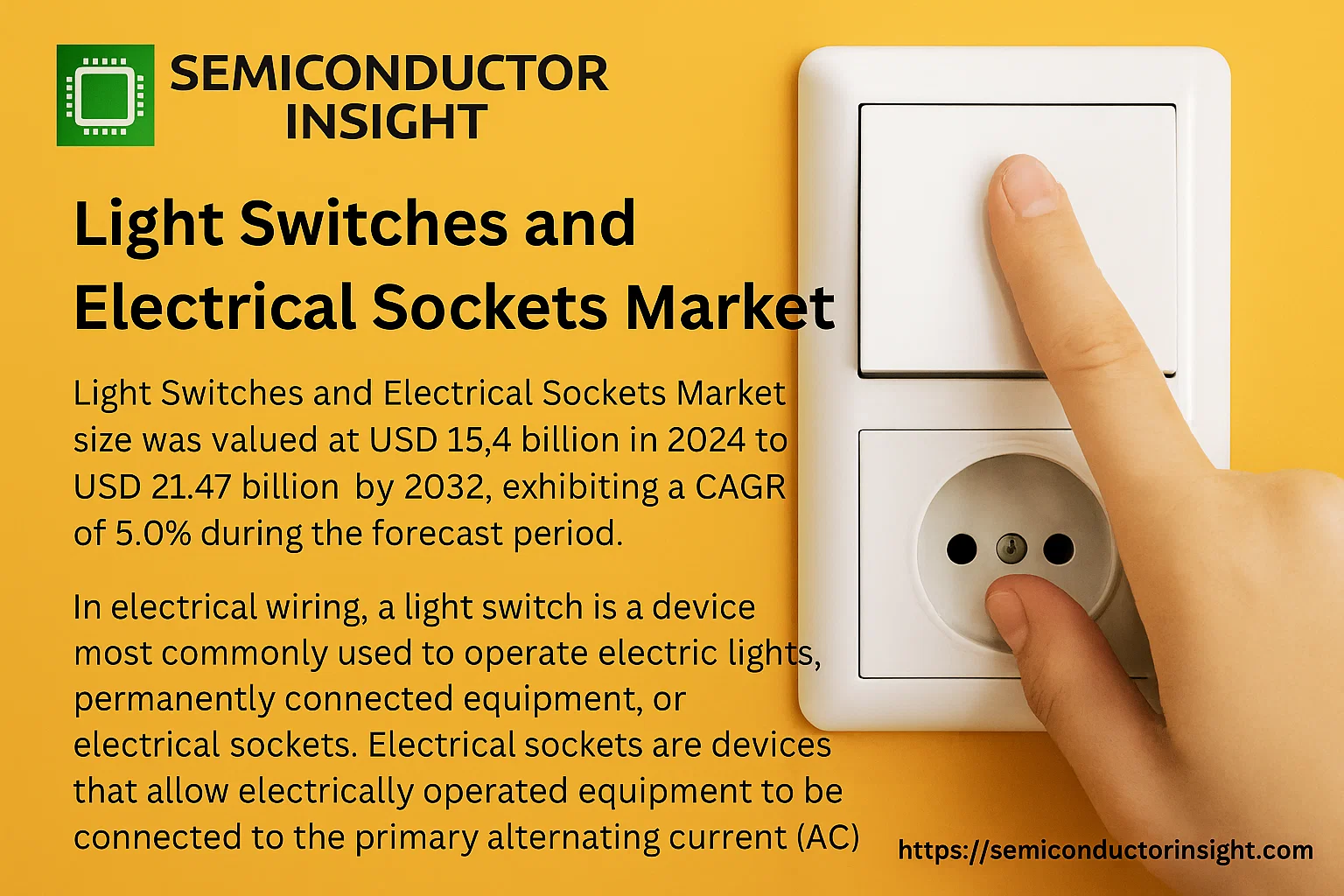
Global Light Switches and Electrical Sockets Market size was valued at USD 15.4 billion in 2024 to USD 21.47 billion by 2032, exhibiting a CAGR of 5.0% during the forecast period.
In electrical wiring, a light switch is a device most commonly used to operate electric lights, permanently connected equipment, or electrical outlets. Electrical sockets are devices that allow electrically operated equipment to be connected to the primary alternating current (AC) power supply in a building.
The market growth is primarily driven by rising construction activities in both residential and commercial sectors globally, coupled with increasing demand for smart home automation systems. Furthermore, government initiatives for infrastructure development and urbanization are contributing to market expansion. Initiatives by key players in the market are also expected to fuel growth through product innovation and strategic partnerships. For instance, leading manufacturers are increasingly integrating USB charging ports into sockets and developing Wi-Fi enabled smart switches that can be controlled remotely. Legrand, Schneider Electric, and Siemens are some of the key players that operate in the market with a wide range of portfolios.
MARKET DRIVERS
Global Construction and Renovation Boom
The market for light switches and electrical sockets is primarily driven by robust global construction activity, particularly in the residential and commercial sectors. Rapid urbanization and infrastructure development, especially in emerging economies in Asia-Pacific and the Middle East, are creating sustained demand for basic electrical fittings. Government initiatives for smart city projects further amplify this need.
Rising Adoption of Smart Home Technology
The proliferation of IoT and home automation is a significant driver. Consumers are increasingly replacing traditional switches with smart switches and sockets that offer remote control, energy monitoring, and voice-activated operation via assistants like Alexa and Google Assistant. This trend is supported by growing consumer disposable income and a desire for convenience and energy efficiency.
➤ Global smart switches market is projected to grow at a CAGR of over 15% in the next five years, significantly outpacing the traditional segment.
Furthermore, stringent government regulations and building codes mandating enhanced safety standards, such as the use of child-safe shutter sockets and fire-resistant materials, are compelling manufacturers and consumers to upgrade to newer, compliant products, thereby stimulating market growth.
MARKET CHALLENGES
Intense Price Competition and Volatile Raw Material Costs
The market is highly fragmented with numerous local and regional players, leading to intense price competition that squeezes profit margins. Fluctuations in the prices of key raw materials like copper, plastics, and brass directly impact manufacturing costs, making pricing strategies difficult to maintain.
Other Challenges
Complexity in Retrofitting Smart Devices
The installation of smart switches and sockets often requires a neutral wire, which is absent in many older buildings. This creates a significant barrier for adoption in the retrofit market, requiring additional electrical work and increasing the total cost for consumers.
Slow Adoption Rates in Developing Regions
While demand is high in emerging economies, the adoption of premium and smart products is hampered by high costs and limited consumer awareness. The market in these regions remains dominated by low-cost, basic products.
MARKET RESTRAINTS
Market Maturity and Long Replacement Cycles
The traditional light switch and socket market in developed regions is highly mature. These products have exceptionally long lifecycles, often exceeding 10-15 years, which naturally limits the frequency of replacement and constrains market growth to new construction and major renovations.
Concerns Over Data Security and Interoperability
For the smart segment, growth is restrained by persistent consumer concerns regarding data privacy and cybersecurity. The lack of universal interoperability standards between different smart home ecosystems can lead to consumer hesitation, as they fear being locked into a single vendor’s platform.
MARKET OPPORTUNITIES
Expansion of Wireless and Battery-Free Solutions
The development of energy-harvesting technologies, such as kinetic and solar-powered switches, presents a major opportunity. These battery-free and wireless solutions reduce installation complexity and maintenance, making them highly attractive for both new builds and retrofit projects.
Integration with Whole-Home Energy Management Systems
There is growing potential for switches and sockets to become integral components of broader home energy management systems. Products that offer detailed real-time energy consumption data and automated load shedding can appeal to environmentally conscious consumers and those seeking to reduce utility bills.
Focus on Aesthetic and Customizable Designs
Increasingly, consumers view switches and sockets as interior design elements. This creates opportunities for manufacturers to offer customizable plates, premium materials like glass and metal, and a wider range of colors and finishes to cater to the high-end residential and hospitality markets.
Light Switches and Electrical Sockets Market Trends
Sustained Market Expansion Driven by Global Infrastructure Development
Global Light Switches and Electrical Sockets Market is on a clear growth trajectory, valued at USD 15,400 million in 2024 and projected to reach USD 21,470 million by 2032, representing a compound annual growth rate (CAGR) of 5.0%. This sustained expansion is primarily fueled by ongoing infrastructure development across residential, commercial, and industrial sectors worldwide. New construction and renovation activities, particularly in emerging economies, are driving consistent demand for these essential electrical components. The market dynamics reflect a direct correlation with global construction and real estate investments, establishing a steady baseline for growth.
Other Trends
Regional Market Concentration and Shifts
The market exhibits distinct regional concentrations that are witnessing gradual shifts. China stands as the largest single market, accounting for approximately 25% of Global share. This dominance is supported by massive urbanization and government-backed housing and infrastructure projects. North America and Europe collectively hold a substantial share of over 40% of the market. While these regions represent mature markets, demand is sustained by building code updates, smart home retrofits, and commercial building modernization. The Asia-Pacific region, excluding China, is expected to show significant growth potential due to rapid urbanization and increasing disposable income.
Product and Application Segment Dynamics
In terms of product segmentation, electrical sockets constitute the largest product category, holding about 55% of the market share. This reflects the fundamental need for power access points in all types of buildings. Within applications, the residential use segment is the largest, followed by commercial and industrial use. The residential segment’s lead is driven by the sheer volume of housing units constructed and renovated annually. The commercial segment is experiencing growth linked to the development of office spaces, retail outlets, and hospitality infrastructure.
Consolidated Competitive Landscape with Dominant Players
The competitive landscape is characterized by a high degree of consolidation, with the top three manufacturers—Legrand, Schneider, and Siemens—collectively holding a share of over 30%. This concentration indicates an established market where brand reputation, distribution networks, and product reliability are critical success factors. These leading companies invest heavily in research and development to incorporate new features such as smart technology, enhanced safety standards, and improved aesthetics, which in turn influences broader market trends and consumer expectations. The market’s competitive intensity ensures continuous innovation and a focus on product differentiation.
COMPETITIVE LANDSCAPE
Key Industry Players
A Market Characterized by Global Giants and Regional Specialists
Global Light Switches and Electrical Sockets Market is moderately concentrated, with the top three manufacturers—Legrand, Schneider Electric, and Siemens—collectively holding a dominant share of over 30%. This leadership is built on extensive global distribution networks, strong brand recognition, and a comprehensive portfolio of products catering to residential, commercial, and industrial segments. These companies compete intensely on innovation, particularly in smart and connected home solutions, energy efficiency, and design aesthetics, driving significant research and development efforts. The market structure is such that these multinational corporations set technological and design trends, while also engaging in strategic mergers and acquisitions to consolidate their positions and expand into emerging markets.
Beyond the dominant leaders, the market includes a diverse range of other significant players that maintain strong positions through regional expertise, niche product specializations, or competitive pricing. Companies like ABB and Panasonic leverage their broad industrial and consumer electronics footprints. In key regional markets such as China, which accounts for approximately 25% of Global market, local players like BULL, T&J, and Feidiao Electrical hold substantial market share. Other notable companies, including Leviton and Lutron in North America, and Simon and Vimar in Europe, are recognized for their strong brand presence and specialization in specific product categories such as dimmers, decorative switches, and advanced control systems.
List of Key Light Switches and Electrical Sockets Companies Profiled
- Legrand
- Schneider Electric
- Siemens
- ABB
- Panasonic
- Honeywell
- BULL
- Leviton
- Simon
- Lutron
- T&J
- Feidiao Electrical
- Vimar SpA
- Hubbell
- SOBEN
Segment Analysis:
| Segment Category | Sub-Segments | Key Insights |
| By Type |
|
Electrical Sockets represent the dominant segment due to their essential function in providing power access points in every building, with demand driven by both new construction and the ongoing replacement cycle in existing infrastructure. The market for advanced and feature-rich sockets, including USB-integrated and smart sockets, is experiencing particularly strong growth, catering to the proliferation of personal electronic devices and the broader trend towards connected homes and offices. |
| By Application |
|
Residential Use is the leading application segment, underpinned by consistent global demand from housing construction, renovation activities, and the rising consumer preference for smart home devices that offer enhanced convenience and energy efficiency. This segment is characterized by a focus on aesthetic designs, safety standards, and integration with home automation systems, driving continuous product innovation from manufacturers to meet evolving homeowner expectations. |
| By End User |
|
Renovation & Retrofit is a critical end-user segment, characterized by strong and steady demand as existing residential and commercial buildings undergo upgrades to improve energy efficiency, comply with updated safety regulations, and incorporate modern aesthetics and smart technologies. This segment often requires products that are compatible with existing wiring systems while offering advanced features, presenting a significant opportunity for manufacturers specializing in easy-to-install solutions. |
| By Technology |
|
Smart / Connected technology is the most dynamic and rapidly evolving segment, driven by Global smart home and building automation trends. These products offer remote control, scheduling, energy monitoring, and integration with voice assistants and other IoT devices. While the traditional segment remains substantial due to its cost-effectiveness and simplicity, the growth momentum is firmly with smart solutions, which are becoming increasingly accessible and are a key differentiator for manufacturers in the competitive landscape. |
| By Price Point |
|
Mid-Range products constitute the leading segment by price point, successfully balancing affordability with enhanced features and improved aesthetics that appeal to a broad consumer base. This segment captures demand from both value-conscious homeowners undertaking renovations and commercial projects seeking reliable, durable products without the highest cost. The premium segment is also growing, fueled by demand for designer finishes, advanced smart features, and superior build quality from high-end residential and hospitality projects. |
Regional Analysis: Light Switches and Electrical Sockets Market
Massive ongoing urbanization projects and the development of new residential and commercial infrastructures across the region are the primary drivers of demand. The scale of construction activity in emerging economies ensures a continuous and high-volume need for basic electrical components, solidifying the market’s foundation.
The market is highly fragmented with numerous local and regional manufacturers, leading to intense price competition. This environment fosters innovation in manufacturing processes and materials to reduce costs while meeting safety standards, making the region a global hub for affordable switch and socket production.
There is a growing trend towards the adoption of smart home technologies. Governments and consumers are increasingly interested in energy-efficient and connected solutions, which is gradually shifting demand from traditional switches and sockets to smart, WiFi-enabled, and aesthetically advanced products.
The region benefits from a dual-demand structure. Its robust manufacturing capabilities cater not only to the immense domestic market but also position it as a key exporter to other regions, creating a resilient market that is less susceptible to localized economic fluctuations.
North America
The North American market for light switches and electrical sockets is mature yet dynamic, characterized by a strong emphasis on product innovation, safety standards, and smart home integration. Demand is primarily driven by the renovation and retrofit sector, as homeowners and businesses upgrade existing electrical systems for improved safety, energy efficiency, and convenience. The adoption of smart switches and sockets that integrate with home automation systems like Alexa and Google Home is a significant trend. Stringent electrical codes and a high level of consumer awareness about safety ensure a market for high-quality, certified products from established brands. Competition is strong, with a focus on design aesthetics, durability, and advanced features rather than just low cost.
Europe
Europe presents a sophisticated market with a strong focus on design, energy efficiency, and regulatory compliance. The region’s demand is fueled by renovations in its aging housing stock and the modernization of commercial buildings to meet strict EU energy efficiency directives. There is a notable consumer preference for minimalist, designer switches and sockets that complement modern interiors. The market is also at the forefront of adopting wireless and smart lighting controls. High safety standards and environmental regulations govern the market, favoring manufacturers who can provide innovative, eco-friendly, and compliant products. Competition is intense among both pan-European and local manufacturers.
South America
The South American market is emerging, with growth potential largely tied to economic stability and infrastructure development. Demand is concentrated in urban centers undergoing modernization and new residential construction. The market is price-sensitive, with a significant portion of demand met by lower-cost imports, particularly from Asia. However, there is a growing middle-class segment showing interest in more reliable and branded products. Basic safety and functionality are the primary concerns, though awareness of energy-efficient options is gradually increasing. The market landscape is competitive, with a mix of local producers and international players vying for market share.
Middle East & Africa
This region exhibits diverse market dynamics. The Gulf Cooperation Council (GCC) countries drive demand through large-scale luxury residential, commercial, and infrastructure projects, often specifying high-end, durable, and aesthetically pleasing electrical fittings. In contrast, other parts of Africa are characterized by a focus on basic, affordable products to meet the needs of a growing population and ongoing electrification projects. The market is highly fragmented, with demand varying significantly between developed urban areas and rural regions. Overall, growth is linked to economic diversification efforts and urbanization trends across the region.
Report Scope
This market research report provides a comprehensive analysis of the Light Switches and Electrical Sockets Market , covering the forecast period 2025–2032. It offers detailed insights into market dynamics, technological advancements, competitive landscape, and key trends shaping the industry.
Key focus areas of the report include:
- Market Overview: The report begins with an overview outlining its current market scenario, key growth indicators, and industry transformation drivers. It discusses macroeconomic factors, demand–supply balance, regulatory landscape, and the strategic role of semiconductors in powering advancements across industries such as automotive, telecommunications, consumer electronics, and industrial automation.
- Market Size & Forecast: Historical data and future projections for revenue, unit shipments, and market value across major regions and segments.
- Segmentation Analysis: Detailed breakdown by product type, technology, application, and end-user industry to identify high-growth segments and investment opportunities.
- Regional Insights: Insights into market performance across North America, Europe, Asia-Pacific, Latin America, and the Middle East & Africa, including country-level analysis where relevant.
- Competitive Landscape: Profiles of leading market participants, including their product offerings, R&D focus, manufacturing capacity, pricing strategies, and recent developments such as mergers, acquisitions, and partnerships.
- Technology Trends & Innovation: Assessment of emerging technologies, integration of AI/IoT, semiconductor design trends, fabrication techniques, and evolving industry standards.
- Market Drivers & Restraints: Evaluation of factors driving market growth along with challenges, supply chain constraints, regulatory issues, and market-entry barriers.
- Stakeholder Insights: Insights for component suppliers, OEMs, system integrators, investors, and policymakers regarding the evolving ecosystem and strategic opportunities.
Primary and secondary research methods are employed, including interviews with industry experts, data from verified sources, and real-time market intelligence to ensure the accuracy and reliability of the insights presented.
FREQUENTLY ASKED QUESTIONS:
What is the current market size of Light Switches and Electrical Sockets Market?
-> Global Light Switches and Electrical Sockets Market was valued at USD 15400 million in 2024 and is projected to reach USD 21470 million by 2032, exhibiting a CAGR of 5.0% during the forecast period.
Which key companies operate in Light Switches and Electrical Sockets Market?
-> Key players include Legrand, Schneider, Siemens, ABB, Panasonic, Honeywell, and BULL, among others. Global top three manufacturers hold a combined market share of over 30%.
What are the key growth drivers?
-> Key growth drivers include global infrastructure development, urbanization trends, rising demand for smart home technologies, and the increasing need for reliable electrical connectivity.
Which region dominates the market?
-> China is the largest market with a share of about 25%, followed by North America and Europe, which together hold over 40% of the market share.
What are the emerging trends?
-> Emerging trends include the integration of smart and connected technologies, the development of energy-efficient solutions, and the growing focus on safety and aesthetic designs in residential and commercial applications.

Get Sample Report PDF for Exclusive Insights
Report Sample Includes
- Table of Contents
- List of Tables & Figures
- Charts, Research Methodology, and more...