
MARKET INSIGHTS
The global Light Dependent Photoresistor size was valued at US$ 89 million in 2024 and is projected to reach US$ 112 million by 2032, at a CAGR of 3.3% during the forecast period 2025-2032. The U.S. market accounted for 28% of global revenue share in 2024, while China is expected to witness the fastest growth with a projected CAGR of 6.7% through 2032.
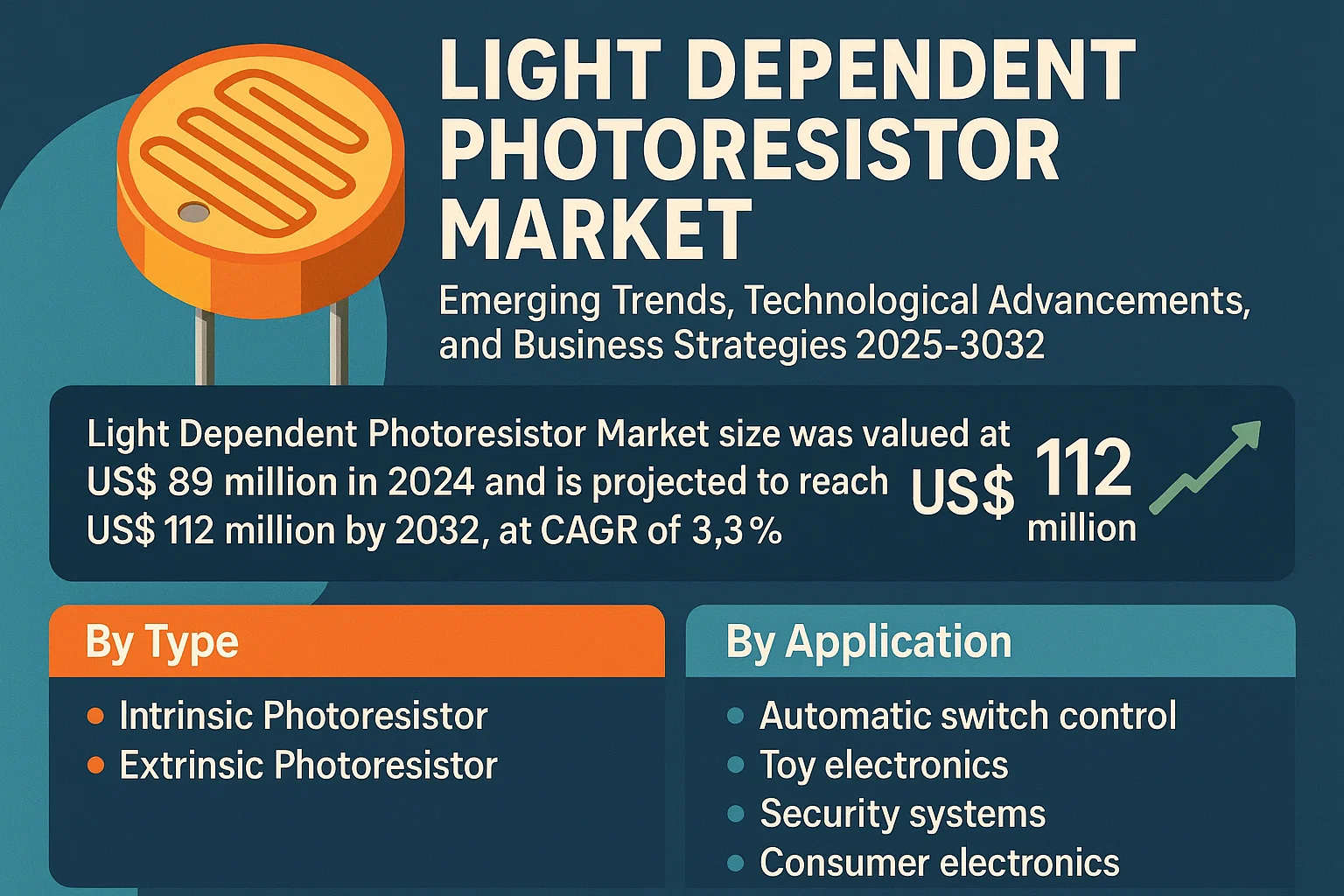
Light dependent photoresistors (LDRs), also known as photocells, are passive electronic components that exhibit decreasing electrical resistance when exposed to increasing light intensity. These semiconductor devices utilize photoconductivity principles, with their sensitivity spectrum typically ranging from visible light to near-infrared wavelengths. The market offers two primary types: intrinsic photoresistors (using pure semiconductor materials) and extrinsic photoresistors (doped with impurities to alter response characteristics).
The market growth is primarily driven by expanding applications in automatic lighting control systems, which accounted for over 42% of global demand in 2024. Emerging IoT applications and smart city infrastructure projects are creating new opportunities, though price sensitivity in consumer electronics remains a challenge. Key manufacturers including Electronics Notes and Sicube Photonics are investing in enhanced spectral response technologies, with the intrinsic photoresistor segment projected to grow at 5.8% CAGR through 2032 due to superior stability in industrial environments.
MARKET DYNAMICS
MARKET DRIVERS
Rising Adoption of Smart Automation to Propel Photoresistor Demand
The global push toward smart automation across industries is creating significant demand for light-dependent photoresistors (LDRs). These components are integral to automatic lighting systems, security devices, and industrial sensors that require ambient light detection. The industrial automation market is projected to grow at a CAGR exceeding 8% annually through 2030, directly correlating with increased LDR adoption. Photoresistors enable cost-effective solutions for light-sensitive switching in applications ranging from street lamps to smart home devices. Their simple design, reliability, and low power consumption make them preferable over complex optical sensors in many applications.
Expansion of Consumer Electronics to Accelerate Market Growth
Consumer electronics manufacturers are increasingly incorporating LDRs into devices for automatic brightness adjustment and power-saving features. The global consumer electronics market, valued at over $1 trillion in 2024, continues to expand with innovations in smartphones, tablets, and IoT devices. Photoresistors provide an economical solution for implementing ambient light detection in these products. For example, they automatically adjust screen brightness on mobile devices, improving user experience while conserving battery life. Nearly 70% of modern handheld devices now include some form of ambient light sensing, with photoresistors capturing a substantial portion of this application segment.
Additionally, the growing Internet of Things (IoT) ecosystem presents new opportunities for LDR integration. Smart home devices increasingly rely on light sensing for automated functionality, from security cameras that activate in low-light conditions to smart blinds that adjust based on daylight levels.
MARKET RESTRAINTS
Performance Limitations Compared to Advanced Alternatives to Hinder Market Potential
While photoresistors remain popular for basic light-sensing applications, their performance limitations present adoption barriers in advanced systems. LDRs typically exhibit slow response times (10-100ms) compared to photodiodes (<1μs) and have limited spectral sensitivity compared to silicon-based alternatives. These constraints make them unsuitable for applications requiring precision or high-speed light detection. Industries demanding faster response times or specific wavelength detection are increasingly transitioning to alternative technologies, restraining market growth potential.
Other Challenges
Environmental Sensitivity
Photoresistor performance degrades under extreme temperatures and humidity, limiting deployment in harsh industrial or outdoor environments. Materials like cadmium sulfide (CdS) used in traditional LDRs are particularly vulnerable to moisture and temperature fluctuations.
Material Restrictions
Regulatory constraints on materials containing cadmium or other heavy metals present compliance challenges for manufacturers. The RoHS compliance requirements in electronics manufacturing are pushing companies to develop alternative materials with comparable performance characteristics.
MARKET CHALLENGES
Intensive Competition from Advanced Optical Sensors to Pressure Profit Margins
The photoresistor market faces mounting pressure from emerging optical sensor technologies that offer superior performance characteristics. Photodiodes, phototransistors, and CMOS image sensors are increasingly penetrating traditional LDR applications with better response times, accuracy, and integration capabilities. While these alternatives often carry higher price points, their falling costs are narrowing the price-performance gap. Manufacturers must balance performance improvements against cost structures to maintain competitiveness in this evolving landscape.
Furthermore, the integration of advanced light sensing capabilities directly into microprocessors and system-on-chip designs presents a disruptive trend. This integration reduces the need for discrete light-sensing components in compact electronic devices.
MARKET OPPORTUNITIES
Emerging Applications in Agricultural Technology to Open New Growth Avenues
The agricultural technology sector presents promising growth opportunities for photoresistor applications. Modern farming increasingly utilizes automated systems that monitor environmental conditions, including light intensity for optimized crop growth. Photoresistors offer economical solutions for greenhouse automation, nursery lighting systems, and outdoor cultivation monitoring. The precision agriculture market expansion, projected to maintain double-digit growth through 2030, creates substantial potential for LDR integration in cost-sensitive agricultural applications.
Additionally, advancements in material science are enabling the development of environmentally friendly and high-performance photoresistive materials. Research into organic semiconductors and quantum dot-based photoresistors shows potential for overcoming current performance limitations while addressing regulatory concerns about hazardous materials.
The growing demand for energy-efficient solutions in building automation also presents opportunities. Photoresistors continue to find new applications in daylight harvesting systems that optimize artificial lighting based on natural light availability, reducing energy consumption in commercial buildings by an estimated 20-60% in optimal implementations.
<html’s content=”” dependent=”” for=”” html=”” light=”” market=”” photoresistor=”” report:=”” requested=”” the=””>
LIGHT DEPENDENT PHOTORESISTOR MARKET TRENDS
Advancements in Smart Sensors Driving Photoresistor Adoption
The global light dependent photoresistor market is experiencing significant growth due to rapid advancements in smart sensor technologies. With the increasing demand for automated lighting systems across commercial and industrial sectors, photoresistors have become essential components in smart buildings and IoT applications. Recent innovations have improved the sensitivity range of modern photoresistors to detect light intensities from 10 lux to 100,000 lux, making them suitable for diverse environmental conditions. Furthermore, manufacturers are developing hybrid photoresistor modules that combine traditional cadmium sulfide cells with semiconductor materials to achieve faster response times below 20 milliseconds. These technological improvements are particularly valuable for critical applications like security systems and automotive lighting controls where rapid light detection is paramount.
Other Trends
Expansion of Smart Home Applications
The proliferation of smart home devices is creating substantial demand for light dependent photoresistors. Modern smart lighting systems increasingly incorporate photoresistors for automatic brightness adjustment based on ambient light conditions. Industry data indicates that smart lighting installations using photoresistor technology are growing at approximately 18% annually, driven by energy efficiency requirements and consumer convenience. Beyond lighting, photoresistors are being integrated into smart blinds, security cameras, and energy monitoring systems – creating multiple growth avenues for market players. The healthcare sector is also adopting these components for specialized medical devices that require light-controlled operations in sterile environments.
Industrial Automation Driving Market Growth
Industrial automation represents one of the fastest-growing segments for light dependent photoresistor applications. Manufacturing facilities are deploying photoresistor-based sensors for machine vision systems, production line monitoring, and quality control processes. The food packaging industry particularly benefits from these components for detecting proper sealing through light transmission analysis. Market analysis shows that industrial applications account for nearly 35% of global photoresistor demand, with increasing adoption in hazardous environment monitoring where light detection provides non-contact measurement solutions. Furthermore, the rising implementation of Industry 4.0 standards is accelerating the integration of intelligent photoresistor arrays with cloud-based monitoring systems for predictive maintenance applications.
Material Innovation Enhancing Performance
Material science breakthroughs are transforming photoresistor capabilities through advanced semiconductor compounds. While traditional cadmium sulfide (CdS) cells still dominate the market due to their cost-effectiveness, new materials like lead sulfide (PbS) and indium antimonide (InSb) are gaining traction for specialized applications requiring infrared detection capabilities. Recent developments include graphene-based photoresistors that offer superior wavelength sensitivity and thermal stability. These innovations are particularly valuable for aerospace and defense applications where reliability under extreme conditions is critical. The automotive sector is another key beneficiary, with advanced driver-assistance systems (ADAS) incorporating next-generation photoresistors for improved night vision and adaptive lighting controls.
COMPETITIVE LANDSCAPE
Key Industry Players
Innovation and Strategic Expansion Drive Market Leadership
The global Light Dependent Photoresistor (LDR) market features a dynamic competitive landscape with a mix of established electronics manufacturers and emerging specialists. Electronics Notes and AZoSensors currently lead the market, holding a combined revenue share of approximately 32% in 2024. Their dominance stems from comprehensive product portfolios spanning both intrinsic and extrinsic photoresistors, coupled with strong distribution networks across North America and Europe.
Meanwhile, Asian manufacturers like Enbon and Wodeyijia are rapidly gaining traction through cost-competitive manufacturing and localized supply chains. These players accounted for nearly 18% of total unit sales last year, primarily serving the automatic switch control segment which represents over 45% of total LDR applications.
The competitive intensity is further heightened by technological collaborations. For instance, FUTURISTIC CLIMATE recently partnered with a major IoT platform provider to develop ultra-sensitive LDRs for smart building applications. Similarly, Sicube Photonics invested €4.2 million in 2023 to expand its R&D facility focused on nano-structured photoresistors.
Recent patent analysis reveals accelerating innovation, with the top five companies filing 28 new LDR-related patents in 2023 alone. This innovation focus creates both opportunities and challenges – while it drives market growth, smaller players face mounting pressure to keep pace with advancing technologies and stricter industry standards.
List of Key Light Dependent Photoresistor Companies
- Electronics Notes (UK)
- FUTURISTIC CLIMATE (India)
- AZoSensors (UK)
- Images SI (U.S.)
- Enbon (China)
- Wodeyijia (China)
- TOKEN (Japan)
- Sicube Photonics (Germany)
Segment Analysis:
By Type
Intrinsic Photoresistor Segment Leads Due to Higher Sensitivity in Low-Light Conditions
The market is segmented based on type into:
- Intrinsic Photoresistor
- Subtypes: Cadmium sulfide (CdS), Lead sulfide (PbS), and others
- Extrinsic Photoresistor
- Subtypes: Germanium (Ge), Silicon (Si), and others
By Application
Automatic Switch Control Dominates With Growing Smart Lighting Adoption
The market is segmented based on application into:
- Automatic switch control
- Toy electronics
- Security systems
- Consumer electronics
- Others
By End User
Industrial Sector Holds Significant Share for Process Automation Needs
The market is segmented based on end user into:
- Industrial
- Consumer electronics
- Automotive
- Healthcare
- Others
By Material
Cadmium Sulfide Remains Preferred Choice for Cost-Effective Solutions
The market is segmented based on material into:
- Cadmium sulfide (CdS)
- Lead sulfide (PbS)
- Germanium (Ge)
- Silicon (Si)
- Others
Regional Analysis: Light Dependent Photoresistor Market
North America
The North American Light Dependent Photoresistor (LDR) market benefits from robust technological adoption in smart lighting, security systems, and IoT applications. The U.S. remains the dominant force, driven by investments in industrial automation and energy efficiency projects. With an estimated market value of $XX million in 2024, the region’s growth is fueled by demand for intrinsic photoresistors in precision devices. However, semiconductor industry competition and supply chain constraints pose challenges. Canada and Mexico are gradually increasing LDR deployment in agricultural and environmental monitoring systems due to their cost-effectiveness and reliability.
Europe
Europe showcases steady demand for LDRs, particularly in Germany and France, owing to innovations in automotive ambient lighting and smart infrastructure. Stringent EU RoHS regulations push manufacturers toward eco-friendly materials in extrinsic photoresistors. The market thrives on high-end applications like medical devices, though price pressures from Asian imports limit margins. Nordic countries lead in renewable energy adoption, where LDRs are integrated into solar tracking systems. Meanwhile, the U.K.’s focus on smart cities accelerates growth, though Brexit-related trade complexities add uncertainty.
Asia-Pacific
Asia-Pacific dominates global LDR production and consumption, with China accounting for over XX% of regional revenue. China’s expansive electronics manufacturing sector and India’s rising consumer electronics demand propel market expansion. Japan and South Korea emphasize miniaturized LDRs for wearables and robotics. Cost competitiveness drives high-volume adoption, though quality disparities persist among local suppliers. Southeast Asian nations like Vietnam and Thailand are emerging as alternative production hubs, attracting foreign investors seeking tariff advantages. The region’s growth potential remains unparalleled, albeit constrained by IP protection issues.
South America
South America’s LDR market grows moderately, leveraging agricultural and urban automation trends. Brazil leads in deploying photoresistors for street lighting and industrial sensors, yet economic instability slows large-scale investments. Argentina’s focus on renewable energy projects creates niche opportunities, though currency volatility deters imports of high-end LDRs. The region’s reliance on Chinese suppliers for low-cost options stifles local innovation, but government initiatives to boost semiconductor self-sufficiency could reshape the landscape long-term.
Middle East & Africa
This region presents nascent but promising growth, with the UAE and Saudi Arabia investing in smart infrastructure and energy-efficient lighting. Israel’s tech-driven economy fosters specialized LDR applications in defense and aerospace. Africa’s underdeveloped electronics sector relies on imports, but rising urbanization and off-grid solar projects stimulate demand. While regulatory frameworks lag, partnerships with global distributors are gradually improving market access. The region’s long-term potential hinges on economic diversification and stable supply chains.
Report Scope
This market research report provides a comprehensive analysis of the global and regional Light Dependent Photoresistor markets, covering the forecast period 2025–2032. It offers detailed insights into market dynamics, technological advancements, competitive landscape, and key trends shaping the industry.
Key focus areas of the report include:
- Market Size & Forecast: Historical data and future projections for revenue, unit shipments, and market value across major regions and segments. The Global Light Dependent Photoresistor market was valued at USD million in 2024 and is projected to reach USD million by 2032.
- Segmentation Analysis: Detailed breakdown by product type (Intrinsic and Extrinsic Photoresistors), application (Automatic Switch Control, Toy, Others), and end-user industry to identify high-growth segments and investment opportunities.
- Regional Outlook: Insights into market performance across North America, Europe, Asia-Pacific, Latin America, and the Middle East & Africa, including country-level analysis. The U.S. market size is estimated at USD million in 2024, while China is projected to reach USD million.
- Competitive Landscape: Profiles of leading market participants including Electronics Notes, FUTURISTIC CLIMATE, AZoSensors, Images SI, Enbon, Wodeyijia, TOKEN, and Sicube Photonics, covering their product offerings, R&D focus, and recent developments.
- Technology Trends & Innovation: Assessment of emerging technologies, semiconductor design trends, fabrication techniques, and evolving industry standards in photoresistor applications.
- Market Drivers & Restraints: Evaluation of factors driving market growth along with challenges, supply chain constraints, regulatory issues, and market-entry barriers.
- Stakeholder Analysis: Insights for component suppliers, OEMs, system integrators, investors, and policymakers regarding the evolving ecosystem and strategic opportunities.
Primary and secondary research methods are employed, including interviews with industry experts, data from verified sources, and real-time market intelligence to ensure the accuracy and reliability of the insights presented.
FREQUENTLY ASKED QUESTIONS:
What is the current market size of Global Light Dependent Photoresistor Market?
-> The global Light Dependent Photoresistor Market size was valued at US$ 89 million in 2024 and is projected to reach US$ 112 million by 2032, at a CAGR of 3.3% during the forecast period 2025-2032.
Which key companies operate in Global Light Dependent Photoresistor Market?
-> Key players include Electronics Notes, FUTURISTIC CLIMATE, AZoSensors, Images SI, Enbon, Wodeyijia, TOKEN, and Sicube Photonics, among others.
What are the key growth drivers?
-> Key growth drivers include increasing automation in lighting systems, rising demand for energy-efficient solutions, and growth in smart home applications.
Which region dominates the market?
-> Asia-Pacific is the fastest-growing region, while North America remains a dominant market due to technological advancements.
What are the emerging trends?
-> Emerging trends include integration with IoT devices, development of high-sensitivity photoresistors, and miniaturization of components.
</html’s>

Get Sample Report PDF for Exclusive Insights
Report Sample Includes
- Table of Contents
- List of Tables & Figures
- Charts, Research Methodology, and more...
 Download Sample Report PDF


