MARKET INSIGHTS
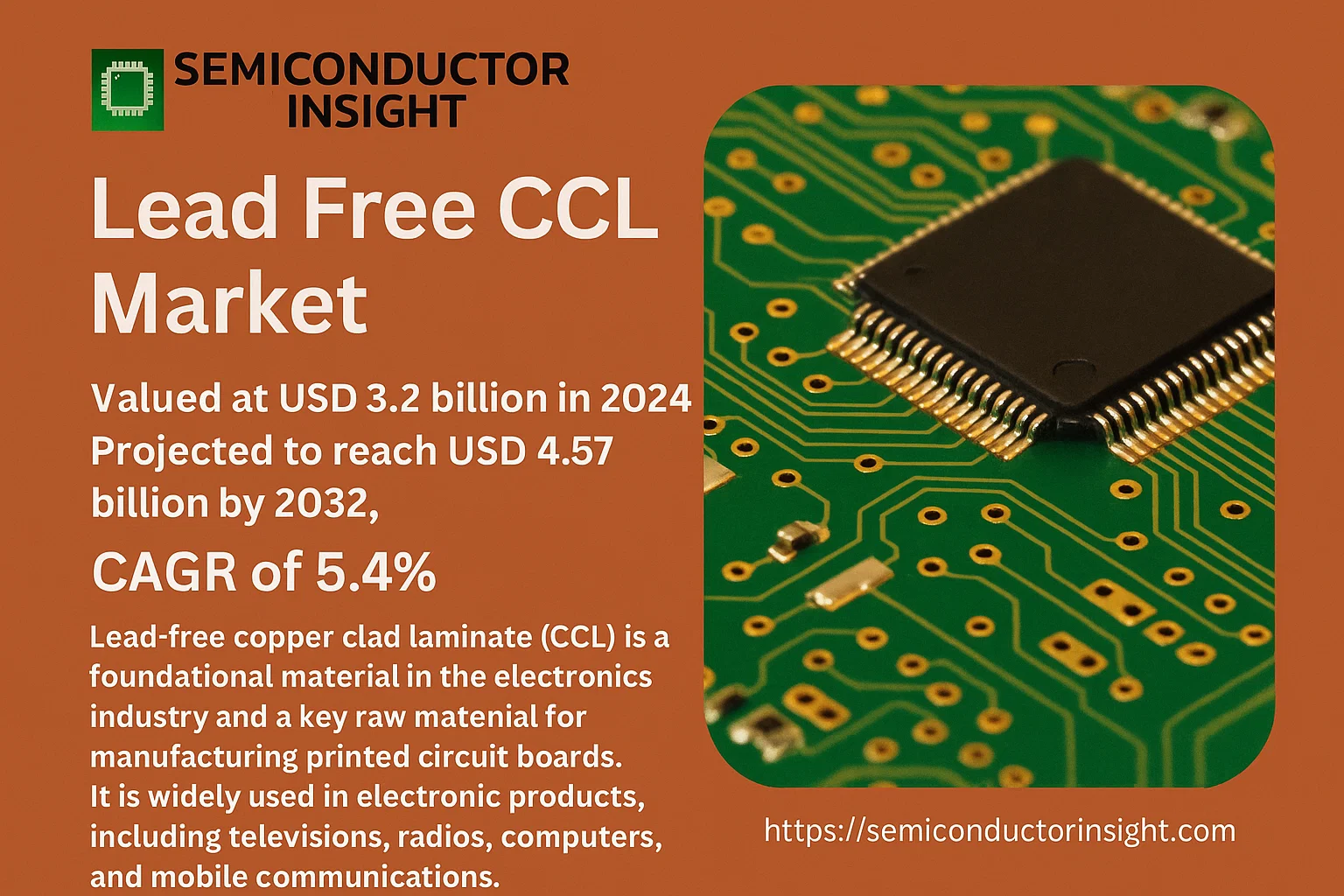
Global Lead Free CCL Market was valued at USD 3.2 billion in 2024 and is projected to reach USD 4.57 billion by 2032, exhibiting a CAGR of 5.4% during the forecast period.
Lead-free copper clad laminate (CCL) is a foundational material in the electronics industry and a key raw material for manufacturing printed circuit boards (PCBs). It is widely used in electronic products, including televisions, radios, computers, and mobile communications.
The market is experiencing steady growth due to several factors, including increasing demand for consumer electronics, the global push for lead-free manufacturing to comply with environmental regulations (such as RoHS and WEEE), and the expansion of 5G and IoT technologies requiring advanced PCBs. Additionally, the rising adoption of electric vehicles and industrial automation is contributing to market expansion. Key players in the market include Taiwan Union Technology Corporation (TUC), SYTECH, Showa Denko Materials, Nan Ya Plastics Corporation, Rogers Corporation, Kingboard Laminates Group, Nanya New Material Technology Co., Ltd., EMC, Guangdong Goworld Lamination Plant, Panasonic, GDM International Technology Ltd., Isola, and Wazam New Materials, among others.
MARKET DRIVERS
Stringent Global Environmental Regulations
The global push for RoHS (Restriction of Hazardous Substances) and WEEE (Waste Electrical and Electronic Equipment) compliance remains the primary catalyst for the lead-free CCL market. Governments worldwide are enforcing bans on lead and other hazardous materials in electronic products, compelling PCB manufacturers to adopt lead-free alternatives. This regulatory pressure is non-negotiable for companies aiming to access major international markets.
Expansion of High-Reliability Electronics
The proliferation of advanced electronics in the automotive, telecommunications, and medical sectors drives demand for high-performance, reliable substrates. Lead-free CCLs are engineered to withstand higher soldering temperatures and offer improved thermal reliability, which is critical for applications like automotive ADAS systems, 5G infrastructure, and medical imaging equipment. The miniaturization of components further necessitates materials with superior performance characteristics.
➤ Consumer demand for “green” electronics is a growing factor, with brand reputation increasingly tied to environmental responsibility.
Furthermore, the rapid growth of consumer electronics, including smartphones, laptops, and IoT devices, continues to fuel market expansion. Manufacturers are prioritizing lead-free materials to meet both regulatory standards and consumer expectations for safer, more sustainable products.
MARKET CHALLENGES
Higher Material Costs and Processing Complexities
Lead-free CCLs typically involve more expensive base materials, such as high-performance epoxy resins or polyimide, and often require silver or tin-based surface finishes instead of lead. The higher processing temperatures required for lead-free soldering (often exceeding 260°C) can also lead to increased energy consumption and pose challenges for PCB laminate integrity, potentially leading to issues like delamination or warpage if not meticulously controlled.
Other Challenges
Performance and Reliability Concerns
While advanced, some lead-free formulations may still face scrutiny regarding long-term reliability, particularly in terms of conductive anode filament (CAF) growth and thermal cycle performance compared to traditional leaded materials, especially in harsh environments.
Supply Chain Adaptation
The entire PCB manufacturing supply chain, from laminate producers to assembly houses, has had to invest significantly in retooling processes, retraining personnel, and qualifying new materials, creating a barrier to adoption for smaller players.
MARKET RESTRAINTS
Cost Sensitivity in Price-Competitive Segments
The premium cost of high-performance lead-free CCLs remains a significant restraint, particularly for manufacturers of low-cost, high-volume consumer goods. In highly competitive market segments where profit margins are thin, the increased material expense can be a deterrent to full adoption, pushing some manufacturers to seek exemptions or use lead-free materials only where legally mandated.
Technical Limitations for Certain Applications
For some specialized applications, such as aerospace and military electronics, where extreme reliability over decades is paramount, the long-term field data for lead-free alternatives is still being accumulated. This data gap can cause hesitation and slow adoption in these conservative, high-reliability sectors, acting as a market restraint.
MARKET OPPORTUNITIES
Innovation in High-Frequency and High-Speed Applications
The rollout of 5G and the ongoing development of 6G technology present a substantial opportunity. These applications require CCLs with excellent dielectric properties (low Dk/Df) at high frequencies. Lead-free formulations are being actively developed to meet these demands, opening up new, high-value market segments for advanced materials.
Growth of Electric and Autonomous Vehicles
The automotive industry’s rapid transition to electric vehicles (EVs) and advanced driver-assistance systems (ADAS) creates a robust demand for reliable, high-temperature-resistant PCBs. Lead-free CCLs are essential for the power electronics, battery management systems, and sensor arrays in these vehicles, representing a fast-growing opportunity.
Expansion in Emerging Economies
As environmental regulations tighten in developing regions and their electronics manufacturing sectors expand, new markets for lead-free CCLs are emerging. This provides significant growth potential for laminate manufacturers who can offer cost-competitive and compliant solutions tailored to these regions.
Lead Free CCL Market Trends
Global Market Expansion Driven by Electronics Demand
The global Lead Free CCL market is on a steady growth trajectory, exhibiting resilience and expansion driven by the ubiquitous demand for electronic devices. The market was valued at approximately US$ 3192 million in 2024 and is projected to reach US$ 4577 million by 2032, growing at a compound annual growth rate (CAGR) of 5.4% throughout the forecast period. This growth is fundamentally linked to the indispensable role of Lead Free CCLs as the primary base material for manufacturing printed circuit boards (PCBs), which are the backbone of virtually all modern electronic products, from consumer gadgets to complex communication infrastructure. The transition to lead-free materials, propelled by global environmental regulations like the RoHS directive, continues to be a core driver of market evolution, cementing the demand for these specialized laminates.
Other Trends
Dominance of the Asia-Pacific Region
The geographical distribution of the Lead Free CCL market is heavily concentrated, with the Asia-Pacific region accounting for a dominant share of over 88% of global activity. This hegemony is underpinned by the region’s robust manufacturing ecosystem, particularly in countries like China, Japan, and South Korea, which are global hubs for electronics production. The concentration of major manufacturers and suppliers in this region, combined with cost advantages and strong supply chains, reinforces its position as the epicenter of the market. While Asia-Pacific leads, other regions such as North America and Europe are also significant markets, driven by advanced technological applications in automotive electronics, aerospace, and telecommunications, indicating a globally distributed yet uneven demand pattern.
Product and Application Segmentation Trends
Market segmentation reveals clear preferences in both product types and applications. In terms of product type, FR4 boards are the undisputed leader, holding about 50% of the market share due to their excellent performance, reliability, and cost-effectiveness for a wide range of applications. Halogen-free boards are also gaining traction, aligned with the broader trend towards safer and more environmentally friendly materials. Regarding application, the communication sector is the largest end-user, accounting for over 38% of the market. This is fueled by the continuous global rollout and upgrades of communication networks, including 5G infrastructure. Consumer electronics and the rapidly growing automotive electronics segment represent other major drivers, as vehicles incorporate increasingly sophisticated electronic systems.
The competitive landscape is characterized by the presence of several key global players, with the top companies collectively accounting for about 72% of the market. Major manufacturers such as Taiwan Union Technology Corporation (TUC), Kingboard Laminates Group, and Nan Ya Plastics Corporation leverage their technological expertise and production scale to maintain significant market shares. The industry is also marked by ongoing research and development efforts focused on enhancing material properties like thermal performance and signal integrity to meet the demands of next-generation electronic devices, ensuring the market’s continued dynamic evolution.
COMPETITIVE LANDSCAPE
Key Industry Players
Global Market Concentration and Regional Dominance Define the Competitive Environment
The global lead-free copper clad laminate (CCL) market is characterized by a moderate level of consolidation, with a core group of established manufacturers commanding a significant portion of the market share. According to industry analysis, the top players collectively account for approximately 72% of the global market. The competitive landscape is heavily influenced by the dominance of the Asia-Pacific region, which constitutes over 88% of the global market. Within this structure, major corporations like Taiwan Union Technology Corporation (TUC), Kingboard Laminates Group, and Nan Ya Plastics Corporation lead the market through their extensive production capacities, strong R&D capabilities, and widespread global distribution networks. Their focus on product innovation, particularly in high-performance FR4 and halogen-free boards, caters to the demanding requirements of the communication and consumer electronics sectors, which are the largest application segments.
Beyond the market leaders, several other significant players compete by specializing in niche segments or offering tailored solutions, contributing to the market’s dynamism. Companies such as Rogers Corporation and Isola have carved out strong positions in the high-frequency and high-performance special board segments, which are critical for advanced communication and automotive electronics applications. Other notable participants, including Showa Denko Materials, Panasonic, and SYTECH, leverage their material science expertise to serve diverse regional and application-specific needs. These players often compete on technological differentiation, reliability, and cost-efficiency to secure contracts with major PCB manufacturers worldwide, ensuring a competitive and innovative market environment.
List of Key Lead Free CCL Companies Profiled
- Taiwan Union Technology Corporation (TUC)
- Showa Denko Materials
- Nan Ya Plastics Corporation
- Rogers Corporation
- Kingboard Laminates Group
- Nanya New Material Technology Co., Ltd.
- EMC
- Guangdong Goworld Lamination Plant
- Panasonic
- GDM International Technology Ltd.
- Isola
- Wazam New Materials
- SYTECH
Segment Analysis:
| Segment Category | Sub-Segments | Key Insights |
| By Type |
|
FR4 Board is the market’s leading segment due to its exceptional balance of performance, reliability, and cost-effectiveness, serving as the industry standard for a vast array of electronic applications. This segment’s dominance is reinforced by its excellent electrical insulation properties, mechanical strength, and extensive familiarity among PCB manufacturers. The halogen-free board segment is gaining significant traction, driven by stringent environmental regulations and a growing corporate focus on sustainability, as these materials offer reduced toxicity without compromising performance under high-temperature conditions. Special boards represent a niche but critical segment, tailored for advanced applications requiring specific properties like high-frequency performance or thermal management, which positions them for growth in cutting-edge technologies. |
| By Application |
|
Communication stands as the most prominent application segment, propelled by the global expansion of 5G infrastructure, data centers, and network equipment that demand high-performance, reliable PCBs. This trend is further fueled by the relentless demand for faster data transmission and connectivity. The consumer electronics segment remains a key driver of volume, with lead-free CCLs being essential for manufacturing everything from smartphones to home appliances, driven by constant product innovation and replacement cycles. Automotive electronics represents a high-growth area, with the increasing integration of advanced driver-assistance systems (ADAS), infotainment, and electrification creating robust demand for durable and high-temperature resistant laminates that meet stringent automotive industry standards. |
| By End User |
|
PCB Manufacturers constitute the primary and most direct end-user segment, forming the core customer base for lead-free CCL suppliers. The competitive landscape for these manufacturers is heavily influenced by their ability to source high-quality, consistent, and cost-effective laminates. Original Equipment Manufacturers (OEMs) in sectors like computing, telecommunications, and automotive exert significant downstream influence, often specifying particular material grades to ensure the reliability and performance of their final products. The Electronic Manufacturing Services (EMS) sector is a vital and expanding consumer of lead-free CCLs, as more brands outsource their production, creating a dynamic market segment that values supply chain flexibility and material consistency across diverse product lines. |
| By Base Material |
|
Glass Epoxy is the foundational and most widely adopted base material for lead-free CCLs, particularly within the dominant FR4 category, due to its superior mechanical strength, thermal stability, and excellent electrical properties. Paper phenolic materials are typically used for cost-sensitive, single-sided PCB applications where high performance is not the primary requirement, though their market share is facing pressure from more advanced alternatives. Composite Epoxy Material (CEM) offers a middle-ground solution, combining good performance with a more favorable cost structure than pure glass epoxy for certain applications. The polyimide segment is critical for high-performance applications, especially in aerospace and military electronics, where exceptional thermal resistance and flexibility are non-negotiable requirements, creating a specialized but high-value niche. |
| By Technology |
|
Standard technology laminates cater to the broadest range of general-purpose electronic applications and form the volume backbone of the market. High-Frequency/Low-Loss technology is an advanced and rapidly growing segment, essential for the performance of 5G communication equipment, radar systems, and high-speed computing, where signal integrity is paramount. The High-Tg segment addresses the need for enhanced thermal performance, which is increasingly critical for applications like automotive electronics, power supplies, and lead-free assembly processes that subject PCBs to higher temperatures; this positions the segment for sustained growth as electronic devices become more powerful and compact. |
Regional Analysis: Lead Free CCL Market
Asia-Pacific’s dominance is built upon its unparalleled electronics manufacturing base. The concentration of PCB fabricators and OEMs creates a self-reinforcing ecosystem that demands vast quantities of Lead Free CCLs. Local production of key raw materials and advanced resin systems ensures supply chain resilience and cost competitiveness, making it the primary global sourcing location.
Early and comprehensive adoption of RoHS and similar environmental regulations gave manufacturers in this region a significant first-mover advantage. This proactive stance has resulted in deep expertise in developing and processing Lead Free CCL formulations that meet the highest reliability standards for complex applications, from consumer gadgets to industrial equipment.
Significant investment in research and development is channeled towards creating next-generation Lead Free CCLs with improved thermal performance, signal integrity, and reliability. Collaboration between academic institutions, material suppliers, and PCB manufacturers fosters a continuous cycle of innovation, particularly for high-frequency and high-speed digital applications.
The region’s dynamic demand is fueled by its own massive consumer base for smartphones and PCs, alongside booming investments in 5G infrastructure, data centers, and electric vehicles. This internal demand cycle reduces reliance on exports and provides a stable foundation for market growth, encouraging further capacity expansion and technological advancement.
North America
North America represents a technologically advanced and high-value segment of the Lead Free CCL market, characterized by strong demand for premium, high-performance materials. The market is driven by the United States, where stringent environmental regulations and a focus on product reliability push the adoption of advanced Lead Free CCLs. Key demand originates from the aerospace, defense, medical devices, and high-end computing sectors, which require laminates with exceptional thermal stability and signal performance. The presence of leading technology companies and a robust R&D infrastructure fosters innovation, particularly in areas like high-speed digital and RF/microwave applications. While manufacturing capacity is more limited compared to Asia-Pacific, the region focuses on specialty products and maintains a strong influence over global technical standards and material specifications.
Europe
Europe is a mature and regulation-driven market for Lead Free CCLs, with the RoHS directive originating in the EU serving as a primary catalyst for its development. The market is characterized by a high degree of environmental consciousness and strict compliance requirements. Germany, the UK, and France are key markets, with demand strongly linked to the automotive industry’s shift towards electric and electronic systems, industrial automation, and telecommunications. European PCB manufacturers often specialize in high-reliability applications, leading to demand for high-quality, certified Lead Free CCLs. The region also shows growing interest in sustainability aspects beyond lead-free, such as the use of halogen-free and bio-based materials, influencing global material trends.
South America
The Lead Free CCL market in South America is a developing one, with growth primarily concentrated in Brazil and, to a lesser extent, Argentina. Market dynamics are influenced by the gradual adoption of international environmental standards and the growth of regional electronics assembly operations. Demand is largely driven by the consumer electronics and automotive sectors, though the scale is significantly smaller than in other regions. The market faces challenges related to economic volatility and a less developed local supply chain, which often leads to reliance on imported materials. However, increasing environmental awareness and integration into global supply chains are expected to foster steady, albeit slow, market growth for Lead Free CCLs in the coming years.
Middle East & Africa
The Middle East & Africa region represents an emerging market for Lead Free CCLs, with potential growth pockets rather than a unified large market. The Gulf Cooperation Council (GCC) countries show the most promise, driven by investments in telecommunications infrastructure and smart city initiatives. South Africa has a more established but small electronics manufacturing base that adheres to global standards. Across the region, market growth is tied to economic diversification efforts and the gradual penetration of modern electronic goods. The lack of significant local PCB production means the market is almost entirely served by imports, making it highly sensitive to global price fluctuations and supply chain dynamics. Awareness and adoption of lead-free standards are increasing but remain at an early stage compared to other regions.
Report Scope
This market research report provides a comprehensive analysis of the Lead Free CCL Market , covering the forecast period 2025–2032. It offers detailed insights into market dynamics, technological advancements, competitive landscape, and key trends shaping the industry.
Key focus areas of the report include:
- Market Overview: The report begins with an overview outlining its current market scenario, key growth indicators, and industry transformation drivers. It discusses macroeconomic factors, demand–supply balance, regulatory landscape, and the strategic role of semiconductors in powering advancements across industries such as automotive, telecommunications, consumer electronics, and industrial automation.
- Market Size & Forecast: Historical data and future projections for revenue, unit shipments, and market value across major regions and segments.
- Segmentation Analysis: Detailed breakdown by product type, technology, application, and end-user industry to identify high-growth segments and investment opportunities.
- Regional Insights: Insights into market performance across North America, Europe, Asia-Pacific, Latin America, and the Middle East & Africa, including country-level analysis where relevant.
- Competitive Landscape: Profiles of leading market participants, including their product offerings, R&D focus, manufacturing capacity, pricing strategies, and recent developments such as mergers, acquisitions, and partnerships.
- Technology Trends & Innovation: Assessment of emerging technologies, integration of AI/IoT, semiconductor design trends, fabrication techniques, and evolving industry standards.
- Market Drivers & Restraints: Evaluation of factors driving market growth along with challenges, supply chain constraints, regulatory issues, and market-entry barriers.
- Stakeholder Insights: Insights for component suppliers, OEMs, system integrators, investors, and policymakers regarding the evolving ecosystem and strategic opportunities.
Primary and secondary research methods are employed, including interviews with industry experts, data from verified sources, and real-time market intelligence to ensure the accuracy and reliability of the insights presented.
FREQUENTLY ASKED QUESTIONS:
What is the current market size of Lead Free CCL Market?
-> Lead Free CCL Market was valued at USD 3.2 billion in 2024 and is projected to reach USD 4.57 billion by 2032, exhibiting a CAGR of 5.4% during the forecast period.
Which key companies operate in Lead Free CCL Market?
-> Key players include Taiwan Union Technology Corporation (TUC), SYTECH, Showa Denko Materials, Nan Ya Plastics Corporation, Rogers Corporation, Kingboard Laminates Group, Nanya New Material Technology Co., Ltd., EMC, Guangdong Goworld Lamination Plant, Panasonic, GDM International Technology Ltd., Isola, and Wazam New Materials, among others.
What are the key growth drivers?
-> Key growth drivers include technological advancements, increasing demand for electronic devices, the growing focus on environmental sustainability, and strong manufacturing industries in key regions.
Which region dominates the market?
-> Asia-Pacific is the largest market, with a share over 88%.
What are the emerging trends?
-> Emerging trends include the adoption of lead-free CCLs across various industries globally, advancements in technology, and a focus on electronics, automotive, telecommunications, and aerospace applications.

Get Sample Report PDF for Exclusive Insights
Report Sample Includes
- Table of Contents
- List of Tables & Figures
- Charts, Research Methodology, and more...
 Download Sample Report PDF