MARKET INSIGHTS
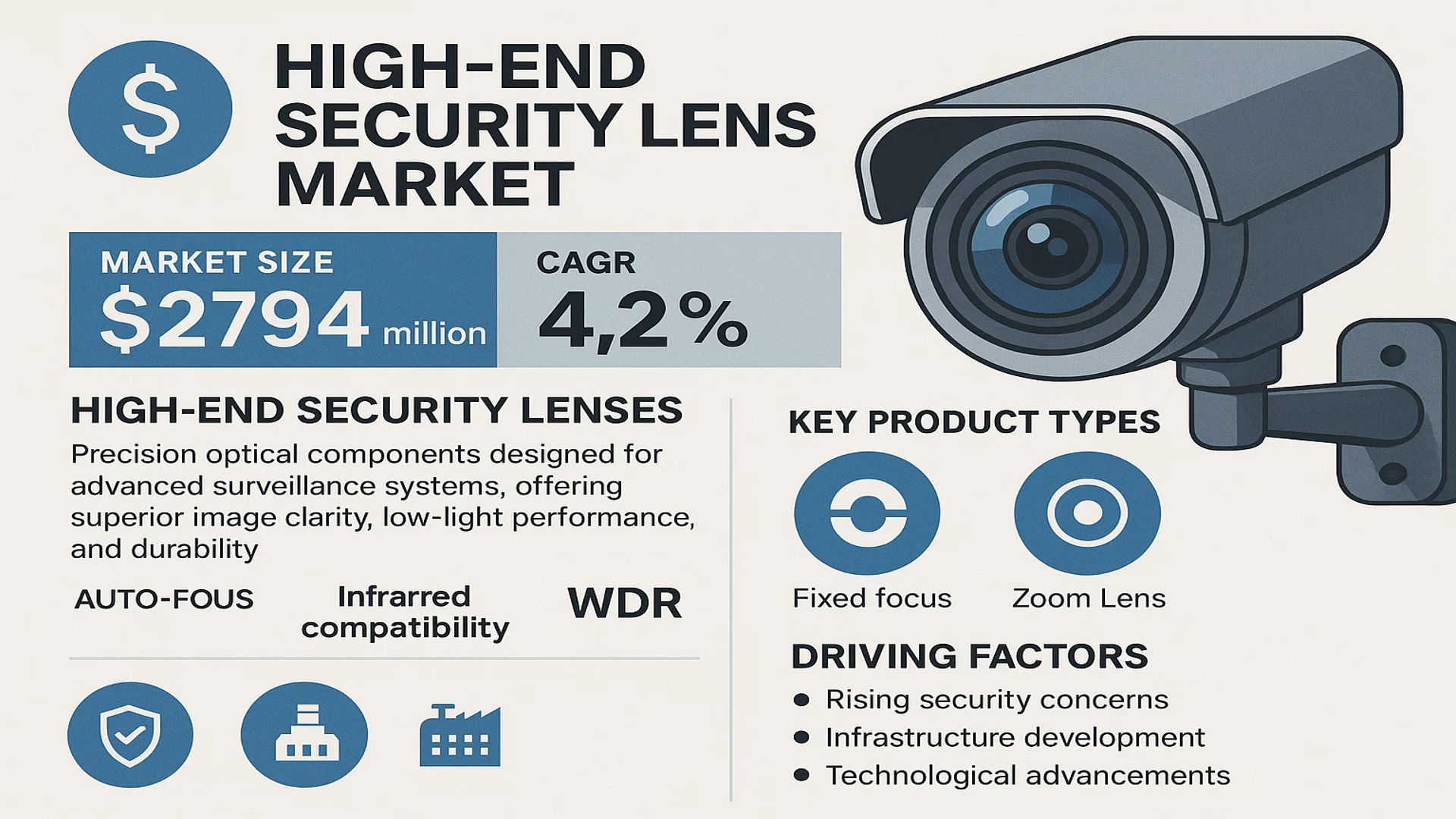
The global High-End Security Lens market was valued at 2794 million in 2024 and is projected to reach US$ 3707 million by 2032, at a CAGR of 4.2% during the forecast period.
High-end security lenses are precision optical components designed for advanced surveillance systems, offering superior image clarity, low-light performance, and durability. These lenses enable 24/7 monitoring with features like auto-focus, infrared compatibility, and wide dynamic range (WDR) to enhance security across commercial, industrial, and military applications. Key product categories include fixed focus lenses and zoom lenses, with varying focal lengths to suit different surveillance needs.
The market growth is driven by rising security concerns, infrastructure development, and technological advancements in surveillance systems. While the commercial sector dominates demand, industrial and military applications are witnessing accelerated adoption due to stricter safety regulations. Leading manufacturers like Hikvision, Dahua Technology, and Axis Communications are investing in AI-integrated lenses with enhanced analytics capabilities, further propelling market expansion. Asia-Pacific holds the largest market share (over 40% in 2024) due to rapid urbanization and government security initiatives across China and India.
MARKET DYNAMICS
MARKET DRIVERS
Increasing Security Threats and Surveillance Demand Accelerate Market Growth
The global high-end security lens market is experiencing robust growth due to escalating security concerns across commercial, industrial, and government sectors. Rising incidents of theft, vandalism, and terrorism have compelled organizations to invest heavily in advanced surveillance systems. High-end security lenses with superior optical clarity, low-light performance, and durable construction are becoming essential components in modern surveillance infrastructure. The market is further propelled by growing smart city initiatives worldwide, where governments are deploying sophisticated CCTV networks with high-resolution imaging capabilities.
Technological Advancements in Imaging Solutions Fuel Market Expansion
Continuous innovations in optical engineering and imaging technologies are significantly boosting the high-end security lens market. Manufacturers are developing lenses with ultra-high resolution, infrared compatibility, and advanced autofocus capabilities that outperform conventional surveillance solutions. The integration of AI-based analytics with security cameras has created demand for precision optics that can capture minute details essential for facial recognition and behavioral analysis. Furthermore, the transition from analog to IP-based surveillance systems has increased the need for lenses capable of supporting 4K and even 8K resolution formats.
Emerging applications in sectors such as transportation, critical infrastructure protection, and retail loss prevention are further expanding the market potential. The global trend towards automation and IoT integration in security systems continues to drive innovation in lens technology, positioning it as a critical component in comprehensive security solutions.
MARKET RESTRAINTS
High Production Costs and Technical Complexity Limit Market Penetration
Despite growing demand, the high-end security lens market faces significant challenges due to the complex manufacturing processes and premium materials required for production. Precision optical components demand specialized glass formulations, anti-reflective coatings, and meticulous assembly processes that contribute to elevated production costs. This results in substantially higher price points compared to standard surveillance lenses, making them less accessible for budget-conscious buyers. The situation is particularly challenging in developing regions where cost sensitivity is acute.
Integration Challenges with Existing Systems Impede Adoption Rates
Many organizations face compatibility issues when upgrading to high-end security lenses, as existing camera systems may not support advanced optical features or resolutions. The need for complete system overhauls to accommodate cutting-edge lenses creates additional financial and operational barriers. Furthermore, the rapid pace of technological advancement in the surveillance industry leads to shorter product lifecycles, making some potential buyers hesitant to invest in what they perceive as potentially soon-to-be-obsolete technology.
Additionally, the specialized nature of high-end security installations requires skilled technicians for proper configuration and maintenance. The shortage of qualified professionals in certain markets creates service gaps that further restrain adoption rates, particularly in regions experiencing rapid infrastructure development but lacking technical training programs.
MARKET OPPORTUNITIES
Emerging Economies Present Significant Growth Potential
Developing nations undergoing rapid urbanization and infrastructure modernization represent substantial growth opportunities for high-end security lens providers. Increased government spending on public safety initiatives, combined with growing private sector investment in commercial security, creates a favorable market environment. Countries implementing large-scale surveillance projects as part of smart city programs are particularly attractive targets for manufacturers offering sophisticated optical solutions.
Advancements in Multi-Sensor Surveillance Systems Open New Applications
The development of multi-camera surveillance arrays and 360-degree imaging systems presents novel opportunities for specialized security lenses. These advanced configurations require precise optical engineering to ensure seamless image stitching and uniform performance across all sensors. The growing adoption of thermal imaging and low-light surveillance in perimeter protection and critical infrastructure monitoring further expands potential applications for high-end lenses optimized for challenging environmental conditions.
Furthermore, the integration of artificial intelligence and machine learning algorithms with surveillance systems is driving demand for lenses that can consistently deliver the high-quality imagery required for accurate analytics. As security solutions become more sophisticated, the need for reliable, high-performance optical components will continue to grow across various industry verticals.
MARKET CHALLENGES
Intellectual Property Protection and Counterfeiting Concerns
The high-end security lens market faces ongoing challenges related to intellectual property rights and product counterfeiting. Leading manufacturers invest heavily in research and development to create proprietary optical designs and coating technologies, making IP protection critical. However, the industry contends with unauthorized reproductions that undercut genuine products on price while failing to deliver comparable performance or durability. These counterfeit products not only impact sales but can also damage brand reputation when inferior copies fail in critical applications.
Regulatory Compliance and Data Privacy Considerations
Increasing scrutiny of surveillance technologies and data collection practices presents regulatory challenges for high-end security lens manufacturers. Various jurisdictions are implementing strict guidelines governing camera resolution, recording capabilities, and data retention, which directly impact product design and functionality. Navigating this evolving regulatory landscape requires continuous monitoring of legal requirements across different markets, adding complexity to product development and distribution strategies.
Privacy concerns related to high-resolution surveillance capabilities are prompting public debates and potential restrictions in some regions. Manufacturers must balance technological advancement with ethical considerations, ensuring their products comply with both legal standards and societal expectations regarding personal privacy in public and private spaces.
HIGH-END SECURITY LENS MARKET TRENDS
Advancements in AI-Powered Surveillance to Drive Market Growth
The high-end security lens market is experiencing rapid transformation with the integration of artificial intelligence (AI) and machine learning technologies. These advancements enable facial recognition, object detection, and behavioral analytics with unprecedented accuracy, significantly enhancing real-time threat assessment capabilities. Nearly 68% of newly installed surveillance systems now incorporate AI-driven lenses, with the military and commercial sectors being early adopters. Furthermore, the demand for ultra-high-definition (4K and 8K) security lenses has surged, as they provide crystal-clear imagery that is indispensable for forensic analysis and long-range monitoring.
Other Trends
Rising Demand for Day/Night Operational Capabilities
The shift toward lenses capable of operating seamlessly in both day and night conditions is accelerating market expansion. Low-light performance improvements, including advanced infrared (IR) correction and wide dynamic range (WDR), ensure high-quality imaging regardless of environmental conditions. Estimates suggest that the global market for security lenses with day/night functionality will grow by 5.8% annually, driven by increasing security concerns in urban areas and critical infrastructure sites.
Expansion of Smart City Projects
The ongoing proliferation of smart city initiatives worldwide is significantly boosting the adoption of high-end security lenses. Governments are investing heavily in intelligent video surveillance to enhance public safety, traffic management, and crime prevention. Municipalities in Asia and Europe are leading this trend, with over 450 smart city projects currently under development. High-performance zoom lenses and panoramic lenses are particularly sought after, given their ability to cover large public spaces efficiently.
COMPETITIVE LANDSCAPE
Key Industry Players
Innovation and Strategic Expansion Drive Market Leadership in High-End Security Lens Segment
The global high-end security lens market exhibits a dynamic and moderately consolidated competitive structure, with Fujifilm and Hikvision emerging as dominant players. Fujifilm commands a significant market share of approximately 18% in 2024, attributed to its advanced optical technologies and extensive product portfolio catering to diverse surveillance applications. The company’s strategic focus on developing high-resolution, low-light-capable lenses has solidified its position across commercial and military sectors.
Dahua Technology and Hanwha Techwin have demonstrated robust growth, collectively accounting for 22% of global sales in 2024. These Asian manufacturers are rapidly gaining traction through competitive pricing models and localized production capabilities, particularly in the booming smart city projects across Southeast Asia. Their success stems from integrating AI-powered analytics with optical solutions, creating value-added surveillance systems.
Meanwhile, Western players like Honeywell Security and Axis Communications maintain strong positions in industrial and government sectors through specialized solutions. Honeywell’s recent launch of its Ultra HD 4K security lenses with enhanced thermal imaging capabilities illustrates the technological arms race within the industry. Such innovations are crucial for maintaining relevance in market segments where precision and reliability are paramount.
The competitive landscape continues evolving through strategic mergers and regional expansions. Tamron’s acquisition of a majority stake in United Optoelectronics in 2023 exemplifies this trend, creating synergies between lens manufacturing and optical component production. Such consolidation activities are expected to intensify as companies seek to diversify supply chains and mitigate geopolitical risks affecting the global optics industry.
List of Key High-End Security Lens Companies Profiled
- Fujifilm Holdings Corporation (Japan)
- Hikvision (China)
- Dahua Technology Co., Ltd. (China)
- VIVOTEK Inc. (Taiwan)
- MOBOTIX AG (Germany)
- Hanwha Techwin (South Korea)
- AV Costar (China)
- Tamron Co., Ltd. (Japan)
- Fujinon Corporation (Japan)
- United Optoelectronics (China)
- Honeywell Security (U.S.)
- Axis Communications (Sweden)
- American Dynamics (U.S.)
Segment Analysis:
By Type
Zoom Lens Segment Leads Due to Enhanced Flexibility in Surveillance Applications
The market is segmented based on type into:
- Fixed Focus Lens
- Subtypes: Standard fixed, Wide-angle fixed, and others
- Zoom Lens
- Subtypes: Varifocal, Auto-focus, and others
By Application
Commercial Use Segment Dominates Due to Rising Security Needs in Urban Infrastructure
The market is segmented based on application into:
- Military Use
- Industrial Use
- Commercial Use
- Subtypes: Banking, Retail, Smart Cities, and others
- Others
By Feature
Night Vision Capability Drives Adoption in Critical Surveillance Applications
The market is segmented based on features into:
- Low-light Performance
- Thermal Imaging
- Corrosion Resistance
- Weatherproofing
By Resolution
4K Resolution Gains Traction for High-Definition Video Surveillance
The market is segmented based on resolution into:
- HD (1080p)
- Full HD (2MP)
- 4K (8MP)
- 8K (16MP+)
Regional Analysis: High-End Security Lens Market
Asia-Pacific
The Asia-Pacific region dominates the global high-end security lens market, accounting for over 45% of total revenue in 2024. This leadership position stems from rapid urbanization, increasing security concerns, and massive government investments in surveillance infrastructure across China, India, and Southeast Asia. China’s Safe Cities Initiative has been a key driver, deploying millions of high-resolution CCTV cameras equipped with advanced lenses. Japanese manufacturers like Fujifilm and Tamron continue to innovate with compact, high-performance zoom lenses tailored for urban security applications, while India’s smart city projects create sustained demand for precision surveillance optics.
North America
North America represents the second-largest market, characterized by stringent security standards and early adoption of AI-integrated surveillance systems. The U.S. Department of Homeland Security’s persistent focus on critical infrastructure protection has boosted demand for high-grade security lenses with night vision and wide dynamic range capabilities. Recent advancements include thermal imaging lenses deployed for border surveillance, with companies like Honeywell Security and American Dynamics leading innovation. The region also sees growing adoption of high-end lenses in commercial applications such as retail analytics and transportation hubs.
Europe
Europe’s market growth is propelled by strict data protection regulations (GDPR) that necessitate high-quality video evidence and increasing terror threats driving public safety investments. Germany and the U.K. lead in adopting 4K and multi-sensor lens systems for urban surveillance, while Eastern European countries are upgrading legacy analog systems to digital. The region benefits from technological leadership by companies like MOBOTIX and Axis Communications, who specialize in vandal-resistant lenses for harsh environments. However, privacy concerns occasionally slow deployment in certain public spaces.
Middle East & Africa
This emerging market shows strong growth potential, particularly in GCC countries implementing smart city visions like Saudi Arabia’s NEOM project. The UAE has become a regional hub for cutting-edge surveillance technologies, deploying high-end security lenses across airports and critical infrastructure. While political instability in parts of Africa hampers market expansion, countries like South Africa are investing in advanced security optics for urban crime prevention. The region’s extreme climate conditions drive demand for ruggedized lenses with heat-resistant coatings.
South America
South America’s market remains constrained by economic volatility but shows pockets of growth in Brazil and Colombia where urban security initiatives gain traction. The 2016 Rio Olympics catalyzed temporary demand for high-performance surveillance lenses, though sustained growth depends on economic recovery. Local manufacturers focus on cost-competitive solutions, while international players like Hikvision cater to premium commercial and government segments. The lack of uniform security regulations across countries presents both challenges and opportunities for market entrants.
Report Scope
This market research report provides a comprehensive analysis of the global and regional High-End Security Lens markets, covering the forecast period 2024–2032. It offers detailed insights into market dynamics, technological advancements, competitive landscape, and key trends shaping the industry.
Key focus areas of the report include:
- Market Size & Forecast: Historical data and future projections for revenue, unit shipments, and market value across major regions and segments. The global High-End Security Lens market was valued at USD 2,794 million in 2024 and is projected to reach USD 3,707 million by 2032, growing at a CAGR of 4.2%.
- Segmentation Analysis: Detailed breakdown by product type (Fixed Focus Lens, Zoom Lens), application (Military, Industrial, Commercial, Others), and end-user industry to identify high-growth segments and investment opportunities.
- Regional Outlook: Insights into market performance across North America, Europe, Asia-Pacific, Latin America, and Middle East & Africa, including country-level analysis of key markets like US, China, Germany, and Japan.
- Competitive Landscape: Profiles of leading market participants including Fujifilm, Hikvision, Dahua Technology, VIVOTEK, and MOBOTIX, covering their product portfolios, market share, R&D focus, and strategic developments.
- Technology Trends & Innovation: Assessment of emerging technologies in surveillance optics, including AI-integrated lenses, thermal imaging capabilities, and low-light performance enhancements.
- Market Drivers & Restraints: Evaluation of factors driving market growth such as increasing security concerns, smart city initiatives, and regulatory mandates, along with challenges like high costs and technical complexities.
- Stakeholder Analysis: Insights for security system integrators, component suppliers, OEMs, and investors regarding emerging opportunities and strategic partnerships in the security optics ecosystem.
Primary and secondary research methodologies were employed, including interviews with industry experts, analysis of financial reports, and data from verified market intelligence sources to ensure accuracy and reliability of the findings.
FREQUENTLY ASKED QUESTIONS:
What is the current market size of Global High-End Security Lens Market?
-> High-End Security Lens market was valued at 2794 million in 2024 and is projected to reach US$ 3707 million by 2032, at a CAGR of 4.2% during the forecast period.
Which key companies operate in Global High-End Security Lens Market?
-> Key players include Fujifilm, Hikvision, Dahua Technology, VIVOTEK, MOBOTIX, Hanwha Techwin, AV Costar, Tamron, Fujinon, and Axis Communications, among others.
What are the key growth drivers?
-> Key growth drivers include rising security concerns, increasing adoption of IP cameras, smart city development projects, and technological advancements in surveillance systems.
Which region dominates the market?
-> Asia-Pacific holds the largest market share due to rapid urbanization and security infrastructure development, while North America leads in technological innovation.
What are the emerging trends?
-> Emerging trends include AI-powered analytics in security lenses, 4K/8K resolution capabilities, thermal imaging integration, and compact form factors for discreet surveillance.

Get Sample Report PDF for Exclusive Insights
Report Sample Includes
- Table of Contents
- List of Tables & Figures
- Charts, Research Methodology, and more...