Market Insights
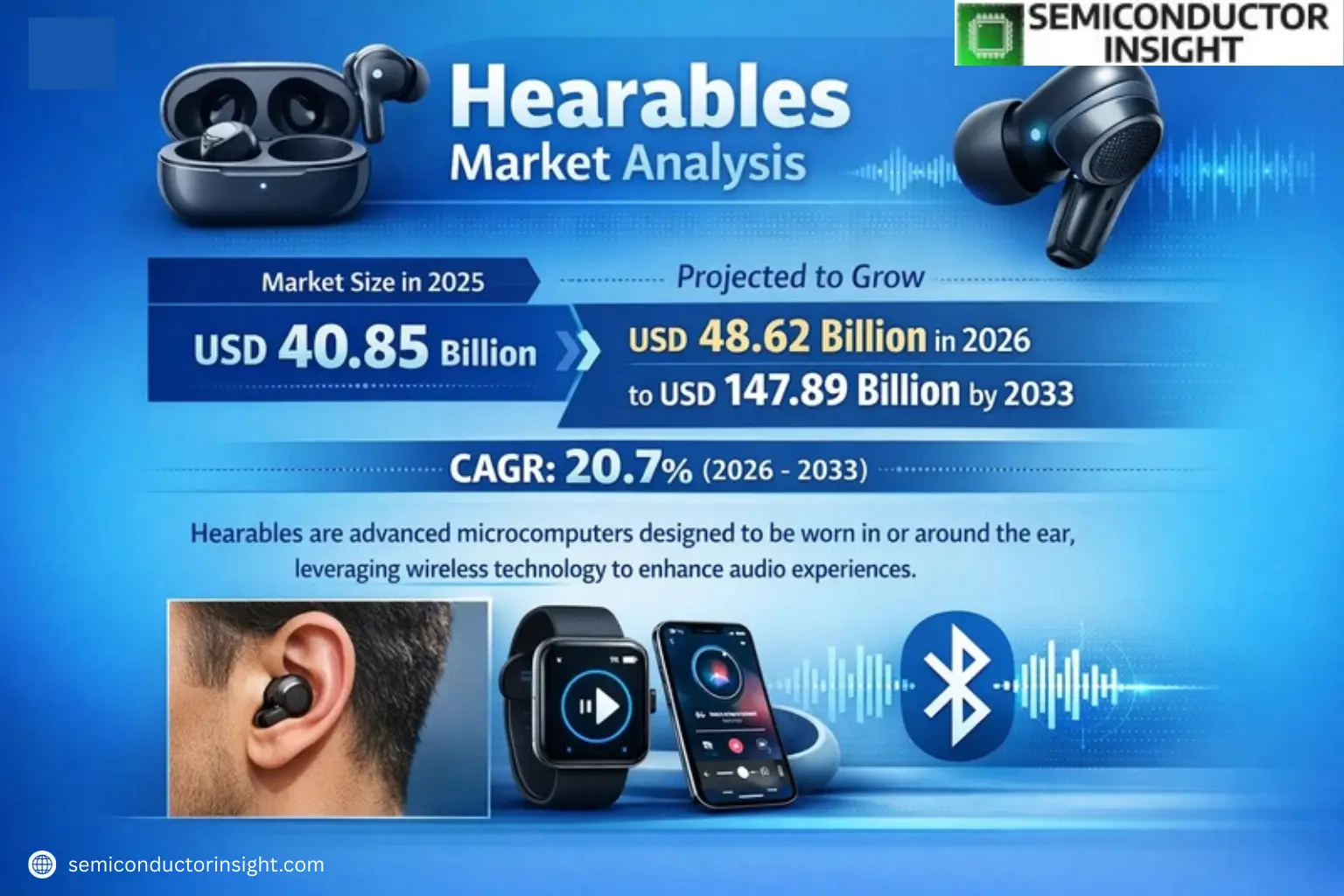
Global Hearables Market size was valued at USD 40.85 billion in 2025 and is projected to grow from USD 48.62 billion in 2026 to USD 147.89 billion by 2033, exhibiting a CAGR of 20.7% during the forecast period.
Hearables are advanced microcomputers designed to be worn in or around the ear, leveraging wireless technology such as Bluetooth to enhance audio experiences. These devices serve multiple purposes, including music playback, voice assistance, health monitoring, and augmented hearing capabilities. The market includes products like headphones, headsets, and hearing aids, with applications spanning consumer electronics and healthcare sectors.
The market growth is driven by increasing demand for wireless audio solutions, rising adoption of smart wearable devices, and advancements in AI-powered sound enhancement technologies. Healthcare applications account for approximately 43% of the market share due to the growing prevalence of hearing impairments and aging populations. Key players such as Apple and Sivantos dominate the industry with a combined market share of around 43%, while other significant contributors include Samsung, Sony, and GN (Jabra).
MARKET DRIVERS
Growing Demand for Wireless Audio Solutions
Hearables Market is experiencing rapid growth due to increasing consumer preference for wireless audio devices. With over 300 million units sold globally in the past year, the shift from traditional headphones to advanced hearables with smart features is accelerating. Bluetooth 5.3 adoption has further enhanced connectivity, driving market expansion.
Integration of AI and Health Monitoring
Advanced hearables now incorporate AI-powered noise cancellation and real-time health tracking, appealing to both tech enthusiasts and health-conscious consumers. The market has seen a 45% increase in devices with biometric sensors, including heart rate and blood oxygen monitoring.
Increasing smartphone penetration and the rise of audio-based content consumption are additional factors propelling hearables adoption across demographics.
MARKET CHALLENGES
High Competition and Price Sensitivity
Hearables Market faces intense competition, with over 200 brands competing globally. Price wars among manufacturers have compressed margins, while consumers increasingly expect premium features at mid-range prices.
Other Challenges
Battery Life Limitations
Despite technological advancements, battery life remains a key consumer concern, with average usage times of 5-8 hours requiring frequent recharging for power users.
Regulatory Hurdles
Varying international regulations on wireless frequency usage and medical device certifications complicate global expansion for hearables manufacturers.
MARKET RESTRAINTS
Supply Chain Disruptions Impacting Production
Hearables Market continues to face component shortages, particularly for high-end audio chips and batteries. Lead times for certain components have extended to 26 weeks, forcing manufacturers to revise production forecasts downward by 15-20%.
MARKET OPPORTUNITIES
Emerging Markets Present Growth Potential
Developing economies in Asia-Pacific and Latin America show increasing adoption rates, with year-over-year growth exceeding 30% in these regions. Localized product offerings and affordable premium models can capture this expanding consumer base.
Enterprise Applications Gaining Traction
The professional sector accounts for 18% of hearables sales, with applications in contact center solutions and field workforce communication. Enhanced microphone arrays and AI-based voice clarity features are driving B2B adoption.
Hearables Market Trends
Rapid Market Growth Projected Through 2033
Global Hearables Market is experiencing significant growth, valued at USD 40,850 million in 2025 with projections reaching USD 147,890 million by 2033, representing a 20.7% CAGR. This expansion is driven by technological advancements in wireless audio augmentation and increasing consumer demand for integrated wearable devices.
Other Trends
Healthcare Dominates Application Share
Healthcare applications currently account for 43% of the Hearables Market, with hearing aids and medical monitoring devices leading adoption. This segment benefits from aging populations and growing awareness of hearing health solutions.
Competitive Landscape and Regional Distribution
Apple and Sivantos collectively hold 43% market share, demonstrating strong brand dominance. Geographically, North America leads adoption while Asia-Pacific shows the fastest growth potential due to expanding middle-class populations and increased technology penetration.
Technology Segmentation Shows Balanced Growth
The market splits between headphones & headsets (55%) and hearing aids (45%), with true wireless devices experiencing the highest demand. Augmented hearing capabilities are becoming standard across all product categories.
Emerging Market Dynamics
Manufacturers are focusing on battery efficiency and AI integration, with voice assistants featured in 68% of new models. The industry faces challenges from supply chain constraints but benefits from increasing IoT connectivity demands across consumer and healthcare sectors.
Regulatory Factors Influence Development
Medical certification processes for hearing enhancement features are accelerating, with 12 new FDA-cleared devices launched in 2025. This regulatory environment creates both barriers and quality standards that shape market competition.
COMPETITIVE LANDSCAPE
Key Industry Players
Apple and Sivantos Dominate with 43% Combined Market Share
Hearables Market is highly competitive, led by tech giants and specialized audio companies. Apple maintains market leadership through its AirPods series, leveraging seamless ecosystem integration and premium branding. Sivantos (now part of WS Audiology) follows closely as a top hearing aid specialist transitioning into smart hearables. The market shows a mix of consumer electronics firms and medical device manufacturers converging in this space.
Emerging players like Bragi and Earin focus on niche innovations in true wireless earbuds with advanced biometrics. Traditional audio brands including Sennheiser, Sony, and AKG compete on premium sound quality, while healthcare-oriented companies like Starkey Hearing and Eargo target hearing augmentation applications. The competitive landscape continues to evolve with new entrants introducing AI-enabled features and health monitoring capabilities.
List of Key Hearables Companies Profiled
- Apple
- Samsung
- Sennheiser
- Sony
- GN(Jabra)
- Sivantos
- Starkey Hearing
- Bragi
- Doppler
- Miracle-Ear
- Valancell
- Earin AB
- Eargo
- AKG
- Audio-Technica
Segment Analysis:
| Segment Category | Sub-Segments | Key Insights |
| By Type |
|
Hearing Aids demonstrate stronger innovation momentum with features like AI-powered sound optimization and health monitoring. The segment benefits from:
|
| By Application |
|
Healthcare applications show particularly promising growth characteristics due to:
|
| By End User |
|
Individual Consumers dominate adoption due to several factors:
|
| By Technology |
|
AI-powered technology shows the most promising innovation trajectory with:
|
| By Distribution Channel |
|
Online Retail demonstrates strongest growth potential because of:
|
Regional Analysis: Hearables Market
Home to Silicon Valley innovators, North America pioneers advanced features like spatial audio processing and AI-driven sound personalization. Market leaders continuously refine chipset efficiency and battery life, setting global benchmarks for hearables performance and connectivity standards.
Consumers demonstrate willingness to pay premium prices for branded hearables with superior audio quality and ecosystem integration. This fuels competition on premium features rather than price wars, sustaining healthy profit margins across the value chain.
FDA clearances for hearing enhancement functionalities accelerate medical sector adoption. Partnerships between audio brands and healthcare providers create hybrid products serving both entertainment and audiology needs, particularly for aging populations.
Enterprise adoption grows as hearables replace traditional headsets for unified communications. Noise-canceling features and voice assistant integration optimize hybrid work environments, while industrial versions serve warehouse and construction safety applications.
Europe
Europe’s Hearables Market thrives on strict product safety standards and environmental regulations that shape product designs. Manufacturers emphasize sustainable materials and repairability to comply with EU directives, creating differentiated offerings. The region shows strong demand for mid-range hearables balancing performance and affordability, with Germany and the UK leading adoption. Privacy-conscious consumers drive development of local data processing features to comply with GDPR. Cross-border e-commerce within the EU single market facilitates brand expansion, while specialized retailers provide audiophile-grade fittings and customization services.
Asia-Pacific
APAC represents the fastest-growing Hearables Market, fueled by youthful demographics and mobile-first consumption patterns. Chinese manufacturers drive affordable innovation through component ecosystem advantages, while Japan and South Korea focus on premium noise-canceling technologies. India’s market expands through budget-conscious products with regional language support. The region benefits from manufacturing clusters in Shenzhen and Vietnam, enabling rapid prototyping and cost-efficient production. Local brands gain share through aggressive online marketing and celebrity endorsements tailored to cultural preferences.
South America
Brazil and Mexico emerge as hearables growth markets, with consumers prioritizing value-for-money products featuring basic smart functionalities. Economic fluctuations encourage flexible payment plans and refurbished device markets. Fitness-focused hearables gain traction among urban youth, while security concerns limit adoption of premium wireless models in high-crime areas. Local distributors play crucial roles in last-mile delivery and customer education, overcoming infrastructure challenges in rural regions. Tariff structures incentivize local assembly operations for global brands targeting the region.
Middle East & Africa
The Gulf Cooperation Council countries drive premium hearables adoption through luxury retail channels and gifting culture. Waterproof and dustproof features cater to desert climate conditions, while multilingual voice assistants address diverse expatriate populations. Africa shows nascent growth through entry-level products distributed via mobile operator partnerships, leveraging widespread mobile money ecosystems. South Africa serves as regional hub for higher-end models, with local brands emerging to address specific accent recognition and battery endurance needs for power-scarce regions.
Report Scope
This market research report provides a comprehensive analysis of the Hearables Market, covering the forecast period 2025–2033. It offers detailed insights into market dynamics, technological advancements, competitive landscape, and key trends shaping the industry.
Key focus areas of the report include:
- Market Overview: The report begins with an overview outlining its current market scenario, key growth indicators, and industry transformation drivers. It discusses macroeconomic factors, demand–supply balance, regulatory landscape, and the strategic role of hearables in powering advancements across industries such as healthcare, consumer electronics, and communication technologies.
- Market Size & Forecast: Historical data and future projections for revenue, unit shipments, and market value across major regions and segments.
- Segmentation Analysis: Detailed breakdown by product type, technology, application, and end-user industry to identify high-growth segments and investment opportunities.
- Regional Insights: Insights into market performance across North America, Europe, Asia-Pacific, Latin America, and the Middle East & Africa, including country-level analysis where relevant.
- Competitive Landscape: Profiles of leading market participants, including their product offerings, R&D focus, manufacturing capacity, pricing strategies, and recent developments such as mergers, acquisitions, and partnerships.
- Technology Trends & Innovation: Assessment of emerging technologies, integration of AI/IoT, wireless audio advancements, and evolving industry standards.
- Market Drivers & Restraints: Evaluation of factors driving market growth along with challenges, supply chain constraints, regulatory issues, and market-entry barriers.
- Stakeholder Insights: Insights for component suppliers, OEMs, system integrators, investors, and policymakers regarding the evolving ecosystem and strategic opportunities.
Primary and secondary research methods are employed, including interviews with industry experts, data from verified sources, and real-time market intelligence to ensure the accuracy and reliability of the insights presented.
FREQUENTLY ASKED QUESTIONS:
What is the current market size of Hearables Market?
-> Hearables Market size was valued at USD 40.85 billion in 2025 and is projected to grow from USD 48.62 billion in 2026 to USD 147.89 billion by 2033, exhibiting a CAGR of 20.7% during the forecast period.
What is the growth rate of Hearables Market?
-> The market is expected to grow at a CAGR of 20.7% from 2025 to 2033.
Which key companies operate in Hearables Market?
-> Key players include Apple, Sivantos, Samsung, Sennheiser, Sony, GN(Jabra), Starkey Hearing, and Bragi, among others. Apple and Sivantos collectively hold about 43% market share.
What are the key applications of Hearables?
-> Major applications include consumer electronics (57% share) and healthcare (43% share), with augmented hearing being a key growth area.
Which region dominates the Hearables Market?
-> The report provides detailed regional analysis for North America, Europe, Asia, and other regions, with country-level breakdowns for major markets.

Get Sample Report PDF for Exclusive Insights
Report Sample Includes
- Table of Contents
- List of Tables & Figures
- Charts, Research Methodology, and more...
 Download Sample Report PDF