MARKET INSIGHTS
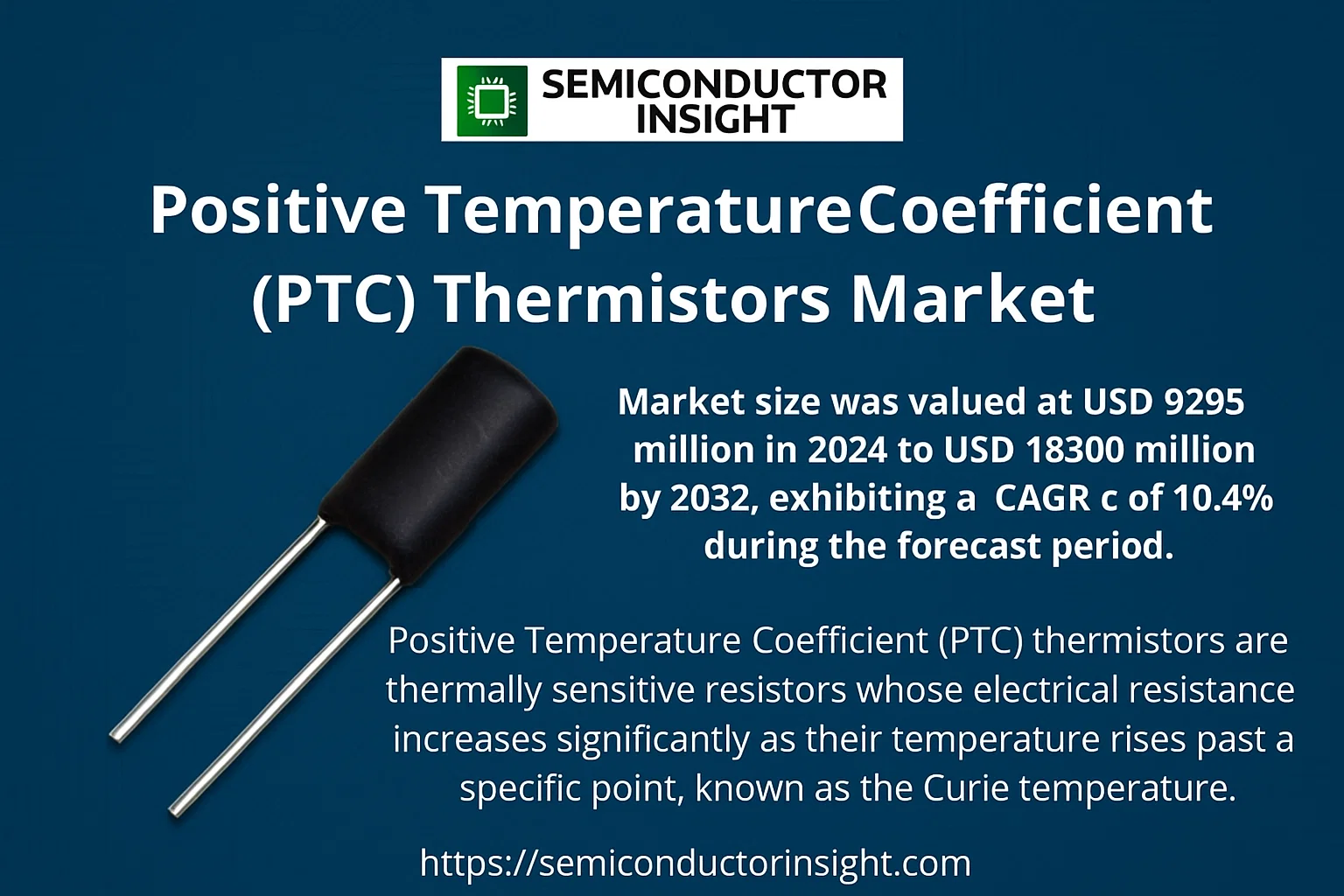
Global Positive Temperature Coefficient (PTC) Thermistors Market size was valued at USD 9295 million in 2024 to USD 18300 million by 2032, exhibiting a CAGR of 10.4% during the forecast period.
Positive Temperature Coefficient (PTC) thermistors are thermally sensitive resistors whose electrical resistance increases significantly as their temperature rises past a specific point, known as the Curie temperature. This unique property makes them ideal for use as self-resetting fuses for overcurrent protection, temperature sensors, and motor-starting components in applications ranging from consumer electronics to automotive systems. The two primary types based on production technology are Ceramic PTC (CPTC) and Polymer PTC (PPTC).
The market is experiencing robust growth driven by increasing demand for reliable circuit protection components across various industries. The expansion of telecom/datacom infrastructure, which holds the largest application share at 22%, is a key driver because PPTCs are essential for safeguarding sensitive networking equipment. Furthermore, rising electronics content in the automotive sector and the proliferation of smart home appliances further contribute to this expansion. Key players like Littelfuse (Tyco), Bourns, and TDK (EPCOS) are fueling competition through technological advancements and strategic initiatives.
MARKET DRIVERS
Expanding Applications in Electronics Protection
Global Positive Temperature Coefficient (PTC) Thermistors Market is primarily driven by the robust demand for reliable overcurrent protection and temperature sensing in consumer electronics, automotive systems, and industrial equipment. The intrinsic self-regulating property of PTC thermistors makes them ideal for limiting inrush current and providing resettable fuse functionality. This is critical for safeguarding sensitive components in smartphones, laptops, and home appliances against electrical faults, ensuring both safety and product longevity.
Growth in Electric Vehicle Production
The accelerating transition to electric vehicles (EVs) represents a significant growth catalyst. PTC thermistors are essential in EV battery management systems (BMS) for precise temperature monitoring and thermal runaway prevention. They are also used in cabin heating systems. With global EV sales projected to exceed 17 million units annually, the demand for high-reliability PTC components is experiencing a corresponding surge.
Furthermore, the push for energy efficiency across industries is leading to the adoption of PTC heaters for applications like automotive seat warmers and defrosting systems, which offer superior safety compared to traditional wire heaters. The miniaturization of electronic devices also necessitates smaller, more efficient PTC components, driving innovation and market expansion.
MARKET CHALLENGES
Competition from Alternative Technologies
One of the primary challenges facing the PTC thermistor market is intense competition from alternative temperature sensing and protection devices. Negative Temperature Coefficient (NTC) thermistors often offer higher measurement sensitivity for certain applications, while solid-state switches and conventional fuses can be more cost-effective for basic overcurrent protection. This forces PTC manufacturers to continuously demonstrate the unique value proposition of their self-regulating, resettable technology.
Other Challenges
Material Cost and Supply Chain Volatility
The production of PTC thermistors relies on specialized ceramic materials, including barium titanate, whose prices can be volatile. Disruptions in the supply of raw materials can lead to increased manufacturing costs and pricing pressure, impacting profit margins for market players.
Technical Limitations in High-Precision Applications
While excellent for protection and switching, PTC thermistors have a non-linear resistance-temperature curve, making them less suitable than NTC thermistors or RTDs for applications requiring extremely precise temperature measurement over a wide range. This limits their use in certain medical and scientific instruments.
MARKET RESTRAINTS
High Customization and Development Costs
A significant restraint for the PTC thermistor market is the high cost associated with research, development, and customization. PTC components often need to be tailored to specific voltage, current, and temperature requirements of end-use products. This customization involves extensive testing and validation, leading to longer development cycles and higher costs for both manufacturers and their clients, which can deter adoption in highly cost-sensitive market segments.
Maturity in Key End-Use Segments
Markets such as consumer electronics and traditional automotive are relatively mature, with well-established supply chains and component specifications. Achieving significant growth in these segments often requires displacing incumbent technologies or relying on incremental innovation, which can slow the pace of market expansion compared to emerging sectors like renewable energy storage.
MARKET OPPORTUNITIES
Emerging Applications in Renewable Energy
The rapid growth of renewable energy infrastructure, particularly solar and wind power, presents a substantial opportunity. PTC thermistors are critical for overcharge and overtemperature protection in the battery energy storage systems (BESS) that support these intermittent power sources. As global investments in grid-scale storage projects increase, the demand for robust, high-capacity PTC components is expected to rise significantly.
Advancements in 5G and IoT Infrastructure
The global rollout of 5G networks and the expansion of the Internet of Things (IoT) ecosystem create new avenues for growth. 5G base stations and IoT sensor nodes require compact, reliable circuit protection for their power supplies and communication modules. PTC thermistors are well-positioned to meet this need for miniaturized, resettable protection in harsh environmental conditions, driving adoption in telecommunications and industrial IoT applications.
Medical Device Innovation
Innovation in medical devices, including portable diagnostic equipment, patient monitoring systems, and therapeutic devices, offers promising growth potential. The need for safe, fail-safe temperature control and circuit protection in equipment that is often life-critical aligns perfectly with the safety features of PTC thermistors, opening up a high-value application segment.
Positive Temperature Coefficient (PTC) Thermistors Market Trends
Robust Market Growth Fueled by Electronics Demand
The global PTC thermistors market is on a trajectory of significant expansion, projected to grow from a valuation of USD 9,295 million in 2024 to USD 18,300 million by 2032, representing a compound annual growth rate (CAGR) of 10.4%. This robust growth is primarily driven by the increasing integration of electronic components across a multitude of industries. The inherent property of PTC thermistors, where electrical resistance increases rapidly upon exceeding a specific temperature, makes them indispensable as reliable, self-resetting overcurrent protection devices. Their application in safeguarding motors, power supplies, and consumer electronics from potential damage due to overheating or short circuits is a key market driver.
Other Trends
Dominance of Polymer PTC (PPTC) Technology
There is a clear market segmentation by technology, with Polymer PTC (PPTC) thermistors dominating the landscape, accounting for approximately 75% of the market share. Preferred for their resettable fuse characteristics, PPTCs are widely adopted in consumer electronics, computing, and telecommunications equipment. In contrast, Ceramic PTC (CPTC) thermistors maintain significant usage in applications requiring high-temperature operation, such as motor-start circuits in home appliances like refrigerator compressors and in industrial control systems.
Telecom/Datacom as the Leading Application
The application landscape reveals that Telecom/Datacom Infrastructure is the largest downstream field, holding a 22% market share. The proliferation of 5G technology and the exponential growth in data centers necessitate highly reliable circuit protection, which PTC thermistors provide. Other major application segments include Consumer Electronics, Automotive electronics for battery management and in-car systems, and Industrial automation, all contributing to the diverse demand base.
Consolidated Competitive Landscape and Regional Dynamics
The market features a consolidated competitive environment, with the top five manufacturersincluding Littelfuse(Tyco), Polytronics, Wayon, Bourns, and Fuzetec collectively accounting for about 71% of the global market share. Geographically, Asia-Pacific stands as the largest market, commanding approximately 65% of the share, fueled by its massive electronics manufacturing base. North America and Europe follow with 17% and 16% shares respectively, supported by advanced industrial and automotive sectors. The ongoing trend of miniaturization and the increasing demand for energy-efficient electronic devices are expected to continue shaping innovation and market strategies among key players.
COMPETITIVE LANDSCAPE
Key Industry Players
A Highly Consolidated Market Led by Globally Recognized Component Manufacturers
The global Positive Temperature Coefficient (PTC) Thermistors market is characterized by a high degree of concentration, with the top five manufacturers collectively accounting for approximately 71% of the total market share. Littelfuse (following its acquisition of Tyco Electronics’ circuit protection business) stands as a dominant force in this landscape. The company’s extensive portfolio of both Polymer PTC (PPTC) and Ceramic PTC (CPTC) thermistors, coupled with its global distribution network, solidifies its leading position. The market structure is driven by the critical need for highly reliable and certified components for applications ranging from telecommunications infrastructure to automotive electronics and home appliances, requiring significant investment in research, development, and quality assurance.
Beyond the market leaders, a group of significant niche players contributes to the competitive dynamics. Companies like Polytronics, Wayon, and Bourns have established strong regional presences and specialized expertise, particularly in the Asia-Pacific market, which is the largest consuming region with about 65% share. Other notable manufacturers such as Fuzetec, Sea & Land, and Keter compete effectively by focusing on cost-optimized solutions for high-volume consumer electronics and industrial applications. Established electronics giants like TDK (through its EPCOS brand), Vishay, Murata, and Amphenol (GE Sensing) bring their vast technological resources and cross-selling opportunities to the PTC thermistor space, often integrating them into broader system solutions.
List of Key Positive Temperature Coefficient (PTC) Thermistors Companies Profiled
- Littelfuse (Tyco)
- Polytronics
- Wayon
- Bourns
- Fuzetec
- Sea & Land
- Keter
- Eaton
- TDK (EPCOS)
- Vishay
- Amphenol (GE Sensing)
- Jinke
- Murata
- Thinking
- HIEL
- HGTECH
Segment Analysis:
| Segment Category | Sub-Segments | Key Insights |
| By Type |
|
PPTC is the dominant product type, favored for its resettable fuse characteristics which offer superior reliability and cost-effectiveness in modern circuit protection applications. While CPTC thermistors are valued for high-temperature applications like motor starting, the versatility and self-healing properties of PPTC variants make them the preferred choice across the broadest range of consumer and industrial electronic devices, driving significant market demand. |
| By Application |
|
Telecom/Datacom Infrastructure represents the leading application segment, driven by the critical need for robust overcurrent protection in servers, routers, and networking equipment that underpins global digital connectivity. The relentless expansion of data centers and 5G networks fuels consistent demand, while the high reliability requirements of these systems make PTC thermistors an indispensable component for preventing costly downtime and equipment damage. |
| By End User |
|
Original Equipment Manufacturers (OEMs) are the primary end users, integrating PTC thermistors directly into a vast array of new electronic products during the manufacturing process. This segment’s leadership is anchored in the essential nature of circuit protection for product reliability and safety compliance. The trend towards miniaturization and increased functionality in electronics further compels OEMs to adopt these compact and efficient components as standard features in their designs. |
| By Function |
|
Overcurrent Protection is the most significant functional segment, as the core property of PTC thermistorsa sharp increase in resistance upon overheatingmakes them ideally suited for safeguarding circuits against short circuits and current overloads. Their ability to act as self-resetting fuses provides a maintenance-free and highly reliable solution that is superior to traditional single-use fuses, cementing their role as a foundational component in modern electrical safety systems. |
| By Material Composition |
|
Conductive Polymer Composites form the material basis for the leading PPTC type and thus represent the most influential segment. These materials offer excellent processability, allowing for the creation of compact, flexible, and highly responsive devices. The inherent properties of these polymers enable the precise control of the trip temperature and resistance characteristics required for sensitive electronic protection, making them the material of choice for the majority of new applications. |
Regional Analysis: Positive Temperature Coefficient (PTC) Thermistors Market
The dense network of electronics manufacturers provides an unparalleled foundation for PTC thermistor demand. Components are integral to circuit protection in devices produced on a massive scale, from smartphones to air conditioners. Local suppliers offer just-in-time delivery, fostering a symbiotic relationship that fuels continuous market expansion. This ecosystem is a critical competitive advantage for the region.
Aggressive adoption of Industry 4.0 principles across the region is a major growth driver. PTC thermistors are essential for motor and sensor protection in automated machinery and robotics. Government initiatives promoting smart manufacturing ensure a robust, long-term pipeline of demand from the industrial sector, making it a cornerstone of the market’s stability and growth.
The explosive growth of the electric vehicle market and renewable energy installations creates significant new applications. PTC thermistors are critical for battery thermal management in EVs and for protecting inverters in solar and wind power systems. This diversification beyond traditional electronics into high-growth green technologies secures the region’s leadership.
A mature and integrated supply chain for electronic components allows for rapid prototyping and cost-competitive mass production of PTC thermistors. High levels of investment in R&D, particularly in Japan and South Korea, lead to continuous product innovations, such as miniaturized and high-curie-temperature thermistors, maintaining a technological edge over other regions.
North America
The North American market for PTC thermistors is characterized by strong demand from the automotive, industrial, and telecommunications sectors. The region’s advanced technological infrastructure and high safety standards drive the adoption of high-reliability components. The presence of major automotive manufacturers and a growing focus on electric and autonomous vehicles provide a significant market for PTC thermistors used in battery packs, charging systems, and various electronic control units. Furthermore, the robust industrial base and investments in upgrading manufacturing facilities sustain demand for motor protection and temperature sensing applications. The telecommunications sector, with its extensive network infrastructure, also utilizes PTC thermistors for surge protection, contributing to steady market growth.
Europe
Europe holds a significant share of the PTC thermistors market, driven by its strong automotive industry and stringent regulatory environment for energy efficiency and product safety. The region’s leadership in automotive manufacturing, particularly in Germany, creates substantial demand for PTC thermistors in engine management, climate control, and advanced driver-assistance systems. The push towards electrification in transportation is a key growth factor. Additionally, the well-established industrial automation sector and the presence of major appliance manufacturers contribute to consistent demand. Europe’s focus on renewable energy and smart grid technologies also opens opportunities for PTC thermistors in power electronics and energy management systems.
South America
The PTC thermistors market in South America is evolving, with growth primarily fueled by the expanding consumer electronics and automotive industries in countries like Brazil and Argentina. While the market is smaller compared to other regions, increasing industrialization and infrastructure development are creating new opportunities. The demand is largely linked to the replacement market for home appliances and the gradual modernization of industrial equipment. Economic fluctuations can impact market dynamics, but the essential nature of PTC thermistors for basic electronic protection ensures a baseline of demand. The market potential is significant as manufacturing capabilities continue to develop across the region.
Middle East & Africa
The Middle East & Africa region represents an emerging market for PTC thermistors, with growth linked to infrastructure development, urbanization, and industrialization. The Gulf Cooperation Council countries, with their investments in smart cities and telecommunications, are key demand centers. The growing consumer electronics market and the establishment of manufacturing hubs in certain nations contribute to demand. In Africa, market growth is more gradual, driven by economic development and the increasing penetration of electronic goods. The region’s focus on power generation and oil & gas infrastructure also presents niche applications for PTC thermistors in equipment protection, indicating potential for future market expansion.
Report Scope
This market research report provides a comprehensive analysis of the Positive Temperature Coefficient (PTC) Thermistors Market , covering the forecast period 2025–2032. It offers detailed insights into market dynamics, technological advancements, competitive landscape, and key trends shaping the industry.
Key focus areas of the report include:
- Market Overview: The report begins with an overview outlining its current market scenario, key growth indicators, and industry transformation drivers. It discusses macroeconomic factors, demand–supply balance, regulatory landscape, and the strategic role of semiconductors in powering advancements across industries such as automotive, telecommunications, consumer electronics, and industrial automation.
- Market Size & Forecast: Historical data and future projections for revenue, unit shipments, and market value across major regions and segments.
- Segmentation Analysis: Detailed breakdown by product type, technology, application, and end-user industry to identify high-growth segments and investment opportunities.
- Regional Insights: Insights into market performance across North America, Europe, Asia-Pacific, Latin America, and the Middle East & Africa, including country-level analysis where relevant.
- Competitive Landscape: Profiles of leading market participants, including their product offerings, R&D focus, manufacturing capacity, pricing strategies, and recent developments such as mergers, acquisitions, and partnerships.
- Technology Trends & Innovation: Assessment of emerging technologies, integration of AI/IoT, semiconductor design trends, fabrication techniques, and evolving industry standards.
- Market Drivers & Restraints: Evaluation of factors driving market growth along with challenges, supply chain constraints, regulatory issues, and market-entry barriers.
- Stakeholder Insights: Insights for component suppliers, OEMs, system integrators, investors, and policymakers regarding the evolving ecosystem and strategic opportunities.
Primary and secondary research methods are employed, including interviews with industry experts, data from verified sources, and real-time market intelligence to ensure the accuracy and reliability of the insights presented.
FREQUENTLY ASKED QUESTIONS:
What is the current market size of Positive Temperature Coefficient (PTC) Thermistors Market?
-> Global Positive Temperature Coefficient (PTC) Thermistors Market was valued at USD 9295 million in 2024 and is projected to reach USD 18300 million by 2032, exhibiting a CAGR of 10.4% during the forecast period.
Which key companies operate in Positive Temperature Coefficient (PTC) Thermistors Market?
-> Key players include Littelfuse(Tyco), Polytronics, Wayon, Bourns, Fuzetec, Sea & Land, and Keter, among others. The top five manufacturers account for about 71% of the market share.
What are the key growth drivers?
-> Key growth drivers include the fundamental property of PTC thermistors for applications such as self-resetting fuses, short circuit protection in motors, and their use in electronic lamp ballasts and switch-mode power supplies, driven by demand across telecommunications, consumer electronics, and automotive industries.
Which region dominates the market?
-> Asia-Pacific is the largest market with a share of about 65%, followed by North America and Europe with shares of 17% and 16% respectively.
What are the emerging trends?
-> Emerging trends include the continued dominance of Polymer PTC (PPTC) technology, which holds about 75% market share, and the leading application in Telecom/Datacom Infrastructure, accounting for 22% of the market.

Get Sample Report PDF for Exclusive Insights
Report Sample Includes
- Table of Contents
- List of Tables & Figures
- Charts, Research Methodology, and more...
 Download Sample Report PDF